I’d been looking for a butternut squash soup that actually tasted like something—not just sweet, not just watery, not a thin orange broth that left you hungry twenty minutes later. For a while, I just accepted that homemade squash soup was going to be a bit one-note. You roast the squash, you blend it with some broth, and it’s fine. But fine wasn’t what I wanted. I wanted the kind of soup that makes you slow down. The kind where you take a spoonful and something shifts in your chest—like the whole day just exhales.
This cozy roasted butternut squash soup with brown butter came from a specific afternoon. I had a squash sitting on the counter, a stick of butter in the fridge, and a quiet house. I wasn’t trying to reinvent anything. I just wanted a bowl of soup that felt like a real meal—something with depth, warmth, and a little bit of nutty richness. The brown butter was an afterthought at first. I’d burned it plenty of times before, so I was careful. But when that foam turned amber and smelled like toasted hazelnuts, I knew it was going to work.
That first batch was a revelation. The soup had body—creamy without being heavy, savory without being dull. The brown butter brought this toasty, almost caramelized note that made the squash taste more like itself. I didn’t have to add cream or coconut milk or any of the usual tricks. The butter did the work. I’ve made it at least a dozen times since, tweaking the garlic, adjusting the sage, figuring out the right roasting temperature so the edges get those caramelized brown spots. And honestly? This is the version I keep coming back to. It’s become the soup I make when I need something dependable—something that delivers every single time.
Why You’ll Love This Recipe
This isn’t just another squash soup recipe. It’s the one that finally delivers on flavor without a laundry list of ingredients. Here’s why it works so well:
- Rich, Nutty Flavor Without Cream: The brown butter does all the heavy lifting. It adds a deep, toasty richness that makes the soup feel indulgent without any dairy beyond the butter itself. You get that luxurious texture naturally from the roasted squash.
- Simple Pantry Ingredients: Onion, garlic, squash, butter, broth, and a few pantry spices. That’s it. No trips to specialty stores, no obscure ingredients you’ll use once and forget about.
- Perfect for Meal Prep: This soup keeps beautifully in the fridge for up to five days, and it freezes like a dream. Make a big batch on Sunday, and you’ve got lunches or quick dinners ready to go all week.
- Naturally Gluten-Free and Vegetarian: With a simple swap of vegetable broth, this becomes fully vegetarian while staying gluten-free as written. It’s a crowd-pleaser that accommodates most dietary needs without compromise.
- That Brown Butter Moment: Honestly, the smell alone is worth it. When the butter sizzles and turns golden, you’ll understand why this simple step transforms the entire dish. It’s the kind of kitchen magic that makes you feel like you actually know what you’re doing.
I’ve tested this recipe more times than I can count—adjusting roasting times, experimenting with different squash varieties, figuring out the exact moment to add the brown butter so it doesn’t get lost in the blend. This version is the one that consistently gets the best feedback. It’s the soup I bring to friends when they’re under the weather, the one I serve on chilly evenings when I need something that feels like a hug in a bowl. And every time, someone asks for the recipe.
What Ingredients You Will Need
This cozy roasted butternut squash soup with brown butter relies on a short list of ingredients, each one playing a specific role in building flavor and texture. Here’s what you’ll need and why each one matters.
- 1 large butternut squash (about 3 pounds): Look for one that feels heavy for its size with a firm, unblemished skin. The neck is the meatiest part, so a squash with a longer neck gives you more usable flesh. You’ll peel, seed, and cube it before roasting. (I prefer organic when possible—the flavor tends to be more concentrated.)
- 4 tablespoons unsalted butter: This is the star of the show. Use unsalted so you can control the salt level. I recommend a good-quality brand like Kerrygold or Plugrà for the richest brown butter flavor. The milk solids in European-style butter brown more evenly and give you a nuttier result.
- 1 medium yellow onion, diced: Onion provides the savory backbone. Yellow onions are ideal here—they’re sweet but not overpowering, and they soften into the soup without leaving any harsh raw notes.
- 3 cloves garlic, smashed: Smashing the garlic instead of mincing it lets you remove the cloves before blending if you want a milder garlic flavor. Or leave them in for a bolder kick. Your call.
- 4 cups low-sodium chicken or vegetable broth: Low-sodium is crucial here. You want to control the salt, especially since the brown butter adds its own savory depth. Homemade broth is wonderful if you have it, but a good store-bought brand (I like Swanson or Pacific Foods) works perfectly.
- 1 teaspoon fresh sage, chopped (plus more for garnish): Sage and brown butter are a classic pairing for a reason. The herb’s earthy, slightly peppery notes cut through the richness and brighten the whole soup. Dried sage works in a pinch—use half the amount.
- ½ teaspoon ground nutmeg: Just a pinch. Nutmeg adds warmth without screaming “holiday spice.” It should whisper in the background, supporting the squash without taking over.
- Salt and freshly ground black pepper to taste: Don’t skimp on the pepper. Freshly ground makes a difference here, adding a subtle heat that balances the sweetness of the roasted squash.
- Optional: ¼ cup heavy cream or coconut milk: I rarely add this, but if you want an extra-lush texture, a splash of cream or full-fat coconut milk at the end makes the soup velvety. Totally optional, but nice for special occasions.
Equipment Needed
You don’t need a fancy kitchen to make this soup. Here’s what you’ll actually use:
- Large baking sheet: A rimmed half-sheet pan is ideal for roasting the squash. Line it with parchment paper for easy cleanup—the caramelized bits tend to stick otherwise.
- Chef’s knife and vegetable peeler: A sharp chef’s knife makes quick work of cubing the squash. A Y-shaped peeler is my favorite for getting the skin off cleanly without wasting too much flesh.
- Large soup pot or Dutch oven: A 5- to 6-quart pot gives you plenty of room for sautéing the aromatics and simmering the soup. A Dutch oven (like a Le Creuset or Lodge) retains heat beautifully and makes the browning step more even.
- Immersion blender or countertop blender: An immersion blender lets you blend the soup right in the pot, which means fewer dishes. If you’re using a countertop blender, work in batches and leave the lid slightly ajar to let steam escape—otherwise, you’ll end up with soup on your ceiling. Ask me how I know.
- Small saucepan: For browning the butter. A light-colored pan (stainless steel or enameled) helps you see the color change so you don’t accidentally burn it.
- Measuring cups and spoons: Precision matters less in soup than in baking, but having the right measurements for broth and spices keeps things consistent.
Preparation Method

Let’s walk through this step by step. Take your time with the roasting—it’s where all the flavor builds.
- Preheat your oven to 400°F (200°C). While it heats, prepare the squash. Cut off both ends, then slice the squash in half where the neck meets the bulb. Stand each piece upright and peel off the skin with a vegetable peeler or sharp knife. Slice the neck into rounds, then cut into 1-inch cubes. Scoop out the seeds from the bulb section and cube that too. Aim for uniform pieces so they roast evenly.
- Toss the cubed squash with 2 tablespoons of olive oil and a generous pinch of salt. Spread it in a single layer on your lined baking sheet. Don’t overcrowd—if the pieces are too close together, they’ll steam instead of roast. Roast for 30-35 minutes, flipping halfway through, until the edges are caramelized and the squash is fork-tender. The caramelized bits are where the flavor lives, so don’t pull them out too early.
- While the squash roasts, start the soup base. In your large pot, melt 1 tablespoon of the butter over medium heat. Add the diced onion and a pinch of salt, then cook for 6-8 minutes, stirring occasionally, until the onion is translucent and starting to turn golden at the edges. Add the smashed garlic cloves and cook for another minute until fragrant.
- Deglaze the pot with about ½ cup of the broth, scraping up any browned bits from the bottom. This is where the flavor concentrates. Add the remaining 3½ cups of broth, the roasted squash, fresh sage, and nutmeg. Bring to a gentle simmer, then reduce the heat to low and let it cook for 10 minutes. The flavors need this time to meld together.
- While the soup simmers, make the brown butter. In a small saucepan, melt the remaining 3 tablespoons of butter over medium heat. Swirl the pan occasionally. The butter will foam, then the foam will subside, and you’ll see little brown specks forming at the bottom. This happens fast—about 3-4 minutes total. As soon as the butter smells nutty and turns amber, remove it from the heat. Pour it into a heat-safe bowl immediately to stop the cooking. (If you leave it in the hot pan, it’ll burn.)
- Remove the garlic cloves from the soup if you prefer a milder flavor. Then blend the soup until smooth using an immersion blender, or carefully transfer it to a countertop blender in batches. Blend until velvety, about 1-2 minutes per batch.
- Stir in the brown butter, reserving a tablespoon or two for drizzling on top. Taste and adjust seasoning—you’ll likely need more salt and pepper than you think. The brown butter adds richness, not salt, so don’t be shy.
- Ladle the soup into bowls, drizzle with the reserved brown butter, and garnish with fresh sage leaves and a crack of black pepper. Serve immediately.
Cooking Tips & Techniques
I’ve made this soup enough times to learn a few things the hard way. Here’s what I wish someone had told me:
- Don’t skip the roasting step: I know it’s tempting to save time by boiling the squash directly in the broth, but roasting concentrates the sugars and gives you those caramelized edges that make the soup taste complex. Boiled squash produces a flat, one-dimensional soup. Trust me on this one.
- Watch the brown butter like a hawk: It goes from perfect to burnt in about 15 seconds. The first time I made brown butter, I looked away to answer a text, and by the time I turned back, I had blackened butter that smelled like scorched popcorn. Keep your eyes on the pan, and pull it off the heat the second it turns amber.
- Use low-sodium broth: This is non-negotiable. Regular broth can make the soup overly salty, especially since the brown butter already adds savory depth. You can always add more salt at the end, but you can’t take it out.
- Blend in batches if using a countertop blender: Hot liquid expands when blended, and if you fill the blender more than halfway, you’ll get a volcanic eruption of hot soup. Leave the lid slightly cracked to let steam escape, and cover it with a kitchen towel just in case.
- Let the soup rest before serving: After blending, let it sit for 5-10 minutes. The flavors settle and meld, and the texture thickens slightly as it cools. It tastes better at a warm-but-not-scalding temperature anyway.
Variations & Adaptations
This cozy roasted butternut squash soup with brown butter is flexible. Here are a few ways to change it up:
- Make it vegan: Substitute the butter with a high-quality vegan butter (Miyoko’s is my go-to) or use coconut oil for browning. The nutty flavor won’t be as pronounced, but it’s still delicious. Use vegetable broth and skip the optional cream.
- Add a spicy kick: Toss a small diced jalapeño or a pinch of red pepper flakes in with the onion. The heat cuts through the richness beautifully and adds a layer of complexity that’s unexpected but welcome.
- Swap the squash: Kabocha or red kuri squash work wonderfully here. They’re a bit sweeter than butternut and have a creamier texture when roasted. If using kabocha, you can leave the skin on—it’s thin and edible once cooked.
- Try a different herb: Rosemary or thyme can replace the sage if that’s what you have on hand. Rosemary adds a piney, aromatic note that pairs well with the brown butter. Just use it sparingly—it’s potent.
- Make it a meal: Add a can of drained chickpeas or white beans after blending for extra protein and fiber. Or top each bowl with crispy bacon bits, toasted pumpkin seeds, or a dollop of Greek yogurt for texture contrast.
Serving & Storage Suggestions
This soup is best served hot, right after you’ve made it, but it holds up beautifully for leftovers. Here’s how to handle both:
- Serving: Ladle into warm bowls and drizzle with the reserved brown butter. A few fresh sage leaves (fried in the brown butter for 10 seconds if you’re feeling fancy) make a gorgeous garnish. Pair it with crusty bread, a simple green salad, or even a cozy side of cheesy ranch chicken pull-apart rolls for a full meal. The soup also works beautifully as a starter for a fall dinner party—it’s elegant without being fussy.
- Storage: Let the soup cool completely, then transfer it to an airtight container. It will keep in the refrigerator for up to 5 days. The flavors actually deepen overnight, so don’t be surprised if it tastes even better the next day.
- Freezing: This soup freezes exceptionally well. Portion it into freezer-safe bags or containers, leaving about an inch of headspace for expansion. It will keep for up to 3 months. Thaw overnight in the refrigerator before reheating.
- Reheating: Warm the soup gently over medium-low heat on the stovetop, stirring occasionally. If it’s too thick after refrigeration, add a splash of broth or water to thin it out. Avoid boiling—it can break the emulsion and make the soup grainy. Microwave works in a pinch, but the stovetop gives you better control.
Nutritional Information & Benefits
This soup is packed with good-for-you ingredients that happen to taste incredible. Here’s the breakdown per serving (based on 6 servings, without optional cream):
| Nutrient | Amount Per Serving |
|---|---|
| Calories | |
| Total Fat | 12g |
| Saturated Fat | 7g |
| Carbohydrates | 28g |
| Fiber | 5g |
| Sugar | 8g (natural) |
| Protein | 4g |
| Vitamin A | 457% DV |
| Vitamin C | 53% DV |
| Potassium | 829mg |
Butternut squash is a powerhouse of vitamin A, which supports eye health and immune function. The brown butter adds healthy fats that help your body absorb those fat-soluble vitamins. This soup is naturally gluten-free and can easily be made vegan or dairy-free. It’s the kind of meal that feels indulgent but is actually incredibly nourishing—a win-win in my book.
Conclusion
This cozy roasted butternut squash soup with brown butter is the kind of recipe that earns a permanent spot in your rotation. It’s simple enough for a weeknight, elegant enough for company, and forgiving enough for beginner cooks. The brown butter adds a nutty depth that makes the squash taste more like itself, and the whole thing comes together with ingredients you probably already have on hand. I’ve made this soup on rainy afternoons, snowy evenings, and even on a random Tuesday when I just needed something warm and dependable. It never disappoints.
If you try this recipe, I’d love to hear how it turns out. Leave a comment below, share your photos, or tag me on social media. And if you’re looking for another cozy meal to round out your week, check out these healthy chicken veggie skillet wraps for a lighter option that still delivers on flavor. Happy cooking, friends—go make some soup.
Frequently Asked Questions
Can I use pre-cut butternut squash from the store?
Absolutely. Pre-cut squash saves time and works perfectly. Just keep in mind that pre-cut cubes tend to be smaller, so reduce your roasting time by about 5-7 minutes. Look for fresh, firm pieces without any mushy spots.
How do I prevent the brown butter from burning?
Use a light-colored pan so you can see the color change clearly. Keep the heat at medium, not high, and swirl the pan frequently. The moment the butter turns amber and smells nutty, pour it into a cold bowl to stop the cooking. Don’t walk away from it—brown butter waits for no one.
Can I make this soup ahead of time?
Yes, and it actually tastes better the next day. Make the soup completely, let it cool, and store it in the fridge. Reheat gently on the stovetop, and add the brown butter garnish just before serving for the freshest flavor.
What can I use instead of sage?
Thyme or rosemary are excellent substitutes. Use fresh if you have it, and add it to the pot during the simmering step. Dried herbs work too—use about half the amount. The soup will still be delicious, just with a slightly different aromatic profile.
Is this soup freezer-friendly?
Very much so. Freeze it in airtight containers or freezer bags for up to 3 months. Thaw overnight in the fridge and reheat gently. I recommend adding the brown butter garnish after thawing, not before, for the best texture and flavor.
Pin This Recipe!
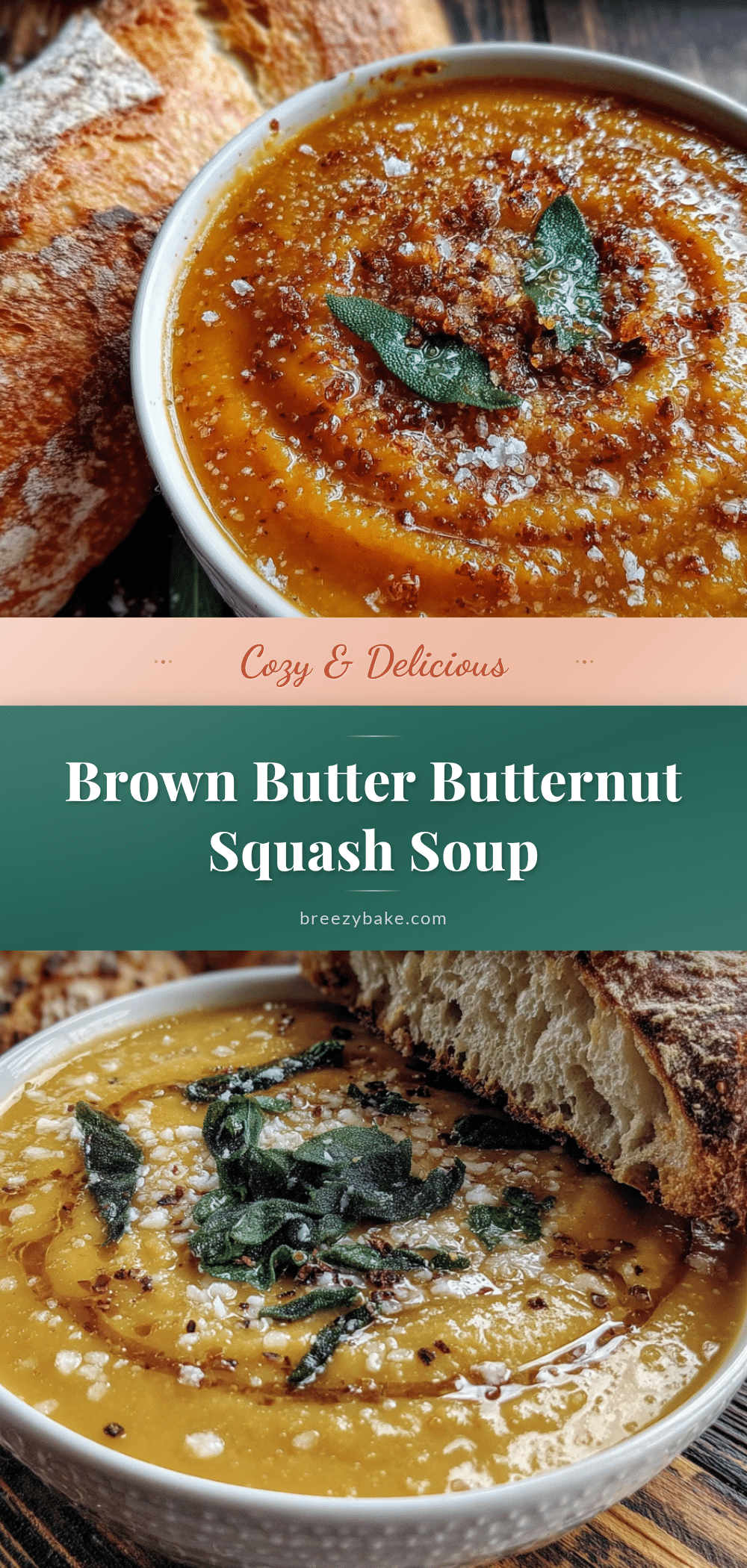
Cozy Roasted Butternut Squash Soup with Brown Butter

A rich, nutty butternut squash soup made with roasted squash and brown butter. This creamy, savory soup is naturally gluten-free and vegetarian, perfect for chilly evenings.
- Prep Time: 15 minutes
- Cook Time: 45 minutes
- Total Time: 1 hour
- Yield: 6 servings 1x
- Category: Soup
- Cuisine: American
Ingredients
- 1 large butternut squash (about 3 pounds), peeled, seeded, and cubed
- 4 tablespoons unsalted butter
- 1 medium yellow onion, diced
- 3 cloves garlic, smashed
- 4 cups low-sodium chicken or vegetable broth
- 1 teaspoon fresh sage, chopped (plus more for garnish)
- ½ teaspoon ground nutmeg
- Salt and freshly ground black pepper to taste
- Optional: ¼ cup heavy cream or coconut milk
Instructions
- Preheat your oven to 400°F (200°C). Cut off both ends of the squash, slice in half where the neck meets the bulb, peel, and cut into 1-inch cubes.
- Toss the cubed squash with 2 tablespoons of olive oil and a generous pinch of salt. Spread in a single layer on a lined baking sheet. Roast for 30-35 minutes, flipping halfway, until caramelized and fork-tender.
- While the squash roasts, melt 1 tablespoon of butter in a large pot over medium heat. Add the diced onion and a pinch of salt, cook for 6-8 minutes until translucent. Add the smashed garlic and cook for 1 minute until fragrant.
- Deglaze the pot with about ½ cup of broth, scraping up browned bits. Add the remaining 3½ cups of broth, roasted squash, sage, and nutmeg. Bring to a gentle simmer, then reduce heat to low and cook for 10 minutes.
- While the soup simmers, make the brown butter: In a small saucepan, melt the remaining 3 tablespoons of butter over medium heat. Swirl occasionally until the butter foams, then the foam subsides and brown specks form at the bottom (about 3-4 minutes). Remove from heat immediately and pour into a heat-safe bowl.
- Remove the garlic cloves from the soup if desired. Blend the soup until smooth using an immersion blender or countertop blender (in batches).
- Stir in the brown butter, reserving a tablespoon or two for drizzling. Taste and adjust seasoning with salt and pepper.
- Ladle into bowls, drizzle with reserved brown butter, and garnish with fresh sage leaves and black pepper. Serve immediately.
Notes
Don’t skip roasting the squash—it concentrates the sugars and adds depth. Watch the brown butter carefully as it can burn quickly. Use low-sodium broth to control salt levels. Let the soup rest for 5-10 minutes after blending for best flavor. The soup keeps in the fridge for up to 5 days and freezes well for up to 3 months.
Nutrition
- Serving Size: 1 bowl (about 1.5 cu
- Calories: 220
- Sugar: 8
- Sodium: 480
- Fat: 12
- Saturated Fat: 7
- Carbohydrates: 28
- Fiber: 5
- Protein: 4
Keywords: butternut squash soup, brown butter, roasted squash, fall soup, gluten-free soup, vegetarian soup, cozy soup