The velvety smoothness of this sauce, clinging to every nook and cranny of the pasta, is what I made this for. Honestly, everything else is secondary. When you take a bite, there’s this initial hit of pure, creamy comfort, and then a subtle, sweet earthiness from the butternut squash sneaks in. It’s not a loud, overpowering flavor, more like a quiet hum in the background that makes the whole thing feel, I don’t know, more adult than your average boxed mac.
I first stumbled onto this idea a few falls ago, staring at a sad, lonely butternut squash on my counter. I had a serious mac and cheese craving, but the idea of a heavy, all-dairy sauce felt a little too much for a Tuesday night. So, I roasted that squash, tossed it into the blender with some milk and cheese, and crossed my fingers. The result was so much better than I expected.
It was creamy, but not gluey. Cheesy, but not greasy. And the color? That brilliant, golden-orange hue made the whole bowl look like it was glowing from the inside out. I knew I had stumbled onto something that would stick in my regular dinner rotation. It’s the kind of recipe that feels a bit sneaky—getting a serving of vegetables into a dish that tastes like pure indulgence.
Why You’ll Love This Recipe
This isn’t just another mac and cheese recipe. It’s the one you’ll turn to when you want something deeply satisfying but don’t want to spend hours in the kitchen. It’s a dish that delivers on every level.
- Weeknight Wonder: Comes together in about 45 minutes, most of which is hands-off roasting time. Perfect for those nights when you need dinner on the table without a fuss.
- Simple Pantry Ingredients: No need for a special trip to the store. You probably already have the pasta, cheese, and milk. The butternut squash is the star, and it’s easy to find in the fall and winter.
- Perfect for Cozy Nights: This is your ultimate comfort food for a chilly evening, a lazy Sunday, or a holiday side dish that will outshine the turkey.
- Kid-Approved and Parent-Praised: The creamy, cheesy flavor is a total crowd-pleaser. Kids gobble it up without realizing they’re eating a vegetable. It’s a win-win for everyone at the table.
- Unbelievably Creamy Texture: The secret is in the squash. It blends into the cheese sauce, creating a silky, luscious texture that’s impossible to get with just milk and cheese alone. It’s the kind of creamy that makes you close your eyes after the first bite.
What sets this recipe apart is that it’s not just another version of mac and cheese. It’s the best version. The roasted butternut squash adds a natural sweetness and a velvety body that you just can’t replicate with a can of pumpkin or a roux. It’s comfort food reimagined—healthier, faster, but with the same soul-soothing satisfaction. Perfect for impressing guests without stress, or turning a simple meal into something memorable.
What Ingredients You Will Need
This recipe uses simple, wholesome ingredients to deliver bold flavor and satisfying texture without the fuss. Most of these are pantry staples, making it an easy choice for a last-minute meal.
- For the Roasted Butternut Squash:
- 1 medium butternut squash (about 2.5 pounds), peeled, seeded, and cubed into 1-inch pieces. (Look for one that feels heavy for its size and has a matte, not shiny, skin. This is your base for that incredible creamy texture.)
- 1 tablespoon olive oil (helps the squash caramelize and get sweet and tender).
- ½ teaspoon salt and ¼ teaspoon black pepper (for seasoning).
- For the Creamy Cheese Sauce:
- 2 tablespoons unsalted butter (I prefer Kerrygold for its rich flavor).
- 2 tablespoons all-purpose flour (this helps thicken the sauce).
- 2 cups whole milk (adds richness; you can use 2% but it won’t be as creamy).
- 1 cup heavy cream (for that extra-luxurious feel).
- 2 cups sharp cheddar cheese, shredded (the sharper, the better for flavor. I recommend Tillamook or Cabot).
- 1 cup Gruyère cheese, shredded (adds a nutty, melt-in-your-mouth quality. If you can’t find it, use more cheddar).
- ½ cup grated Parmesan cheese (adds a salty, savory kick).
- 1 teaspoon Dijon mustard (trust me on this—it cuts the richness and brightens the whole dish).
- ½ teaspoon garlic powder.
- ¼ teaspoon nutmeg (a pinch of warmth that goes beautifully with the squash).
- Salt and pepper to taste.
- For the Pasta:
- 1 pound (16 ounces) elbow macaroni or cavatappi. Cavatappi is my favorite because the ridges hold onto all that creamy sauce perfectly.
- For the Topping (Optional but Recommended):
- ½ cup panko breadcrumbs (for a crispy, golden crust).
- 2 tablespoons melted butter (to mix with the panko).
- ¼ cup grated Parmesan cheese (to mix with the panko).
Substitution Guidance: If you’re looking to lighten things up, you can swap the heavy cream for an additional ½ cup of milk and ½ cup of Greek yogurt (add it at the end to avoid curdling). For a gluten-free version, use gluten-free pasta and a 1:1 gluten-free flour blend in the roux. If you’re dairy-free, use plant-based butter, oat milk, and your favorite dairy-free shredded cheese, but know the texture will be a bit different.
Equipment Needed
- Baking Sheet: For roasting the butternut squash. A rimmed baking sheet is best to catch any juices.
- Large Pot: For boiling the pasta. You’ll need a 5-6 quart pot.
- Large, Oven-Safe Skillet or Dutch Oven: This is where the magic happens. A 12-inch cast-iron skillet is perfect for making the sauce and then baking the whole thing. A 5-quart Dutch oven works great too.
- Food Processor or Blender: To puree the roasted squash into a silky smooth paste. A high-speed blender like a Vitamix gives the best texture, but a regular blender or immersion blender will work.
- Wooden Spoon or Silicone Spatula: For stirring the roux and sauce without scratching your cookware.
- Box Grater or Food Processor with Grating Disc: For shredding your cheese. Pre-shredded cheese has anti-caking agents that prevent it from melting smoothly, so grating your own is a must.
- Colander: For draining the pasta.
Preparation Method
- Roast the Squash (25-30 minutes): Preheat your oven to 400°F (200°C). Toss the cubed butternut squash with the olive oil, salt, and pepper on your baking sheet. Spread it out in a single layer. Roast for 25-30 minutes, flipping halfway through, until the squash is fork-tender and the edges are lightly caramelized. The smell in your kitchen will be incredible—sweet and nutty.
- Cook the Pasta (8-10 minutes): While the squash roasts, bring a large pot of generously salted water to a rolling boil. Add your pasta and cook it according to the package directions until it’s al dente. You want it to have a little bite because it will continue cooking in the sauce and under the broiler. Drain it in a colander and set it aside. Don’t rinse it—you want that starch to help the sauce stick.
- Puree the Squash (5 minutes): Once the squash is done, let it cool for a few minutes. Transfer the roasted squash to your blender or food processor. Add about ½ cup of the milk and blend until completely smooth and velvety. You might need to scrape down the sides once or twice. Set this aside.
- Make the Roux (5 minutes): In your large oven-safe skillet or Dutch oven, melt the 2 tablespoons of butter over medium heat. Once it’s bubbling, whisk in the 2 tablespoons of flour. Cook, stirring constantly, for about 1-2 minutes. You’re looking for a paste that smells a little nutty and has turned a very light golden color. Don’t let it brown too much.
- Build the Sauce (5 minutes): Slowly pour in the remaining milk and the heavy cream, whisking constantly to prevent lumps. Continue whisking until the mixture thickens slightly, about 3-4 minutes. It should be thick enough to coat the back of a spoon.
- Add the Cheese and Squash (5 minutes): Reduce the heat to low. Add the shredded cheddar, Gruyère, and Parmesan cheese, a handful at a time, stirring until each handful is fully melted before adding the next. This prevents the sauce from becoming grainy. Stir in the Dijon mustard, garlic powder, and nutmeg. Finally, fold in the smooth butternut squash puree until everything is a beautiful, uniform orange. Taste it and add salt and pepper as needed. This is where you adjust the seasoning.
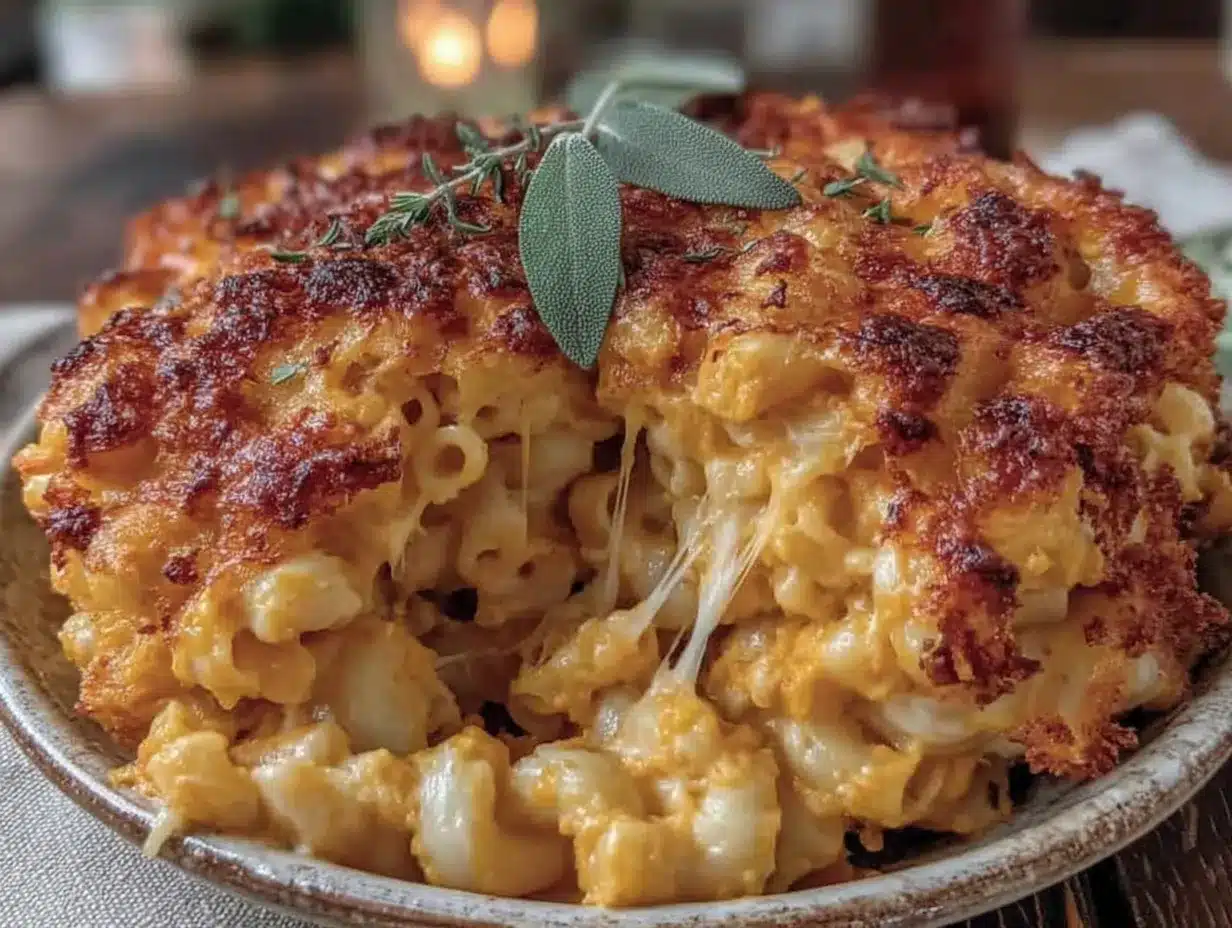
- Combine and Bake (15-20 minutes): Preheat your oven to 375°F (190°C). Add the cooked pasta to the cheese sauce and stir until every piece is coated. If you’re using a topping, mix the panko, melted butter, and Parmesan in a small bowl. Sprinkle it evenly over the top of the mac and cheese. Bake for 15-20 minutes, until the sauce is bubbly and the topping is golden brown. If you want an extra-crispy topping, you can switch the oven to broil for the last 2-3 minutes, but watch it closely so it doesn’t burn.
- Rest and Serve (5 minutes): Let the mac and cheese rest for at least 5 minutes before serving. This allows the sauce to set up a little so it’s not runny. Scoop it into bowls and enjoy the look of that perfect, creamy, cheesy pull.
Cooking Tips & Techniques
I’ve made this recipe so many times that I’ve learned a few things the hard way. Here’s what I wish I knew from the start.
Don’t Skip Roasting the Squash: I know it’s tempting to just boil the squash to save time, but roasting is non-negotiable. It concentrates the natural sugars and gives you that deep, caramelized flavor that makes the sauce so special. Boiling will just make it watery and bland.
Grate Your Own Cheese: This is the single biggest mistake people make with mac and cheese. Pre-shredded cheese is coated in cellulose and starches to keep it from clumping, which also means it won’t melt into a smooth sauce. You’ll end up with a gritty texture. Spend the 3 minutes grating a block of cheese—it’s worth it.
Low and Slow for the Cheese: When you’re melting the cheese into the sauce, keep the heat on low. If the heat is too high, the proteins in the cheese will seize up and you’ll get a grainy, separated sauce. Patience is your friend here.
The Mustard is Not Optional: I know it sounds weird, but a little bit of Dijon mustard does two things. First, it adds a tiny tang that cuts through the richness. Second, it helps stabilize the cheese sauce, making it less likely to break. You won’t taste it, I promise.
Undercook the Pasta: Remember that your pasta will spend 15-20 minutes in the oven. If you cook it all the way to al dente on the stovetop, it will be mushy after baking. Aim for just under al dente—it should still have a firm white core when you bite into it.
I once forgot to add the squash puree until after I’d already poured the pasta into the baking dish. I had to stir it in carefully, and it wasn’t as evenly distributed as it should have been. Learn from my mistake—mix it into the sauce in the pot first.
Variations & Adaptations
This recipe is a fantastic base for experimenting. Here are a few ways I’ve twisted it up depending on my mood or what I have on hand.
- Spicy Chipotle Version: Add 1-2 chipotle peppers in adobo sauce (minced) to the sauce along with the cheese. The smoky heat is a fantastic counterpoint to the sweet squash. I made this for a game day gathering once, and it disappeared faster than the crispy Super Bowl chicken nacho crust pizza I also brought!
- Add Some Protein: Stir in 2 cups of shredded rotisserie chicken or crispy bacon bits right before baking. It turns this side dish into a full, satisfying meal. The salty, smoky bacon is a classic pairing with the creamy squash.
- Make it a Casserole: Layer half the pasta in the dish, add a cup of steamed broccoli florets, and then top with the remaining pasta and cheese. It’s a great way to sneak in more greens, and it reminds me of a crispy loaded bacon mac and cheese casserole, but with a healthier twist.
- Herb Infusion: Stir in 2 tablespoons of fresh chopped sage or thyme into the sauce along with the squash. The earthy herbs are a natural fit with the butternut squash and make the dish feel extra special for the holidays.
- Vegan Adaptation: Use a high-quality vegan butter, oat milk for the creaminess, and your favorite shredded vegan cheddar. The squash will still provide that velvety texture. Nutritional yeast (about 2 tablespoons) can help replicate that cheesy, umami flavor.
Serving & Storage Suggestions
This mac and cheese is best served hot, straight from the oven, when the sauce is at its creamiest and the topping is perfectly crisp. Let it rest for 5 minutes first so it’s not a molten puddle on your plate.
It’s a fantastic side dish for roasted chicken, pork chops, or a simple green salad. I love it alongside a healthy chicken veggie skillet wrap for a balanced but comforting dinner. For a festive touch, serve it in a large, warm cast-iron skillet at the table.
Storage: Leftovers can be stored in an airtight container in the refrigerator for up to 4 days. The pasta will absorb some of the sauce as it sits, so it won’t be quite as saucy the next day, but the flavor will be even better.
Reheating: The best way to reheat it is in the oven at 350°F (175°C) for 15-20 minutes, or until warmed through. You can add a splash of milk on top before reheating to restore some creaminess. The microwave works in a pinch, but it can make the pasta a little soft. If you’re using the microwave, heat it in 30-second bursts, stirring in between, and add a little milk.
Freezing: You can freeze this mac and cheese before baking. Assemble it completely, but don’t add the topping. Cover it tightly with foil and freeze for up to 3 months. When you’re ready to bake, thaw it in the refrigerator overnight, add the topping, and bake as directed, adding about 10-15 minutes to the baking time since it will be cold.
Nutritional Information & Benefits
This recipe is a great way to enjoy a classic comfort food with a hidden nutritional boost. The butternut squash is packed with Vitamin A (great for your eyes and immune system), fiber, and potassium. The calcium from the cheese is excellent for bone health.
Here is an approximate nutritional breakdown per serving (based on 8 servings):
| Nutrient | Amount per Serving |
|---|---|
| Calories | 580 |
| Total Fat | 32g |
| Saturated Fat | 19g |
| Cholesterol | 95mg |
| Sodium | 720mg |
| Total Carbohydrates | 52g |
| Dietary Fiber | 4g |
| Sugars | 8g |
| Protein | 24g |
| Vitamin A | 180% DV |
| Calcium | 45% DV |
(Note: These values are estimates and will vary based on specific ingredients and portion sizes.)
I love that this dish lets me feel good about serving a hearty, satisfying meal. It’s not “diet food,” but it’s a smarter way to indulge, getting a serving of veggies into a dish that tastes like pure decadence.
Conclusion
This Creamy Cheesy Butternut Squash Mac and Cheese is more than just a recipe; it’s a little trick you’ll keep up your sleeve. It’s the kind of dish that makes you feel clever—you get all the gooey, cheesy satisfaction of the classic, but with a velvety, rich sauce that has a secret heart of roasted squash.
I love how versatile it is. You can keep it simple for a weeknight dinner or dress it up with a crispy topping and fresh herbs for a holiday table. It’s forgiving, it’s delicious, and it always, always gets eaten. Whether you’re making it for a crowd or just for yourself on a quiet Tuesday, I hope it brings you the same cozy comfort it brings me.
Go ahead and make it your own—throw in some bacon, a pinch of cayenne, or a handful of spinach. I’d love to hear how it turns out for you! Drop a comment below and let me know what twist you added, or share a photo of your creation. Happy cooking!
Frequently Asked Questions
Can I use pre-cut butternut squash from the store?
Absolutely! Pre-cut squash is a huge time-saver. Just make sure the cubes are roughly the same size (about 1-inch) so they roast evenly. You’ll need about 4-5 cups of pre-cut cubes for this recipe.
Why did my cheese sauce turn out grainy?
This usually happens for two reasons. First, you might have used pre-shredded cheese, which has anti-caking agents. Second, your heat was too high when melting the cheese. Always use freshly grated cheese and melt it over low heat, stirring constantly.
Can I make this recipe without heavy cream?
Yes! You can substitute the heavy cream with an equal amount of whole milk for a lighter sauce. The sauce won’t be quite as thick or luxurious, but it will still be very creamy thanks to the butternut squash puree. You can also use half-and-half for a middle ground.
How do I know when the butternut squash is done roasting?
The squash is ready when you can easily pierce it with a fork or a paring knife. The edges should be lightly browned and caramelized. It should be soft all the way through, with no hard spots. Don’t under-roast it, or your sauce won’t be as smooth.
Can I skip the baking step and just serve it stovetop?
Definitely. If you want a quicker version, you can skip the baking and the topping. Just combine the cooked pasta with the sauce in the pot and stir until it’s all warmed through. It will be a saucier, more stovetop-style mac and cheese, and it’s ready in minutes.
Pin This Recipe!
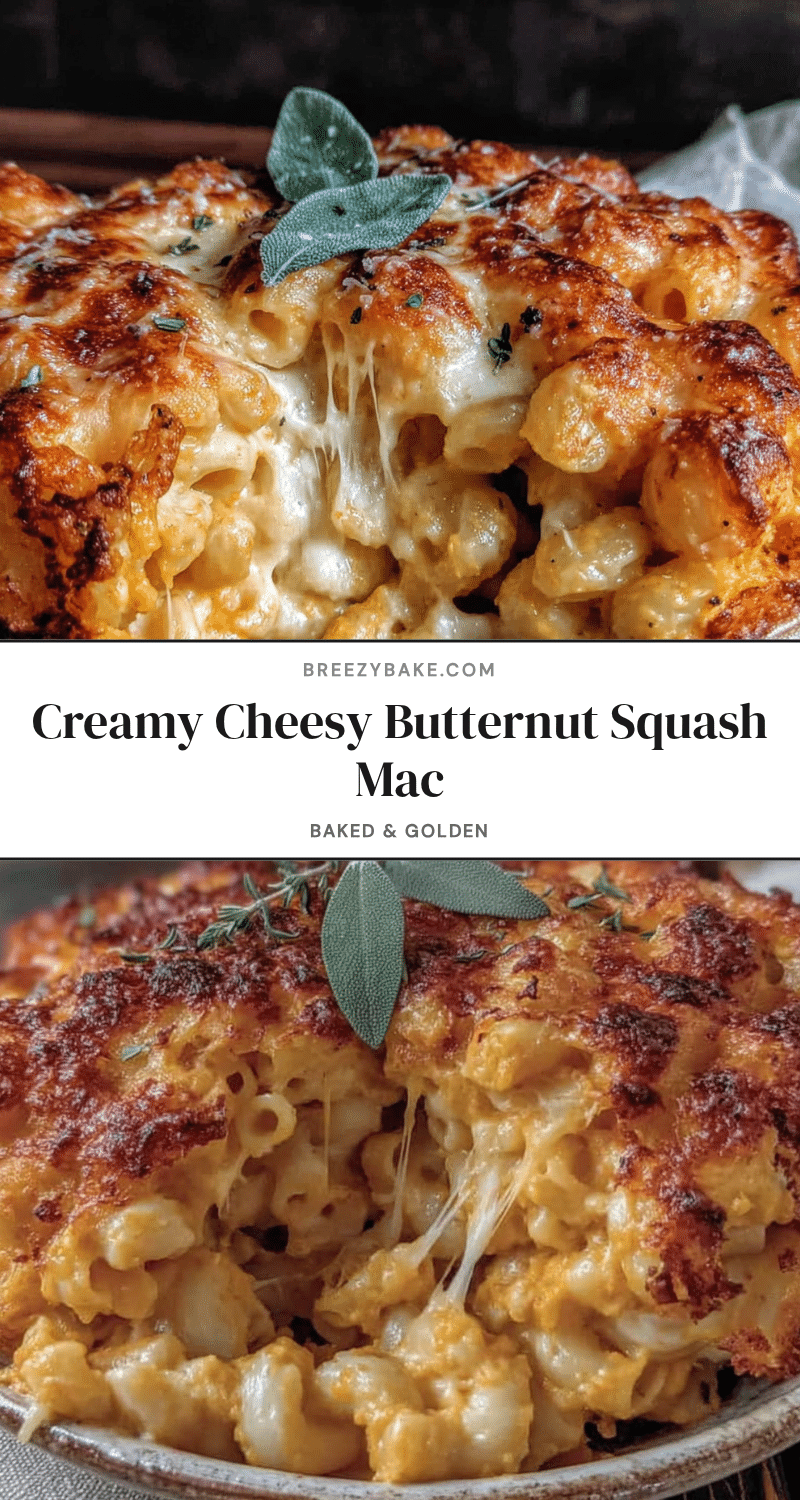
Creamy Cheesy Butternut Squash Mac and Cheese – Best Easy Recipe

The velvety smoothness of this sauce, clinging to every nook and cranny of the pasta, is what I made this for. Honestly, everything else is secondary. When you take a bite, there’s this initial hit of pure, creamy comfort, and then a subtle, sweet earthiness from the butternut squash sneaks in.
- Prep Time: 15 minutes
- Cook Time: 45 minutes
- Total Time: 1 hour
- Yield: 8 servings 1x
- Category: Main Course
- Cuisine: American
Ingredients
- 1 medium butternut squash (about 2.5 pounds), peeled, seeded, and cubed into 1-inch pieces
- 1 tablespoon olive oil
- ½ teaspoon salt
- ¼ teaspoon black pepper
- 2 tablespoons unsalted butter
- 2 tablespoons all-purpose flour
- 2 cups whole milk
- 1 cup heavy cream
- 2 cups sharp cheddar cheese, shredded
- 1 cup Gruyère cheese, shredded
- ½ cup grated Parmesan cheese
- 1 teaspoon Dijon mustard
- ½ teaspoon garlic powder
- ¼ teaspoon nutmeg
- Salt and pepper to taste
- 1 pound (16 ounces) elbow macaroni or cavatappi
- ½ cup panko breadcrumbs (optional)
- 2 tablespoons melted butter (optional, for topping)
- ¼ cup grated Parmesan cheese (optional, for topping)
Instructions
- Preheat your oven to 400°F (200°C). Toss the cubed butternut squash with the olive oil, salt, and pepper on your baking sheet. Spread it out in a single layer. Roast for 25-30 minutes, flipping halfway through, until the squash is fork-tender and the edges are lightly caramelized.
- While the squash roasts, bring a large pot of generously salted water to a rolling boil. Add your pasta and cook it according to the package directions until it’s al dente. Drain it in a colander and set it aside. Don’t rinse it.
- Once the squash is done, let it cool for a few minutes. Transfer the roasted squash to your blender or food processor. Add about ½ cup of the milk and blend until completely smooth and velvety. Set this aside.
- In your large oven-safe skillet or Dutch oven, melt the 2 tablespoons of butter over medium heat. Once it’s bubbling, whisk in the 2 tablespoons of flour. Cook, stirring constantly, for about 1-2 minutes until the paste smells nutty and turns a very light golden color.
- Slowly pour in the remaining milk and the heavy cream, whisking constantly to prevent lumps. Continue whisking until the mixture thickens slightly, about 3-4 minutes. It should be thick enough to coat the back of a spoon.
- Reduce the heat to low. Add the shredded cheddar, Gruyère, and Parmesan cheese, a handful at a time, stirring until each handful is fully melted before adding the next. Stir in the Dijon mustard, garlic powder, and nutmeg. Finally, fold in the smooth butternut squash puree until everything is a beautiful, uniform orange. Taste it and add salt and pepper as needed.
- Preheat your oven to 375°F (190°C). Add the cooked pasta to the cheese sauce and stir until every piece is coated. If you’re using a topping, mix the panko, melted butter, and Parmesan in a small bowl. Sprinkle it evenly over the top of the mac and cheese. Bake for 15-20 minutes, until the sauce is bubbly and the topping is golden brown. If you want an extra-crispy topping, you can switch the oven to broil for the last 2-3 minutes, but watch it closely.
- Let the mac and cheese rest for at least 5 minutes before serving. This allows the sauce to set up a little so it’s not runny.
Notes
Don’t skip roasting the squash; it concentrates the natural sugars. Grate your own cheese for a smooth sauce. Keep heat low when melting cheese to avoid graininess. Dijon mustard is not optional—it adds tang and stabilizes the sauce. Undercook the pasta slightly as it will continue cooking in the oven. Let the dish rest for 5 minutes before serving to allow the sauce to set.
Nutrition
- Serving Size: 1 serving
- Calories: 580
- Sugar: 8
- Sodium: 720
- Fat: 32
- Saturated Fat: 19
- Carbohydrates: 52
- Fiber: 4
- Protein: 24
Keywords: butternut squash mac and cheese, creamy mac and cheese, easy mac and cheese, comfort food, fall recipe, vegetarian mac and cheese