The church potluck was in six hours and I’d completely forgotten. I was standing in my kitchen at 2 PM on a Saturday, staring into the fridge like it would magically produce something impressive. Everyone else would be bringing their grandmother’s famous casseroles, those perfectly layered lasagnas that took all weekend. I had a chuck roast that needed cooking, some sad carrots in the crisper drawer, and a bag of potatoes that were starting to sprout. Not exactly potluck gold.
I grabbed my crockpot out of the back of the cabinet—the one I barely used because I always thought slow cooking was for people with their lives together. I chopped everything in a rush, tossed it in, and prayed. No searing, no fancy prep, just throw it all in and hope for the best. I showed up late with my crockpot under my arm, feeling like I’d brought a microwave dinner to a five-star restaurant.
You know that moment when someone takes a bite and their eyes go wide? That happened. Then it happened again. And again. People were coming back for seconds, asking for the recipe, and I had to admit I’d thrown it together in fifteen minutes because I forgot about the potluck. Honestly, I felt a little sheepish about it. The lady who brought the handmade ravioli looked at me like I’d cheated. Maybe I had. But this easy crockpot beef stew for fall became my go-to that day, and I’ve been making it ever since. It’s the recipe that made me believe simple can be spectacular.
Why You’ll Love This Recipe
Let me tell you why this easy crockpot beef stew for fall is going to change your weeknight cooking game. I’ve tested this recipe more times than I can count, and it’s the one that gets me through the chaos of autumn. It’s not fancy, but it’s honest food that delivers every single time.
- Quick & Easy: Fifteen minutes of prep and your crockpot does the rest. No babysitting, no stirring, no stress. Perfect for those days when you walk in the door starving and need dinner ready now.
- Simple Ingredients: You probably have most of this in your kitchen right now. No trips to specialty stores or hunting down exotic spices. Just good, honest ingredients that work together beautifully.
- Perfect for Weeknights: This is the definition of set-it-and-forget-it. Toss everything in before work, come home to a house that smells like Sunday dinner, and dinner’s ready when you are.
- Crowd-Pleaser: I’ve served this to picky kids, meat-and-potatoes dads, and my vegetarian friend who made an exception. Everyone loves it. The beef gets so tender it falls apart with a fork.
- Unbelievably Delicious: The secret is letting the vegetables and beef meld together for hours. The broth gets rich and silky, the beef melts in your mouth, and the vegetables soak up all that savory goodness. It’s comfort in a bowl.
What makes this different from every other stew recipe out there? It’s the simplicity. No searing the meat first, no deglazing the pan, no complicated layering of ingredients. I’ve made it with the searing step, and honestly? The extra effort doesn’t make enough difference to justify the mess. This version lets the slow cooker work its magic, and the results are just as good—maybe better because you’re not stressed out before dinner even starts.
This isn’t just another stew recipe. It’s the one that makes you close your eyes after the first bite because it tastes like coming home. It’s the kind of meal that makes a Tuesday feel special without requiring any actual effort. When the weather turns cold and you need something warm in your belly, this is the recipe you’ll reach for again and again.
What Ingredients You Will Need
This easy crockpot beef stew for fall uses simple, wholesome ingredients that come together to create something truly special. Most of these are pantry staples, which makes this recipe perfect for those weeks when you haven’t made it to the grocery store.
For the Stew Base
- Beef chuck roast, 2 pounds (900g) — cut into 1-inch cubes. Chuck roast is perfect for slow cooking because it has enough marbling to stay tender. I’ve used stew meat from the store in a pinch, but cutting your own from a roast gives you better control over the size. Look for meat with good fat marbling—that’s where the flavor lives.
- Yellow onions, 2 medium — diced. I prefer yellow onions for stew because they get sweet and mellow as they cook. White onions work too, but they’re a little sharper. Red onions will turn the broth a funny color, so stick with yellow.
- Garlic cloves, 4 — minced. Fresh garlic is non-negotiable here. The jarred stuff just doesn’t have the same punch, and you want that garlic flavor to infuse the whole stew.
- Carrots, 4 large — peeled and cut into 1-inch chunks. I like using whole carrots and cutting them myself because they hold up better than baby carrots. Plus, they’re cheaper. If you’re in a hurry, baby carrots work fine—just know they’ll get a little softer.
- Celery stalks, 3 — sliced into 1/2-inch pieces. Celery adds that background flavor that you might not notice until it’s missing. Don’t skip it.
- Potatoes, 3 medium Yukon Gold (about 500g) — cut into 1-inch cubes. Yukon Golds hold their shape better than russets and have a creamier texture. Russets will work, but they tend to get mushy after hours in the crockpot. Red potatoes are also great—they stay firm and have a nice waxy texture.
- Beef broth, 4 cups (950ml) — low sodium if you can find it. I use Better Than Bouillon beef base because it has deeper flavor than boxed broth. Just mix a couple teaspoons with hot water and you’re good to go.
- Tomato paste, 3 tablespoons (45g) — this adds richness and depth to the broth. Don’t skip it—it’s the secret to that deep, savory flavor that makes this stew taste like it cooked all day.
- Worcestershire sauce, 2 tablespoons (30ml) — adds umami and complexity. I’ve used soy sauce in a pinch when I ran out, and it works surprisingly well.
- Dried thyme, 1 teaspoon — thyme and beef are a classic combination. Fresh thyme is even better if you have it—use about 3 sprigs and remove them before serving.
- Dried rosemary, 1/2 teaspoon — go easy on rosemary because it can get overpowering. Crush it between your fingers before adding to release the oils.
- Bay leaves, 2 — remember to fish these out before serving. Nobody wants to bite into a bay leaf.
- Salt and black pepper — to taste. I start with 1 teaspoon of salt and 1/2 teaspoon of pepper, then adjust at the end.
Optional Additions
- Frozen peas, 1 cup (150g) — add these in the last 30 minutes of cooking. They add a pop of color and sweetness.
- Cornstarch slurry, 2 tablespoons cornstarch mixed with 2 tablespoons cold water — if you want a thicker broth, stir this in during the last 30 minutes.
- Red wine, 1/2 cup (120ml) — replace half a cup of broth with red wine for extra depth. Use something you’d actually drink, not cooking wine.
Ingredient Selection Tips: I’ve learned the hard way that not all beef stew meat is created equal. If you’re buying pre-cut stew meat, look for pieces that have some fat marbling. Lean cuts like sirloin will dry out and get tough. For vegetables, firmer is better—limp carrots and soft potatoes will turn to mush. And please, please use real potatoes, not the frozen hash brown kind. I tried that once when I was desperate, and it was a texture disaster.
Substitution Guidance: If you’re gluten-free, make sure your Worcestershire sauce and beef broth are certified gluten-free. For a dairy-free version, this recipe is already dairy-free as written. If you want to add more vegetables, parsnips and turnips work beautifully in this stew—just cut them the same size as the potatoes so they cook evenly.
Equipment Needed
You don’t need a fancy kitchen to make this easy crockpot beef stew for fall. Here’s what you’ll actually use:
- Crockpot or slow cooker (5-6 quart recommended) — this is the star of the show. I use a 6-quart Crock-Pot brand slow cooker that I got on sale for thirty bucks. It’s nothing fancy, but it gets the job done. If you have a smaller one, just halve the recipe. A larger one works too—the stew will just cook a little faster.
- Sharp chef’s knife — a good knife makes all the difference when you’re chopping vegetables and cutting beef. I use a 8-inch Wusthof that I’ve had for years. If your knife is dull, you’re going to have a bad time.
- Cutting board — preferably one with a groove to catch juices. I use a big wooden one, but plastic is fine too. Just make sure it’s stable so you don’t slip.
- Measuring cups and spoons — for the broth and seasonings. I’m usually a “measure with your heart” kind of cook, but for this stew, getting the liquid ratio right matters.
- Wooden spoon or spatula — for stirring and scraping. Silicone works too, but I prefer wood because it doesn’t scratch the crockpot insert.
- Vegetable peeler — for the carrots. A standard Y-peeler is my favorite because it’s faster than the straight kind.
- Small bowl — for making the cornstarch slurry if you’re using it.
Budget-Friendly Options: Don’t have a crockpot? You can make this in a Dutch oven on the stovetop or in the oven at 300°F for about 3 hours. It won’t be quite as hands-off, but it’ll still be delicious. I’ve also made it in an Instant Pot on the slow cook setting, and it works great. If you’re using an Instant Pot, just leave the lid venting so it doesn’t build pressure.
Maintenance Tip: If your crockpot insert is ceramic, let it cool completely before washing. I cracked one once by rinsing it with cold water while it was still warm. Not a fun lesson to learn.
Preparation Method
Here’s how to make this easy crockpot beef stew for fall. I’ve broken it down step by step so you can’t mess it up.
- Prep your ingredients (15 minutes): Start by cutting your beef chuck roast into 1-inch cubes. Don’t stress about making them perfect—roughly the same size is fine. Season the beef generously with salt and pepper. Peel and chop your onions, mince your garlic, peel and chunk your carrots, slice your celery, and cube your potatoes. I like to do all my chopping first so I can just dump everything in.
- Layer the vegetables (2 minutes): Put the onions, carrots, celery, and potatoes in the bottom of your crockpot. This is important—the vegetables take longer to cook than the beef, so they need to be at the bottom where they’ll get the most heat. Trust me on this one. I used to put the beef on the bottom, and my carrots were always crunchy.
- Add the beef (1 minute): Place the seasoned beef cubes on top of the vegetables. Don’t stir yet. The beef will release some juices as it cooks, and those juices will drip down through the vegetables, flavoring everything.
- Mix the liquid base (3 minutes): In a small bowl or measuring cup, whisk together the beef broth, tomato paste, Worcestershire sauce, dried thyme, dried rosemary, and bay leaves. Make sure the tomato paste is fully dissolved—nobody wants a blob of tomato paste in their stew. If you’re using red wine, replace half a cup of broth with it here.
- Pour it over everything (30 seconds): Pour the liquid mixture over the beef and vegetables. Don’t stir. I know it’s tempting, but leaving everything layered helps the vegetables cook evenly. The liquid should come about three-quarters of the way up the ingredients—if it doesn’t, add a little more broth or water.
- Cook low and slow (6-8 hours on low or 4-5 hours on high): Put the lid on and set your crockpot to low. This is where the magic happens. Cooking on low gives you more tender beef and better-developed flavors. If you’re in a hurry, high will work, but the beef won’t be quite as fork-tender. I always choose low if I have the time.
- Check for doneness (at the 6-hour mark): After about 6 hours on low, check the beef. It should be fall-apart tender when you poke it with a fork. The potatoes should be soft but not mushy. If everything isn’t quite there yet, let it go another hour. Every crockpot runs a little differently—mine tends to run hot, so I start checking at 5 hours.
- Add peas and thicken (last 30 minutes): If you’re using frozen peas, stir them in now. If you want a thicker broth, make a cornstarch slurry by mixing 2 tablespoons of cornstarch with 2 tablespoons of cold water until smooth. Stir it into the stew and let it cook for another 30 minutes. The stew will thicken as it sits, so don’t worry if it looks thin at first.
- Season and serve (2 minutes): Fish out the bay leaves—I always lose count and end up finding one in my bowl later. Taste the broth and adjust salt and pepper as needed. The flavors will have concentrated as the stew cooked, so you might need less salt than you think.
- Rest before serving (10 minutes): Let the stew sit for about 10 minutes before serving. This allows the flavors to settle and the broth to thicken slightly. I know you’re hungry, but this short wait makes a difference.
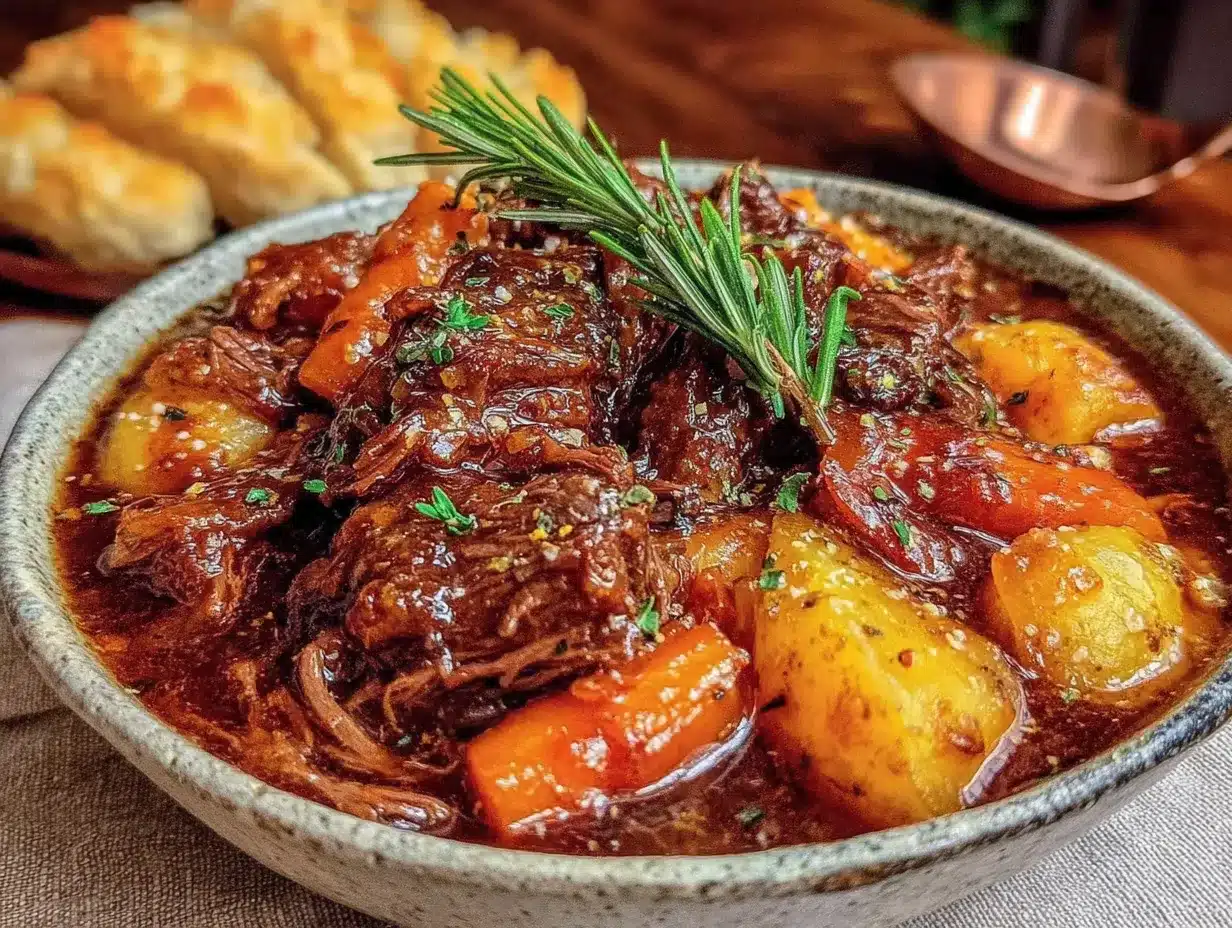
Sensory Cues: Your stew is ready when the broth is rich and dark, the beef shreds with a fork, and the potatoes offer just a little resistance when you bite into them. The smell should be deeply savory with hints of thyme and garlic. If you can smell it from the other room, you’re on the right track.
Troubleshooting: If your stew tastes bland, it probably needs more salt or a splash of Worcestershire sauce. If it’s too salty, add a potato half and let it cook for 30 minutes—the potato will absorb some of the salt. If the broth is too thin, let it cook with the lid off for the last 30 minutes to let some liquid evaporate.
Cooking Tips & Techniques
I’ve made this easy crockpot beef stew for fall more times than I can count, and I’ve learned a few things along the way. Here are my best tips for getting it right every time.
Don’t skip the tomato paste. I know it seems like a small thing, but tomato paste adds a depth of flavor that you just can’t get from anything else. It’s not about making the stew taste like tomatoes—it’s about adding that savory umami richness that makes the broth taste like it cooked all day. If you have time, cook the tomato paste in a pan for a minute before adding it to the broth. It darkens the flavor even more.
Brown the beef if you have 10 extra minutes. I said earlier that you don’t have to sear the beef, and you don’t. But if you have the time, searing the beef in a hot pan before adding it to the crockpot adds a layer of flavor that’s hard to beat. The browned bits on the bottom of the pan—called fond—are pure flavor. Deglaze the pan with a little broth and pour that into the crockpot too. I do this on weekends when I have more time, but on weeknights, I skip it without guilt.
Cut vegetables uniformly. This is the one thing that really matters for texture. If your potatoes are cut into big chunks and your carrots are tiny, the carrots will turn to mush before the potatoes are done. Aim for 1-inch cubes across the board. It doesn’t have to be perfect, but try to keep things roughly the same size.
Resist the urge to peek. Every time you lift that lid, you lose heat and add 20-30 minutes to your cooking time. I know it’s tempting to check on it, but try to wait until at least the 5-hour mark. If you absolutely have to check, do it quickly and put the lid back on.
My biggest failure: The first time I made this stew, I used russet potatoes and they completely disintegrated. I ended up with beef and vegetable soup with potato mush floating around. It still tasted good, but the texture was all wrong. That’s when I learned that Yukon Gold or red potatoes are the way to go for stew. Russets are great for mashed potatoes, but they can’t handle long cooking times.
Timing strategy: If you’re making this for a weeknight dinner, get everything prepped the night before. Chop your vegetables, cut your beef, and store everything in separate containers in the fridge. In the morning, just dump everything in the crockpot and go. I do this every Sunday for Monday night dinner, and it makes Mondays so much easier.
Variations & Adaptations
This easy crockpot beef stew for fall is incredibly flexible. Here are some ways to make it your own.
Low-Carb/Keto Version: Skip the potatoes and add extra vegetables like cauliflower, turnips, or radishes. I’ve made this with cauliflower instead of potatoes, and honestly, it’s almost as good. The cauliflower soaks up all that broth flavor and gets tender without falling apart. Add a little extra celery and carrot to bulk it up. You can also add some mushrooms for texture—they’re practically zero carbs.
Gluten-Free Version: This recipe is naturally gluten-free if you use gluten-free Worcestershire sauce and beef broth. Some Worcestershire sauces contain malt vinegar, which has gluten, so check the label. For thickening, use cornstarch or arrowroot powder instead of flour. I’ve used arrowroot and it works just as well as cornstarch—just make sure you dissolve it in cold water first.
Seasonal Variations: In the fall, I add cubed butternut squash and a chopped apple for a touch of sweetness. In the winter, I swap in parsnips and add a parmesan rind to the broth for extra richness. In the spring, I use fresh herbs instead of dried and add asparagus in the last 30 minutes. The basic recipe is the same—just swap in whatever vegetables are in season.
Spicy Version: Add a chopped chipotle pepper in adobo sauce or a teaspoon of smoked paprika for a smoky kick. I made this for a friend who loves heat, and she added a whole habanero. I tried it and nearly died, but she loved it. Start small and taste as you go.
Herb Swap: If you don’t have thyme and rosemary, try using Italian seasoning or herbes de Provence. They have a similar flavor profile and work beautifully in this stew. I’ve also used fresh sage in the fall—about 4 leaves, chopped—and it gives the stew a cozy, almost Thanksgiving-like flavor.
My favorite variation: I once added a cup of dark beer—a stout or porter—instead of some of the broth. The beer adds a malty richness that’s incredible with the beef. Just be careful not to use an IPA or anything too hoppy, because the bitterness can throw off the flavor. A Guinness or a dark ale works perfectly.
Serving & Storage Suggestions
This stew is best served hot, straight from the crockpot. Ladle it into big bowls and let people add their own toppings.
Serving Temperature: Serve this stew piping hot. The broth should be steaming when it hits the bowl. If it’s cooled down too much, just microwave individual servings for 30 seconds. I like to serve it with a big hunk of crusty bread for dipping—something with a good crust that can handle all that broth. A no-knead crusty bread is perfect for this, and it’s so easy to make.
Toppings: A sprinkle of fresh parsley adds color and freshness. A dollop of sour cream or Greek yogurt adds creaminess. Grated Parmesan cheese is also amazing—it melts into the broth and adds a salty, nutty flavor. I’ve also had readers tell me they add a spoonful of pesto on top, which sounds weird but is actually delicious.
What to Serve With It: A simple green salad with a vinaigrette cuts through the richness of the stew. Roasted Brussels sprouts or a simple roasted vegetable medley would also be great. If you want to keep it simple, just serve it with bread and butter. That’s what I do most nights.
Storage: This stew gets better as it sits. Store leftovers in an airtight container in the refrigerator for up to 4 days. The flavors meld together and deepen overnight, so it’s even better the next day. I actually prefer day-old stew—the broth gets thicker and the flavors get more complex.
Freezing: This stew freezes beautifully. Let it cool completely, then transfer it to freezer-safe containers or zip-top bags. It will keep for up to 3 months. I like to freeze it in individual portions so I can grab one for lunch. When you’re ready to eat, thaw it in the refrigerator overnight and reheat it on the stovetop or in the microwave.
Reheating: The best way to reheat this stew is on the stovetop over medium-low heat, stirring occasionally. If it’s too thick, add a splash of broth or water. You can also reheat it in the microwave in 1-minute intervals, stirring between each. Don’t reheat it more than once—only heat what you’re going to eat.
How Flavors Develop: The first day, this stew is good. The second day, it’s great. The third day, it’s incredible. The beef continues to break down, the vegetables absorb more broth, and the flavors meld together into something truly special. If you can make this a day ahead, do it. Your future self will thank you.
Nutritional Information & Benefits
This easy crockpot beef stew for fall is not just delicious—it’s also packed with nutrients that make it a smart choice for a weeknight dinner.
Estimated Nutritional Values (per serving, based on 6 servings):
- Calories: 385
- Protein: 32g
- Fat: 14g
- Carbohydrates: 28g
- Fiber: 5g
- Sugar: 8g
- Sodium: 680mg (varies based on broth and added salt)
Health Benefits: Beef is an excellent source of protein, iron, and B vitamins, especially B12. The carrots provide beta-carotene, which your body converts to vitamin A for eye health. Potatoes give you potassium and vitamin C, and celery adds fiber and antioxidants. This is a complete meal in a bowl—protein, vegetables, and carbohydrates all in one dish.
Dietary Considerations: This recipe is naturally dairy-free and nut-free. It can be made gluten-free with simple substitutions. It’s also relatively low in sugar—most of the sweetness comes from the carrots and the natural sugars in the broth.
Potential Allergens: The Worcestershire sauce typically contains anchovies, so if you have a fish allergy, use a vegan Worcestershire sauce or substitute with soy sauce and a splash of vinegar. The beef broth may contain soy or gluten depending on the brand.
My Personal Take: I love that this stew makes me feel good about what I’m eating. It’s real food—no processed ingredients, no hidden additives. When I serve this to my family, I know they’re getting a meal that’s nourishing and satisfying. And honestly, knowing that it’s good for us makes it taste even better.
Conclusion
This easy crockpot beef stew for fall has become my secret weapon for busy weeknights. It’s the recipe I turn to when I need something comforting, nourishing, and completely foolproof. The best part? It makes me look like I spent hours in the kitchen when really, I just threw everything in a pot and walked away.
I love that this recipe is forgiving enough for beginners but satisfying enough for experienced cooks. You can make it exactly as written, or you can tweak it to suit your tastes. Add more vegetables, swap in different herbs, make it spicy or mild—it’s your stew now. That’s the beauty of a good base recipe.
If you try this recipe, I’d love to hear about it. Did you add something unexpected? Did your kids go back for seconds? Did you forget the bay leaves and wonder why it tasted different? (I’ve done that too.) Leave a comment below and let me know how it turned out. And if you have a favorite variation, please share it—I’m always looking for new ways to make this stew even better.
Here’s to cozy fall evenings, full bellies, and recipes that make life a little easier. Happy cooking, friends.
Frequently Asked Questions
Can I use a different cut of beef for this stew?
Absolutely. While chuck roast is my top pick for its tenderness and flavor, you can also use bottom round, brisket, or even stew meat from the store. Just avoid lean cuts like sirloin or top round—they’ll get tough and dry after hours of cooking. If you’re using a tougher cut, cook it on low for the full 8 hours to give it time to break down.
Can I make this stew in an Instant Pot?
Yes, you can! Use the slow cook function on your Instant Pot for the same hands-off experience. Set it to low for 6-8 hours with the lid venting. If you want to pressure cook instead, cook on high pressure for 35 minutes with a natural release. The texture will be slightly different—the vegetables will be softer and the broth won’t be as rich—but it’s still delicious.
Why is my stew broth thin?
Thin broth usually means there’s too much liquid or you haven’t cooked it long enough. Next time, try using less broth—start with 3 cups instead of 4. You can also thicken it with a cornstarch slurry at the end, or let it cook with the lid off for the last 30 minutes to let some liquid evaporate. The stew will also thicken as it sits, so don’t worry if it looks thin when it’s hot.
Can I add other vegetables to this stew?
Definitely. This recipe is very adaptable. Try adding parsnips, turnips, mushrooms, bell peppers, or butternut squash. Just keep the total amount of vegetables the same so you don’t throw off the liquid ratio. Add delicate vegetables like peas or green beans in the last 30 minutes so they don’t turn to mush.
How do I prevent my potatoes from turning to mush?
Use waxy potatoes like Yukon Gold or red potatoes instead of russets. Cut them into larger chunks—about 1.5 inches instead of 1 inch—so they hold up better. And don’t stir the stew too much during cooking, because that can break up the potatoes. If you’re cooking on high, check them early because they’ll cook faster than on low.
Pin This Recipe!
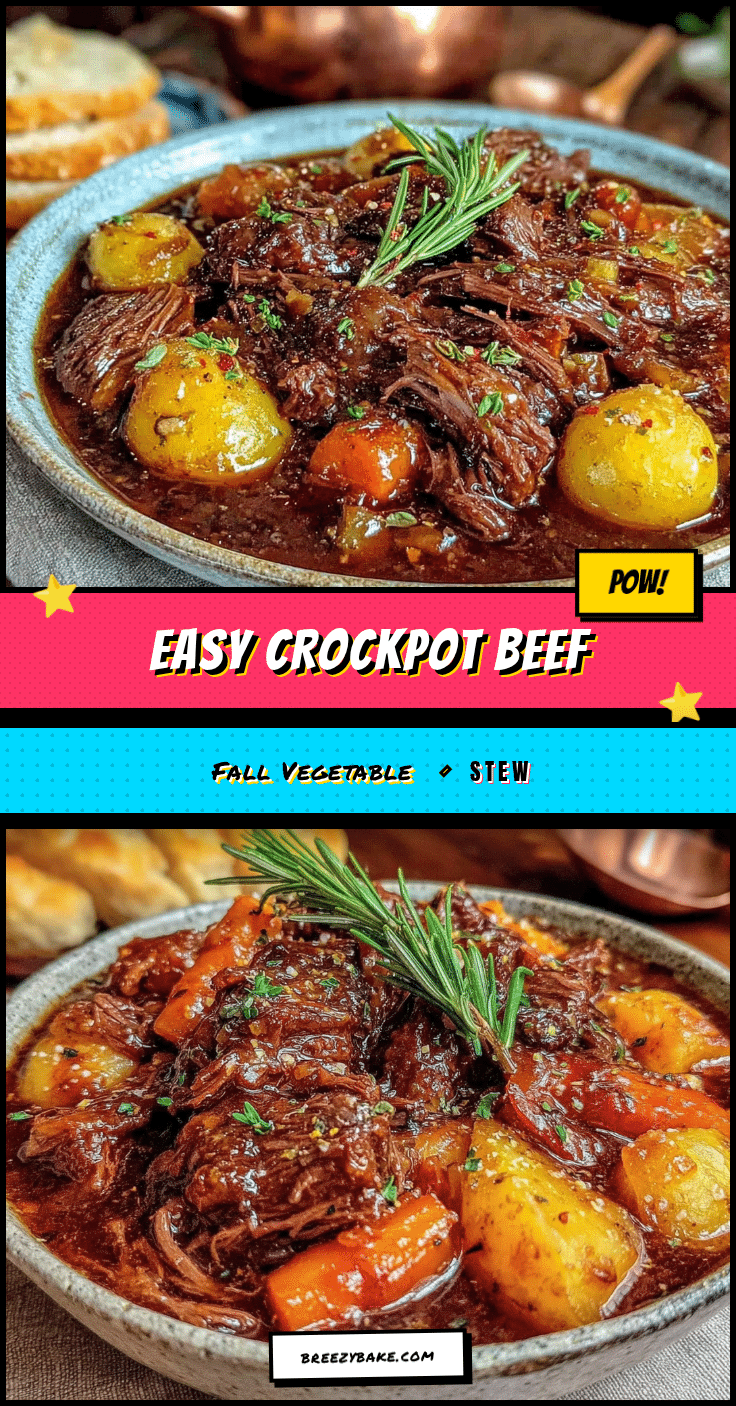
Easy Crockpot Beef Stew for Fall
A simple, set-it-and-forget-it beef stew made in the crockpot with tender chuck roast, hearty vegetables, and a rich savory broth. Perfect for busy weeknights and fall comfort food cravings.
- Prep Time: 15 minutes
- Cook Time: 6 hours
- Total Time: 6 hours 15 minutes
- Yield: 6 servings 1x
- Category: Main Course
- Cuisine: American
Ingredients
- 2 pounds (900g) beef chuck roast, cut into 1-inch cubes
- 2 medium yellow onions, diced
- 4 garlic cloves, minced
- 4 large carrots, peeled and cut into 1-inch chunks
- 3 celery stalks, sliced into 1/2-inch pieces
- 3 medium Yukon Gold potatoes (about 500g), cut into 1-inch cubes
- 4 cups (950ml) low-sodium beef broth
- 3 tablespoons (45g) tomato paste
- 2 tablespoons (30ml) Worcestershire sauce
- 1 teaspoon dried thyme
- 1/2 teaspoon dried rosemary
- 2 bay leaves
- Salt and black pepper to taste
- 1 cup (150g) frozen peas (optional)
- 2 tablespoons cornstarch mixed with 2 tablespoons cold water (optional, for thickening)
- 1/2 cup (120ml) red wine (optional, replace 1/2 cup broth)
Instructions
- Prep your ingredients (15 minutes): Cut beef chuck roast into 1-inch cubes. Season generously with salt and pepper. Peel and chop onions, mince garlic, peel and chunk carrots, slice celery, and cube potatoes.
- Layer the vegetables (2 minutes): Place onions, carrots, celery, and potatoes in the bottom of the crockpot.
- Add the beef (1 minute): Place seasoned beef cubes on top of the vegetables. Do not stir.
- Mix the liquid base (3 minutes): In a small bowl, whisk together beef broth, tomato paste, Worcestershire sauce, dried thyme, dried rosemary, and bay leaves until tomato paste is dissolved. If using red wine, replace 1/2 cup broth with it.
- Pour it over everything (30 seconds): Pour the liquid mixture over the beef and vegetables. Do not stir. Liquid should come about three-quarters of the way up the ingredients; add more broth or water if needed.
- Cook low and slow (6-8 hours on low or 4-5 hours on high): Cover and cook on low for 6-8 hours or on high for 4-5 hours.
- Check for doneness (at the 6-hour mark): Beef should be fall-apart tender; potatoes should be soft but not mushy. Cook longer if needed.
- Add peas and thicken (last 30 minutes): If using frozen peas, stir them in. For thicker broth, stir in cornstarch slurry and cook for 30 more minutes.
- Season and serve (2 minutes): Remove bay leaves. Taste and adjust salt and pepper as needed.
- Rest before serving (10 minutes): Let stew sit for 10 minutes before serving to allow flavors to settle and broth to thicken slightly.
Notes
For best results, use Yukon Gold or red potatoes to avoid mushiness. Searing the beef before adding adds extra flavor but is optional. Stew thickens as it sits; add cornstarch slurry if desired. Leftovers keep for up to 4 days in the fridge or 3 months in the freezer.
Nutrition
- Serving Size: 1 serving (about 1.5
- Calories: 385
- Sugar: 8
- Sodium: 680
- Fat: 14
- Saturated Fat: 5
- Carbohydrates: 28
- Fiber: 5
- Protein: 32
Keywords: crockpot beef stew, easy beef stew, fall stew, slow cooker beef stew, comfort food, weeknight dinner