I was at a hardware store. Not a farmers market, not a cooking class, not even a grocery store. I was holding a paint swatch and trying to decide between “Dried Thyme” and “Sage Wisdom” when the man next to me, a retired electrician named Frank who smelled faintly of sawdust and coffee, started telling me about his Thanksgiving mashed potatoes. “The secret,” he said, not looking up from his own paint chips, “is cream cheese. And you make ’em the day before.”
I almost laughed. I mean, I’d spent years perfecting my holiday mashed potatoes. Butter, heavy cream, a whole head of roasted garlic. They were good. But Frank had this quiet confidence, the kind that comes from feeding a family of seven for forty years. He told me his wife had gotten the recipe from a church cookbook in 1978, and he’d been in charge of the potatoes ever since. “Nobody wants to be boiling potatoes at 11 AM on Thanksgiving,” he said. “That’s crazy talk.”
So I tried it. Honestly, I was skeptical. Cream cheese in mashed potatoes felt like overkill. But that first bite? Let me tell you, I actually apologized to my old recipe out loud. The texture was impossibly smooth, almost velvety, with this subtle tang that cut through the richness. And the fact that I made them on Wednesday and just reheated them on Thursday? That changed everything. Frank was right. Nobody should be boiling potatoes while the turkey rests. Maybe you’ve been there, frantically mashing while guests hover. This recipe is the fix you didn’t know you needed.
Why You’ll Love This Recipe
I’ve tested this recipe at least a dozen times over the past few years, tweaking the ratio of cream cheese to butter, trying different potato varieties, and experimenting with reheating methods. Here is why this version is the one I keep coming back to:
- Stress-Free Holiday Prep: Make these up to two days ahead. Reheat in the oven or slow cooker. No last-minute boiling, draining, or mashing.
- Incredibly Creamy Texture: The cream cheese adds a velvety richness that heavy cream alone just can’t match. Plus it stabilizes the potatoes so they don’t get watery or gluey when reheated.
- Simple Ingredients: Potatoes, butter, cream cheese, milk, salt, pepper. That’s it. No fancy grocery store trips.
- Crowd-Pleaser Approved: I brought these to a Friendsgiving once and three people asked for the recipe before I’d even sat down. Kids love them. Picky eaters love them.
- Freezer-Friendly: You can freeze these for up to a month. They thaw and reheat beautifully, which is a lifesaver for busy weeks.
This isn’t just another mashed potato recipe. It is the one that makes you close your eyes after the first bite. It is comfort food at its finest—rich, satisfying, and somehow even better made ahead. Perfect for when you want to impress without the stress.
What Ingredients You Will Need
This recipe uses simple, honest ingredients. Nothing fussy, nothing hard to find. The magic happens in the ratios and the technique, not in obscure specialty items.
- Russet potatoes (4 pounds, peeled and cut into 2-inch chunks) – Russets are ideal here. They are starchy, which gives you that fluffy, light texture. Yukon Golds work too, but the results will be slightly denser and more buttery.
- Unsalted butter (1/2 cup, or 1 stick, softened) – I use Land O Lakes, but any quality butter works. Softening it first helps it incorporate more smoothly into the hot potatoes.
- Full-fat cream cheese (8 ounces, softened) – This is non-negotiable for the signature texture. I recommend Philadelphia brand for consistent results. Low-fat cream cheese will make the potatoes thinner and less stable.
- Whole milk (1/2 to 3/4 cup, warm) – Warm milk incorporates better than cold milk, which can cool down the potatoes. You can use 2% milk if needed, but whole milk gives the best richness.
- Salt (1 to 1.5 teaspoons, plus more for the boiling water) – I use fine sea salt. Season the boiling water generously—this is your first chance to flavor the potatoes from the inside out.
- Black pepper (1/2 teaspoon, freshly ground) – Freshly ground pepper makes a difference here. Pre-ground pepper tends to taste flat.
- Optional: Garlic powder (1/2 teaspoon) – Not traditional, but I add this when I want a savory depth without the texture of actual garlic bits.
Ingredient Tips: For the fluffiest potatoes, avoid over-mixing. A potato ricer or food mill gives the smoothest texture with the least risk of developing gluey starches. If you don’t have one, a hand masher works fine—just don’t use an electric mixer for too long.
Equipment Needed
You don’t need a professional kitchen to pull this off, but having the right tools makes the process smoother. Here is what you will need:
- Large stockpot (at least 6 quarts) – For boiling the potatoes. Make sure it is big enough to give them room to cook evenly.
- Colander – For draining the cooked potatoes.
- Potato ricer or food mill (optional but recommended) – This gives the smoothest, fluffiest texture. I bought a ricer after my third batch and honestly, I wish I’d done it sooner.
- Hand masher – If you prefer a slightly more rustic texture. I still use this sometimes when I want the potatoes a bit chunkier.
- Large mixing bowl – For combining everything.
- Spatula or wooden spoon – For folding in the butter and cream cheese.
- 9×13-inch baking dish or slow cooker – For storing and reheating. A baking dish works in the oven; a slow cooker keeps them warm for serving.
- Aluminum foil – For covering the dish during reheating to prevent drying out.
Budget-Friendly Tip: If you don’t own a ricer, a simple hand masher from the grocery store costs around $10 and works perfectly. Avoid using a food processor—it overworks the potatoes and turns them into glue.
Preparation Method
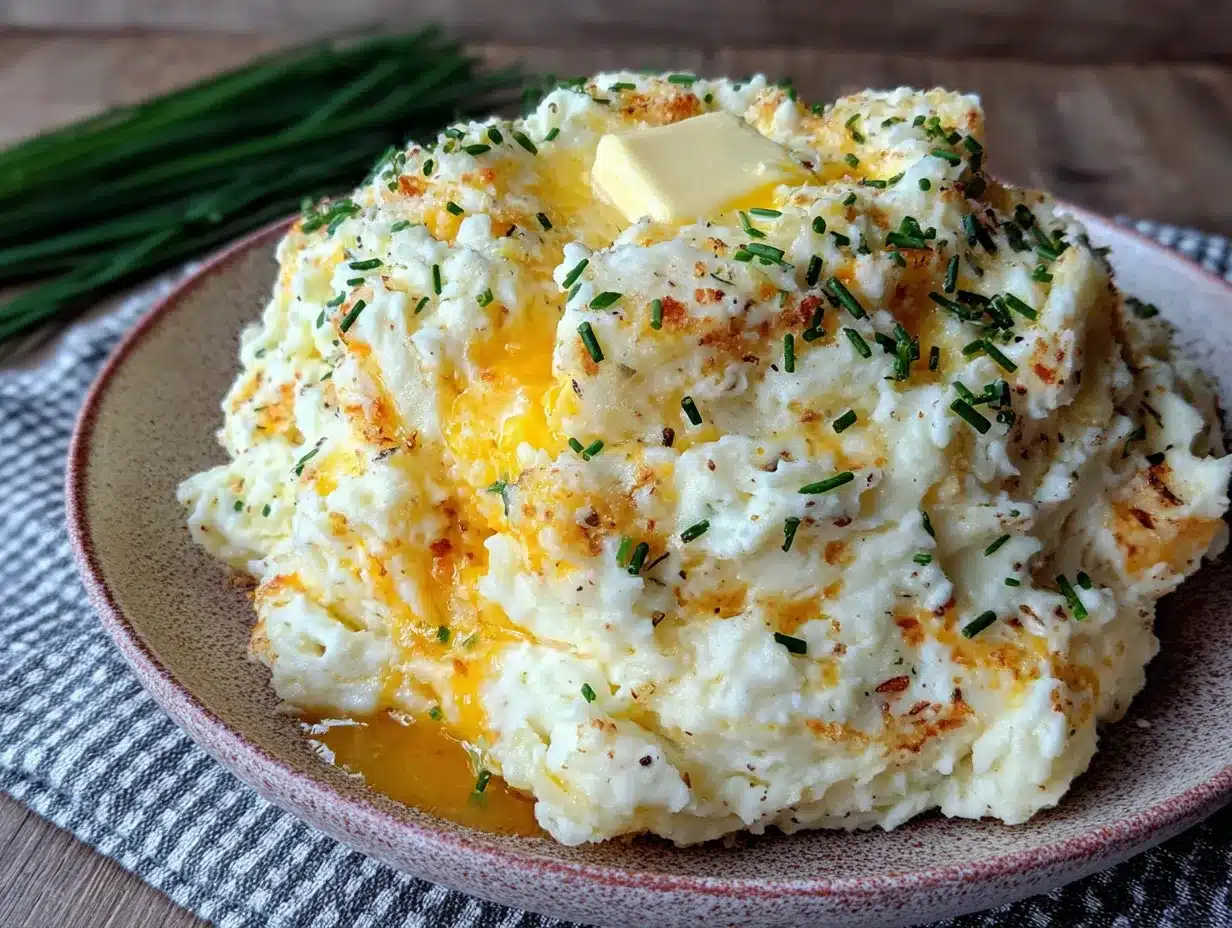
This method breaks down into three parts: cooking the potatoes, mixing the mash, and prepping for make-ahead storage. Take your time with the first step—it sets everything up for success.
Step 1: Prepare the Potatoes
Peel 4 pounds of russet potatoes and cut them into uniform 2-inch chunks. Uniformity matters here. If some pieces are smaller, they will cook faster and turn mushy while larger pieces remain undercooked. Rinse the cut potatoes in cold water to remove excess surface starch. This helps prevent them from becoming gummy later.
Step 2: Boil the Potatoes
Place the potato chunks in a large stockpot and cover them with cold water by about an inch. Add a generous tablespoon of salt to the water. Bring to a boil over high heat, then reduce to a medium simmer. Cook for 15 to 20 minutes, until the potatoes are fork-tender. You want a fork to slide in with almost no resistance. Drain them thoroughly in a colander and let them sit for 2 to 3 minutes to steam dry. Excess moisture is the enemy of creamy mashed potatoes.
Step 3: Warm the Milk and Soften the Dairy
While the potatoes are draining, warm 1/2 cup of whole milk in a small saucepan or microwave until it is warm to the touch—not hot, just warm. Make sure your butter and cream cheese are at room temperature. Cold dairy will seize up the starches and leave you with lumpy potatoes.
Step 4: Rice or Mash the Potatoes
If using a ricer, pass the hot potatoes through it directly into a large mixing bowl. Work in batches, and don’t rush. If using a hand masher, mash the potatoes in the pot until smooth but not overworked. Stop as soon as you don’t see large lumps. Over-mashing activates the starch and creates a gluey texture.
Step 5: Incorporate the Butter and Cream Cheese
Add the softened butter and cream cheese to the hot potatoes. Use a spatula or wooden spoon to fold them in gently. The residual heat will melt the butter and soften the cream cheese. Fold until just combined—you should see no streaks of white or yellow. Season with 1 teaspoon of salt and 1/2 teaspoon of black pepper.
Step 6: Add the Warm Milk
Pour in the warm milk slowly, folding as you go. Start with 1/2 cup and add more if needed. The potatoes should be creamy and smooth, not soupy. Taste and adjust salt and pepper. If you want that subtle savory note, fold in 1/2 teaspoon of garlic powder now.
Step 7: Cool and Store for Make-Ahead
Let the mashed potatoes cool to room temperature, about 20 to 30 minutes. Spread them into a greased 9×13-inch baking dish or transfer them to a slow cooker insert. Cover tightly with foil or a lid. Refrigerate for up to 2 days, or freeze for up to 1 month.
Cooking Tips & Techniques
I have made every mistake you can imagine with mashed potatoes. I have made them watery, gluey, lumpy, and bland. Here is what I learned so you don’t have to repeat my failures.
Don’t Overwork the Potatoes. This is the number one mistake. When you mash or mix too vigorously, the starches break down and release a sticky, glue-like substance. Use a gentle folding motion, and stop the moment everything comes together. A ricer is your best friend here because it does the work without the risk of overworking.
Salt the Water Generously. You want the potatoes to be seasoned from the inside out. I use about a tablespoon of salt per gallon of water. The potatoes absorb the seasoning as they cook, which makes a huge difference in the final flavor.
Warm Your Dairy. Cold milk or cream will cool down the potatoes and make them stiff. Warm them gently before adding. This also helps the fats incorporate more smoothly, giving you that velvety texture.
Let the Potatoes Steam Dry. After draining, let them sit in the colander for a few minutes. This allows excess steam to escape and prevents watery mash. I know it feels like wasted time, but it is one of those little steps that separates good mashed potatoes from great ones.
Reheat Gently. When reheating from the fridge, add a splash of warm milk or melted butter to revive the texture. Cover the dish with foil and reheat at 350°F for 20 to 30 minutes, or until warmed through. If using a slow cooker, set it on low for 2 to 3 hours, stirring once halfway.
Variations & Adaptations
This recipe is a fantastic base, and I have played around with it more times than I can count. Here are some of my favorite variations:
- Garlic Herb Mashed Potatoes: Roast a head of garlic (cut the top off, drizzle with olive oil, wrap in foil, and bake at 400°F for 40 minutes). Squeeze the soft cloves into the potatoes when you add the butter and cream cheese. Fold in 2 tablespoons of chopped fresh chives or parsley.
- Vegan Make-Ahead Mashed Potatoes: Substitute the butter with a high-quality vegan butter (I like Miyoko’s), the cream cheese with a vegan cream cheese alternative, and the milk with unsweetened oat milk. The texture will be slightly less rich, but still creamy and delicious.
- Loaded Baked Potato Style: Fold in 1/2 cup of shredded cheddar cheese, 1/4 cup of cooked and crumbled bacon, and 2 tablespoons of sliced green onions. This version is a hit at potlucks and game day gatherings.
- Herb-Infused Version: Warm the milk with a sprig of fresh rosemary and a few sprigs of thyme for 10 minutes before adding. Strain out the herbs. This infuses a subtle, aromatic flavor without any distracting texture.
My personal favorite is the garlic herb version. I make it every Christmas now, and my sister-in-law always asks if I can leave the leftovers with her. Which I never do, because I want them for myself.
Serving & Storage Suggestions
Serving: Serve these mashed potatoes warm, straight from the oven or slow cooker. I like to create a little well in the center and pour in a pat of melted butter, then sprinkle with fresh chives or a crack of black pepper. They pair beautifully with roast chicken, turkey, meatloaf, or even a simple seared steak.
Storage: Store leftovers in an airtight container in the refrigerator for up to 4 days. To reheat individual portions, microwave them in 30-second bursts, stirring in between. Add a splash of milk if they seem dry.
Freezing: These freeze exceptionally well. Portion the cooled potatoes into freezer-safe bags or containers. Flatten the bags for faster thawing. Freeze for up to 1 month. Thaw overnight in the refrigerator before reheating.
Reheating from Frozen: Place the frozen block of potatoes in a covered baking dish with a splash of milk. Reheat at 350°F for 35 to 45 minutes, stirring halfway through. The texture will be nearly identical to fresh—honestly, I have served these to guests without mentioning they were frozen and nobody noticed.
Pro Tip: The flavors actually deepen after a day or two in the fridge. These potatoes taste even better on day two. It is one of those rare recipes where leftovers are genuinely something to look forward to.
Nutritional Information & Benefits
Here is the estimated nutritional breakdown per serving (based on 8 servings):
| Nutrient | Amount per Serving |
|---|---|
| Calories | 320 |
| Total Fat | 18g |
| Saturated Fat | 11g |
| Cholesterol | 50mg |
| Sodium | 480mg |
| Total Carbohydrates | 35g |
| Dietary Fiber | 3g |
| Sugar | 3g |
| Protein | 6g |
Health Benefits: Potatoes often get a bad rap, but they are actually a good source of vitamin C, potassium, and vitamin B6. The skin (if you leave some on) provides fiber. Cream cheese adds a small amount of protein and calcium. This recipe is a balanced comfort food that fits into a sensible eating plan—it is about wholesome enjoyment, not deprivation.
Dietary Note: This recipe contains dairy (butter, cream cheese, milk). For a dairy-free version, see the vegan variation above. It is naturally gluten-free, making it a safe option for those with celiac disease or gluten sensitivity.
Conclusion
This creamy make-ahead mashed potatoes recipe has become my go-to for every holiday, potluck, and cozy Sunday dinner. It started with a conversation in a hardware store, of all places, and now I can’t imagine the holidays without it. The combination of cream cheese and butter gives it a richness that feels indulgent, while the make-ahead method saves you from the chaos of last-minute cooking.
I hope you give this recipe a try, whether for a big family gathering or just a quiet weeknight meal. Feel free to make it your own—add garlic, herbs, cheese, whatever your heart desires. The beauty of this recipe is how forgiving and adaptable it is.
If you make it, I would love to hear how it turned out. Drop a comment below and let me know if you found your own Frank, or if you surprised yourself by making potatoes that were actually better the next day. Happy cooking, and remember: you deserve a holiday without the stress of boiling potatoes at the last minute!
Frequently Asked Questions
Can I use red potatoes or Yukon Golds instead of russets?
Yes, you can. Yukon Golds will give you a naturally buttery flavor and a slightly denser texture. Red potatoes are waxier and will result in a thicker, less fluffy mash. If using red potatoes, be careful not to over-mix, as they can turn gluey more easily.
Do I have to use full-fat cream cheese?
For the best texture and stability, yes. Full-fat cream cheese has the right moisture content and fat ratio to keep the potatoes creamy without becoming watery. Low-fat or fat-free cream cheese has more water and less fat, which can make the potatoes thin and less stable during reheating.
Can I make these mashed potatoes vegan?
Absolutely. Use vegan butter, vegan cream cheese, and unsweetened oat or almond milk. The texture will be slightly less rich, but still creamy and delicious. I recommend adding an extra tablespoon of vegan butter to compensate for the missing dairy fat.
How far ahead can I make these mashed potatoes?
You can make them up to 2 days ahead and store them in the refrigerator. They also freeze beautifully for up to 1 month. Just thaw overnight in the fridge before reheating. The flavors actually deepen over time, so making them ahead is a win-win.
Why did my mashed potatoes turn out gluey?
Gluey mashed potatoes are usually a result of over-mixing or using a food processor. The agitation releases too much starch, creating a sticky, paste-like texture. To fix this, use a ricer or hand masher and stop as soon as the ingredients are combined. If you have already made them gluey, try folding in a bit more warm milk or melted butter to loosen the texture.
PrintCreamy Make-Ahead Mashed Potatoes with Cream Cheese
These incredibly creamy mashed potatoes get their velvety texture from cream cheese and can be made up to two days ahead. Perfect for stress-free holiday dinners, this recipe delivers rich, smooth potatoes that reheat beautifully.
- Prep Time: 20 minutes
- Cook Time: 20 minutes
- Total Time: 40 minutes
- Yield: 8 servings 1x
- Category: Side Dish
- Cuisine: American
Ingredients
- 4 pounds russet potatoes, peeled and cut into 2-inch chunks
- 1/2 cup (1 stick) unsalted butter, softened
- 8 ounces full-fat cream cheese, softened
- 1/2 to 3/4 cup whole milk, warm
- 1 to 1.5 teaspoons fine sea salt, plus more for boiling water
- 1/2 teaspoon freshly ground black pepper
- 1/2 teaspoon garlic powder (optional)
Instructions
- Peel the potatoes and cut them into uniform 2-inch chunks. Rinse in cold water to remove excess starch.
- Place the potato chunks in a large stockpot and cover with cold water by about an inch. Add a generous tablespoon of salt to the water. Bring to a boil over high heat, then reduce to a medium simmer. Cook for 15 to 20 minutes, until fork-tender.
- Drain the potatoes thoroughly in a colander and let them sit for 2 to 3 minutes to steam dry.
- While the potatoes drain, warm 1/2 cup of whole milk in a small saucepan or microwave until warm to the touch.
- If using a ricer, pass the hot potatoes through it into a large mixing bowl. If using a hand masher, mash them in the pot until smooth but not overworked.
- Add the softened butter and cream cheese to the hot potatoes. Fold gently with a spatula or wooden spoon until just combined and no streaks remain. Season with 1 teaspoon of salt and 1/2 teaspoon of black pepper.
- Pour in the warm milk slowly, folding as you go. Start with 1/2 cup and add more if needed until creamy and smooth. Taste and adjust salt and pepper. Fold in garlic powder if using.
- Let the mashed potatoes cool to room temperature, about 20 to 30 minutes. Spread into a greased 9×13-inch baking dish or transfer to a slow cooker insert. Cover tightly and refrigerate for up to 2 days, or freeze for up to 1 month.
- To reheat from refrigerated: Add a splash of warm milk or melted butter, cover with foil, and reheat at 350°F for 20 to 30 minutes. From frozen: Thaw overnight in the refrigerator, then reheat at 350°F for 35 to 45 minutes, stirring halfway.
Notes
For the fluffiest potatoes, avoid over-mixing. A potato ricer gives the smoothest texture. Salt the boiling water generously to season potatoes from the inside out. Warm the dairy before adding to prevent cooling the potatoes. Let potatoes steam dry after draining to avoid watery mash. The flavors deepen after a day in the fridge.
Nutrition
- Serving Size: 1 serving
- Calories: 320
- Sugar: 3
- Sodium: 480
- Fat: 18
- Saturated Fat: 11
- Carbohydrates: 35
- Fiber: 3
- Protein: 6
Keywords: make-ahead mashed potatoes, creamy mashed potatoes, cream cheese mashed potatoes, holiday side dish, Thanksgiving potatoes, make ahead, easy mashed potatoes