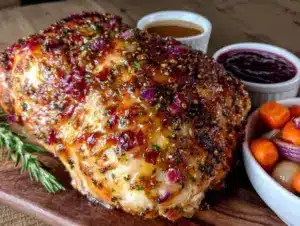
I was standing in the grocery store parking lot last November, juggling a bag of onions and my car keys, when the smell hit me. It wasn’t the damp asphalt or the exhaust from the idling SUV next to me. It was the faint, buttery scent of roasted herbs wafting from the hot food section near the exit. And just like that, I was eight years old, standing in my neighbor Mrs. Gable’s kitchen, watching her pull a golden-brown turkey out of the oven. She wasn’t my grandmother or my aunt. She was just the lady next door who, every Thanksgiving, let me come over and “help” by handing her the pepper grinder. I can still see the way her hands, flour-dusted and steady, worked the herb butter under the skin. I remember the quiet sigh she let out when the bird came out perfect, and the way she’d wink at me and say, “See? Not as scary as it looks.”
I didn’t roast my first turkey until I was twenty-six, and honestly, I was terrified. I had called my mom three times, watched two YouTube videos, and somehow convinced myself I needed a meat thermometer with Bluetooth. But standing there in that parking lot, that memory of Mrs. Gable’s calm confidence made me realize something. I had been overcomplicating it. Turkey doesn’t need a fussy brine or a complicated rub. It needs butter, herbs, a hot oven, and someone willing to try. That first bird I made was a little lopsided, and I forgot to take the giblets out until after it was in the oven (a mistake I will never, ever make again). But it was good. It was really good. And that’s the thing about this easy herb butter roasted turkey recipe — it’s built for beginners, for people who might be sweating a little just thinking about it. Maybe you’ve been there, staring at a raw turkey in the sink, wondering if you’ve bitten off more than you can chew. You haven’t. Let me show you how simple this can be.
Why You’ll Love This Recipe
Let’s be honest — roasting a whole turkey can feel like a high-stakes cooking exam. But this recipe takes all the pressure off. It’s designed to be forgiving, straightforward, and almost impossible to mess up, even if you’ve never roasted a bird in your life.
- Quick & Easy Prep: The active prep time is only about 20 minutes. You’re not brining for 24 hours or wrestling with a complicated rub. It’s just butter, herbs, and a hot oven.
- Simple Ingredients: You probably already have butter, garlic, salt, and pepper in your kitchen. A few fresh herbs are all you need to pick up at the store. No fancy grocery trips required.
- Perfect for Thanksgiving or Any Special Dinner: This turkey is the centerpiece of a holiday table, but it’s also perfect for a Sunday roast or a Christmas dinner when you want to impress without the stress.
- Crowd-Pleaser: The herb butter keeps the meat incredibly moist, and the skin gets crispy and golden. I’ve served this to picky eaters, in-laws, and even a friend who swore she didn’t like turkey. Every single person went back for seconds.
- Unbelievably Delicious: The combination of softened butter, fresh rosemary, thyme, and a little garlic creates a flavor that soaks into every bite. It’s not just good — it’s the kind of turkey that makes you close your eyes after the first bite.
What makes this recipe different from all the others? It’s the technique of spreading the herb butter directly under the skin. This isn’t just a surface slather — it melts into the breast meat as it roasts, keeping it from drying out while infusing it with flavor. It’s a small step that makes a huge difference, and it’s so easy a beginner can do it. This isn’t just another turkey recipe. It’s your best version, and it’s the one you’ll come back to year after year.
What Ingredients You Will Need
This recipe uses simple, wholesome ingredients to deliver a turkey that’s juicy, flavorful, and beautiful. Most of these are pantry staples or easy to find at any grocery store.
- 1 whole turkey (12-14 pounds / 5.4-6.4 kg), thawed: Look for a fresh or fully thawed turkey. If using frozen, plan for 24 hours of thawing in the fridge for every 4-5 pounds. I prefer a turkey that hasn’t been pre-brined or injected with solution, as it lets you control the seasoning.
- 1 cup (2 sticks / 226 grams) unsalted butter, softened: This is the star of the show. Using unsalted butter lets you control the salt level. Make sure it’s truly softened to room temperature so it spreads easily under the skin. (I recommend Land O’Lakes or Kerrygold for consistent quality.)
- 4 cloves garlic, minced: Fresh garlic is non-negotiable here. It adds a warmth that powdered garlic just can’t match. You can use a garlic press or just mince it finely with a knife.
- 2 tablespoons fresh rosemary, finely chopped: Rosemary is earthy and aromatic. Strip the leaves from the woody stems before chopping. If you only have dried, use 2 teaspoons, but fresh really makes a difference here.
- 2 tablespoons fresh thyme leaves: Thyme is delicate and slightly floral. Run your fingers down the stems to strip the leaves easily. You can also use 2 teaspoons of dried thyme in a pinch.
- 1 tablespoon fresh sage, finely chopped (optional but recommended): Sage adds a slightly peppery, almost piney flavor that pairs beautifully with turkey. If you don’t have it, don’t worry — the turkey will still be delicious.
- 2 teaspoons salt: I use kosher salt for its clean flavor and easy handling. Table salt is saltier by volume, so if you’re using that, reduce to 1 ½ teaspoons.
- 1 teaspoon black pepper, freshly ground: Freshly ground pepper has more punch than pre-ground. It adds a subtle heat that balances the rich butter.
- 1 large onion, quartered: This goes inside the cavity to add moisture and flavor from the inside out. No need to peel it completely — just remove any loose papery skin.
- 2 carrots, cut into large chunks: These sit in the roasting pan and help flavor the drippings for gravy. They also lift the turkey slightly off the bottom of the pan.
- 2 celery stalks, cut into large chunks: Same as the carrots — they add aroma to the pan and help keep the turkey elevated.
- 1 cup (240 ml) low-sodium chicken broth: This goes into the bottom of the roasting pan to create steam and prevent the drippings from burning. You can also use turkey broth or even water in a pinch.
Equipment Needed
You don’t need a lot of fancy gear to pull off a great turkey. Here’s what you’ll need to have on hand.
- Roasting pan with a rack: A sturdy metal or ceramic roasting pan is ideal. The rack lifts the turkey so hot air can circulate underneath, helping the skin crisp evenly. If you don’t have a rack, you can use rolled-up foil on the bottom of the pan to create a makeshift one.
- Meat thermometer: This is your best friend. A digital instant-read thermometer is accurate and fast. An oven-safe probe thermometer is even better because you can leave it in the turkey and monitor the temperature without opening the oven. (I use a ThermoPro, and it’s never let me down.)
- Kitchen twine: Used to tie the legs together for even cooking and a neat presentation. If you don’t have twine, you can tuck the legs under the skin flap or use unwaxed dental floss in a pinch.
- Small bowl: For mixing the herb butter.
- Chef’s knife and cutting board: For chopping herbs and vegetables.
- Aluminum foil: For tenting the turkey if the skin browns too quickly.
- Basting brush (optional): Useful for brushing the turkey with pan juices, but you can also use a spoon.
Preparation Method
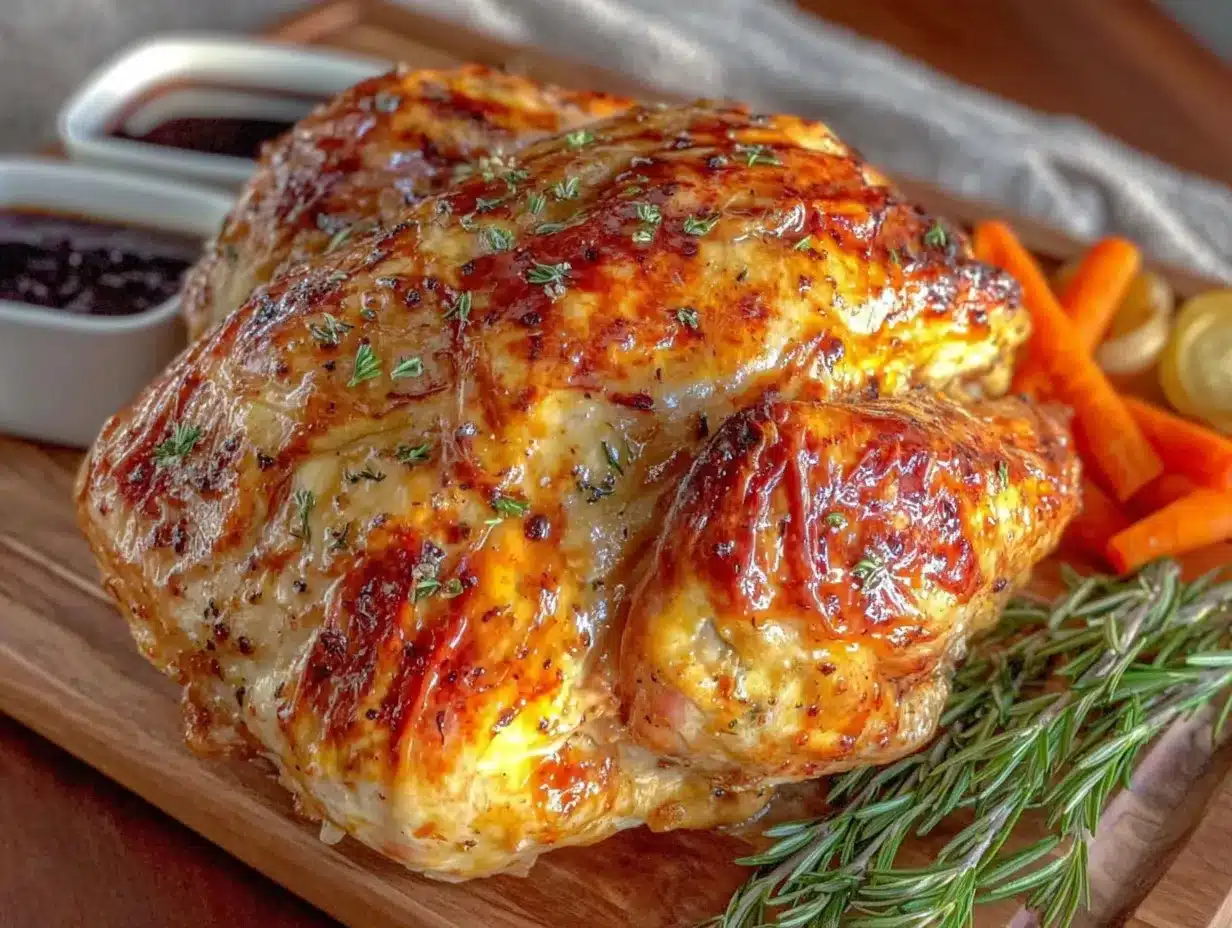
Follow these steps, and you’ll have a beautiful, juicy turkey that looks like you spent hours on it. Trust the process, and don’t skip the thermometer.
- Prep the turkey (10 minutes): Take the turkey out of its packaging. Remove the neck and giblets from the cavity — these are usually in a bag tucked inside. I once forgot this step until the turkey was halfway through roasting, and let me tell you, it’s not a mistake you make twice. Pat the turkey completely dry with paper towels, inside and out. This is crucial for crispy skin. Let it sit on the counter for about 30 minutes to take the chill off, which helps it cook more evenly.
- Make the herb butter (5 minutes): In a small bowl, combine the softened butter, minced garlic, chopped rosemary, thyme, sage (if using), salt, and pepper. Mix until everything is evenly distributed. The mixture should be soft and spreadable. If your butter is too cold, microwave it for 5-10 seconds to soften it further.
- Apply the butter under the skin (10 minutes): This is the most important step. Using your fingers, gently loosen the skin over the turkey breast. Start at the neck opening and work your fingers between the skin and the meat, being careful not to tear the skin. You want to create a pocket. Take about two-thirds of the herb butter and push it under the skin, spreading it evenly over each breast half. Rub the outside of the turkey with the remaining butter. Don’t forget the legs and thighs.
- Stuff and truss the turkey (5 minutes): Place the quartered onion, carrot chunks, and celery chunks inside the turkey cavity. They won’t be eaten, but they add moisture and flavor. Tie the legs together with kitchen twine. Tuck the wing tips under the body of the turkey so they don’t burn.
- Set up the roasting pan (5 minutes): Place the turkey on the rack in the roasting pan, breast side up. Pour the chicken broth into the bottom of the pan, being careful not to splash the turkey. The broth will create steam and keep the drippings from scorching.
- Roast the turkey (2 ½ to 3 hours): Preheat your oven to 425°F (220°C). Roast the turkey at this high temperature for 20 minutes. This initial blast of heat helps brown the skin. Then, without opening the oven, reduce the temperature to 350°F (175°C) and continue roasting. The total roasting time will be about 13-15 minutes per pound for a stuffed bird, or 11-13 minutes per pound for an unstuffed bird. For a 12-14 pound turkey, start checking at the 2-hour mark.
- Check for doneness (30 minutes before the end): About 30 minutes before you think the turkey will be done, start checking the temperature. Insert your meat thermometer into the thickest part of the thigh, being careful not to hit the bone. The turkey is safe to eat when it reaches 165°F (74°C) in the thigh. The breast should be around 160°F (71°C). If the skin is browning too quickly, tent the turkey loosely with aluminum foil.
- Rest the turkey (20-30 minutes): This is non-negotiable. Once the turkey reaches the correct temperature, remove it from the oven and transfer it to a cutting board. Let it rest, uncovered, for at least 20 minutes before carving. This allows the juices to redistribute throughout the meat. If you carve it too soon, all those juices will run out onto the cutting board, leaving you with dry meat.
Cooking Tips & Techniques
I’ve roasted a lot of turkeys over the years, and I’ve made just about every mistake you can imagine. Here’s what I’ve learned so you don’t have to.
- Don’t skip the drying step: Patting the turkey dry is not optional. Moisture is the enemy of crispy skin. If you have time, you can even leave the turkey uncovered in the fridge overnight to dry out the skin further. It’s a game-changer.
- Use a thermometer, not a timer: Ovens vary wildly. A timer is a rough guide, but a thermometer is the truth. I once pulled a turkey out based on the timer alone, and it was still raw in the thigh. Now I never trust anything but the thermometer.
- Let it rest: I know you’re hungry. I know everyone is staring at the turkey. But if you carve it immediately, you will have dry meat. I learned this the hard way when I carved a beautiful bird for my in-laws and watched the juices pool on the cutting board. It was a tragedy. Just wait the 20 minutes.
- Baste wisely: You don’t need to baste every 15 minutes. In fact, opening the oven constantly releases heat and can extend your cooking time. I baste once or twice during the last hour, just to keep the skin moist and glossy.
- Keep the drippings: After you remove the turkey, don’t throw away the pan juices. Strain them into a measuring cup and use them to make the most incredible gravy. It’s the best part of the meal, honestly.
Variations & Adaptations
This recipe is a great base, but don’t be afraid to make it your own. Here are a few ways to switch it up.
- Citrus Herb Turkey: Add the zest of one lemon and one orange to the herb butter. It adds a bright, fresh note that cuts through the richness of the butter. I tried this one year when I had extra citrus lying around, and it was a huge hit.
- Spicy Smoked Paprika Turkey: Add 1 tablespoon of smoked paprika and ½ teaspoon of cayenne pepper to the herb butter. This gives the turkey a smoky, slightly spicy kick and a gorgeous deep red color. Perfect if you like a little heat.
- Garlic and Herb Butter without the Herbs: If you don’t have fresh herbs, don’t panic. Use 1 tablespoon of dried Italian seasoning instead. It won’t be quite as vibrant, but it will still be delicious. I’ve done this in a pinch, and no one noticed the difference.
- Butterflied (Spatchcocked) Turkey: If you want a faster, more evenly cooked bird, ask your butcher to remove the backbone and flatten the turkey. This reduces cooking time to about 1 ½ hours and gives you incredibly crispy skin. It’s a bit more work, but the results are amazing.
Serving & Storage Suggestions
This turkey is best served warm, right after it has rested. The skin will be crispy, and the meat will be juicy and tender.
- Serving Temperature: Serve the turkey at a warm, not hot, temperature. After resting, it should be around 140°F (60°C). Carve it just before serving to keep it from drying out.
- Presentation: Arrange the carved meat on a warm platter. Garnish with fresh sprigs of rosemary and thyme for a beautiful, rustic look. A few lemon slices add a nice pop of color.
- Complementary Dishes: This turkey pairs beautifully with classic sides like mashed potatoes, green bean casserole, cranberry sauce, and dinner rolls. The rich, herby flavor also goes well with a simple arugula salad with lemon vinaigrette.
- Storage: Store leftover turkey in an airtight container in the refrigerator for up to 4 days. The meat will continue to absorb flavors, making it even tastier the next day.
- Reheating: The best way to reheat turkey is to place it in a baking dish with a splash of chicken broth, cover it with foil, and warm it in a 300°F (150°C) oven for about 15-20 minutes. This prevents it from drying out. Avoid the microwave if you can — it tends to make the meat rubbery.
- Freezing: Cooked turkey freezes well for up to 3 months. Wrap it tightly in plastic wrap and then in foil. Thaw in the refrigerator overnight before reheating.
Nutritional Information & Benefits
Turkey is a lean, high-protein meat that’s packed with nutrients. A 3-ounce (85 gram) serving of roasted turkey breast (without skin) contains approximately:
- Calories: 125
- Protein: 26 grams
- Fat: 2 grams
- Carbohydrates: 0 grams
- Iron: 6% of the Daily Value (DV)
- Potassium: 5% of the DV
- Vitamin B6: 20% of the DV
Turkey is an excellent source of tryptophan, an amino acid that helps produce serotonin and melatonin, which can improve mood and sleep. It’s also rich in selenium, a powerful antioxidant that supports thyroid function. While the skin and butter add fat and calories, the meat itself is incredibly healthy. This recipe is naturally gluten-free and low-carb, making it suitable for a variety of dietary needs. If you’re watching your sodium, you can reduce the salt in the herb butter or use a low-sodium broth.
Conclusion
This easy herb butter roasted turkey is more than just a recipe — it’s a confidence builder. It’s the dish that proves you can absolutely handle the big holiday meal, even if you’ve never done it before. The herb butter keeps everything simple and foolproof, and the results are genuinely stunning. I love this recipe because it reminds me of that first turkey I made in my tiny apartment kitchen, nervous but determined. It tasted like victory, and it tasted like Mrs. Gable’s kitchen. I hope this recipe becomes a tradition in your home, too. Don’t be afraid to make it your own — swap the herbs, add some citrus, or go spicy. The kitchen is your place to play. If you make this turkey, I’d love to hear about it. Drop a comment below and tell me how it turned out, or share a photo on social media and tag me. Happy roasting, friend. You’ve got this.
Frequently Asked Questions
Do I have to use fresh herbs, or can I use dried?
Fresh herbs are preferred for the best flavor and texture, but you can absolutely use dried herbs in a pinch. Use about one-third of the amount called for fresh, so about 2 teaspoons of dried rosemary and 2 teaspoons of dried thyme.
How do I know when the turkey is fully thawed?
A fully thawed turkey will be pliable and have no ice crystals in the cavity. The legs and wings should move easily. The safest way to thaw a turkey is in the refrigerator, allowing 24 hours for every 4-5 pounds.
Can I stuff the turkey with traditional stuffing?
You can, but it will increase the cooking time significantly, and you run a higher risk of the stuffing not reaching a safe temperature (165°F). I recommend cooking stuffing separately in a baking dish for safety and ease.
My turkey skin is getting too dark. What should I do?
If the skin is browning too quickly, tent the turkey loosely with a piece of aluminum foil. This will slow down the browning while allowing the turkey to continue cooking. Check it after 20 minutes.
Can I make the herb butter ahead of time?
Absolutely! You can make the herb butter up to 3 days in advance. Keep it covered in the refrigerator. Let it come to room temperature for about 30 minutes before using so it’s soft and spreadable.
Pin This Recipe!
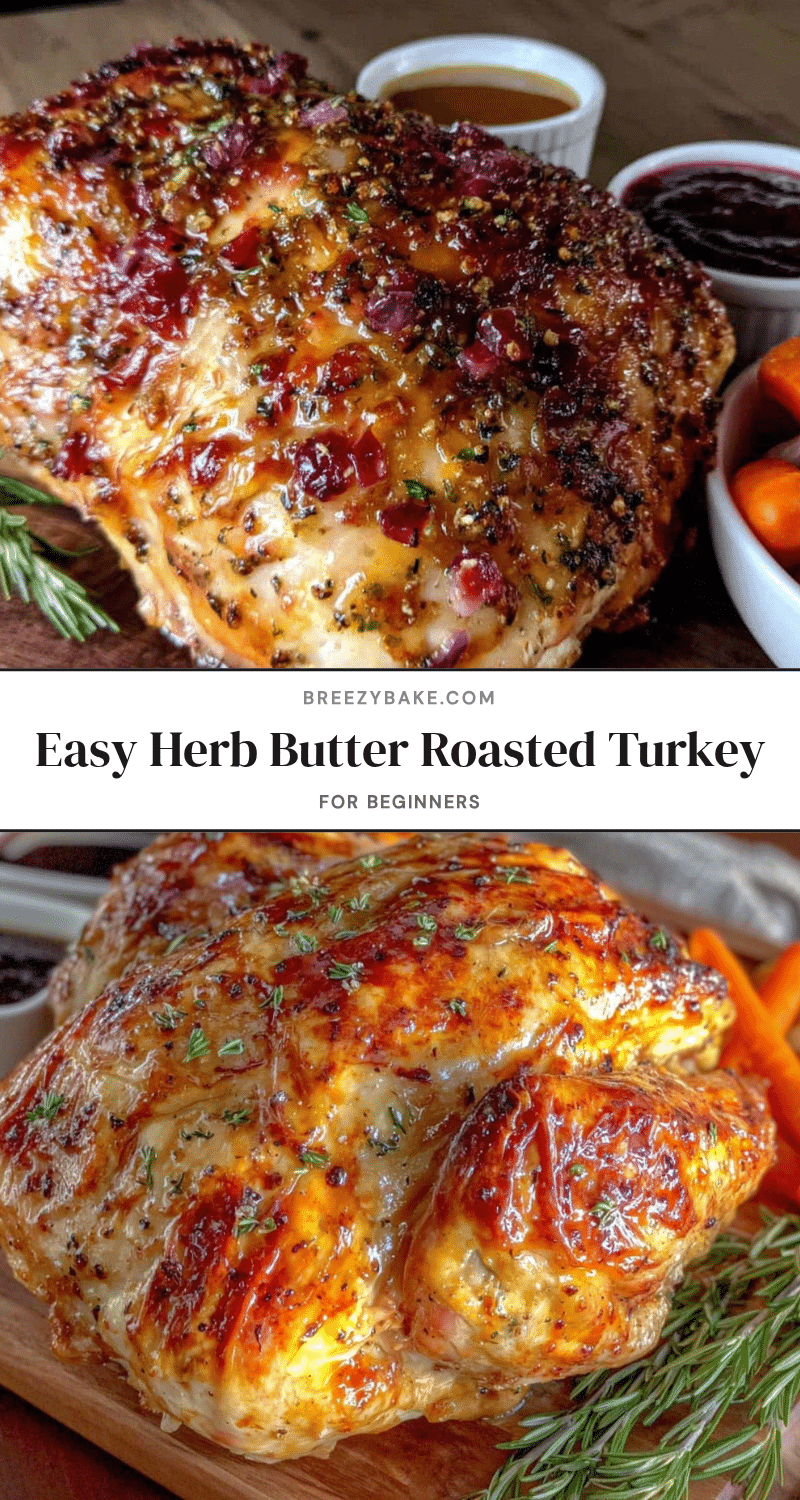
Easy Herb Butter Roasted Turkey: Best Beginner Recipe
This easy herb butter roasted turkey is designed for beginners, featuring a simple herb butter that keeps the meat incredibly moist and the skin crispy and golden. It’s a forgiving, straightforward recipe that’s almost impossible to mess up, perfect for Thanksgiving or any special dinner.
- Prep Time: 20 minutes
- Cook Time: 2 hours 30 minutes to 3 hours
- Total Time: 2 hours 50 minutes to 3 hours 20 minutes
- Yield: 12 servings 1x
- Category: Main Course
- Cuisine: American
Ingredients
- 1 whole turkey (12–14 pounds / 5.4–6.4 kg), thawed
- 1 cup (2 sticks / 226 grams) unsalted butter, softened
- 4 cloves garlic, minced
- 2 tablespoons fresh rosemary, finely chopped
- 2 tablespoons fresh thyme leaves
- 1 tablespoon fresh sage, finely chopped (optional but recommended)
- 2 teaspoons salt
- 1 teaspoon black pepper, freshly ground
- 1 large onion, quartered
- 2 carrots, cut into large chunks
- 2 celery stalks, cut into large chunks
- 1 cup (240 ml) low-sodium chicken broth
Instructions
- Prep the turkey (10 minutes): Take the turkey out of its packaging. Remove the neck and giblets from the cavity. Pat the turkey completely dry with paper towels, inside and out. Let it sit on the counter for about 30 minutes to take the chill off.
- Make the herb butter (5 minutes): In a small bowl, combine the softened butter, minced garlic, chopped rosemary, thyme, sage (if using), salt, and pepper. Mix until evenly distributed.
- Apply the butter under the skin (10 minutes): Using your fingers, gently loosen the skin over the turkey breast. Take about two-thirds of the herb butter and push it under the skin, spreading it evenly over each breast half. Rub the outside of the turkey with the remaining butter.
- Stuff and truss the turkey (5 minutes): Place the quartered onion, carrot chunks, and celery chunks inside the turkey cavity. Tie the legs together with kitchen twine. Tuck the wing tips under the body of the turkey.
- Set up the roasting pan (5 minutes): Place the turkey on the rack in the roasting pan, breast side up. Pour the chicken broth into the bottom of the pan.
- Roast the turkey (2 ½ to 3 hours): Preheat your oven to 425°F (220°C). Roast the turkey at this high temperature for 20 minutes. Then, without opening the oven, reduce the temperature to 350°F (175°C) and continue roasting. Total roasting time will be about 13-15 minutes per pound for a stuffed bird, or 11-13 minutes per pound for an unstuffed bird.
- Check for doneness (30 minutes before the end): About 30 minutes before you think the turkey will be done, start checking the temperature. Insert your meat thermometer into the thickest part of the thigh, being careful not to hit the bone. The turkey is safe to eat when it reaches 165°F (74°C) in the thigh. The breast should be around 160°F (71°C). If the skin is browning too quickly, tent the turkey loosely with aluminum foil.
- Rest the turkey (20-30 minutes): Once the turkey reaches the correct temperature, remove it from the oven and transfer it to a cutting board. Let it rest, uncovered, for at least 20 minutes before carving.
Notes
Don’t skip drying the turkey for crispy skin. Use a thermometer, not a timer. Let the turkey rest for at least 20 minutes before carving. Baste wisely to avoid opening the oven too often. Keep the drippings for gravy.
Nutrition
- Serving Size: 3 ounces (85 grams)
- Calories: 125
- Sodium: 200
- Fat: 2
- Saturated Fat: 0.5
- Protein: 26
Keywords: herb butter roasted turkey, easy turkey recipe, beginner turkey, Thanksgiving turkey, roasted turkey, herb butter