I wasn’t expecting cooking advice from our apartment building’s maintenance guy, but there I was, stuck in the elevator between the third and fourth floors, listening to Frank describe exactly how to make the best weeknight salmon of my life. The elevator had groaned to a halt around 6:15 PM on a Tuesday. I was tired, hungry, and honestly, a little panicked about being trapped. Frank, however, was completely unbothered. He just leaned against the wall, jingled his key ring, and started talking about this honey garlic glaze he makes for his grandkids. “They won’t eat fish any other way,” he said, like it was the most obvious thing in the world.
By the time the fire department got us out—twenty-three minutes later, not that I was counting—I had the entire recipe memorized. Frank’s secret wasn’t some fancy technique or rare ingredient. It was the one-pan method. He insisted that cooking the salmon right on top of the asparagus in a single skillet was the only way to get the glaze to caramelize perfectly without burning the garlic. “The asparagus soaks up all the drippings,” he explained, tapping the side of his nose. “That’s the trick.”
I tried it that very same week, and honestly, it was a revelation. The salmon comes out flaky and tender, coated in a sticky, sweet-and-savory glaze. The asparagus roasts right alongside it, picking up all that garlicky honey goodness. And the best part? There’s practically no cleanup. Maybe you’ve been there, staring into your fridge at 6 PM with zero energy and a mountain of dishes already in the sink. This recipe is the answer. It’s the kind of meal that makes you feel like you’ve got your life together, even on a chaotic Tuesday. Let me tell you, I’ve made this at least once a week ever since that elevator ride. It’s just that good.
Why You’ll Love This Recipe
This isn’t just another salmon recipe. It’s the one you’ll actually make on a busy weeknight when you’re short on time and patience. I’ve tested this method more times than I can count, tweaking the glaze and the cooking time until it was absolutely foolproof. Here’s why it works so well:
- Quick & Easy: From start to finish, this meal is on the table in under 25 minutes. No marinating, no complicated steps, just one skillet and a handful of ingredients.
- Simple Ingredients: You likely already have honey, soy sauce, and garlic in your pantry. A quick trip for salmon and asparagus is all you need.
- Perfect for Busy Weeknights: This is the definition of a stress-free dinner. It’s impressive enough for guests but simple enough for a Tuesday.
- Crowd-Pleaser: Even my friend who “doesn’t like fish” went back for seconds. The honey garlic glaze is universally loved.
- Unbelievably Delicious: The combination of caramelized honey, savory soy, and tender salmon is pure comfort food. The asparagus, roasted in the same pan, soaks up all that flavor.
What makes this recipe different from the rest? It’s the one-pan technique. By cooking the salmon directly on top of the asparagus, you get perfectly cooked fish and perfectly roasted vegetables at the same time. The asparagus steams slightly from the salmon’s moisture, then roasts in the glaze drippings. It’s a beautiful, efficient system. This isn’t just another version of honey garlic salmon—it’s the best version, born from a chance conversation in a broken elevator and perfected in my own kitchen.
What Ingredients You Will Need
This recipe uses simple, wholesome ingredients to deliver bold flavor and satisfying texture without the fuss. Everything is easy to find at any grocery store, and most of it is probably already in your kitchen.
- Salmon Fillets: 4 fillets (about 6 ounces each), skin-on or skinless. I prefer skin-on for extra crispiness, but either works. Look for fillets that are roughly the same thickness so they cook evenly. (Wild-caught salmon is my go-to for flavor, but farmed is perfectly fine and often more affordable.)
- Asparagus: 1 bunch (about 1 pound), woody ends trimmed. Look for spears that are bright green and firm, not limp. Thicker spears hold up better to roasting, but thin ones work too—just reduce the cooking time by a minute or two.
- Honey: ¼ cup. Use a good-quality, runny honey. Local honey is lovely if you have it, but any brand will do. (Adds natural sweetness and helps create that gorgeous sticky glaze.)
- Soy Sauce: 3 tablespoons. I recommend low-sodium soy sauce so you can control the salt level. Tamari or coconut aminos work great for a gluten-free option.
- Garlic: 4 cloves, minced. Fresh garlic is non-negotiable here. The pre-minced stuff in a jar just doesn’t have the same punch. (Use a microplane for the finest mince—it melts right into the glaze.)
- Olive Oil: 2 tablespoons, divided. A good extra virgin olive oil adds richness. You’ll use some for the asparagus and some for searing the salmon.
- Lemon Juice: 1 tablespoon, freshly squeezed. A bright, acidic finish that balances the sweetness of the honey. Don’t skip it—it’s the secret to making the flavors pop.
- Red Pepper Flakes: ½ teaspoon (optional). For a tiny kick of heat. I add it to the glaze, but you can skip it if you prefer a milder dish.
- Salt and Black Pepper: To taste. I use kosher salt and freshly ground black pepper. Season the salmon generously—it makes a difference.
- Sesame Seeds: 1 tablespoon (optional), for garnish. Adds a nice crunch and visual appeal. Toasted sesame seeds are even better.
- Fresh Parsley or Green Onions: For garnish. A sprinkle of fresh herbs makes the dish look restaurant-worthy.
Substitution Guidance: If you don’t have asparagus, green beans or broccoli florets work beautifully. For a low-carb option, use a sugar-free honey substitute or monk fruit sweetener. And if you’re out of soy sauce, coconut aminos are a perfect 1:1 swap.
Equipment Needed
One of the best things about this recipe is how little equipment it requires. You don’t need a fancy kitchen to pull this off.
- Large Oven-Safe Skillet: A 12-inch cast iron skillet is my top choice. It heats evenly, gets screaming hot for a perfect sear, and goes straight from stovetop to oven. If you don’t have cast iron, a stainless steel or oven-safe nonstick skillet works just fine. Just make sure it’s large enough to hold all the salmon and asparagus without crowding.
- Cutting Board and Sharp Knife: For trimming the asparagus and mincing the garlic. A good chef’s knife makes prep quick and painless.
- Small Bowl: For whisking together the honey garlic glaze. Any small mixing bowl will do.
- Measuring Spoons and Cups: For accurate measurements. Baking is a science, but cooking is an art—still, getting the glaze ratios right matters.
- Tongs: For flipping the salmon and moving the asparagus around. Silicone-tipped tongs won’t scratch your pan.
- Instant-Read Thermometer (optional but helpful): Salmon is perfectly cooked at 125°F to 130°F for medium. If you’re new to cooking fish, a thermometer takes the guesswork out.
Budget-Friendly Note: If you don’t own an oven-safe skillet, you can cook the entire dish on the stovetop. Just cover the pan with a lid after adding the glaze to help the salmon cook through. It works perfectly.
Preparation Method
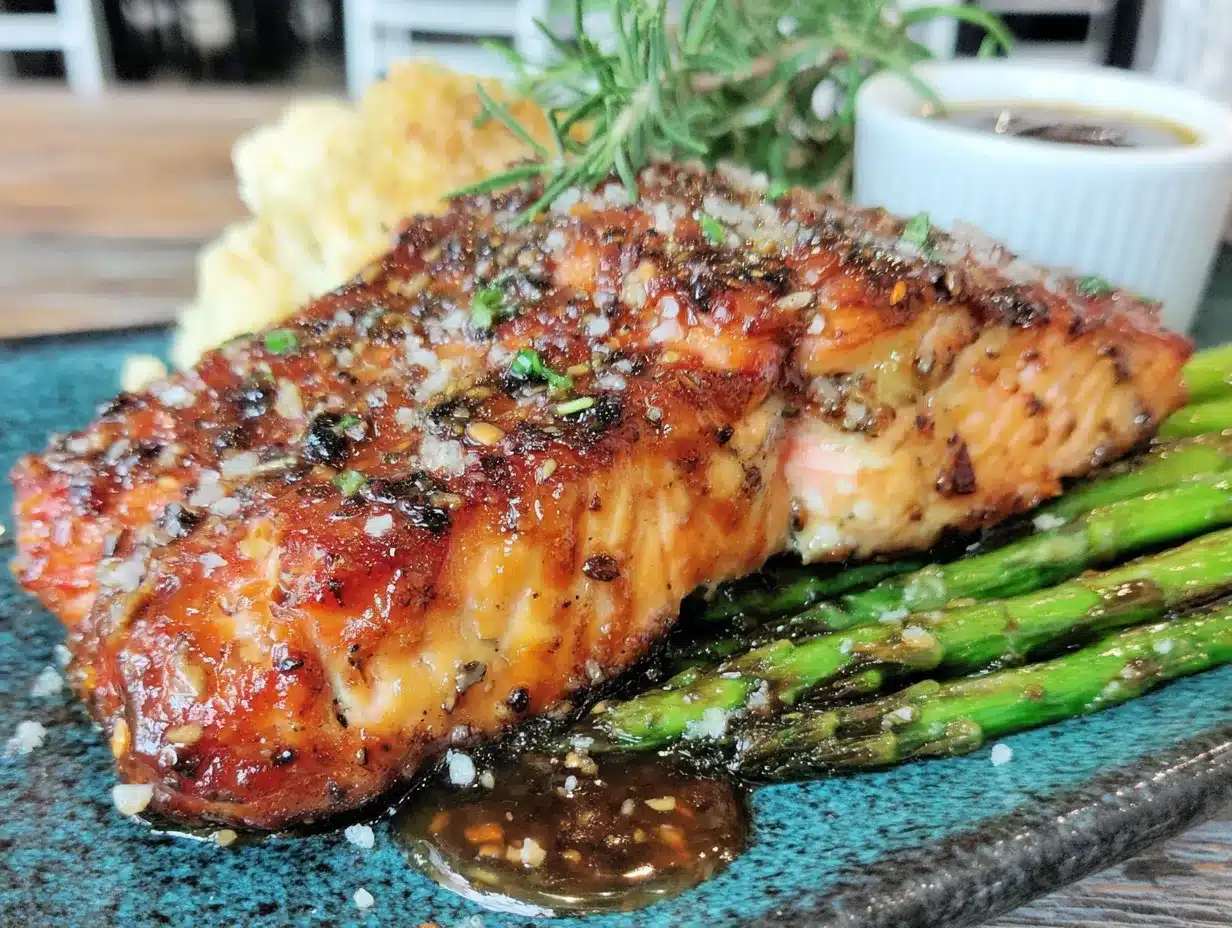
Let’s get cooking. This entire dish comes together in one pan and under 25 minutes. Follow these steps, and you’ll have a restaurant-quality dinner on the table before you know it.
- Preheat your oven to 400°F (200°C). Position the rack in the middle of the oven. While it heats, you can prep your ingredients. This is a great time to trim the asparagus and mince the garlic.
- Make the honey garlic glaze. In a small bowl, whisk together ¼ cup honey, 3 tablespoons low-sodium soy sauce, 4 minced garlic cloves, 1 tablespoon lemon juice, and ½ teaspoon red pepper flakes (if using). Set it aside. The glaze should be smooth and slightly runny. Give it a taste—it should be sweet, salty, and just a little tangy. Adjust the honey or soy sauce to your liking.
- Prepare the asparagus. Snap off the woody ends of the asparagus spears (they’ll naturally break where the tender part begins). Place the asparagus on a large baking sheet or directly on your cutting board. Drizzle with 1 tablespoon of olive oil and a pinch of salt and pepper. Toss to coat evenly.
- Season the salmon. Pat the salmon fillets dry with paper towels. This step is crucial for getting a good sear. Season both sides generously with salt and black pepper. Don’t be shy—salmon can handle a fair amount of seasoning.
- Heat the skillet. Place your large oven-safe skillet over medium-high heat. Add the remaining 1 tablespoon of olive oil. Let it heat until it shimmers—about 2 minutes. You want the pan hot enough that the salmon sizzles immediately when it hits the surface.
- Sear the salmon. Carefully place the salmon fillets in the hot skillet, skin-side down (if using skin-on). Let them cook undisturbed for 3-4 minutes. You should hear a steady sizzle. The skin will turn golden and crispy. Use a spatula to gently lift a corner and check—if it releases easily, it’s ready to flip. If it sticks, give it another 30 seconds.
- Flip the salmon and add the asparagus. Using tongs, carefully flip each fillet. The seared side should be beautifully browned. Immediately add the seasoned asparagus to the skillet, arranging it around the salmon fillets. Try to keep the asparagus in a single layer for even cooking.
- Pour the glaze over everything. Drizzle the honey garlic glaze evenly over the salmon and asparagus. Use a spoon to make sure each fillet gets coated. The glaze will bubble and start to caramelize immediately—that’s exactly what you want.
- Transfer to the oven. Carefully place the entire skillet in the preheated oven. Bake for 8-12 minutes, depending on the thickness of your salmon. For 1-inch thick fillets, 10 minutes is usually perfect. The salmon should be opaque and flake easily with a fork. The asparagus should be tender-crisp, not mushy.
- Rest and garnish. Remove the skillet from the oven (use oven mitts—the handle will be screaming hot). Let it rest for 2-3 minutes. The residual heat will finish cooking the salmon gently. Sprinkle with sesame seeds and fresh parsley or sliced green onions. Squeeze a little extra lemon juice on top if you like.
Pro Tip: If your salmon fillets are thinner than 1 inch, start checking for doneness at 7 minutes. Overcooked salmon is dry and sad, and we don’t want that.
Cooking Tips & Techniques
I’ve made this recipe more times than I can count, and I’ve learned a few things along the way. Here are my best tips for perfect results every single time.
Don’t skip the pat-dry step. I know it seems fussy, but moisture is the enemy of a good sear. If your salmon is wet, it will steam instead of sear, and you’ll miss out on that gorgeous golden crust. Pat those fillets dry with paper towels, even if you’re in a hurry.
Watch the garlic. Garlic burns quickly, especially when combined with honey and high heat. That’s why we add the glaze after searing the salmon, not before. If you add it too early, the garlic will turn bitter and acrid. Trust the order of operations here.
Use a meat thermometer. I used to guess when my salmon was done, and I ended up with dry, overcooked fish more often than I’d like to admit. An instant-read thermometer is a game-changer. Insert it into the thickest part of the fillet. For medium-rare, aim for 120°F. For medium (my preference), 125°F to 130°F. For well-done, 135°F. Remember that the salmon will continue cooking as it rests.
Don’t crowd the pan. If your skillet is too small, the asparagus will steam instead of roast, and the salmon won’t sear properly. If you need to, use two skillets or cook in batches. A 12-inch skillet is the sweet spot for 4 fillets and a pound of asparagus.
One of my biggest failures: The first time I made this, I used a nonstick skillet that wasn’t oven-safe. I didn’t realize until I had the salmon perfectly seared and the glaze bubbling. I had to transfer everything to a baking dish mid-recipe, which was a mess. Learn from my mistake—check that your pan can go in the oven before you start.
Multitasking tip: While the salmon is searing, use that time to wash the cutting board and knife. By the time dinner is in the oven, your kitchen is already clean. It’s a small thing, but it makes the whole experience feel so much more relaxed.
Variations & Adaptations
This recipe is incredibly versatile. Here are a few ways to change it up based on what you have on hand or what you’re craving.
Dietary Adaptations: For a gluten-free version, swap the soy sauce for tamari or coconut aminos. For a low-carb or keto option, use a sugar-free honey substitute or monk fruit sweetener—the glaze will still caramelize beautifully. For a dairy-free version, you’re already set; this recipe has no dairy.
Vegetable Swaps: Not an asparagus fan? No problem. Broccoli florets, green beans, or even thick slices of zucchini work perfectly. Just adjust the roasting time slightly—broccoli might need an extra 2 minutes, while zucchini might need 2 minutes less. I’ve also made this with cherry tomatoes and bell peppers for a summery twist.
Flavor Twists: Add a teaspoon of grated fresh ginger to the glaze for a warming, spicy kick. Or stir in a tablespoon of sriracha for heat. For an herby version, add a tablespoon of chopped fresh thyme or rosemary to the glaze. I once made this with a splash of orange juice instead of lemon, and it was amazing—the orange and honey are a beautiful pair.
Different Proteins: This glaze works wonders on chicken thighs, pork chops, or even firm tofu. If using chicken, increase the oven time to 15-18 minutes, depending on thickness. For tofu, press it well first, then sear and glaze exactly as you would the salmon.
Personal Variation: I love adding a sprinkle of toasted sesame seeds and a drizzle of sriracha mayo (just mix sriracha with mayonnaise) on top before serving. It adds a creamy, spicy finish that takes the dish to another level. My husband calls it “fancy salmon” and requests it for his birthday dinner every year.
Serving & Storage Suggestions
This dish is beautiful as-is, but a few thoughtful touches can make it feel even more special.
Serving Temperature: Serve the salmon and asparagus hot, straight from the skillet. The glaze will be sticky and caramelized, and the asparagus should still have a slight snap. A final squeeze of fresh lemon juice right before serving brightens everything up.
Presentation: For a family-style dinner, bring the skillet right to the table. It’s rustic and inviting. For individual plates, place a salmon fillet on each plate alongside a generous portion of asparagus. Drizzle any remaining glaze from the pan over the top. Sprinkle with sesame seeds and fresh herbs for a pop of color.
Complementary Dishes: This salmon pairs beautifully with steamed rice, quinoa, or cauliflower rice to soak up the extra glaze. A simple side salad with a vinaigrette adds freshness. For a heartier meal, serve with roasted potatoes or crusty bread to mop up every last drop of sauce.
Beverage Pairing: A crisp white wine like Sauvignon Blanc or Pinot Grigio is a classic match. For a non-alcoholic option, sparkling water with a slice of lemon or lime is refreshing and cuts through the richness of the glaze.
Storage Instructions: Store leftovers in an airtight container in the refrigerator for up to 3 days. The flavors actually meld and deepen overnight, so leftovers can be even better the next day. To reheat, place the salmon and asparagus in a skillet over medium-low heat with a splash of water or chicken broth. Cover and warm gently for 3-5 minutes. Avoid the microwave—it tends to overcook the fish and make the asparagus soggy.
Freezing: Cooked salmon freezes well for up to 2 months. Let it cool completely, then wrap each fillet tightly in plastic wrap and place in a freezer bag. Thaw overnight in the refrigerator and reheat gently.
Flavor Development: The glaze continues to penetrate the salmon as it sits, so leftovers are incredibly flavorful. I often make a double batch on Sunday and enjoy it for quick lunches during the week.
Nutritional Information & Benefits
This meal is not only delicious but also packed with nutrients. Here’s a breakdown of what you’re getting in each serving (based on 4 servings).
| Nutrient | Amount Per Serving |
|---|---|
| Calories | 380 |
| Protein | 35g |
| Fat | 18g |
| Saturated Fat | 3g |
| Carbohydrates | 22g |
| Fiber | 3g |
| Sugar | 18g |
| Sodium | 680mg |
Health Benefits: Salmon is rich in omega-3 fatty acids, which support heart health and brain function. It’s also an excellent source of high-quality protein and vitamin D. Asparagus is packed with fiber, folate, and vitamins A, C, and K. The honey provides natural energy, while garlic offers immune-boosting properties. This is a meal that truly nourishes your body.
Dietary Considerations: This recipe is naturally gluten-free (with tamari), dairy-free, and low-carb friendly. It’s also suitable for pescatarian diets. The only potential allergen is soy, but coconut aminos are a perfect substitute.
Personal Wellness Perspective: I love that this meal feels indulgent—the sticky, sweet glaze and tender fish—but is actually incredibly good for you. It’s proof that healthy eating doesn’t have to be boring or bland. When I eat this, I feel satisfied, energized, and proud that I made something so wholesome for myself and my family.
Conclusion
This Quick One-Pan Honey Garlic Salmon with Asparagus is the weeknight dinner hero you didn’t know you needed. It’s fast, it’s simple, and it’s absolutely packed with flavor. The recipe came from an unexpected source—a chat with my building’s maintenance guy in a broken elevator—but it has become a staple in my kitchen. Every time I make it, I think of Frank and his grandkids, and I smile.
I encourage you to make this recipe your own. Swap in your favorite vegetables, adjust the glaze to your taste, or try it with chicken or tofu. The beauty of this dish is its flexibility. It’s a template for a perfect weeknight meal, not a rigid set of rules.
Honestly, I just love how this recipe makes me feel. Like I’ve got dinner handled, even on the craziest days. Like I’m eating something truly delicious without spending hours in the kitchen. Like I’ve discovered a little secret that makes life just a bit easier.
Now I want to hear from you! Have you tried this recipe? Did you add your own twist? Drop a comment below and let me know how it turned out. And if you loved it, share it with a friend who needs a quick dinner win. Happy cooking, friends!
Frequently Asked Questions
Can I use frozen salmon for this recipe?
Yes, but you’ll need to thaw it completely first. Pat it very dry with paper towels before searing, as frozen fish releases more moisture. You may also need to add a minute or two to the oven time.
Can I make the glaze ahead of time?
Absolutely! You can whisk together the honey, soy sauce, garlic, lemon juice, and red pepper flakes up to 3 days in advance. Store it in an airtight container in the refrigerator. Give it a good stir before using.
What if I don’t have an oven-safe skillet?
No problem! After searing the salmon and adding the glaze, simply cover the skillet with a lid and cook on the stovetop over medium-low heat for 8-10 minutes, or until the salmon is cooked through. The asparagus will steam beautifully.
How do I know when the salmon is done?
The easiest way is to use an instant-read thermometer. Insert it into the thickest part of the fillet—it should read 125°F to 130°F for medium. You can also check by gently pressing on the fish; it should flake easily with a fork and be opaque all the way through.
Can I double this recipe?
Yes, but you’ll need a larger skillet or cook in batches. Crowding the pan will cause the salmon to steam instead of sear, and the asparagus won’t roast properly. If you have a 14-inch skillet, you can fit 6 fillets and 1.5 pounds of asparagus comfortably.
Pin This Recipe!
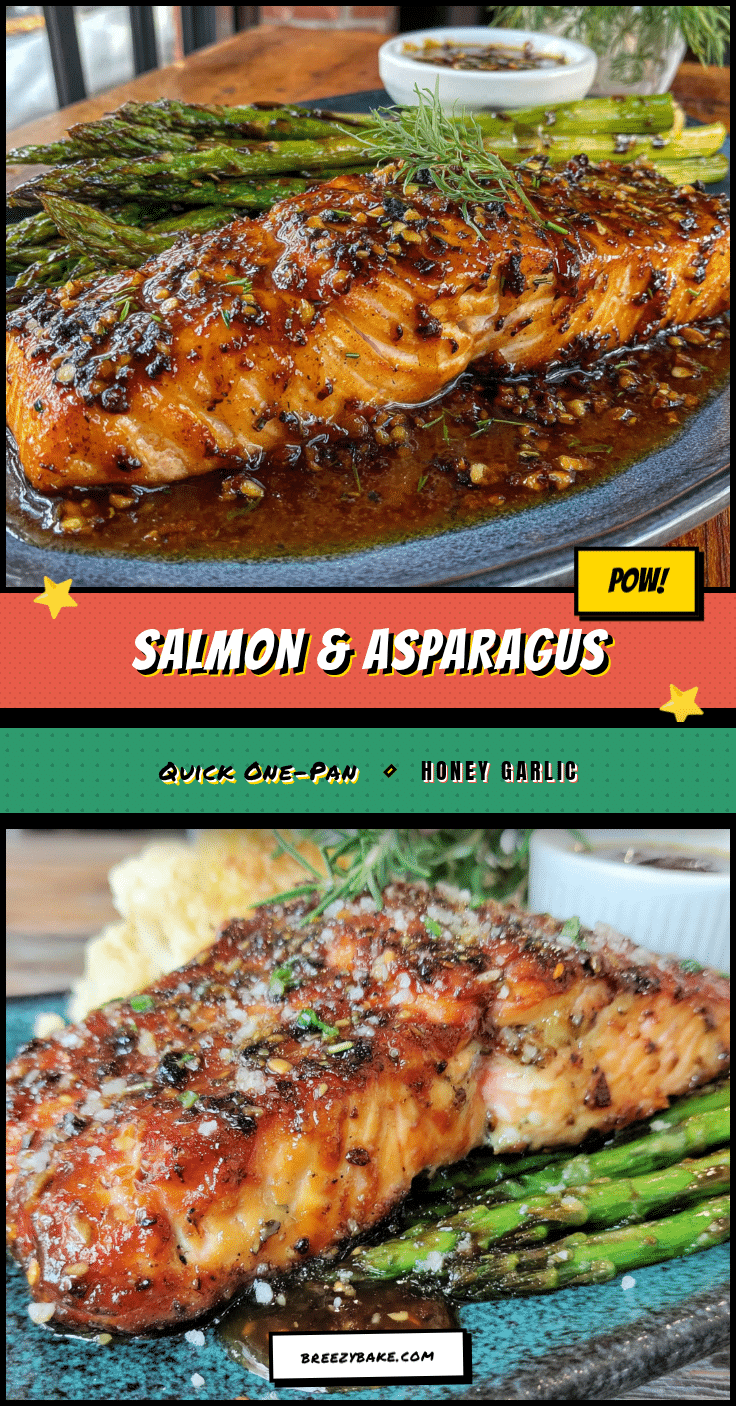
Easy One-Pan Honey Garlic Salmon with Asparagus
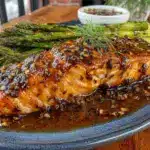
A quick and easy weeknight dinner featuring flaky salmon and tender asparagus coated in a sticky, sweet-and-savory honey garlic glaze, all cooked in a single skillet for minimal cleanup.
- Prep Time: 10 minutes
- Cook Time: 15 minutes
- Total Time: 25 minutes
- Yield: 4 servings 1x
- Category: Main Course
- Cuisine: American
Ingredients
- 4 salmon fillets (about 6 ounces each), skin-on or skinless
- 1 bunch asparagus (about 1 pound), woody ends trimmed
- ¼ cup honey
- 3 tablespoons low-sodium soy sauce
- 4 cloves garlic, minced
- 2 tablespoons olive oil, divided
- 1 tablespoon lemon juice, freshly squeezed
- ½ teaspoon red pepper flakes (optional)
- Salt and black pepper to taste
- 1 tablespoon sesame seeds (optional), for garnish
- Fresh parsley or green onions, for garnish
Instructions
- Preheat your oven to 400°F (200°C). Position the rack in the middle of the oven.
- In a small bowl, whisk together honey, soy sauce, minced garlic, lemon juice, and red pepper flakes (if using). Set aside.
- Snap off the woody ends of the asparagus. Place asparagus on a baking sheet or cutting board, drizzle with 1 tablespoon olive oil, and season with salt and pepper. Toss to coat.
- Pat salmon fillets dry with paper towels. Season both sides generously with salt and black pepper.
- Heat a large oven-safe skillet over medium-high heat. Add remaining 1 tablespoon olive oil and heat until shimmering (about 2 minutes).
- Place salmon fillets in the hot skillet, skin-side down (if using skin-on). Cook undisturbed for 3-4 minutes until skin is golden and crispy.
- Flip the salmon using tongs. Immediately add seasoned asparagus to the skillet, arranging it around the fillets in a single layer.
- Drizzle the honey garlic glaze evenly over the salmon and asparagus.
- Transfer the skillet to the preheated oven. Bake for 8-12 minutes, depending on thickness (10 minutes for 1-inch thick fillets). Salmon should be opaque and flake easily; asparagus should be tender-crisp.
- Remove skillet from oven (handle will be hot). Let rest for 2-3 minutes. Garnish with sesame seeds and fresh parsley or green onions. Squeeze extra lemon juice on top if desired.
Notes
Pat salmon dry for best sear. Add glaze after searing to prevent garlic from burning. Use a meat thermometer for perfect doneness (125°F-130°F for medium). Do not crowd the pan. For non-oven-safe skillet, cover and cook on stovetop over medium-low heat for 8-10 minutes.
Nutrition
- Serving Size: 1 salmon fillet with
- Calories: 380
- Sugar: 18
- Sodium: 680
- Fat: 18
- Saturated Fat: 3
- Carbohydrates: 22
- Fiber: 3
- Protein: 35
Keywords: honey garlic salmon, one-pan salmon, salmon with asparagus, easy weeknight dinner, quick salmon recipe