I was standing in the middle of a big-box hardware store last October, holding a bag of lightbulbs I didn’t really need, when the air from a vent kicked up and hit me with the exact smell of boiled-down apple cider and cinnamon. It was the strangest thing — that artificial, slightly dusty warmth that those stores have, but for a split second, it was my mother’s kitchen in 1998. I was eight years old, standing on a stepstool, watching her stir a pot of cider on the stove until the whole house smelled like autumn had moved in permanently. She was making something I haven’t thought about in years — these little drop cookies that tasted like the concentrated essence of a whole apple orchard. I didn’t even know the recipe was still in my head until that moment. Honestly, I almost dropped the lightbulbs. The memory was that sharp. She passed away a few years ago, and I’ve been chasing that specific cookie ever since — the one that tastes less like dessert and more like a season you want to bottle up. This is the closest I’ve come to getting it right. Maybe you’ve had that experience too — where a random smell just yanks you back to a specific person and a specific moment, and you suddenly need to recreate it.
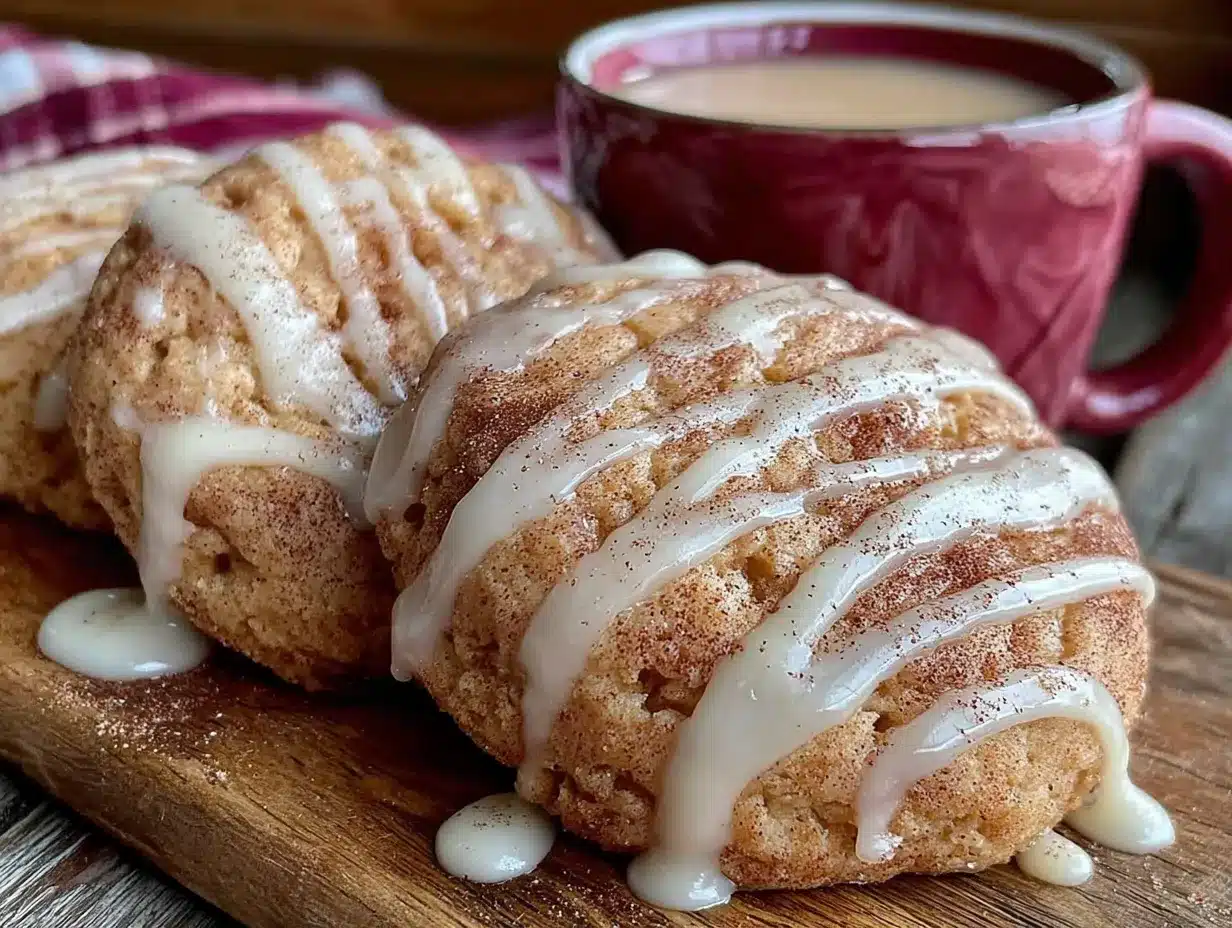
These Cozy Iced Apple Cider Cookies with Cinnamon Glaze are exactly that — a little piece of fall you can hold in your hand. They’re soft, almost cake-like, with a concentrated apple flavor that comes from reducing the cider down until it’s syrupy and intense. The cinnamon glaze on top adds that warm, spicy finish that just makes sense with every single bite. I’ve tested this recipe about seven times now, trying to get it to taste like I remember. Let me tell you, the first batch was a disaster — flat, bland, and nothing like the memory. But I kept at it, and this version? It’s the one. The cookies are thick and pillowy, the glaze sets up perfectly, and the whole house smells like a fall candle while they’re baking. They’re the kind of cookie you make on a rainy Sunday afternoon when you just want to feel cozy and slow down for a bit.
Why You’ll Love This Recipe
These aren’t your average drop cookies. They’re something special, and here’s why you’re going to want to make them immediately.
- Real Apple Cider Flavor : This isn’t a recipe that relies on apple juice or extract. You actually boil down fresh apple cider until it’s thick and concentrated, which gives the cookies that deep, authentic apple taste. No shortcuts here, and it makes all the difference.
- Soft and Pillowy Texture : The cookies come out tender and almost muffin-like in texture. They’re not crisp or crunchy — they’re the kind of soft cookie that practically melts in your mouth. The reduced cider adds moisture without making them gummy.
- Simple Pantry Ingredients : Aside from the apple cider, you probably have everything else in your kitchen right now. Butter, sugar, flour, eggs, cinnamon — the usual suspects. No weird specialty items that you’ll use once and then forget about.
- Perfect for Fall Gatherings : These cookies were made for autumn. They’re great for Thanksgiving dessert tables, Halloween parties, or just a cozy afternoon snack with a hot cup of tea. They travel well too, so they’re perfect for bringing to a friend’s house.
- That Cinnamon Glaze : Let’s be honest, the glaze is what takes these over the top. It’s simple — just powdered sugar, cinnamon, and a little milk — but it sets up into this beautiful, crackly top that adds sweetness and spice in every bite.
What makes this recipe different from other apple cider cookies you might have tried is the reduction step. I know it sounds like an extra hassle, but trust me on this. Boiling the cider down concentrates the flavor and removes excess water that would make the cookies spread too thin. I learned this the hard way after my first batch turned into flat, sad disks that tasted vaguely of cider. Once you reduce it, the flavor is so intense that you actually taste the apples, not just the sugar. It’s the kind of cookie that makes you close your eyes after the first bite — that’s the reaction I get every time I serve them. They’re comfort food in cookie form, and they’re honestly not that hard to pull off.
What Ingredients You Will Need
This recipe uses simple, wholesome ingredients to deliver that bold apple cider flavor and soft, tender texture. Most of these are pantry staples, and the ones that aren’t are easy to find at any grocery store this time of year.
- Apple Cider : 1 cup (240 ml) of fresh apple cider. Not apple juice, not apple cider vinegar — actual fresh apple cider. I prefer the unfiltered kind from the refrigerated section. It has more flavor and body. You’ll be reducing this down to about 1/4 cup, so the flavor gets super concentrated.
- Unsalted Butter : 1/2 cup (113 g), softened to room temperature. Using unsalted butter lets you control the salt level in the cookies. If you only have salted butter, just reduce the added salt by 1/4 teaspoon.
- Granulated Sugar : 1 cup (200 g). Regular white sugar works perfectly here. It helps the cookies spread just enough and adds sweetness without overpowering the apple flavor.
- Light Brown Sugar : 1/2 cup (100 g), packed. This adds a little molasses flavor and extra moisture, which helps keep the cookies soft. You can use dark brown sugar if you want a deeper flavor, but light brown is my go-to.
- Large Egg : 1 large egg, at room temperature. Let it sit out for about 30 minutes before you start baking. Cold eggs can make the butter seize up and affect the texture.
- Vanilla Extract : 1 teaspoon. Pure vanilla extract is best, but imitation works in a pinch. It rounds out the apple and cinnamon flavors nicely.
- All-Purpose Flour : 2 cups (250 g). Spoon and level your flour — don’t scoop directly from the bag, or you’ll end up with too much and the cookies will be dry. I use Gold Medal or King Arthur Flour for consistent results.
- Baking Soda : 1 teaspoon. This helps the cookies rise and spread just the right amount.
- Baking Powder : 1/2 teaspoon. Adds a little extra lift for that pillowy texture.
- Ground Cinnamon : 1 teaspoon. Use a good quality cinnamon like Ceylon or Saigon. The flavor difference is noticeable.
- Ground Nutmeg : 1/4 teaspoon. Just a pinch adds warmth and depth. Freshly grated is amazing if you have it.
- Salt : 1/2 teaspoon. Don’t skip this — salt balances the sweetness and makes the apple flavor pop.
For the Cinnamon Glaze:
- Powdered Sugar : 1 cup (120 g), sifted if it’s lumpy.
- Ground Cinnamon : 1/2 teaspoon.
- Milk : 2 to 3 tablespoons. Whole milk gives a creamier glaze, but any milk works. Add it slowly until you reach a drizzling consistency.
- Vanilla Extract : 1/4 teaspoon. Optional, but it adds a nice little flavor boost.
A quick note on substitutions: If you need these to be dairy-free, you can use vegan butter and plant-based milk in the glaze. The texture will be slightly different, but still delicious. For a gluten-free version, use a 1:1 gluten-free flour blend that contains xanthan gum. I’ve tested this with Bob’s Red Mill, and it worked well — the cookies were a bit more delicate, but the flavor was all there.
Equipment Needed
You don’t need any fancy equipment for these cookies, which is part of why I love this recipe. Here’s what you’ll need:
- Medium Saucepan : For reducing the apple cider. A 2-quart saucepan works perfectly. Don’t use a big pot — you want the cider to have a decent surface area so it reduces faster.
- Mixing Bowls : You’ll need one large bowl for the wet ingredients and one medium bowl for the dry ingredients. I use glass or stainless steel.
- Electric Mixer : A hand mixer or stand mixer with the paddle attachment works great for creaming the butter and sugars. You can do this by hand with a wooden spoon, but it takes some elbow grease.
- Baking Sheets : Two large baking sheets. I prefer light-colored aluminum sheets — dark ones can cause the bottoms to brown too quickly.
- Parchment Paper : Or silicone baking mats. Parchment is easier to clean up and helps the cookies bake evenly.
- Cookie Scoop : A 1.5-tablespoon scoop makes perfectly uniform cookies. If you don’t have one, use two spoons to portion the dough.
- Cooling Rack : For letting the cookies cool completely before glazing. A wire rack lets air circulate so they don’t get soggy.
- Whisk : For making the glaze. A small whisk works better than a fork for getting it smooth.
If you don’t have a cookie scoop, don’t worry. I used a regular tablespoon for years before I finally bought one. Just make sure all your cookies are roughly the same size so they bake evenly. And if you don’t have parchment paper, you can grease the baking sheets lightly with butter or non-stick spray. The cookies might spread a tiny bit more, but they’ll still be delicious.
Preparation Method
Let’s get to the good part. This recipe takes about 30 minutes of active prep time, plus 45 minutes for the dough to chill. I know, chilling sounds annoying, but it’s crucial for keeping the cookies thick and preventing them from spreading into flat pancakes. Trust the process.
Step 1: Reduce the Apple Cider
Pour 1 cup of apple cider into a medium saucepan. Bring it to a boil over medium-high heat, then reduce the heat to medium-low so it’s at a steady simmer. Let it cook for about 15 to 20 minutes, stirring occasionally, until it’s reduced to about 1/4 cup. It should be thick and syrupy, almost like a thin caramel. Watch it carefully toward the end — it can go from perfect to burnt pretty fast. When it’s done, pour it into a small bowl and let it cool completely. You can speed this up by sticking it in the fridge for 10 minutes.
Step 2: Cream the Butter and Sugars
In a large mixing bowl, beat 1/2 cup softened unsalted butter with 1 cup granulated sugar and 1/2 cup packed light brown sugar. Beat on medium speed for about 2 to 3 minutes, until the mixture is light and fluffy. Scrape down the sides of the bowl halfway through. You want it to look pale and creamy — that means you’ve incorporated enough air for a tender cookie.
Step 3: Add the Wet Ingredients
Add 1 large egg, 1 teaspoon vanilla extract, and the cooled reduced cider. Beat on low speed until just combined. Don’t overmix here — you just want everything to come together. The mixture might look a little curdled at this point, especially if the cider isn’t completely cool. That’s okay, it will come together when you add the flour.
Step 4: Mix the Dry Ingredients
In a separate bowl, whisk together 2 cups all-purpose flour, 1 teaspoon baking soda, 1/2 teaspoon baking powder, 1 teaspoon ground cinnamon, 1/4 teaspoon ground nutmeg, and 1/2 teaspoon salt. Make sure everything is evenly distributed — nobody wants a pocket of baking soda in their cookie.
Step 5: Combine Wet and Dry
Gradually add the dry ingredients to the wet ingredients, mixing on low speed until just combined. You should see a few streaks of flour remaining — that’s your cue to stop. Overmixing at this stage develops gluten and makes the cookies tough. Use a rubber spatula to fold in any remaining flour by hand.
Step 6: Chill the Dough
Cover the bowl with plastic wrap and refrigerate for at least 45 minutes, or up to 2 days. This step is non-negotiable. The dough is very soft because of the reduced cider, and chilling it solidifies the butter so the cookies don’t spread too much. I’ve tried baking without chilling, and the cookies turned into thin, crispy discs. Not what we’re going for.
Step 7: Preheat and Prep
About 15 minutes before you’re ready to bake, preheat your oven to 350°F (175°C). Line two baking sheets with parchment paper.
Step 8: Scoop and Bake
Use a cookie scoop or two spoons to portion the dough into 1.5-tablespoon balls. Place them about 2 inches apart on the prepared baking sheets. Bake for 10 to 12 minutes, or until the edges are set and lightly golden. The centers will still look slightly soft and puffy — that’s perfect. They’ll continue to set as they cool.
Step 9: Cool Completely
Let the cookies cool on the baking sheet for 5 minutes, then transfer them to a wire rack to cool completely. Don’t even think about glazing them while they’re warm — the glaze will just melt off and make a mess.
Step 10: Make the Glaze and Drizzle
In a small bowl, whisk together 1 cup powdered sugar, 1/2 teaspoon cinnamon, and 2 tablespoons milk. Add the remaining tablespoon of milk if needed to reach a drizzling consistency. It should be thick enough to hold its shape on the cookies but thin enough to drizzle. Drizzle the glaze over the cooled cookies using a spoon or a piping bag with the tip snipped off. Let the glaze set for about 20 minutes before serving.
Cooking Tips & Techniques
I’ve made these cookies enough times to know exactly where things can go wrong. Here are some tips I’ve picked up along the way.
Don’t Rush the Cider Reduction : This is the most important step. If you don’t reduce the cider enough, your dough will be too wet and the cookies will spread. If you reduce it too much, it can turn into a sticky mess that’s hard to incorporate. Aim for that syrupy consistency — it should coat the back of a spoon. I once got distracted and let it reduce to almost a caramel, and it was a nightmare to mix in. The cookies still tasted good, but they were denser than I wanted.
Chill the Dough, Seriously : I cannot stress this enough. The first time I made these, I was impatient and skipped the chilling step. The cookies spread so much that they merged into one giant cookie on the sheet. A delicious giant cookie, sure, but not what I was going for. The chill time allows the flour to fully hydrate and the butter to firm up, which gives you those thick, bakery-style cookies.
Use a Cookie Scoop for Even Baking : Uniform size means uniform baking. If some cookies are bigger than others, the small ones will burn while the big ones are still underdone. A cookie scoop is cheap and makes the whole process faster. If you don’t have one, use a measuring tablespoon to portion the dough.
Check Your Oven Temperature : Ovens can be off by 25 degrees or more. I learned this when my cookies kept burning on the bottom while the tops were still pale. An inexpensive oven thermometer will save you a lot of frustration. If your cookies are browning too quickly, try reducing the temperature by 25 degrees and baking a minute or two longer.
Room Temperature Ingredients Matter : Cold eggs and cold butter don’t cream together properly. You’ll end up with a lumpy dough that doesn’t rise evenly. Let your butter and egg sit out for about 30 minutes before you start. If you’re in a hurry, you can put the egg in a bowl of warm water for 5 minutes.
Let the Glaze Set Before Stacking : I made this mistake when I was rushing to bring cookies to a party. I stacked them while the glaze was still wet, and they all stuck together in one big, sticky mess. Give the glaze at least 20 minutes to set, or pop them in the fridge for 10 minutes to speed things up.
Variations & Adaptations
One of the best things about this recipe is how easy it is to tweak. Here are some variations I’ve tried and loved.
Spiced Apple Cider Cookies : Add 1/4 teaspoon ground cloves and 1/4 teaspoon ground ginger to the dry ingredients. This gives the cookies a chai-like warmth that’s perfect for cold winter days. I made these for a holiday party last year, and they disappeared faster than anything else on the dessert table.
Maple Glaze Variation : Replace the milk in the glaze with 2 tablespoons of pure maple syrup and 1 tablespoon of milk. The maple flavor pairs beautifully with the apple cider. Just be aware that maple syrup makes the glaze a bit thinner, so you might need to add a little extra powdered sugar to thicken it up.
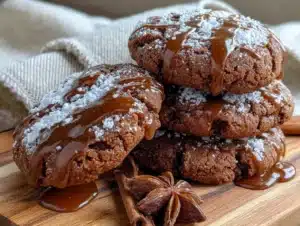
Apple Cider Cookies with Caramel Drizzle : Skip the cinnamon glaze and drizzle the cookies with store-bought or homemade caramel sauce instead. Sprinkle a little flaky sea salt on top for that sweet-salty combo. This version is a little more decadent, but sometimes that’s exactly what you need.
Gluten-Free Version : Substitute the all-purpose flour with a 1:1 gluten-free flour blend that contains xanthan gum. I’ve tested this with Bob’s Red Mill 1:1 Baking Flour, and it worked great. The cookies were a bit more delicate, so handle them gently when transferring to the cooling rack.
Vegan Version : Use vegan butter (I like Earth Balance) and a flax egg (1 tablespoon ground flaxseed mixed with 3 tablespoons water, let sit for 5 minutes). For the glaze, use plant-based milk. The texture will be slightly less tender, but the flavor is still fantastic.
Add Mix-Ins : Fold in 1/2 cup of chopped pecans, walnuts, or dried cranberries after you combine the wet and dry ingredients. The nuts add a nice crunch, and the cranberries give little bursts of tartness. I made a batch with white chocolate chips once, and honestly, it was incredible.
Serving & Storage Suggestions
These cookies are best served at room temperature, with the glaze fully set. They’re perfect on their own, but they also pair beautifully with a hot cup of coffee, spiced chai, or a mug of warm apple cider. If you’re serving them at a fall gathering, arrange them on a wooden board with some cinnamon sticks and star anise for a pretty presentation.
For storage, place the cookies in an airtight container at room temperature. They’ll stay fresh for up to 5 days. If you stack them, put a piece of parchment paper between the layers to prevent the glaze from smudging. Honestly, I think they taste even better on day two — the flavors have time to meld together, and the texture gets even softer.
You can also freeze these cookies, with or without the glaze. To freeze unglazed cookies, let them cool completely, then place them in a single layer in a freezer-safe bag or container. They’ll keep for up to 3 months. When you’re ready to serve them, thaw them at room temperature, then make the glaze and drizzle it on. If you’ve already glazed them, freeze them in a single layer on a baking sheet, then transfer to a freezer bag. Thaw in the fridge overnight to prevent the glaze from getting sticky.
For reheating, pop a cookie in the microwave for about 10 seconds. It softens the cookie and makes the glaze slightly warm and gooey. It’s a dangerous game, though — once you start, it’s hard to stop.
Nutritional Information & Benefits
Here’s the estimated nutritional breakdown for one cookie (based on 24 cookies):
- Calories : 145
- Total Fat : 5g
- Saturated Fat : 3g
- Cholesterol : 20mg
- Sodium : 95mg
- Total Carbohydrates : 24g
- Dietary Fiber : 0.5g
- Sugars : 16g
- Protein : 1.5g
These numbers are estimates and will vary based on the specific brands and ingredients you use. While these aren’t health food by any stretch, there are a few bright spots. The apple cider provides a small amount of vitamin C and antioxidants, and the cinnamon has anti-inflammatory properties. The brown sugar adds a touch of molasses, which contains trace amounts of calcium and iron. But let’s be real — these are a treat, and they’re meant to be enjoyed as such.
If you’re watching your sugar intake, you could try reducing the granulated sugar to 3/4 cup, but the texture will be slightly less tender. For a lower-fat option, you can substitute half the butter with unsweetened applesauce, but the cookies will be more cake-like and less tender. I’ve tried it, and it’s not bad, but it’s not the same.
These cookies are not gluten-free, vegan, or dairy-free in their standard form, but I’ve included variations above if you need to adapt them. They do contain wheat and dairy, so keep that in mind if you’re baking for someone with allergies.
Conclusion
These Cozy Iced Apple Cider Cookies with Cinnamon Glaze are everything I wanted them to be — soft, flavorful, and full of that nostalgic fall feeling that’s so hard to bottle up. They’re not the fanciest cookies you’ll ever make, but they might just be the coziest. The process of reducing the cider, the smell of cinnamon filling the kitchen, the way the glaze sets into that perfect crackly top — it all adds up to something that feels like a hug in cookie form.
I love that this recipe is forgiving enough for beginner bakers but special enough to impress at a holiday gathering. You can make it your own with different glazes, mix-ins, or spice combinations. That’s the beauty of a good base recipe — it’s a starting point, not a rulebook.
I’d love to hear how these turn out for you. Did you try a variation? Did you add something unexpected? Drop a comment below and let me know — I read every single one, and your ideas often inspire my next batch. If you make these, tag me in your photos on social media. There’s something so satisfying about seeing these cookies in someone else’s kitchen, knowing they’re creating their own little fall memory. Happy baking, friends.
Frequently Asked Questions
Can I use apple juice instead of apple cider?
You can, but the flavor won’t be as rich. Apple juice is thinner and less concentrated, so you’ll get a milder apple taste. If you’re in a pinch, add 1/4 teaspoon of apple cider vinegar to the juice to mimic some of that tangy depth.
Why did my cookies spread too much?
This usually happens for one of two reasons: the dough wasn’t chilled long enough, or the cider wasn’t reduced enough. Make sure you chill the dough for at least 45 minutes, and reduce the cider until it’s thick and syrupy. If your kitchen is warm, you can chill the dough for up to 2 hours.
Can I make the dough ahead of time?
Absolutely. The dough can be refrigerated for up to 2 days. Just wrap it tightly in plastic wrap to prevent it from drying out. You can also freeze the dough balls for up to 3 months. Bake them straight from frozen, adding 1 to 2 minutes to the baking time.
How do I know when the cookies are done?
Look for edges that are set and lightly golden, with centers that still look slightly soft and puffy. They’ll continue to bake on the hot baking sheet for a few minutes after you take them out. If you’re unsure, err on the side of underbaking — overbaked cookies will be dry and crumbly.
Can I skip the glaze?
You can, but you’ll be missing out. The glaze adds sweetness and a beautiful crackly texture that really makes these cookies special. If you want a lighter option, you can dust them with powdered sugar and a pinch of cinnamon instead. That’s still delicious, just not as showy.
Pin This Recipe!

Perfect Cozy Iced Apple Cider Cookies Recipe — Best Fall Dessert

These soft, pillowy apple cider cookies are packed with concentrated apple flavor from reduced cider and topped with a cinnamon glaze. They’re the perfect fall treat that tastes like a season you want to bottle up.
- Prep Time: 30 minutes
- Cook Time: 12 minutes
- Total Time: 1 hour 27 minutes (includes 45 minutes chilling)
- Yield: 24 cookies 1x
- Category: Dessert
- Cuisine: American
Ingredients
- 1 cup (240 ml) fresh apple cider
- 1/2 cup (113 g) unsalted butter, softened
- 1 cup (200 g) granulated sugar
- 1/2 cup (100 g) packed light brown sugar
- 1 large egg, at room temperature
- 1 teaspoon vanilla extract
- 2 cups (250 g) all-purpose flour
- 1 teaspoon baking soda
- 1/2 teaspoon baking powder
- 1 teaspoon ground cinnamon
- 1/4 teaspoon ground nutmeg
- 1/2 teaspoon salt
- 1 cup (120 g) powdered sugar, sifted
- 1/2 teaspoon ground cinnamon (for glaze)
- 2 to 3 tablespoons milk
- 1/4 teaspoon vanilla extract (optional, for glaze)
Instructions
- Reduce the apple cider: Pour 1 cup apple cider into a medium saucepan. Bring to a boil over medium-high heat, then reduce to a steady simmer. Cook for 15-20 minutes, stirring occasionally, until reduced to about 1/4 cup and syrupy. Pour into a small bowl and let cool completely.
- Cream the butter and sugars: In a large mixing bowl, beat 1/2 cup softened butter with 1 cup granulated sugar and 1/2 cup packed light brown sugar on medium speed for 2-3 minutes until light and fluffy. Scrape down the sides.
- Add the wet ingredients: Add 1 large egg, 1 teaspoon vanilla extract, and the cooled reduced cider. Beat on low speed until just combined.
- Mix the dry ingredients: In a separate bowl, whisk together 2 cups all-purpose flour, 1 teaspoon baking soda, 1/2 teaspoon baking powder, 1 teaspoon ground cinnamon, 1/4 teaspoon ground nutmeg, and 1/2 teaspoon salt.
- Combine wet and dry: Gradually add the dry ingredients to the wet mixture, mixing on low speed until just combined. Fold in any remaining flour with a rubber spatula.
- Chill the dough: Cover the bowl with plastic wrap and refrigerate for at least 45 minutes, or up to 2 days.
- Preheat and prep: About 15 minutes before baking, preheat oven to 350°F (175°C). Line two baking sheets with parchment paper.
- Scoop and bake: Use a cookie scoop or two spoons to portion dough into 1.5-tablespoon balls. Place 2 inches apart on prepared sheets. Bake for 10-12 minutes, until edges are set and lightly golden. Centers will still look soft.
- Cool completely: Let cookies cool on baking sheet for 5 minutes, then transfer to a wire rack to cool completely.
- Make the glaze and drizzle: In a small bowl, whisk together 1 cup powdered sugar, 1/2 teaspoon cinnamon, and 2 tablespoons milk. Add more milk if needed for drizzling consistency. Drizzle over cooled cookies. Let glaze set for 20 minutes before serving.
Notes
Chilling the dough is crucial to prevent spreading. Reduce the cider until syrupy for best flavor. Let glaze set completely before stacking. Cookies stay fresh up to 5 days in an airtight container.
Nutrition
- Serving Size: 1 cookie
- Calories: 145
- Sugar: 16
- Sodium: 95
- Fat: 5
- Saturated Fat: 3
- Carbohydrates: 24
- Fiber: 0.5
- Protein: 1.5
Keywords: apple cider cookies, fall cookies, cinnamon glaze, soft cookies, apple dessert, autumn baking