My friend Marco asked why I couldn’t just throw a whole roasted butternut squash into the blender with the cheese sauce instead of painstakingly cubing and boiling it. I started to explain why that wouldn’t work — something about texture and water content and the sacred rules of béchamel. Then I stopped. Honestly, I had no good reason. I was just being stubborn about doing things the way I always had. So I shrugged, said “fine, let’s try it your way,” and braced for disaster.
What happened next was one of those humbling kitchen moments you don’t forget. The sauce came together in half the time. It was silkier, creamier, and somehow more buttery without any extra butter. Marco stood there with this look of pure vindication while I scraped the blender clean with my finger. I mean, I’ve been cooking professionally for over a decade, and a guy who once set a grilled cheese on fire taught me something about efficiency. The universe has a sense of humor, you know?
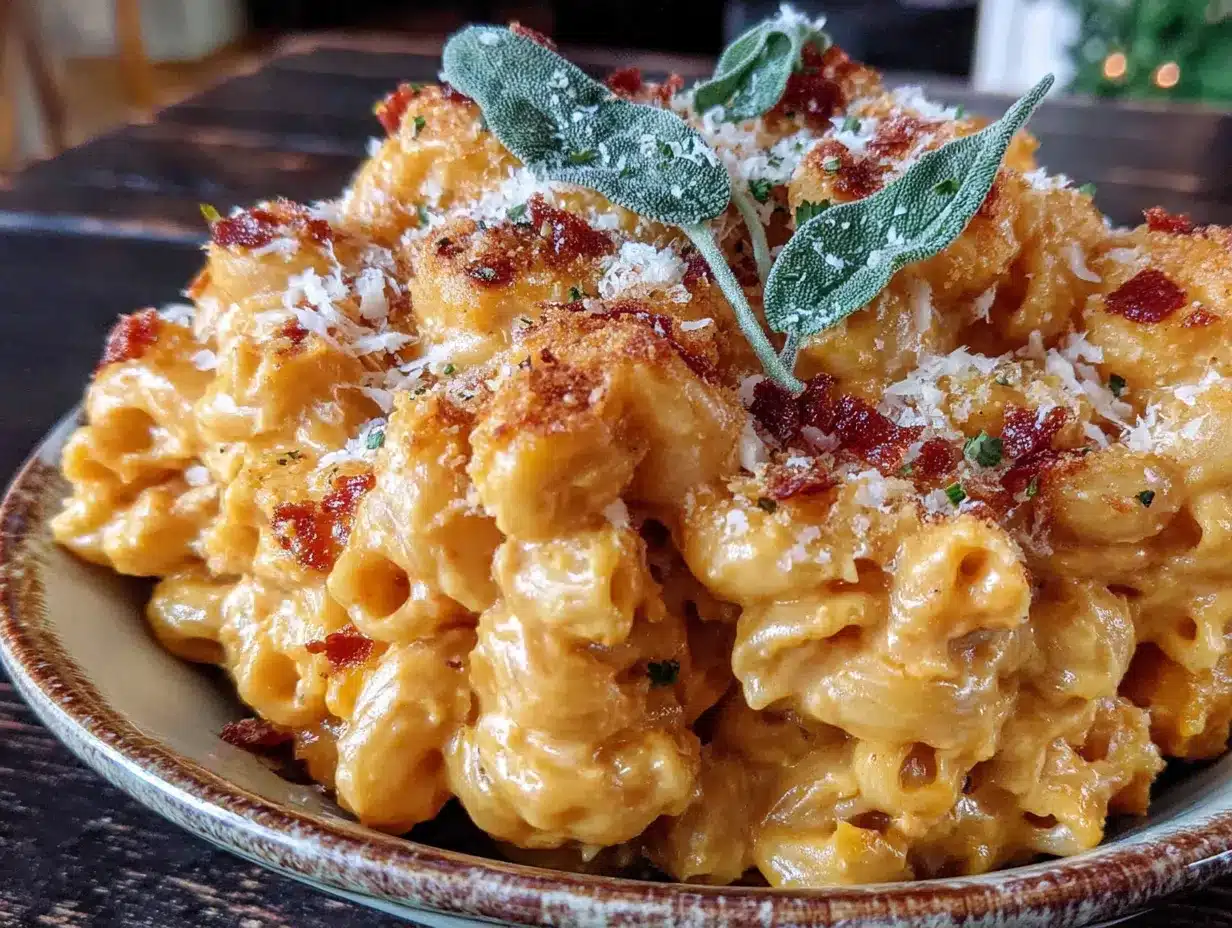
That night, we served that Crowd-Pleasing Butternut Squash Mac and Cheese at a small dinner party, and three people asked for the recipe before finishing their first helping. I kept telling them about Marco’s blender trick like I hadn’t fought it twenty minutes earlier. Maybe you’ve been there — that moment when you realize the “wrong” way is actually better. This recipe became my go-to for every gathering since. It’s the dish people hover around, the one that gets scraped clean, the one that makes you look like you planned something brilliant when really you just got out of your own way.
Why You’ll Love This Recipe
Let me tell you why this butternut squash mac and cheese has earned a permanent spot in my hosting rotation. It solves every problem you face when cooking for a crowd.
- Incredibly Creamy Without Heavy Cream: The blended squash creates this velvety texture that feels indulgent but isn’t. You get all the comfort with less guilt.
- One-Pot Sauce Magic: Roast the squash, blend it with your cheese sauce ingredients, and you’re done. No roux-making, no constant whisking, no worrying about lumps.
- Prep-Ahead Friendly: Make the sauce three days in advance. Assemble the whole dish the morning of your party. Pop it in the oven when guests arrive. Your future self will thank you.
- Hidden Vegetable Victory: Kids eat it without question. Adults compliment the “unique flavor” without realizing they’re eating a full serving of squash. It’s the kind of stealth health that actually tastes amazing.
- Scales Beautifully: This recipe doubles, triples, or quadruples without fuss. I’ve made it for six people and for sixty people with the same formula.
- Always Gets the “Wow”: There’s something about the golden-orange color and that first cheesy pull that makes people stop talking and start eating. It’s a showstopper without being complicated.
This isn’t just another mac and cheese recipe. It’s the one where the squash does the heavy lifting — adding sweetness, creaminess, and a gorgeous color that makes regular mac and cheese look boring in comparison. Perfect for dinner parties, potlucks, holiday gatherings, or any time you want to impress without stress.
What Ingredients You Will Need
This recipe uses simple, wholesome ingredients that work together to create something truly special. Most of these are pantry staples, with the star ingredient being the humble butternut squash.
For the Butternut Squash Puree
- 1 medium butternut squash (about 2-2.5 pounds) — Look for one that feels heavy for its size with firm, unblemished skin. I prefer organic when possible, but conventional works fine.
- 2 tablespoons olive oil — For roasting. A good quality extra virgin adds flavor, but regular works too.
- ½ teaspoon salt — Kosher salt preferred for even seasoning.
- ¼ teaspoon black pepper — Freshly ground if you have it.
For the Cheese Sauce
- 4 tablespoons unsalted butter — Adds richness. Use salted butter and reduce added salt if that’s what you have.
- 3 tablespoons all-purpose flour — For thickening the sauce. Gluten-free flour blends work well here too.
- 2 cups whole milk — Full-fat gives the creamiest results. 2% works but the sauce will be slightly thinner.
- 1 cup heavy cream — Optional but recommended for extra luxury. Substitute with half-and-half for a lighter version.
- 2 cups sharp cheddar cheese, shredded — I recommend Tillamook or Cabot for consistent melting. Always shred your own — pre-shredded cheese contains anti-caking agents that make sauces grainy.
- 1 cup Gruyère cheese, shredded — Adds nuttiness and incredible meltability. Swiss or fontina work as substitutes.
- ½ cup Parmesan cheese, grated — Use real Parmesan, not the stuff in the green can. The flavor difference is night and day.
- 1 teaspoon Dijon mustard — Don’t skip this. It doesn’t taste like mustard; it just makes the cheese taste cheesier.
- ½ teaspoon garlic powder — Not fresh garlic, which can make the sauce bitter. Trust me on this one.
- ¼ teaspoon nutmeg, freshly grated — A tiny amount that elevates the whole dish. Pre-ground works but fresh is noticeably better.
- Salt and pepper to taste — The cheese adds saltiness, so taste before adding more.
For the Pasta
- 1 pound elbow macaroni — Classic choice. Cavatappi, shells, or fusilli work great too. The ridges hold more sauce.
- Salt for pasta water — Should taste like the sea. This is your only chance to season the pasta itself.
For the Topping
- 1 cup panko breadcrumbs — Regular breadcrumbs work but panko gives superior crunch.
- 2 tablespoons butter, melted — For tossing with breadcrumbs.
- ¼ cup Parmesan cheese, grated — For extra flavor in the topping.
- Fresh thyme or parsley for garnish — Optional but makes it look restaurant-worthy.
Equipment Needed
Nothing too fancy here. Most of these items are probably already in your kitchen.
- Large baking sheet — For roasting the squash. A rimmed sheet prevents juices from spilling.
- Blender or food processor — This is where Marco’s trick comes in. A high-speed blender works best, but any blender will do. An immersion blender with a tall container also works.
- Large pot — For boiling pasta. At least 6-quart capacity.
- Medium saucepan — For making the cheese sauce.
- 9×13-inch baking dish — Standard size for this recipe. A 3-quart casserole dish works too.
- Whisk — For smooth sauce. A silicone whisk won’t scratch your pots.
- Cheese grater — Please grate your own cheese. I learned this lesson after years of grainy sauces. A box grater or food processor with grating disc works.
- Aluminum foil — For covering during baking.
If you don’t have a blender, you can mash the roasted squash thoroughly with a potato masher and whisk it into the sauce. The texture won’t be quite as silky, but it still works beautifully.
Preparation Method
Step 1: Roast the Squash
Preheat your oven to 400°F (200°C). Cut the butternut squash in half lengthwise and scoop out the seeds. Drizzle the cut sides with olive oil and sprinkle with salt and pepper. Place cut-side down on a baking sheet lined with parchment paper. Roast for 35-40 minutes until the flesh is fork-tender. Let it cool slightly, then scoop the flesh into your blender. You should have about 2 cups of squash puree.
Step 2: Cook the Pasta
While the squash roasts, bring a large pot of salted water to a boil. Add your pasta and cook until al dente — about 1-2 minutes less than the package directions. The pasta will continue cooking in the oven. Drain and set aside. Don’t rinse it; the starch helps the sauce cling.
Step 3: Make the Cheese Sauce
In a medium saucepan over medium heat, melt the butter. Add the flour and whisk constantly for 1-2 minutes until golden and fragrant. This is your roux. Slowly pour in the milk while whisking continuously to prevent lumps. Add the heavy cream and continue whisking until the mixture thickens enough to coat the back of a spoon, about 3-4 minutes.
Step 4: Blend the Sauce
Reduce the heat to low. Add the roasted squash puree to the blender along with the milk mixture. Blend until completely smooth — about 30 seconds. Pour this mixture back into the saucepan. Add the shredded cheddar, Gruyère, Parmesan, Dijon mustard, garlic powder, and nutmeg. Stir until all the cheese is melted and the sauce is smooth. Taste and adjust seasoning with salt and pepper.
Step 5: Combine and Assemble
Pour the cheese sauce over the cooked pasta and stir until every piece is coated. The sauce will seem thin, but it thickens as it bakes. Transfer everything to your greased 9×13-inch baking dish and spread evenly.
Step 6: Make the Topping
In a small bowl, combine the panko breadcrumbs with melted butter and grated Parmesan. Sprinkle this mixture evenly over the mac and cheese.
Step 7: Bake
Place the dish in the oven and bake at 375°F (190°C) for 20-25 minutes until bubbly and golden on top. If the top browns too quickly, tent with foil for the last 10 minutes. Let it rest for 5 minutes before serving — this allows the sauce to set and prevents it from being runny.
Cooking Tips & Techniques
I’ve made this recipe more times than I can count, and I’ve learned a few things the hard way. Here’s what I wish someone had told me.
Don’t overcook the pasta. This is the most common mistake. If your pasta is fully cooked before baking, it turns into mush in the oven. Cook it just until it’s still firm in the center — al dente means “to the tooth,” and that’s exactly what you want.
Grate your own cheese. I know it’s tempting to buy the bagged shreds. I’ve done it. Every time, the sauce comes out grainy and slightly greasy. Pre-shredded cheese has cellulose and starch coatings that prevent clumping but also prevent smooth melting. Spend the two minutes grating your own. Your sauce will thank you.
Taste the sauce before adding salt. Cheese is salty. Parmesan is especially salty. I once ruined a batch by salting before tasting and ended up with something that could have cured meat. Taste first, adjust second.
Let it rest after baking. I know you want to dig in immediately. But that five-minute rest is crucial. The sauce continues to thicken, and the flavors meld together. Serve it too soon, and you’ll have a soupy mess. Trust the process.
Make extra sauce. If you’re feeding a crowd, double the sauce recipe but keep the pasta amount the same. Extra saucy mac and cheese is always better than dry mac and cheese. Nobody ever complained about too much cheese sauce.
Prep everything before you start. Grate the cheese, measure the milk, have your spices ready. Once you start making the sauce, things move quickly, and you don’t want to be scrambling for ingredients while your roux burns. I learned this one the messy way.
Variations & Adaptations
This recipe is wonderfully flexible. Here are some ways to make it your own.
Make It Gluten-Free
Use gluten-free pasta (I like Banza chickpea pasta or Jovial brown rice pasta). Swap the all-purpose flour for a 1:1 gluten-free flour blend or cornstarch. Use gluten-free panko breadcrumbs for the topping. The sauce texture remains identical — I’ve tested this multiple times for friends with celiac disease.
Add Protein
Transform this into a complete meal by adding cooked, crumbled bacon, shredded rotisserie chicken, or crispy pancetta. Stir it in before baking, or sprinkle on top for a decorative finish. Leftover Thanksgiving turkey works beautifully here too.
Spice It Up
Add ½ teaspoon of smoked paprika, a pinch of cayenne pepper, or ¼ teaspoon of chipotle powder to the cheese sauce. The smoky heat pairs surprisingly well with the sweetness of the squash. I once added a tablespoon of adobo sauce from a can of chipotles, and it was life-changing.
Vegetable Boost
Fold in 2 cups of steamed broccoli florets, sautéed mushrooms, or roasted Brussels sprouts before baking. The creamy sauce coats everything beautifully, and it’s an easy way to add more vegetables without anyone complaining.
Dairy-Free Version
Use unsweetened oat milk or cashew milk instead of dairy milk. Replace the butter with vegan butter or olive oil. Use dairy-free cheese shreds — I’ve had good results with Violife and Miyoko’s brands. The squash helps create creaminess even without dairy, so it’s not a total loss.
Serving & Storage Suggestions
This mac and cheese is best served hot, straight from the oven. The topping should be golden and crisp, the sauce bubbly around the edges. I like to garnish with fresh thyme leaves or chopped parsley for a pop of green that contrasts with the orange sauce.
What to serve alongside: A simple green salad with vinaigrette cuts through the richness perfectly. Roasted broccoli or green beans add color and freshness. If you’re hosting a dinner party, this pairs beautifully with roast chicken or grilled steak. For a potluck, it’s a complete dish on its own.
Storage: Leftovers keep in an airtight container in the refrigerator for up to 4 days. The pasta will absorb some sauce as it sits, so don’t be alarmed if it seems drier the next day.
Reheating: The best way to reheat is in the oven at 350°F for 10-15 minutes, covered with foil. Add a splash of milk before reheating to restore creaminess. The microwave works in a pinch, but the texture won’t be as good. I’ve also reheated single portions in a skillet with a little milk — it gets crispy edges that are actually delicious.
Freezing: This recipe freezes beautifully. Assemble the dish completely but don’t bake it. Cover tightly with foil and freeze for up to 3 months. To bake from frozen, add 20-25 minutes to the baking time and cover with foil for the first half. The topping won’t be as crispy, but the flavor remains excellent.
The flavors actually deepen after a day in the fridge. I sometimes make this specifically to eat as leftovers. Don’t judge me until you’ve tried cold mac and cheese straight from the container at midnight.
Nutritional Information & Benefits
Here’s the estimated nutrition per serving (based on 8 servings):
- Calories: 485
- Protein: 22g
- Carbohydrates: 48g
- Fat: 24g
- Fiber: 4g
- Sugar: 8g
- Sodium: 620mg
- Vitamin A: 180% DV
- Vitamin C: 25% DV
The butternut squash is the real hero here nutritionally. It’s packed with vitamin A (in the form of beta-carotene), which supports eye health and immune function. It also provides fiber, potassium, and vitamin C. By replacing some of the heavy cream with squash puree, you’re cutting calories and fat while adding nutrients. It’s not health food, but it’s healthier mac and cheese — and it tastes better than the original.
This recipe contains dairy and gluten. For dairy-free or gluten-free options, check the variations section above. The squash provides natural sweetness, so you get that comfort food satisfaction without as much added sugar or processed ingredients.
Conclusion
This Crowd-Pleasing Butternut Squash Mac and Cheese has become my secret weapon for every gathering. It’s the dish that disappears first, the one people ask about, the one that makes me look like I spent hours in the kitchen when really, Marco’s blender trick made everything faster and easier.
What I love most about this recipe is how it brings people together. There’s something about a big dish of creamy, cheesy pasta that makes everyone feel welcome. Add the subtle sweetness of roasted squash, the golden crunch of the topping, and the fact that you can make it ahead of time, and you’ve got a recipe that works as hard as you do.
I’d love to hear how this turns out for you. Did you try any variations? Did your guests guess the secret ingredient? Drop a comment below and let me know. And if you’re looking for more crowd-pleasing recipes, check out my creamy Tuscan chicken pasta or easy slow cooker pulled pork for your next gathering. Happy cooking!
Frequently Asked Questions
Can I use frozen butternut squash instead of fresh?
Absolutely. Use about 2 cups of frozen cubed squash. Roast it directly from frozen at 400°F for 25-30 minutes, or steam it according to package directions. The texture will be slightly different, but the flavor remains excellent. I’ve done this many times when butternut squash wasn’t in season.
Why is my sauce grainy?
Grainy sauce usually comes from pre-shredded cheese or overheating. Always grate your own cheese from a block. Also, keep the heat on low when adding cheese to the sauce — high heat causes the proteins to separate and become grainy. If your sauce does turn grainy, try blending it with an immersion blender to smooth it out.
Can I make this vegetarian or vegan?
This recipe is already vegetarian as written. For vegan, use dairy-free cheese, plant-based milk, and vegan butter. The squash helps create creaminess, so it works better than most vegan mac and cheese recipes. I recommend following the dairy-free variation notes above for best results.
How do I prevent the topping from burning?
If the panko topping is browning too quickly, tent the dish loosely with aluminum foil for the last 10-15 minutes of baking. You can also check it at the 15-minute mark and cover it if needed. Every oven runs slightly differently, so keep an eye on it.
Can I use a different type of squash?
Yes! Kabocha, acorn, or even pumpkin work well. Each variety has slightly different sweetness and moisture content, so you may need to adjust the milk quantity slightly. Buttercup squash gives a particularly creamy result. I’ve even used sweet potatoes in a pinch — they’re not technically squash, but the flavor profile works beautifully.
Pin This Recipe!
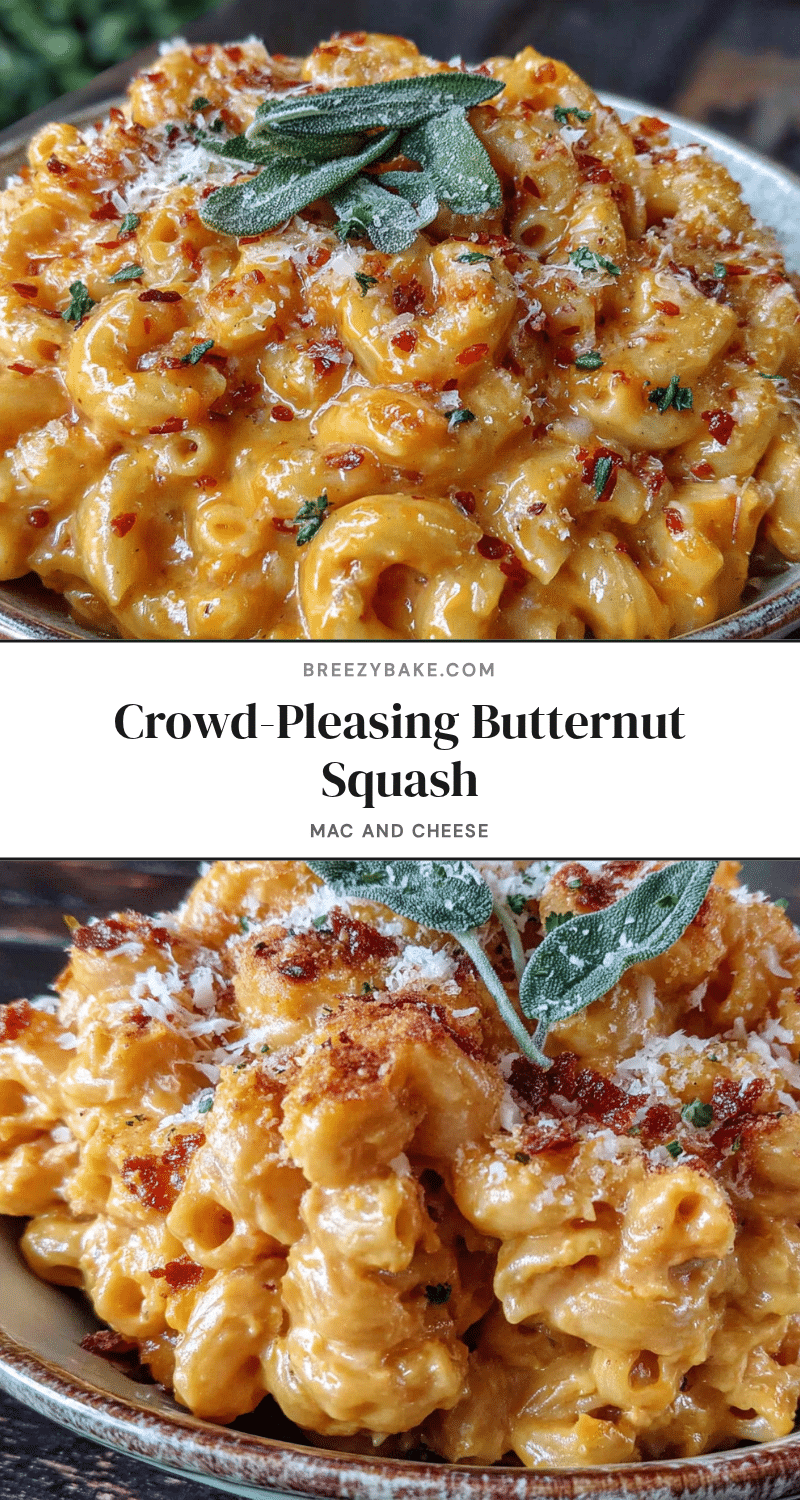
Easy Butternut Squash Mac and Cheese Recipe

This creamy, crowd-pleasing mac and cheese uses roasted butternut squash blended into the cheese sauce for a silky texture and hidden vegetable boost. A one-pot sauce trick makes it faster and easier than traditional recipes.
- Prep Time: 15 minutes
- Cook Time: 45 minutes
- Total Time: 1 hour
- Yield: 8 servings 1x
- Category: Main Course
- Cuisine: American
Ingredients
- 1 medium butternut squash (about 2–2.5 pounds)
- 2 tablespoons olive oil
- ½ teaspoon salt
- ¼ teaspoon black pepper
- 4 tablespoons unsalted butter
- 3 tablespoons all-purpose flour
- 2 cups whole milk
- 1 cup heavy cream (optional)
- 2 cups sharp cheddar cheese, shredded
- 1 cup Gruyère cheese, shredded
- ½ cup Parmesan cheese, grated
- 1 teaspoon Dijon mustard
- ½ teaspoon garlic powder
- ¼ teaspoon nutmeg, freshly grated
- Salt and pepper to taste
- 1 pound elbow macaroni
- Salt for pasta water
- 1 cup panko breadcrumbs
- 2 tablespoons butter, melted
- ¼ cup Parmesan cheese, grated (for topping)
- Fresh thyme or parsley for garnish (optional)
Instructions
- Preheat oven to 400°F (200°C). Cut butternut squash in half lengthwise, scoop out seeds. Drizzle cut sides with olive oil, sprinkle with salt and pepper. Place cut-side down on a parchment-lined baking sheet. Roast 35-40 minutes until fork-tender. Let cool slightly, then scoop flesh into blender (about 2 cups puree).
- While squash roasts, bring a large pot of salted water to a boil. Cook pasta until al dente (1-2 minutes less than package directions). Drain and set aside; do not rinse.
- In a medium saucepan over medium heat, melt butter. Add flour and whisk constantly for 1-2 minutes until golden and fragrant. Slowly pour in milk while whisking continuously. Add heavy cream and whisk until mixture thickens enough to coat the back of a spoon, about 3-4 minutes.
- Reduce heat to low. Add roasted squash puree to blender along with the milk mixture. Blend until completely smooth, about 30 seconds. Pour back into saucepan. Add shredded cheddar, Gruyère, Parmesan, Dijon mustard, garlic powder, and nutmeg. Stir until cheese is melted and sauce is smooth. Taste and adjust seasoning with salt and pepper.
- Pour cheese sauce over cooked pasta and stir until every piece is coated. Transfer to a greased 9×13-inch baking dish and spread evenly.
- In a small bowl, combine panko breadcrumbs with melted butter and grated Parmesan. Sprinkle evenly over mac and cheese.
- Bake at 375°F (190°C) for 20-25 minutes until bubbly and golden on top. If top browns too quickly, tent with foil for last 10 minutes. Let rest 5 minutes before serving.
Notes
Don’t overcook the pasta; cook al dente. Grate your own cheese for smooth sauce. Taste sauce before adding salt. Let rest 5 minutes after baking. Make extra sauce for saucier mac and cheese. Prep all ingredients before starting.
Nutrition
- Serving Size: 1 serving (about 1/8
- Calories: 485
- Sugar: 8
- Sodium: 620
- Fat: 24
- Saturated Fat: 14
- Carbohydrates: 48
- Fiber: 4
- Protein: 22
Keywords: butternut squash mac and cheese, easy mac and cheese, crowd-pleasing mac and cheese, hidden vegetable mac and cheese, creamy mac and cheese, one-pot mac and cheese