It was 11:47 PM on a rainy Tuesday in late October, and I had a bone-deep craving for something slow and red and wine-soaked. The kind of dinner that takes all day, the kind that fills the whole house with steam and promises. But here’s the thing — I didn’t have a proper chuck roast, and I definitely didn’t have the patience for a long braise at that hour. What I did have was a half-empty bottle of Cabernet from last weekend, some sad-looking carrots in the crisper, and a wild idea that maybe, just maybe, I could cheat the system. So I grabbed my Dutch oven, turned the music up way too loud for a weeknight, and decided to make a red wine beef stew that would taste like it had been simmering for hours — even if it was coming together on a whim at nearly midnight.
Let me tell you, there’s something about cooking alone late at night that makes you bolder. You take risks. You add that extra glug of wine. You throw in a parsnip you bought on a whim and forgot about. I didn’t have celery, so I used fennel. I didn’t have fresh thyme, so I raided my dried herb collection. And honestly? It worked. Better than worked. It was the kind of stew that makes you close your eyes after the first bite and just… breathe. The beef was tender, the broth was thick and glossy, and those root vegetables had soaked up all that wine and garlic until they were practically candy.
Maybe you’ve been there — standing in your kitchen at a weird hour, craving something that feels like a hug in a bowl, but not wanting to wait all day for it. This cozy red wine beef stew with root vegetables is for those exact moments. It’s the shortcut that doesn’t taste like one. It’s the meal that makes you feel like you’ve got your life together, even if you’re eating it at midnight in your pajamas. I’ve been making this version for three years now, and it’s never let me down. Not once.
Why You’ll Love This Recipe
This isn’t just another beef stew recipe. I’ve tested this one at least a dozen times, tweaking the wine-to-broth ratio, playing with cooking times, and even dragging my chef friend over for a taste test. What we landed on is pure comfort — faster than a traditional braise but with all the deep, savory flavor you’d expect from a stew that’s been bubbling all afternoon. Here’s why this one’s a keeper:
- Quick & Easy: Comes together in about an hour and a half, most of which is hands-off simmering. Perfect for a cozy weeknight or a lazy Sunday.
- Simple Ingredients: No fancy grocery trips. Beef stew meat, a bottle of red wine you’d actually drink, and whatever root vegetables you have on hand.
- Perfect for Cold Weather: This is the ultimate rainy day dinner. It warms you from the inside out and makes your whole kitchen smell incredible.
- Crowd-Pleaser: I’ve served this to picky kids, vegetarian friends who “just wanted a taste,” and my dad who claims he doesn’t like wine — everyone goes back for seconds.
- Unbelievably Delicious: The secret is browning the beef really well and letting the wine reduce until it’s almost syrupy before adding the broth. That’s where the magic happens.
What makes this recipe different is the technique. Most stews just dump everything in and hope for the best. But here, we take a few extra minutes to sear the meat in batches, deglaze the pan properly, and let the vegetables caramelize before adding liquid. It’s not complicated, but it makes a world of difference. The result is a stew that’s rich, velvety, and deeply satisfying — the kind that makes you forget you’re eating something that’s actually pretty healthy for you.
This recipe is comfort food reimagined. It’s faster than the classic version, but it has the same soul-soothing satisfaction. Perfect for impressing guests without stress, or turning a simple Tuesday night into something memorable. Honestly, it’s the kind of stew that makes you want to curl up on the couch with a good book and not move for hours.
What Ingredients You Will Need
This cozy red wine beef stew with root vegetables uses simple, honest ingredients that work together to create something truly special. Most of these are pantry staples or easy to find at any grocery store. I’ve included some substitution notes based on what I’ve learned from making this over and over.
- 2 pounds beef stew meat (chuck or round, cut into 1.5-inch cubes) — Look for well-marbled meat; it stays tender during simmering. I prefer chuck for its rich flavor.
- 3 tablespoons olive oil (divided) — Use a good quality one for browning. Avocado oil works too.
- 1 large yellow onion (diced) — Sweet onions are fine, but yellow gives the best savory base.
- 4 cloves garlic (minced) — Fresh is non-negotiable here. Don’t use jarred.
- 3 tablespoons tomato paste — This adds depth and helps thicken the broth. I like Cento or Amore brands.
- 1 ½ cups dry red wine (Cabernet Sauvignon or Merlot) — Use something you’d drink. The flavor concentrates, so cheap wine tastes cheap here.
- 4 cups beef broth (low sodium) — Homemade is amazing, but store-bought works. I use Pacific Foods brand.
- 2 tablespoons Worcestershire sauce — Adds umami and a little tang. (Use coconut aminos for gluten-free.)
- 2 sprigs fresh rosemary (or 1 teaspoon dried) — Fresh is more fragrant, but dried works in a pinch.
- 2 sprigs fresh thyme (or ½ teaspoon dried) — Same here. Dried is fine, just crush it between your fingers first.
- 2 bay leaves — Don’t skip these. They add a subtle herbal note you’ll miss if they’re gone.
- 3 medium carrots (peeled and cut into 1-inch chunks) — I like using rainbow carrots for color, but orange is classic.
- 3 medium parsnips (peeled and cut into 1-inch chunks) — Parsnips add sweetness and a slightly peppery bite. Swap with extra carrots or celery root if needed.
- 2 medium Yukon Gold potatoes (cut into 1.5-inch chunks) — These hold their shape better than Russets. Red potatoes work too.
- 1 cup frozen peas (optional, but I love them) — Add at the end for a pop of color and sweetness.
- Salt and black pepper (to taste) — Go easy on the salt early; it concentrates as the stew reduces.
- 2 tablespoons all-purpose flour (optional, for thicker stew) — I skip this most of the time because the potatoes and tomato paste do the job.
A quick note on wine: I’ve made this with everything from a $12 Cab to a $30 bottle someone gifted me, and honestly, the mid-range stuff works best. Too cheap and it tastes sharp; too expensive and you’re wasting money. A good rule is: if you’d drink it, cook with it.
Equipment Needed
You don’t need a fancy kitchen to make this stew, but a few key tools make the process smoother. Here’s what I use every time:
- Dutch oven or heavy-bottomed pot (5-6 quart) — This is non-negotiable. The heavy base distributes heat evenly and retains it for slow simmering. I use a Lodge enameled cast iron one I got on sale.
- Sharp chef’s knife — For cutting beef and vegetables. A dull knife makes everything harder and more dangerous.
- Cutting board — Wood or plastic, just make sure it’s big enough to hold all your chopped veggies.
- Wooden spoon or spatula — For stirring and scraping up the browned bits (the fond) from the bottom of the pot.
- Measuring cups and spoons — For wine, broth, and seasonings. I use a liquid measuring cup for the wine.
- Tongs — For flipping and removing the beef during browning. Much easier than a fork.
- Small bowl — For holding the browned beef while you cook the vegetables.
If you don’t have a Dutch oven, a heavy stainless steel pot or even a slow cooker can work. For the slow cooker version, brown everything on the stovetop first, then transfer to the slow cooker and cook on low for 6-8 hours. Just know you’ll lose some of that deep caramelized flavor. Also, a splatter screen is nice to have when browning the beef — it keeps your stovetop clean. Budget tip: check thrift stores for cast iron Dutch ovens. I found my first one for $15 and it’s still going strong.
Preparation Method
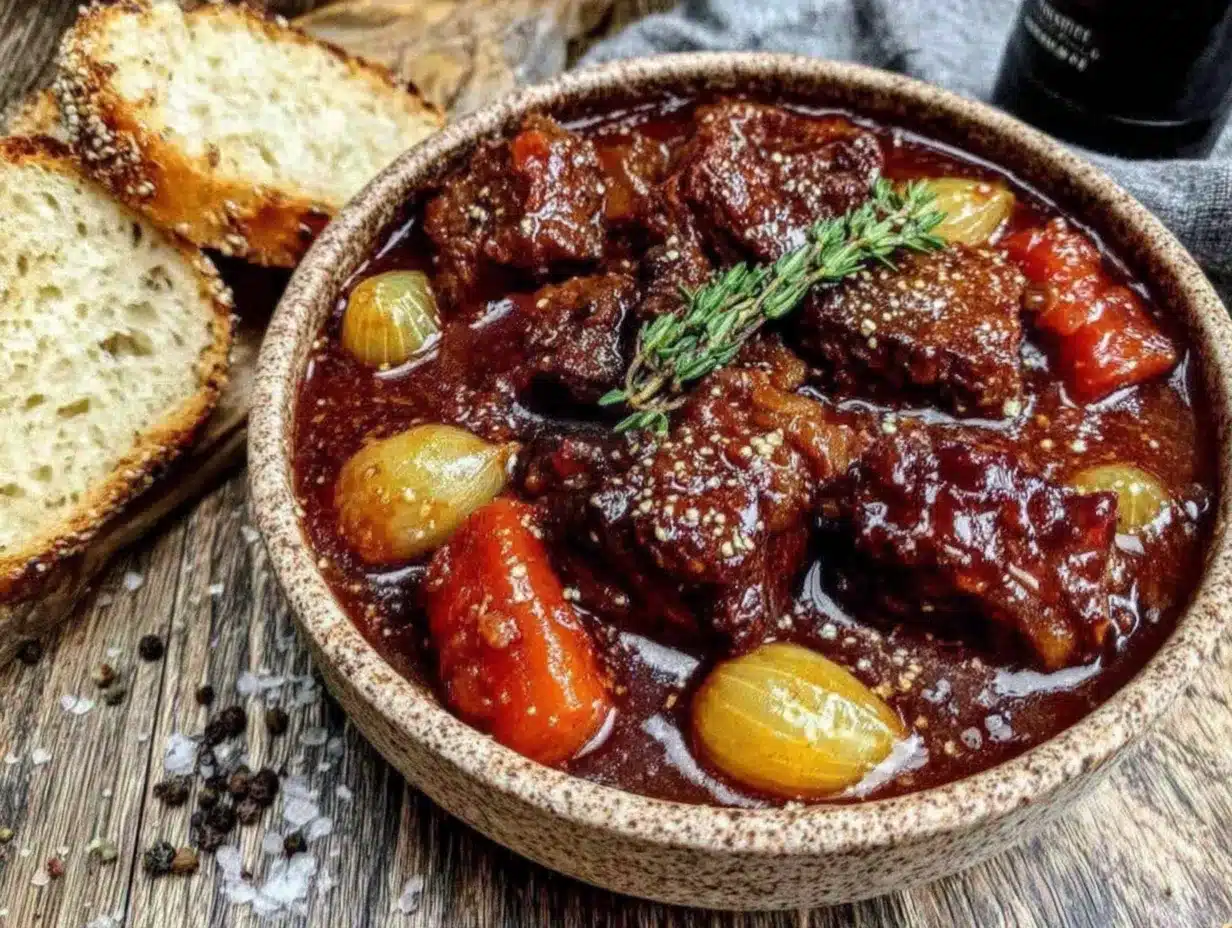
Alright, let’s get cooking. This cozy red wine beef stew with root vegetables comes together in about an hour and a half, but most of that is just letting it simmer. The active work is upfront, and it’s totally worth it.
- Prep the beef: Pat the beef stew meat dry with paper towels. This is crucial — wet meat won’t brown properly. Season generously with salt and black pepper on all sides. Let it sit at room temperature for 15-20 minutes while you prep the vegetables.
- Brown the beef in batches: Heat 2 tablespoons of olive oil in your Dutch oven over medium-high heat until it shimmers. Add the beef in a single layer — don’t crowd the pot. If you add too much at once, it steams instead of browning. Work in 2-3 batches. Cook each batch for 3-4 minutes per side, until deeply browned. Use tongs to transfer the browned beef to a bowl. Don’t rush this step; it’s where most of the flavor comes from.
- Cook the aromatics: Reduce heat to medium. Add the remaining 1 tablespoon of olive oil. Toss in the diced onion and cook for 4-5 minutes, stirring occasionally, until softened and translucent. Scrape up any browned bits from the bottom of the pot — that’s liquid gold. Add the minced garlic and cook for 30 seconds until fragrant. Don’t let it burn.
- Add the tomato paste: Stir in the tomato paste and cook for 2 minutes, stirring constantly. It’ll darken and smell amazing. This step removes the raw, tinny taste and adds depth.
- Deglaze with wine: Pour in the red wine. Use a wooden spoon to scrape up every last bit of browned goodness from the bottom of the pot. Let the wine come to a boil, then reduce the heat to a simmer. Cook for 5-7 minutes, until the wine has reduced by about half and looks slightly syrupy. The alcohol cooks off, leaving behind concentrated flavor.
- Add broth and seasonings: Pour in the beef broth and Worcestershire sauce. Add the rosemary sprigs, thyme sprigs, and bay leaves. Stir to combine. Return the browned beef and any accumulated juices to the pot. Bring to a gentle boil, then reduce heat to low, cover, and let it simmer for 45 minutes. The stew should be bubbling gently, not furiously.
- Add the root vegetables: After 45 minutes, add the carrots, parsnips, and potatoes. Stir everything together. Cover again and simmer for another 25-30 minutes, until the vegetables are fork-tender but not falling apart. The potatoes should offer a little resistance when pierced.
- Finish the stew: Remove the rosemary and thyme sprigs and the bay leaves. If using frozen peas, stir them in now and cook for 2-3 minutes until heated through. Taste and adjust seasoning with salt and pepper. If you want a thicker stew, mix 1 tablespoon of flour with 2 tablespoons of cold water to make a slurry, stir it in, and let it simmer for 5 minutes.
- Rest before serving: Turn off the heat and let the stew sit for 10-15 minutes. This allows the flavors to meld and the meat to relax. It’ll taste even better than when it was bubbling.
A visual cue: the broth should be thick enough to coat the back of a spoon. The beef should shred easily with a fork. If it’s still tough, let it simmer another 15-20 minutes. Patience pays off here.
Cooking Tips & Techniques
I’ve made this stew at least thirty times, and I’ve learned a few things the hard way. Here are my best tips for getting it right every time.
Don’t skip the browning. I know it’s tempting to just dump everything in the pot and walk away, but that deep brown crust on the beef is where all the flavor lives. It’s called the Maillard reaction, and it’s not just chef talk — it’s science. Take the extra 10 minutes. Your taste buds will thank you.
Watch your heat. If the wine boils too vigorously, it’ll evaporate too quickly and leave you with a harsh, acidic flavor. Keep it at a gentle simmer — small bubbles, not a rolling boil. I learned this the hard way when I tried to speed things up and ended up with a stew that tasted like cheap sangria.
Salt carefully. Beef broth and Worcestershire sauce both contain salt, so go easy at the beginning. You can always add more at the end. I usually add a pinch of salt at the start and then adjust after the vegetables are cooked. Trust me, it’s easier to add salt than to fix an oversalted stew (though a raw potato can help absorb excess salt in a pinch).
Let it rest. This is the tip that changed everything for me. After cooking, let the stew sit off the heat for 15-20 minutes before serving. The flavors deepen and meld together in a way they just don’t when it’s piping hot. It’s like the stew needs a minute to collect itself. I once served it immediately and it was good; the next day’s leftovers were incredible.
Multitask wisely. While the beef is browning, chop your vegetables. While the stew is simmering, clean up your kitchen. The active cooking time is only about 30 minutes, so use the passive time wisely. I like to set a timer for the first 45-minute simmer and use that time to read or prep a side dish.
Consistency tip: If your stew is too thin at the end, remove the lid and let it simmer uncovered for 10-15 minutes. If it’s too thick, add a splash of beef broth or water. I prefer mine on the thicker side, almost like a gravy, so I usually leave the lid off for the last 10 minutes of cooking.
Variations & Adaptations
This recipe is forgiving, and I’ve tried quite a few twists over the years. Here are some of my favorites:
- Gluten-Free Version: Skip the flour slurry at the end. The potatoes and tomato paste naturally thicken the stew. Use tamari or coconut aminos instead of Worcestershire sauce (which contains malt vinegar from barley).
- Dairy-Free Version: This recipe is already dairy-free, but if you want to add richness, stir in a splash of full-fat coconut milk at the end. It sounds weird, but it works beautifully.
- Slow Cooker Adaptation: Brown the beef and cook the aromatics on the stovetop first, then transfer everything (including the wine and broth) to a slow cooker. Cook on low for 6-8 hours or high for 4-5 hours. Add the root vegetables in the last 2 hours so they don’t turn to mush.
- Seasonal Variations: In spring, swap the parsnips for asparagus tips (add in the last 10 minutes) and use fresh peas instead of frozen. In summer, add zucchini and bell peppers in the last 15 minutes. In fall, throw in some cubed butternut squash along with the potatoes.
- Herb Swaps: No rosemary or thyme? Use 1 teaspoon of dried oregano and a pinch of dried sage. It gives the stew a slightly different but equally delicious flavor profile.
- Personal Variation: Last winter, I added a cinnamon stick and a pinch of allspice to the broth. It gave the stew a warm, almost Moroccan vibe that was absolutely incredible with the red wine. I served it over couscous and my family still talks about it.
Serving & Storage Suggestions
This cozy red wine beef stew with root vegetables is best served warm, almost hot, in deep bowls. I like to ladle it over a bed of creamy mashed potatoes or wide egg noodles to soak up all that rich broth. A slice of crusty bread for dipping is non-negotiable in my house. For a lighter option, serve it alongside a simple green salad with a lemon vinaigrette to cut through the richness.
For presentation, I sprinkle a little fresh parsley or chives on top right before serving. It adds a pop of color and freshness. A dollop of sour cream or crème fraîche is also lovely, though totally optional.
Storage: This stew tastes even better the next day. Let it cool completely, then transfer to an airtight container. It will keep in the refrigerator for up to 4 days. The flavors continue to meld, and the broth thickens slightly as it sits.
Freezing: This stew freezes beautifully. Portion it into freezer-safe containers or zip-top bags (lay them flat to save space). It will keep for up to 3 months. Thaw overnight in the refrigerator before reheating.
Reheating: Reheat gently on the stovetop over medium-low heat, stirring occasionally. Add a splash of beef broth or water if it’s too thick. You can also microwave individual portions in 30-second bursts, stirring in between. Avoid boiling, as it can make the meat tough.
One thing I love about this stew is how the flavors develop. Day two is always better than day one. The wine mellows, the herbs infuse, and everything just comes together. I’ve been known to make a double batch just so I have leftovers for the week.
Nutritional Information & Benefits
Here’s an estimated nutritional breakdown for one serving (about 1.5 cups) of this stew, based on 6 servings:
| Nutrient | Amount |
|---|---|
| Calories | 385 |
| Protein | 32g |
| Fat | 12g |
| Saturated Fat | 3g |
| Carbohydrates | 28g |
| Fiber | 6g |
| Sugar | 8g |
| Sodium | 680mg |
This stew is packed with nutrients. Beef provides high-quality protein, iron, and B vitamins, which support energy and immune function. Root vegetables like carrots, parsnips, and potatoes are rich in fiber, vitamin A, and potassium. The red wine (in moderation) contains antioxidants like resveratrol, which may support heart health.
Dietary considerations: This recipe is naturally dairy-free and can easily be made gluten-free (see variations). It’s also low in added sugar — the sweetness comes entirely from the vegetables and wine. If you’re watching your sodium, use low-sodium broth and go easy on the salt. I personally love that this stew feels indulgent but is actually pretty balanced. It’s comfort food that nourishes you, not just something that fills you up.
Conclusion
This cozy red wine beef stew with root vegetables has become my go-to for those days when I need a slow, warm hug in a bowl. It’s the recipe I turn to after a long week, on a rainy Sunday, or when I just want to fill my kitchen with something that smells like home. The best part? It doesn’t ask for much from you — just a little patience, a good bottle of wine, and some honest vegetables.
I hope you give this one a try. Don’t be afraid to make it your own — throw in whatever vegetables are languishing in your fridge, use a different herb, or add a splash of balsamic vinegar at the end if that’s what you’re craving. Cooking should feel like play, not a test. And this stew? It’s the perfect playground.
If you make this cozy red wine beef stew with root vegetables, I’d love to hear about it. Drop a comment below, tag me in your photos, or tell me what twist you added. Did you use parsnips or skip them? Did you serve it over mashed potatoes or with crusty bread? Let’s talk stew. It’s the kind of conversation that warms you up, even on the coldest days.
Frequently Asked Questions
Can I use a different type of wine?
Absolutely. A dry red wine like Merlot, Malbec, or even a Zinfandel works well. Avoid sweet wines like port or dessert wines — they’ll make the stew taste sugary. If you don’t have red wine, you can use an extra cup of beef broth with a tablespoon of balsamic vinegar for acidity.
Can I make this in an Instant Pot?
Yes! Use the sauté function to brown the beef and cook the aromatics. Then add the wine, broth, and seasonings. Pressure cook on high for 35 minutes with a natural release. Add the root vegetables, pressure cook for another 5 minutes, then quick release. Stir in the peas and serve.
Why is my beef tough?
This usually happens if the stew isn’t simmered long enough or if the heat was too high. Beef chuck needs time to break down its connective tissue. If it’s tough, let it simmer another 20-30 minutes. Also, make sure you cut the beef against the grain for maximum tenderness.
Can I omit the alcohol?
Sure. Replace the wine with an equal amount of beef broth and add 2 tablespoons of red wine vinegar or balsamic vinegar for acidity. The flavor won’t be as complex, but it’ll still be delicious. Alternatively, use non-alcoholic red wine if you can find it.
How do I prevent the potatoes from falling apart?
Use waxy potatoes like Yukon Golds or red potatoes. They hold their shape better than Russets. Also, add them halfway through the cooking time rather than at the beginning. Cut them into larger chunks — about 1.5 inches — so they have more structural integrity.
Pin This Recipe!
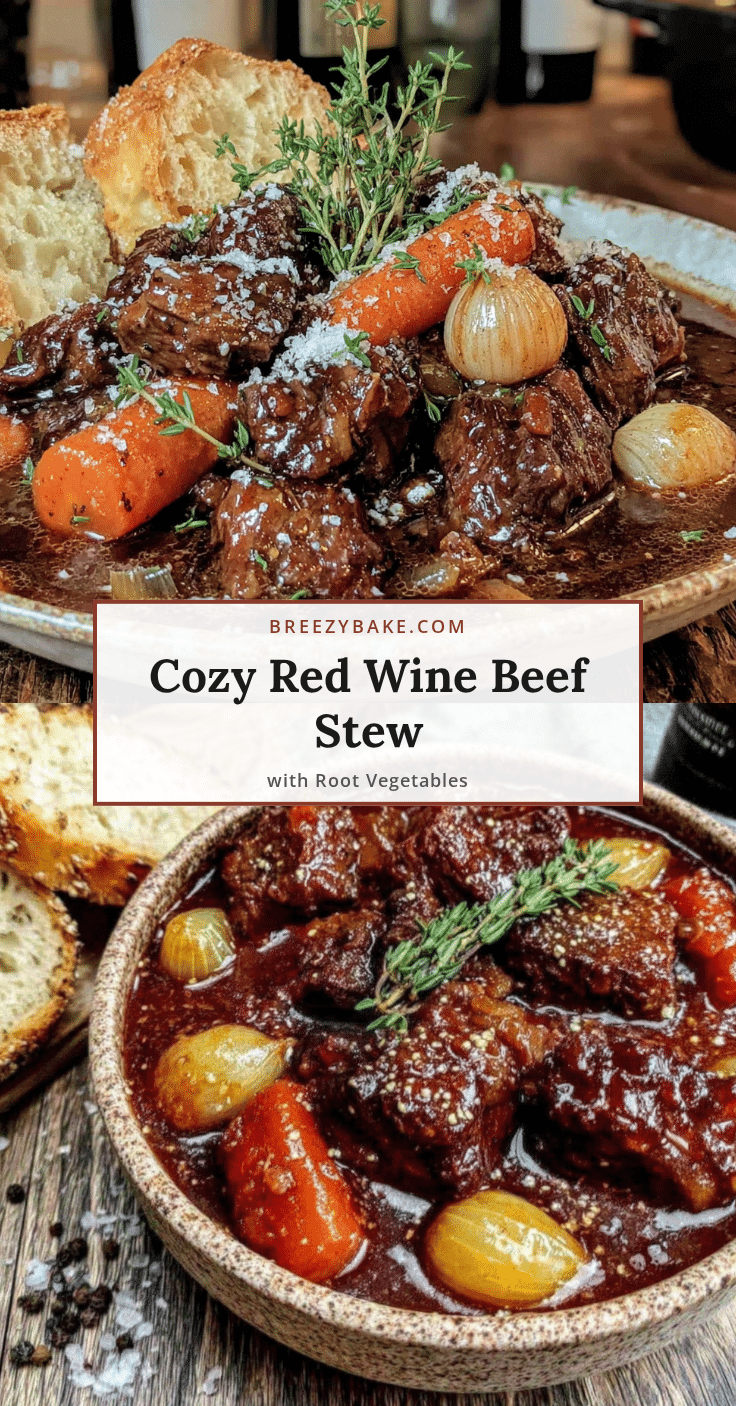
Cozy Red Wine Beef Stew with Root Vegetables – Easy One-Pot Dinner
A rich, savory beef stew made with red wine and root vegetables, ready in about an hour and a half. Perfect for a cozy weeknight dinner, this one-pot meal delivers deep flavor without the long braise.
- Prep Time: 20 minutes
- Cook Time: 1 hour 10 minutes
- Total Time: 1 hour 30 minutes
- Yield: 6 servings 1x
- Category: Main Course
- Cuisine: American
Ingredients
- 2 pounds beef stew meat (chuck or round, cut into 1.5-inch cubes)
- 3 tablespoons olive oil (divided)
- 1 large yellow onion (diced)
- 4 cloves garlic (minced)
- 3 tablespoons tomato paste
- 1 ½ cups dry red wine (Cabernet Sauvignon or Merlot)
- 4 cups beef broth (low sodium)
- 2 tablespoons Worcestershire sauce
- 2 sprigs fresh rosemary (or 1 teaspoon dried)
- 2 sprigs fresh thyme (or ½ teaspoon dried)
- 2 bay leaves
- 3 medium carrots (peeled and cut into 1-inch chunks)
- 3 medium parsnips (peeled and cut into 1-inch chunks)
- 2 medium Yukon Gold potatoes (cut into 1.5-inch chunks)
- 1 cup frozen peas (optional)
- Salt and black pepper (to taste)
- 2 tablespoons all-purpose flour (optional, for thicker stew)
Instructions
- Prep the beef: Pat the beef stew meat dry with paper towels. Season generously with salt and black pepper on all sides. Let it sit at room temperature for 15-20 minutes while you prep the vegetables.
- Brown the beef in batches: Heat 2 tablespoons of olive oil in your Dutch oven over medium-high heat until it shimmers. Add the beef in a single layer — don’t crowd the pot. Work in 2-3 batches. Cook each batch for 3-4 minutes per side, until deeply browned. Use tongs to transfer the browned beef to a bowl.
- Cook the aromatics: Reduce heat to medium. Add the remaining 1 tablespoon of olive oil. Toss in the diced onion and cook for 4-5 minutes, stirring occasionally, until softened and translucent. Scrape up any browned bits from the bottom of the pot. Add the minced garlic and cook for 30 seconds until fragrant.
- Add the tomato paste: Stir in the tomato paste and cook for 2 minutes, stirring constantly. It’ll darken and smell amazing.
- Deglaze with wine: Pour in the red wine. Use a wooden spoon to scrape up every last bit of browned goodness from the bottom of the pot. Let the wine come to a boil, then reduce the heat to a simmer. Cook for 5-7 minutes, until the wine has reduced by about half and looks slightly syrupy.
- Add broth and seasonings: Pour in the beef broth and Worcestershire sauce. Add the rosemary sprigs, thyme sprigs, and bay leaves. Stir to combine. Return the browned beef and any accumulated juices to the pot. Bring to a gentle boil, then reduce heat to low, cover, and let it simmer for 45 minutes.
- Add the root vegetables: After 45 minutes, add the carrots, parsnips, and potatoes. Stir everything together. Cover again and simmer for another 25-30 minutes, until the vegetables are fork-tender but not falling apart.
- Finish the stew: Remove the rosemary and thyme sprigs and the bay leaves. If using frozen peas, stir them in now and cook for 2-3 minutes until heated through. Taste and adjust seasoning with salt and pepper. If you want a thicker stew, mix 1 tablespoon of flour with 2 tablespoons of cold water to make a slurry, stir it in, and let it simmer for 5 minutes.
- Rest before serving: Turn off the heat and let the stew sit for 10-15 minutes. This allows the flavors to meld and the meat to relax.
Notes
Don’t skip browning the beef — it’s where most of the flavor comes from. Keep the stew at a gentle simmer, not a rolling boil. Salt carefully as broth and Worcestershire sauce contain salt. Let the stew rest for 10-15 minutes before serving for best flavor. For a thicker stew, use a flour slurry or simmer uncovered. This stew tastes even better the next day.
Nutrition
- Serving Size: 1.5 cups
- Calories: 385
- Sugar: 8
- Sodium: 680
- Fat: 12
- Saturated Fat: 3
- Carbohydrates: 28
- Fiber: 6
- Protein: 32
Keywords: beef stew, red wine stew, root vegetables, one-pot dinner, comfort food, easy dinner, winter recipe