My neighbor, an eighty-year-old woman named Margaret who still tends a vegetable garden that would put most farms to shame, asked me why I couldn’t just roast acorn squash in rings instead of messing with those awkward half-moons that never sit flat on the plate. I started to explain that traditional wedges caramelize better, that rings would be too thin, that they’d burn before getting tender. Then I stopped. I honestly had no good reason. I was just repeating what I’d always done without ever questioning it.
So I tried it her way. And let me tell you, Margaret was absolutely right. The first time I pulled a baking sheet of those golden rings out of the oven, I actually laughed at myself. There they were, perfect circles of caramelized squash with edges that had turned dark and sticky-sweet, each one lying flat and proud. I’d been overcomplicating squash for years, and a woman who still uses a hand-cranked egg beater figured it out in two seconds.
These Caramelized Roasted Acorn Squash Rings with Candied Pecans have become my go-to fall side dish that feels fancy but takes almost no real effort. The rings cook evenly, they look stunning on a platter, and that little crunch of candied pecans on top? Honestly, it’s the kind of combination that makes you wonder why you ever served squash any other way. Maybe you’ve been there, stubbornly sticking to a method just because that’s how you learned it. I get it. But trust me on this one.
Why You’ll Love This Recipe
After testing this recipe about six times (my family has been very patient), I can tell you exactly why these squash rings are different from every other roasted squash recipe you’ve tried. First off, the ring shape isn’t just for looks. It means every single piece gets the same amount of heat, so you don’t end up with some parts undercooked and others turning to mush. It’s a game changer, honestly.
- Quick & Easy : Comes together in about 40 minutes, with only 10 minutes of active prep. Perfect for those evenings when you want something impressive without spending hours in the kitchen.
- Simple Ingredients : You probably have most of these in your pantry right now. No fancy trips to specialty stores or hunting down obscure spices.
- Perfect for Fall Gatherings : Whether it’s Thanksgiving, a cozy dinner party, or just a Tuesday night when you want something warm and comforting, these rings deliver.
- Crowd-Pleaser : I’ve served these to kids who swore they hated squash and watched them ask for seconds. The caramelized edges and crunchy pecans do all the heavy lifting.
- Unbelievably Delicious : The texture is what gets me every time. Soft and tender in the center, sticky and caramelized on the edges, with that nutty crunch on top. It’s next-level comfort food that happens to be good for you.
What makes this recipe different from the dozens of other roasted squash recipes out there is the technique. Most recipes tell you to toss everything together and hope for the best. But I’ve learned that taking an extra minute to arrange the rings in a single layer and brushing them with the butter mixture instead of just drizzling makes all the difference. You get that deep, even caramelization that tastes like you spent way more effort than you actually did.
This is the kind of dish that makes you close your eyes after the first bite. It’s comfort food reimagined. Healthier, faster, but with the same soul-soothing satisfaction that makes fall cooking so special. Perfect for impressing guests without stress, or turning a simple weeknight meal into something memorable.
What Ingredients You Will Need
This recipe uses simple, wholesome ingredients that work together to create something truly special. Most of these are pantry staples, and the ones that aren’t are easy to find at any grocery store. Here’s what you’ll need and why each ingredient matters.
For the Squash Rings
- 1 large acorn squash (about 2 pounds) – Look for one that feels heavy for its size and has a deep green color with some orange patches. That orange means it’s ripe and will be sweeter. I prefer organic when I can find it, but conventional works just fine.
- 3 tablespoons unsalted butter, melted – Butter gives the best flavor and helps with caramelization. If you need dairy-free, coconut oil works beautifully here, though the flavor will be slightly different.
- 2 tablespoons brown sugar, packed – This is what creates that sticky, caramelized exterior. Dark brown sugar gives a deeper flavor, but light brown sugar works well too.
- 1/2 teaspoon ground cinnamon – The warmth of cinnamon pairs perfectly with the natural sweetness of the squash. I use Vietnamese cinnamon when I have it because it’s more aromatic.
- 1/4 teaspoon ground nutmeg – Freshly grated is always better, but pre-ground works in a pinch. Just a tiny bit goes a long way.
- 1/4 teaspoon salt – Don’t skip this. Salt balances the sweetness and makes all the flavors pop. I use fine sea salt for even distribution.
- 1/8 teaspoon black pepper – This might seem weird, but trust me. A tiny bit of pepper adds a subtle warmth that makes the squash taste more complex.
For the Candied Pecans
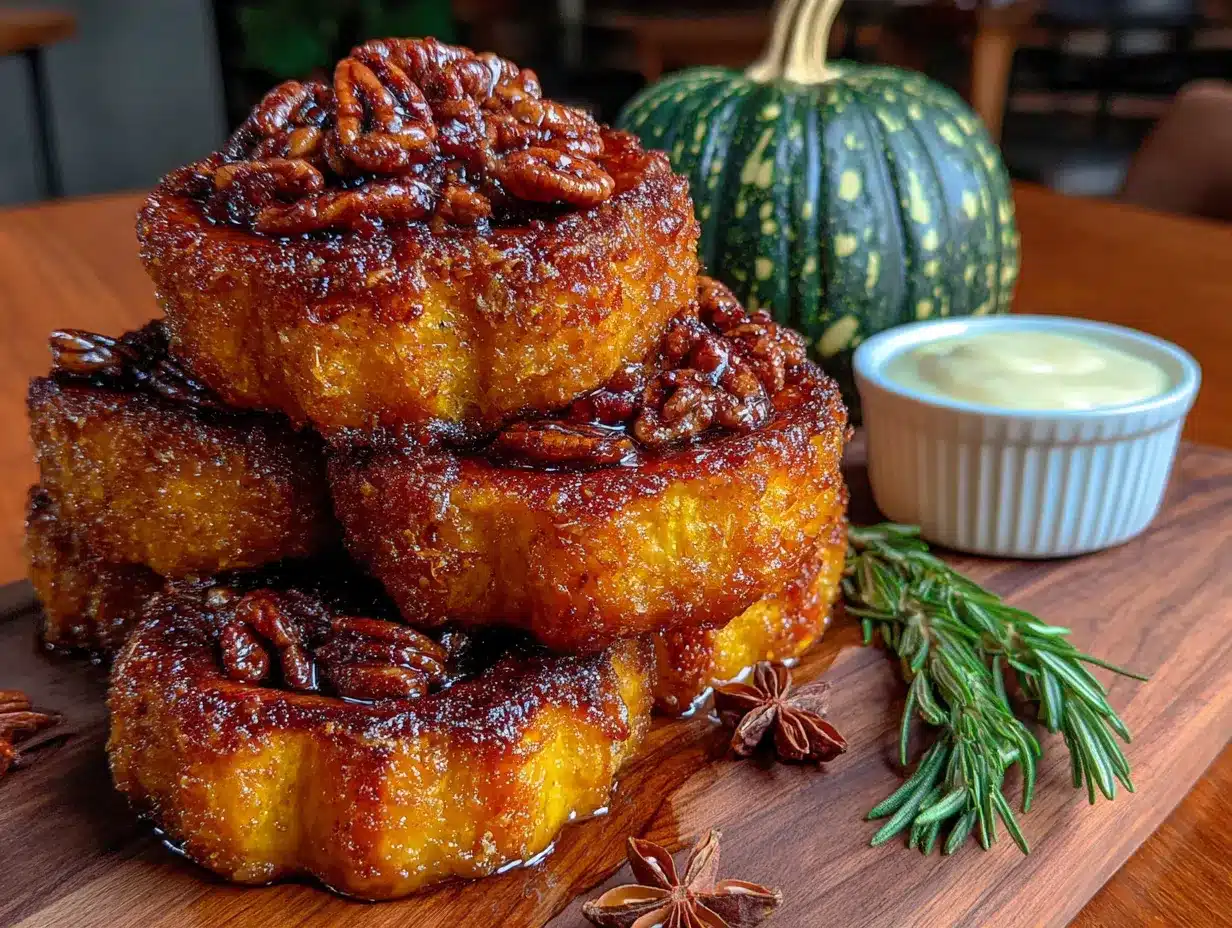
- 1/2 cup pecan halves – You can use chopped pecans if that’s what you have, but halves look prettier on top. Toast them lightly first for extra crunch.
- 2 tablespoons maple syrup – Real maple syrup, not pancake syrup. The flavor is much richer and it caramelizes beautifully in the oven.
- 1 tablespoon brown sugar – Adds extra sweetness and helps create that candied coating.
- 1/4 teaspoon cinnamon – Just a little more warmth to tie everything together.
- Pinch of salt – Essential for that sweet-salty balance that makes candied nuts so addictive.
For the pecans, I recommend using fresh nuts from the baking aisle rather than the ones that have been sitting in your pantry for months. Stale pecans can ruin the whole dish. If you’re feeling adventurous, you can swap the pecans for walnuts or even pumpkin seeds. I’ve tried both, and they’re delicious, though the texture is slightly different.
One more thing about the squash. If you’ve never cut an acorn squash before, don’t be intimidated. The key is a sharp knife and a stable cutting board. I’ll walk you through it in the preparation section. And if you can’t find acorn squash, butternut squash works as a substitute, though the rings will be smaller and the cooking time might vary slightly.
Equipment Needed
You don’t need any fancy equipment for this recipe, which is part of what makes it so approachable. Here’s what you’ll need:
- Sharp chef’s knife – This is non-negotiable. A dull knife is dangerous when cutting through hard squash. I use a 8-inch chef’s knife and it works perfectly.
- Cutting board – A sturdy wooden or plastic board that won’t slip. Put a damp paper towel underneath to keep it stable.
- Large baking sheet – A rimmed baking sheet works best to catch any drips. I prefer light-colored metal because it promotes even browning without burning.
- Parchment paper – Optional but highly recommended. It makes cleanup so much easier and prevents sticking.
- Small bowl – For mixing the butter and spices.
- Pastry brush – For brushing the butter mixture onto the squash rings. If you don’t have one, you can use a spoon, but a brush gives more even coverage.
- Measuring spoons – For accurate measurements, especially with the spices.
- Metal spoon or melon baller – For scooping out the seeds and stringy bits from the squash.
If you don’t have a pastry brush, I’ve used a folded paper towel before in a pinch. It’s not ideal, but it works. And if you’re using a dark non-stick baking sheet, just keep an eye on the squash a few minutes early because dark pans tend to brown things faster.
Preparation Method
Alright, let’s get cooking. I’ll walk you through every step so you get perfect results the first time.
- Preheat your oven to 400°F (200°C). Getting the oven hot before you start is important. A preheated oven ensures even cooking from the moment the squash goes in.
- Prepare the squash. Using your sharp chef’s knife, carefully cut off both ends of the acorn squash. This creates flat surfaces so the squash sits steady. Then, cut the squash crosswise into rings about 1/2-inch thick. I usually get about 5 to 6 rings from one large squash. Use a metal spoon or melon baller to scoop out the seeds and stringy fibers from the center of each ring. Don’t worry about getting every last bit of string. A few leftover strands will crisp up in the oven and taste fine.
- Line your baking sheet. Cover your baking sheet with parchment paper for easy cleanup. If you don’t have parchment, you can lightly grease the pan with butter or cooking spray.
- Make the butter mixture. In a small bowl, combine the melted butter, brown sugar, cinnamon, nutmeg, salt, and black pepper. Stir until the sugar is mostly dissolved. It won’t be completely smooth, and that’s okay.
- Arrange and brush the rings. Place the squash rings in a single layer on the prepared baking sheet. Don’t overlap them. Using your pastry brush, brush the tops of each ring generously with the butter mixture. Flip each ring and brush the other side. Use all of the mixture. I know it seems like a lot, but the rings will absorb it as they roast.
- Roast the squash. Place the baking sheet in the preheated oven and roast for 20 minutes. After 20 minutes, carefully flip each ring using a spatula. The rings should be starting to brown on the edges. Roast for another 15 to 20 minutes, until the rings are tender when pierced with a fork and the edges are deeply caramelized. The timing depends on how thick your rings are and your individual oven, so start checking at the 15-minute mark.
- While the squash roasts, make the candied pecans. In a small bowl, toss the pecan halves with the maple syrup, brown sugar, cinnamon, and a pinch of salt. Spread them in a single layer on a small baking sheet lined with parchment paper.
- Add the pecans to the oven. When the squash has about 5 to 7 minutes left, add the pecans to the oven. Watch them carefully. They can go from perfectly candied to burnt in seconds. They’re done when they’re bubbling and fragrant, and the coating has caramelized.
- Remove everything from the oven. Let the squash rings cool on the baking sheet for about 5 minutes. This allows the caramelization to set. The pecans will harden as they cool, so don’t try to move them right away.
- Assemble and serve. Transfer the squash rings to a serving platter. Sprinkle the candied pecans over the top, pressing them gently into the sticky surface so they stick. Serve warm or at room temperature.
A few things to watch for. If your rings are browning too quickly on the bottom, your oven might run hot. You can move the baking sheet to a higher rack to slow things down. And if the centers aren’t quite tender when the edges look done, cover the pan loosely with foil for the last few minutes. That traps steam and helps the centers cook through without burning the edges.
Cooking Tips & Techniques
I’ve made this recipe enough times to learn a few things the hard way. Let me save you some trouble.
Uniform thickness matters. I learned this after making one batch where some rings were thin and others were thick. The thin ones burned while the thick ones were still crunchy. Try to cut your rings as evenly as possible. If you end up with a few that are noticeably thicker, you can give them a head start in the oven before adding the thinner ones.
Don’t skip the flipping step. I know it’s tempting to just let them roast and be done with it, but flipping ensures both sides get that beautiful caramelization. The bottom of the ring sits in the butter mixture as it roasts, so flipping halfway through gives the top the same treatment.
Watch the pecans like a hawk. The first time I made candied pecans, I got distracted by chopping vegetables and they went from golden to charcoal in what felt like seconds. Set a timer for 5 minutes and check them. They’re done when the syrup is bubbling and the nuts look glossy. They’ll continue to darken as they cool.
Room temperature squash is easier to cut. If your squash has been sitting in the fridge, let it come to room temperature for about 30 minutes before cutting. Cold squash is harder and more likely to cause knife slips. And please, please use a sharp knife. A dull knife is the most dangerous tool in the kitchen because it requires more force and is more likely to slip.
Multitasking strategy. While the squash is roasting, you can prep the pecans and clean up your workspace. That way when everything comes out of the oven, you just have to assemble and serve. I like to set out my serving platter ahead of time so I’m not scrambling at the end.
Variations & Adaptations
This recipe is pretty forgiving, and I’ve tried several variations that turned out great. Here are some of my favorites.
Savory version. Skip the brown sugar and cinnamon and instead use garlic powder, rosemary, and a sprinkle of parmesan cheese in the last 5 minutes of roasting. The candied pecans become toasted pecans with just salt and pepper. This version is amazing alongside roasted chicken or pork.
Maple-bourbon glaze. Replace the brown sugar in the butter mixture with 2 tablespoons of maple syrup and 1 tablespoon of bourbon. The alcohol cooks off, leaving a subtle warmth that pairs beautifully with the squash. I made this for a Friendsgiving dinner and it was the first dish to disappear.
Spicy kick. Add 1/4 teaspoon of cayenne pepper to the butter mixture and a pinch of chili powder to the candied pecans. The heat balances the sweetness in a way that’s honestly addictive. My husband, who claims he doesn’t like sweet and savory together, ate half the batch.
Dietary adaptations. For a vegan version, use coconut oil or vegan butter instead of regular butter. The flavor will be slightly different, but still delicious. For a nut-free version, skip the pecans and use pumpkin seeds or sunflower seeds instead. Toast them with the same maple syrup mixture and they’ll be just as crunchy and satisfying.
Different squash options. Butternut squash works well, though you’ll get smaller rings. Delicata squash is even easier because you don’t have to peel it, and the skin is tender enough to eat. Just adjust the cooking time based on the size of your rings.
Serving & Storage Suggestions
These squash rings are best served warm, right after the pecans have been sprinkled on top. The contrast between the warm, tender squash and the crunchy, candied pecans is at its peak when everything is fresh from the oven. But they’re also delicious at room temperature, which makes them perfect for potlucks and holiday buffets.
For presentation, I like to arrange the rings in a slight overlapping pattern on a white platter. The golden-orange color of the squash pops against the white background, and the pecans add visual interest. A light dusting of fresh thyme or parsley adds a touch of green that looks beautiful, though it’s completely optional.
These pair beautifully with roasted chicken, pork tenderloin, or even a simple grilled steak. For a vegetarian meal, serve them alongside a hearty grain salad or stuffed mushrooms. They also work well as part of a Thanksgiving spread, where they hold their own against all the other heavy hitters on the table.
Storage instructions. Leftover squash rings can be stored in an airtight container in the refrigerator for up to 4 days. The pecans will lose some of their crunch, but the flavor will still be great. To reheat, place them on a baking sheet in a 350°F oven for about 10 minutes. This helps restore some of the caramelization. I don’t recommend microwaving, as it makes the squash soggy and the pecans rubbery.
If you’re making these ahead for a party, you can roast the squash rings and make the candied pecans separately up to a day in advance. Store them in separate containers in the refrigerator. When you’re ready to serve, reheat the squash rings in the oven and top with the pecans just before serving. This way the pecans stay crunchy.
The flavors actually deepen after a day in the fridge. The spices meld with the squash in a way that’s even more complex. So don’t worry if you have leftovers. They might be even better the next day.
Nutritional Information & Benefits
This recipe is a great example of how comfort food can also be good for you. Acorn squash is packed with vitamins and minerals. It’s an excellent source of vitamin A, which supports eye health and immune function. It also provides a good amount of vitamin C, potassium, and fiber. One cup of cooked acorn squash has about 115 calories and 9 grams of fiber, making it a nutrient-dense choice.
Pecans are rich in healthy monounsaturated fats, which are good for heart health. They also contain antioxidants and minerals like magnesium and zinc. The small amount of butter and sugar in this recipe is balanced by the overall nutritional profile of the dish.
Here are approximate nutritional values per serving (based on 4 servings):
- Calories: 280
- Total Fat: 18g
- Saturated Fat: 6g
- Cholesterol: 23mg
- Sodium: 180mg
- Total Carbohydrates: 32g
- Dietary Fiber: 5g
- Sugars: 18g
- Protein: 4g
This recipe is naturally gluten-free and can easily be made vegan and dairy-free with simple substitutions. It’s also suitable for vegetarian diets. If you’re watching your sugar intake, you can reduce the brown sugar to 1 tablespoon and skip the candied pecans, though the dish will be less indulgent.
Conclusion
I keep coming back to this recipe because it reminds me that sometimes the best cooking advice comes from the most unexpected places. Margaret didn’t know she was teaching me a lesson about letting go of assumptions in the kitchen. She just wanted to know why I was making things harder than they needed to be. And honestly, that’s a question worth asking yourself with any recipe.
These Caramelized Roasted Acorn Squash Rings with Candied Pecans are proof that simple changes can make a huge difference. The rings cook evenly, they look stunning, and that combination of tender squash with crunchy, sweet pecans is honestly unforgettable. Whether you’re serving them for a holiday dinner or just a regular weeknight meal, they deliver comfort and flavor without a lot of fuss.
I’d love to hear how these turn out for you. Did you try any variations? Did your family love them as much as mine does? Drop a comment below and let me know. And if you share a photo on social media, tag me so I can see your beautiful squash rings. Happy cooking, friends.
Frequently Asked Questions
Can I use a different type of squash for this recipe?
Absolutely. Butternut squash and delicata squash both work well. Just adjust the cooking time based on the thickness of your rings. Delicata cooks faster, so start checking at 25 minutes total.
Can I make the candied pecans ahead of time?
Yes, you can make them up to a week in advance. Store them in an airtight container at room temperature. They’ll stay crunchy for several days, though they’re best within the first 3 days.
How do I prevent the squash rings from sticking to the pan?
Parchment paper is your best friend here. It prevents sticking and makes cleanup effortless. If you don’t have parchment, make sure to grease your pan well with butter or cooking spray.
Can I freeze the roasted squash rings?
Yes, but the texture will change slightly. Freeze them in a single layer on a baking sheet, then transfer to a freezer bag. Reheat directly from frozen in a 375°F oven for about 15 minutes. The pecans should be added fresh after reheating.
What can I use instead of pecans?
Walnuts, pumpkin seeds, or even sliced almonds work beautifully. Just adjust the cooking time for the nuts, as smaller pieces will toast faster. Keep an eye on them to prevent burning.
Pin This Recipe!
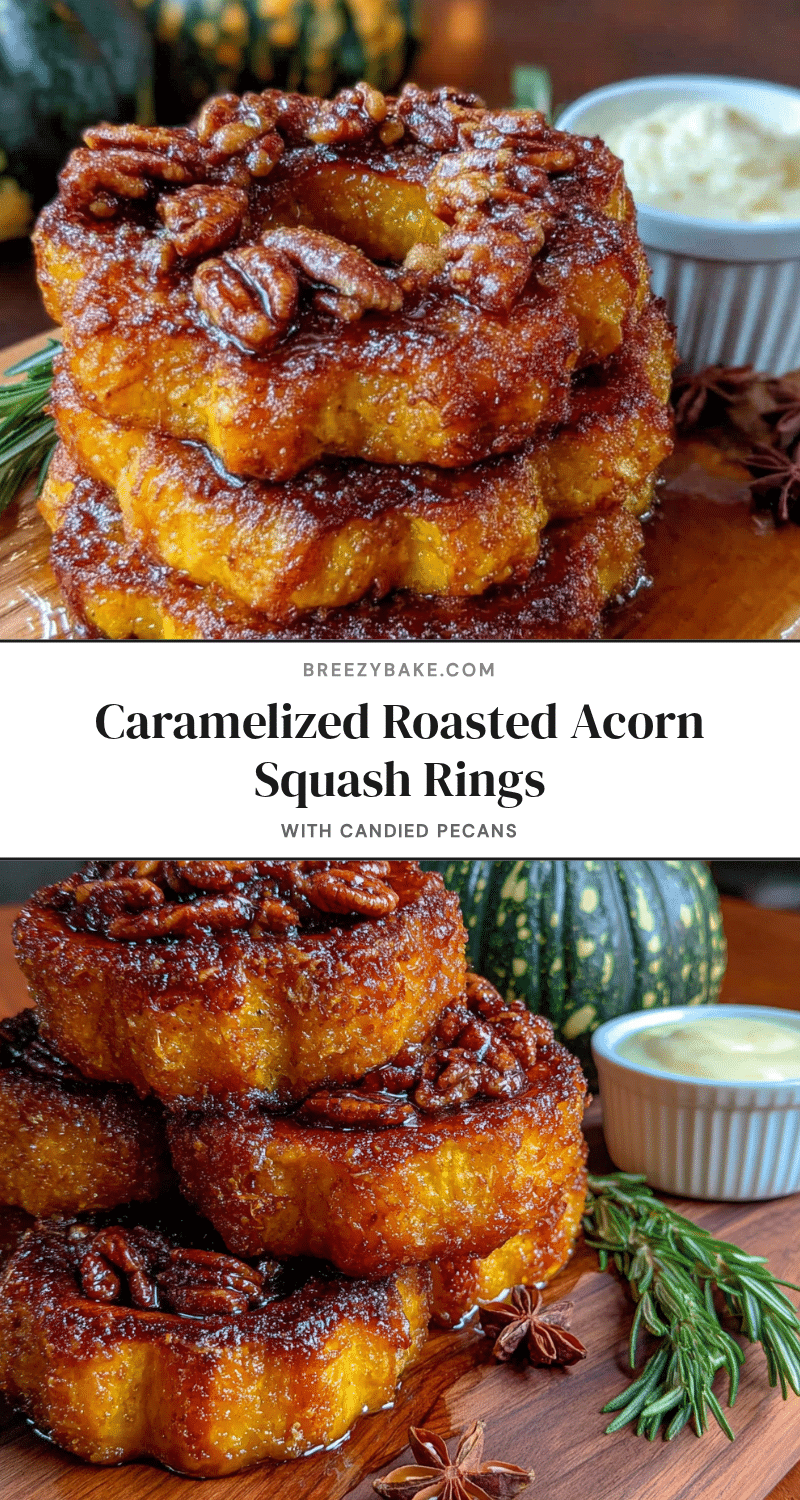
Easy Caramelized Roasted Acorn Squash Rings with Candied Pecans

These caramelized roasted acorn squash rings are a game-changing fall side dish that cooks evenly and looks stunning. Topped with crunchy candied pecans, they’re quick, easy, and perfect for any gathering.
- Prep Time: 10 minutes
- Cook Time: 35-40 minutes
- Total Time: 45-50 minutes
- Yield: 4 servings 1x
- Category: Side Dish
- Cuisine: American
Ingredients
- 1 large acorn squash (about 2 pounds)
- 3 tablespoons unsalted butter, melted
- 2 tablespoons brown sugar, packed
- 1/2 teaspoon ground cinnamon
- 1/4 teaspoon ground nutmeg
- 1/4 teaspoon salt
- 1/8 teaspoon black pepper
- 1/2 cup pecan halves
- 2 tablespoons maple syrup
- 1 tablespoon brown sugar
- 1/4 teaspoon cinnamon
- Pinch of salt
Instructions
- Preheat your oven to 400°F (200°C).
- Prepare the squash: Using a sharp chef’s knife, carefully cut off both ends of the acorn squash. Then, cut the squash crosswise into rings about 1/2-inch thick. Use a metal spoon or melon baller to scoop out the seeds and stringy fibers from the center of each ring.
- Line your baking sheet with parchment paper.
- Make the butter mixture: In a small bowl, combine the melted butter, brown sugar, cinnamon, nutmeg, salt, and black pepper. Stir until the sugar is mostly dissolved.
- Arrange and brush the rings: Place the squash rings in a single layer on the prepared baking sheet. Using a pastry brush, brush the tops of each ring generously with the butter mixture. Flip each ring and brush the other side. Use all of the mixture.
- Roast the squash: Place the baking sheet in the preheated oven and roast for 20 minutes. After 20 minutes, carefully flip each ring using a spatula. Roast for another 15 to 20 minutes, until the rings are tender when pierced with a fork and the edges are deeply caramelized.
- While the squash roasts, make the candied pecans: In a small bowl, toss the pecan halves with the maple syrup, brown sugar, cinnamon, and a pinch of salt. Spread them in a single layer on a small baking sheet lined with parchment paper.
- Add the pecans to the oven: When the squash has about 5 to 7 minutes left, add the pecans to the oven. Watch them carefully. They’re done when they’re bubbling and fragrant, and the coating has caramelized.
- Remove everything from the oven: Let the squash rings cool on the baking sheet for about 5 minutes. The pecans will harden as they cool.
- Assemble and serve: Transfer the squash rings to a serving platter. Sprinkle the candied pecans over the top, pressing them gently into the sticky surface so they stick. Serve warm or at room temperature.
Notes
For uniform cooking, cut rings evenly. Watch pecans closely to prevent burning. For a vegan version, use coconut oil or vegan butter. For a nut-free version, use pumpkin seeds or sunflower seeds.
Nutrition
- Serving Size: 1 serving (about 1 r
- Calories: 280
- Sugar: 18
- Sodium: 180
- Fat: 18
- Saturated Fat: 6
- Carbohydrates: 32
- Fiber: 5
- Protein: 4
Keywords: acorn squash, roasted squash, caramelized squash, candied pecans, fall side dish, Thanksgiving, easy recipe