There used to be a tiny bakery tucked between a laundromat and a vintage shop on the corner of Oak and Elm that made these incredible shortbread cookies. When they closed three years ago — just a handwritten sign in the window one Tuesday saying “Thank you, neighbors” — I honestly felt a little lost. Those cookies had gotten me through two moves, one breakup, and countless holiday seasons where I didn’t have the energy to bake from scratch.
After maybe twelve tries — some too crumbly, some too sweet, one that I accidentally burned so badly the smoke alarm went off — I finally cracked it. The secret, let me tell you, was in the balance. Too much orange zest and the cookie tasted like soap. Too little cranberry and why even bother? But this version? This is the one that makes me close my eyes after the first bite.
These Easy Cranberry Orange Shortbread Cookies are buttery, tender, and studded with tart dried cranberries and bright citrus zest. They’re the kind of cookie that disappears from the tin at holiday parties before you’ve even hung up your coat. And honestly, they’re simple enough that you can whip up a batch on a random Tuesday night when you just need something sweet. Maybe you’ve been there — craving that one bakery cookie you can’t get anymore. This is my love letter to that little shop on Oak Street.
Why You’ll Love This Recipe
Let’s be real for a second — holiday baking can feel like a full-time job. Between the rolling, the chilling, the frosting, and the cleanup, sometimes you just want a cookie that delivers without the drama. That’s exactly what these shortbread cookies do.
- Quick & Easy: From start to finish, these come together in about 35 minutes. No electric mixer required — just a bowl and some elbow grease.
- Simple Ingredients: You probably have most of this stuff in your pantry right now. Butter, flour, sugar — the usual suspects. Just grab some dried cranberries and an orange on your next grocery run.
- Perfect for the Holidays: These cookies look gorgeous on a cookie platter, work great for cookie swaps, and make thoughtful homemade gifts when packed in a simple tin with some tissue paper.
- Crowd-Pleaser: I’ve brought these to three different holiday parties this year, and every single time someone asks for the recipe. Kids love them, adults love them — they’re universally adored.
- Unbelievably Delicious: The texture is that perfect shortbread crumble — not too soft, not too hard, with a melt-in-your-mouth quality that feels fancy even though it took you twenty minutes of active work.
What makes this recipe different from all the other cranberry orange shortbread recipes out there? It’s the ratio. After those twelve failed attempts, I figured out that using cold butter (not room temperature) gives you a flakier, more tender crumb. And toasting the dried cranberries briefly in the oven before mixing them in? Game changer. It concentrates their flavor and keeps them from turning tough during baking.
This is the kind of cookie that makes you feel like a hero in the kitchen without actually having to work that hard. And honestly, isn’t that what we all want during the busy holiday season?
What Ingredients You Will Need
This recipe uses simple, wholesome ingredients to deliver bold flavor and satisfying texture without the fuss. Most of these are pantry staples, which means you can make these cookies on a whim without a special trip to the store.
For the Shortbread Dough
- 1 cup (226g) unsalted butter, cold and cut into small cubes — Cold butter is the secret to that perfect shortbread texture. I prefer using Kerrygold or Plugrà for their higher butterfat content, which gives a richer flavor.
- ½ cup (100g) granulated sugar — Regular white sugar works perfectly here. You want the sweetness to be present but not overwhelming — the cranberries and orange should shine through.
- 2 cups (250g) all-purpose flour — Spoon and level your flour for the most accurate measurement. Scooping directly from the bag can pack in too much flour and make your cookies dry.
- ¼ teaspoon salt — Just a pinch to balance the sweetness. I use fine sea salt, but table salt works fine too.
- Zest of 1 large orange — About 1 to 2 tablespoons. Make sure you only zest the orange part — the white pith is bitter and will ruin the delicate flavor.
- 1 tablespoon fresh orange juice — Adds a subtle tang and helps bind the dough without making it too wet.
- ¾ cup (105g) dried cranberries — Look for soft, plump dried cranberries. Craisins work great, but if you can find unsweetened dried cranberries, they’ll give you a more tart flavor that balances the sweet shortbread beautifully.
For the Optional Glaze
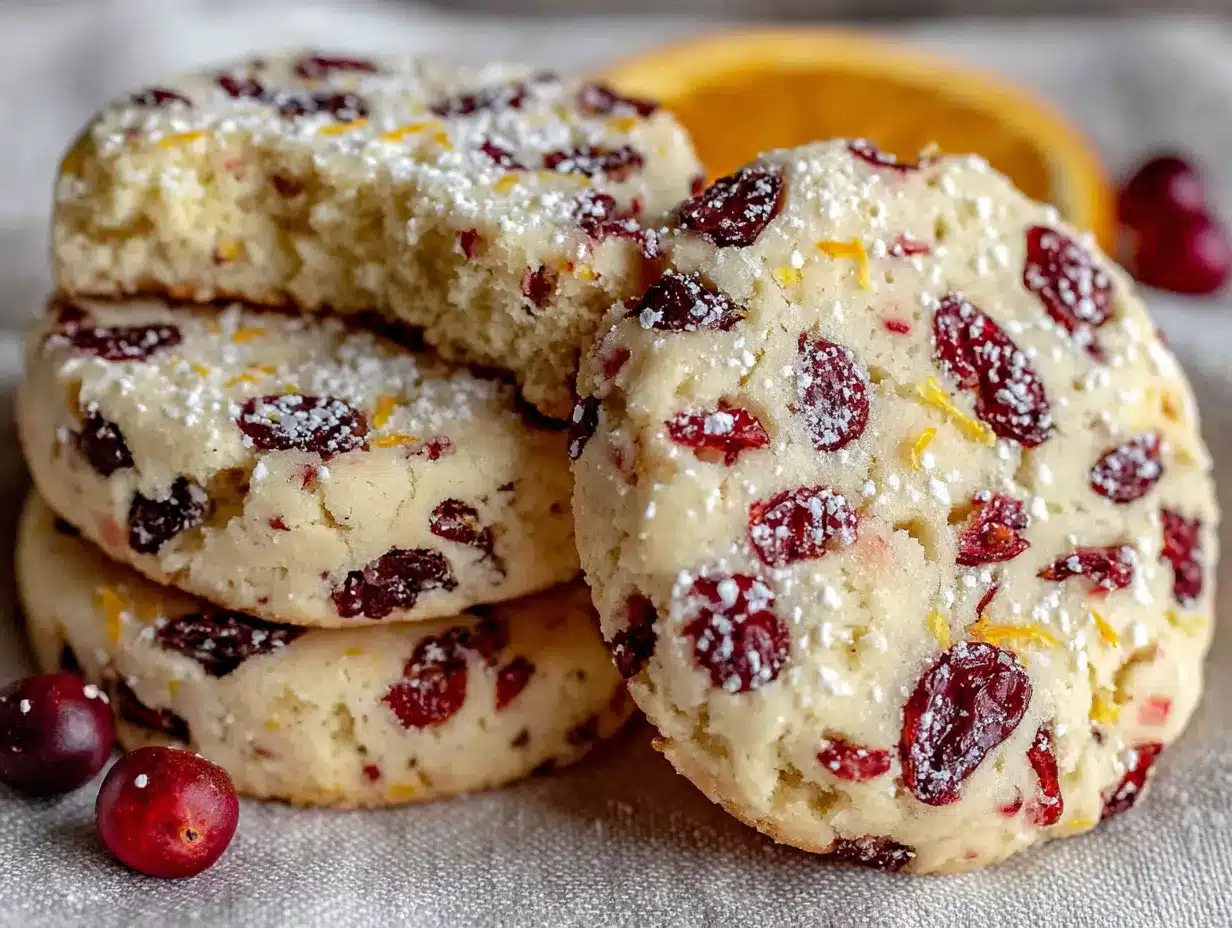
- ½ cup (60g) powdered sugar — Sifted to remove lumps.
- 1 to 2 tablespoons fresh orange juice — Start with one tablespoon and add more until you reach your desired consistency.
- ½ teaspoon orange zest — For that extra pop of citrus flavor on top.
Ingredient Selection Tips: When choosing your orange, go for one that feels heavy for its size — that means it’s juicier. Navel oranges work great, but if you can find Cara Cara oranges, their slightly pink flesh gives a milder, sweeter citrus flavor that’s absolutely lovely in these cookies.
Substitution Guidance: If you’re out of dried cranberries, dried cherries or chopped dried apricots work beautifully here. For a gluten-free version, swap the all-purpose flour with a 1:1 gluten-free baking flour blend that contains xanthan gum. And if you want to make these dairy-free, use a high-quality plant-based butter stick (not the spreadable kind in a tub) — I’ve had good results with Miyoko’s.
Equipment Needed
You don’t need a fancy kitchen to make these cookies. Here’s what you’ll need:
- Large mixing bowl — Any bowl will do, but a wide one makes it easier to work the butter into the flour.
- Pastry cutter or two forks — For cutting the cold butter into the flour mixture. If you don’t have a pastry cutter, two forks or even your fingertips work perfectly. Just work quickly so the butter doesn’t warm up.
- Baking sheet — A light-colored baking sheet works best. Dark sheets can cause the bottoms of your cookies to brown too quickly.
- Parchment paper or silicone baking mat — Non-negotiable for easy cleanup and preventing sticking.
- Sharp knife or bench scraper — For slicing the log of dough into neat rounds.
- Plastic wrap — For shaping and chilling the dough log.
- Microplane or fine grater — For zesting the orange. A box grater works too, but a microplane gives you finer zest that disperses more evenly through the dough.
- Cooling rack — Optional but helpful for letting the cookies cool evenly.
Budget-Friendly Options: If you don’t have a microplane, use the smallest holes on a box grater. No pastry cutter? Just use your fingertips — the warmth of your hands will help incorporate the butter, just work quickly. And if you don’t have a cooling rack, a clean wire oven rack turned upside down works in a pinch.
Preparation Method
- Preheat your oven to 350°F (175°C). Line a baking sheet with parchment paper or a silicone baking mat. While the oven is heating, spread the dried cranberries on a small baking sheet and toast them for 3 to 4 minutes — just until they smell fragrant and look slightly plump. Remove and let them cool completely. This step is optional but highly recommended for the best flavor.
- In a large mixing bowl, whisk together the flour, sugar, and salt. Make sure there are no lumps in the sugar. Add the orange zest and rub it into the flour mixture with your fingertips for about 30 seconds — this releases the oils from the zest and infuses the entire dough with citrus flavor.
- Add the cold, cubed butter to the flour mixture. Use a pastry cutter or two forks to cut the butter into the flour until the mixture resembles coarse meal with pea-sized pieces of butter still visible. You want some small butter chunks — they create steam pockets during baking that give shortbread its signature tender texture. Don’t overwork it; if the butter starts to soften, pop the bowl in the fridge for 5 minutes.
- Add the orange juice and toasted dried cranberries. Use your hands to gently bring the dough together. It will seem crumbly at first — that’s normal. Keep pressing and squeezing until it forms a cohesive dough. If it’s too dry, add another teaspoon of orange juice. If it’s too sticky, add a tablespoon of flour. The dough should hold together when squeezed but not feel greasy.
- Turn the dough out onto a clean work surface. Shape it into a log about 10 inches (25 cm) long and 2 inches (5 cm) in diameter. Wrap the log tightly in plastic wrap and twist the ends to seal. Refrigerate for at least 30 minutes, or up to 3 days. Chilling is essential — it firms up the butter so the cookies hold their shape and develop that perfect crumbly texture.
- When you’re ready to bake, remove the dough log from the fridge. Unwrap it and use a sharp knife to slice the log into ¼-inch (6 mm) rounds. Don’t saw back and forth — use one clean, firm cut straight down. If the dough cracks, just press it back together with your fingers. Place the rounds on the prepared baking sheet, spacing them about 1 inch (2.5 cm) apart.
- Bake for 12 to 15 minutes, or until the edges are just barely golden. The centers will still look pale — that’s exactly what you want. Overbaking will make them dry and crumbly. The cookies will look soft when they come out of the oven but will firm up as they cool.
- Let the cookies cool on the baking sheet for 5 minutes. Then transfer them to a cooling rack to cool completely. If you’re adding the glaze, wait until the cookies are completely cool — warm cookies will melt the glaze into a sticky mess.
- For the glaze (optional): In a small bowl, whisk together the sifted powdered sugar, orange juice, and orange zest until smooth. The glaze should be thick but drizzle-able. Drizzle over the cooled cookies using a spoon or a piping bag with a small tip. Let the glaze set for about 20 minutes before serving.
Cooking Tips & Techniques
After making these cookies what feels like a hundred times, I’ve picked up a few tricks that make a real difference.
Keep everything cold. This is the number one rule of shortbread. If your butter softens too much during mixing, your cookies will spread into flat, greasy puddles instead of staying thick and tender. If your kitchen is warm, chill your mixing bowl and flour before you start. And if at any point the dough feels soft or sticky, just pop it in the fridge for 10 minutes.
Don’t overmix. I learned this the hard way after my third batch turned out tough and dense. Shortbread gets its signature texture from minimal gluten development. Mix just until the dough comes together — no more. A few streaks of flour are totally fine.
Slice evenly. Uneven slices mean uneven baking. If you struggle with getting consistent rounds, try this trick: after forming the log, use a ruler to gently press indentations at ¼-inch intervals along the length of the log. Then slice at those marks. It sounds fussy, but it guarantees every cookie bakes at the same rate.
Toast the cranberries. I cannot stress this enough. That quick toasting step concentrates their flavor and gives them a slightly chewy texture that contrasts beautifully with the tender shortbread. Skip this step and your cookies will still be good, but toasting makes them great.
Rotate your baking sheet halfway through. Most ovens have hot spots, and rotating ensures even browning. I forgot to do this once and ended up with half a batch of burnt-bottom cookies. Not my finest moment.
Make ahead tip: The dough log can be frozen for up to 3 months. Wrap it tightly in plastic wrap, then in foil, and slip it into a freezer bag. When you’re ready to bake, slice the frozen log with a sharp knife (let it sit at room temperature for 5 minutes first) and add 2 to 3 minutes to the baking time. Fresh cookies whenever you want them!
Variations & Adaptations
One of the best things about this recipe is how easily it adapts to different tastes and dietary needs. Here are some variations I’ve tried and loved:
Chocolate-Dipped Shortbread: After the cookies have cooled completely, dip half of each cookie into melted dark chocolate (about 70% cocoa works best). Let the excess drip off, then place on parchment paper to set. The combination of buttery shortbread, tart cranberry, and rich chocolate is absolutely divine. I made these for a holiday cookie exchange last year and they were the first to disappear.
Gluten-Free Version: Substitute the all-purpose flour with a 1:1 gluten-free baking flour blend that contains xanthan gum. I’ve tested this with Bob’s Red Mill 1:1 Baking Flour and King Arthur Measure for Measure, and both worked beautifully. The texture is slightly more delicate, so handle the dough gently when slicing.
Spiced Holiday Version: Add ½ teaspoon of cinnamon, ¼ teaspoon of nutmeg, and a pinch of cloves to the flour mixture. The warm spices complement the orange and cranberry flavors perfectly, making these taste even more like Christmas. I made this version for Thanksgiving last year and my aunt asked for the recipe before the turkey was even carved.
Vegan Adaptation: Use a high-quality vegan butter stick (like Miyoko’s or Earth Balance) and substitute the orange juice with a tablespoon of cold water mixed with ½ teaspoon of orange extract. The texture will be slightly different — a bit more crumbly — but the flavor is still fantastic.
Lemon Blueberry Variation: Swap the orange zest and juice for lemon, and replace the dried cranberries with dried blueberries. The bright, tangy flavor is perfect for spring and summer baking. I’ve been known to make these for Easter brunch and they pair beautifully with a cup of Earl Grey tea.
Serving & Storage Suggestions
These cookies are best served at room temperature — the texture is at its peak when they’ve had a chance to rest for about 10 minutes after coming out of the fridge. Arrange them on a pretty plate or in a festive tin lined with parchment paper for a gorgeous presentation that screams “homemade with love.”
What to serve with them: A cup of hot coffee or tea is the classic pairing — the bitterness of the coffee balances the sweetness of the cookie perfectly. For a holiday treat, try serving them alongside a glass of cold milk or a warm mug of spiced apple cider. And if you’re feeling fancy, a small glass of dessert wine like Moscato or a late-harvest Riesling is a lovely accompaniment.
Storage Instructions: Store the cookies in an airtight container at room temperature for up to 1 week. Layer them between sheets of parchment paper to prevent them from sticking together or breaking. If you’ve added the glaze, let it set completely before stacking the cookies.
Freezer Instructions: These cookies freeze beautifully. Place the cooled, unglazed cookies in a single layer on a baking sheet and freeze for 1 hour. Transfer them to a freezer-safe container or bag, layering parchment paper between each layer. They’ll keep for up to 3 months. To serve, thaw at room temperature for 15 minutes, then add the glaze if desired.
Reheating Tip: If you want that just-baked warmth, pop a cookie in a 300°F (150°C) oven for 3 to 4 minutes. Don’t use the microwave — it will make the shortbread tough and chewy instead of tender and crumbly.
Flavor Development: Here’s something I discovered by accident — these cookies actually taste better the next day. The flavors meld together overnight, and the texture becomes even more tender. So don’t stress about making them at the last minute. Bake them a day ahead and thank me later.
Nutritional Information & Benefits
Let’s be honest — these are cookies, not health food. But that doesn’t mean they don’t have some redeeming qualities. Here’s the estimated nutritional breakdown per cookie (based on 24 cookies, without glaze):
- Calories: 145
- Total Fat: 8g
- Saturated Fat: 5g
- Cholesterol: 20mg
- Sodium: 35mg
- Total Carbohydrates: 17g
- Dietary Fiber: 1g
- Sugars: 9g
- Protein: 2g
Health Benefits of Key Ingredients: Dried cranberries are packed with antioxidants and vitamin C, which support immune health — especially welcome during the holiday season. Oranges are rich in vitamin C and flavonoids that have anti-inflammatory properties. And while butter gets a bad rap, it does contain butyrate, a short-chain fatty acid that supports gut health when consumed in moderation.
Dietary Considerations: This recipe is vegetarian and can easily be made gluten-free or vegan with the substitutions mentioned above. It does contain dairy and gluten in its original form, and the dried cranberries may contain sulfites for preservation — check the label if you have sensitivities.
My Personal Perspective: I believe in balance. These cookies are a treat, meant to be enjoyed in moderation alongside a balanced diet. The holidays are about joy, connection, and sharing food with the people you love. One cookie — or even two — isn’t going to derail your wellness goals. So bake them, share them, and savor every buttery, citrusy bite.
Conclusion
These Easy Cranberry Orange Shortbread Cookies are everything I wanted that little bakery’s recipe to be — buttery, tender, bright, and absolutely impossible to eat just one of. They’ve become my go-to holiday cookie, the one I bring to every party and pack in tins for neighbors and friends.
What I love most about this recipe is how forgiving it is. You don’t need to be a pastry chef or own fancy equipment. You just need a bowl, some butter, and a little bit of patience while the dough chills. And the payoff? A batch of cookies that tastes like you spent hours in the kitchen, when really it was more like 20 minutes of active work.
I’d love to hear how these turn out for you. Did you add the chocolate dip? Try the lemon blueberry version? Forget to chill the dough and end up with flat cookies (hey, it happens)? Drop a comment below and let me know. And if you share a photo on Pinterest or Instagram, tag me — I love seeing your baking adventures.
Now go preheat that oven. Your cookie tin is waiting.
Frequently Asked Questions
Can I use fresh cranberries instead of dried?
I wouldn’t recommend it for this recipe. Fresh cranberries have a much higher water content, which will make the dough sticky and cause the cookies to spread during baking. Plus, fresh cranberries are extremely tart and won’t give you the same sweet-tart balance that dried cranberries provide. Stick with dried for the best results.
Why did my shortbread cookies spread too much?
This usually happens for one of two reasons: your butter was too soft when you mixed the dough, or you didn’t chill the dough log long enough before slicing. Make sure your butter is cold straight from the fridge, and don’t skip the 30-minute chill time. If your kitchen is warm, chill the shaped log for a full hour.
Can I make these cookies without a mixer?
Absolutely! In fact, I prefer making shortbread by hand. Using a pastry cutter or your fingertips gives you more control over how much the butter is incorporated, which leads to a better texture. A mixer can overwork the dough and make the cookies tough. So grab a bowl and get your hands in there — it’s actually quite therapeutic.
How do I keep the cookies from crumbling when I slice them?
Make sure your dough log is thoroughly chilled — at least 30 minutes, but an hour is better. Use a sharp, non-serrated knife and make one clean cut straight down. Don’t saw back and forth. If the edges crack, just press them back together gently with your fingers before baking. And if the dough is still too crumbly, it might need a teaspoon more orange juice to bind it.
Can I double this recipe?
Yes, and I do it all the time during the holiday season. Simply double all the ingredients and mix in a larger bowl. You may need to chill the dough in two separate logs to ensure even cooling. The baking time stays the same, but you’ll need to bake in batches since the cookies need space to spread slightly on the baking sheet.
Pin This Recipe!

Easy Cranberry Orange Shortbread Cookies: Best Holiday Cookie Recipe

These Easy Cranberry Orange Shortbread Cookies are buttery, tender, and studded with tart dried cranberries and bright citrus zest. They’re the kind of cookie that disappears from the tin at holiday parties before you’ve even hung up your coat.
- Prep Time: 20 minutes
- Cook Time: 15 minutes
- Total Time: 35 minutes
- Yield: 24 cookies 1x
- Category: Dessert
- Cuisine: American
Ingredients
- 1 cup (226g) unsalted butter, cold and cut into small cubes
- ½ cup (100g) granulated sugar
- 2 cups (250g) all-purpose flour
- ¼ teaspoon salt
- Zest of 1 large orange (about 1 to 2 tablespoons)
- 1 tablespoon fresh orange juice
- ¾ cup (105g) dried cranberries
- ½ cup (60g) powdered sugar (for optional glaze)
- 1 to 2 tablespoons fresh orange juice (for optional glaze)
- ½ teaspoon orange zest (for optional glaze)
Instructions
- Preheat your oven to 350°F (175°C). Line a baking sheet with parchment paper or a silicone baking mat. While the oven is heating, spread the dried cranberries on a small baking sheet and toast them for 3 to 4 minutes — just until they smell fragrant and look slightly plump. Remove and let them cool completely. This step is optional but highly recommended for the best flavor.
- In a large mixing bowl, whisk together the flour, sugar, and salt. Make sure there are no lumps in the sugar. Add the orange zest and rub it into the flour mixture with your fingertips for about 30 seconds — this releases the oils from the zest and infuses the entire dough with citrus flavor.
- Add the cold, cubed butter to the flour mixture. Use a pastry cutter or two forks to cut the butter into the flour until the mixture resembles coarse meal with pea-sized pieces of butter still visible. You want some small butter chunks — they create steam pockets during baking that give shortbread its signature tender texture. Don’t overwork it; if the butter starts to soften, pop the bowl in the fridge for 5 minutes.
- Add the orange juice and toasted dried cranberries. Use your hands to gently bring the dough together. It will seem crumbly at first — that’s normal. Keep pressing and squeezing until it forms a cohesive dough. If it’s too dry, add another teaspoon of orange juice. If it’s too sticky, add a tablespoon of flour. The dough should hold together when squeezed but not feel greasy.
- Turn the dough out onto a clean work surface. Shape it into a log about 10 inches (25 cm) long and 2 inches (5 cm) in diameter. Wrap the log tightly in plastic wrap and twist the ends to seal. Refrigerate for at least 30 minutes, or up to 3 days. Chilling is essential — it firms up the butter so the cookies hold their shape and develop that perfect crumbly texture.
- When you’re ready to bake, remove the dough log from the fridge. Unwrap it and use a sharp knife to slice the log into ¼-inch (6 mm) rounds. Don’t saw back and forth — use one clean, firm cut straight down. If the dough cracks, just press it back together with your fingers. Place the rounds on the prepared baking sheet, spacing them about 1 inch (2.5 cm) apart.
- Bake for 12 to 15 minutes, or until the edges are just barely golden. The centers will still look pale — that’s exactly what you want. Overbaking will make them dry and crumbly. The cookies will look soft when they come out of the oven but will firm up as they cool.
- Let the cookies cool on the baking sheet for 5 minutes. Then transfer them to a cooling rack to cool completely. If you’re adding the glaze, wait until the cookies are completely cool — warm cookies will melt the glaze into a sticky mess.
- For the glaze (optional): In a small bowl, whisk together the sifted powdered sugar, orange juice, and orange zest until smooth. The glaze should be thick but drizzle-able. Drizzle over the cooled cookies using a spoon or a piping bag with a small tip. Let the glaze set for about 20 minutes before serving.
Notes
Keep everything cold. Don’t overmix. Slice evenly. Toast the cranberries. Rotate your baking sheet halfway through. The dough log can be frozen for up to 3 months. These cookies actually taste better the next day.
Nutrition
- Serving Size: 1 cookie
- Calories: 145
- Sugar: 9
- Sodium: 35
- Fat: 8
- Saturated Fat: 5
- Carbohydrates: 17
- Fiber: 1
- Protein: 2
Keywords: cranberry orange shortbread cookies, holiday cookies, easy shortbread recipe, cranberry orange cookies, Christmas cookies