My neighbor, a retired botanist named Carol, asked me why I couldn’t just toss everything onto one sheet pan instead of roasting the carrots and parsnips separately. I started to explain why that wouldn’t work—different cook times, the risk of steaming instead of caramelizing. Then I stopped. She was holding a glass of wine and looking at me with this patient, knowing smile that said she’d already figured out the answer. I shrugged, grabbed my biggest sheet pan, and threw in every root vegetable I had.
Honestly, I was sure it would be a mess. The beets would bleed into the potatoes, the parsnips would turn to mush, and the rosemary would burn into bitter little specks. But I was wrong. Dead wrong. The vegetables softened in the center, their natural sugars concentrating into golden, caramelized edges. The rosemary infused everything—not aggressively, but like a warm blanket settling over the whole pan. Carol nodded as she took a bite, like she’d known all along.
That was two autumns ago, and I haven’t roasted vegetables any other way since. You know that feeling when a recipe just clicks into place? This is that recipe. It’s the kind of side dish that makes a simple roast chicken feel like a Sunday dinner, or turns a weeknight meal into something you actually look forward to. Maybe you’ve been there—overcomplicating something that really just needs a little trust and a hot oven.
So here it is: my cozy roasted root vegetable medley with rosemary. It’s the dish I bring to Friendsgiving, the one I make when the first chill hits the air, and the one I keep coming back to because it genuinely delivers every single time.
Why You’ll Love This Recipe
I’ve tested this recipe at least a dozen times—for holiday dinners, casual weeknights, and even once for a brunch party where everyone was skeptical about vegetables before noon. It passed every test with flying colors. Here’s why this one stands out:
- Quick & Easy: Comes together in about 15 minutes of prep and 40 minutes in the oven. The oven does most of the work while you handle the rest of the meal.
- Simple Ingredients: No fancy grocery trips needed. Carrots, potatoes, parsnips, and beets are pantry staples this time of year. You probably have rosemary growing in a pot or dried in your spice rack.
- Perfect for Fall Gatherings: This medley is made for Thanksgiving, Friendsgiving, Sunday suppers, or any cozy meal where you want the table to feel special without stress.
- Crowd-Pleaser: I’ve watched kids go back for seconds of beets—yes, beets. The roasting tames their earthiness and brings out natural sweetness that wins over even the pickiest eaters.
- Unbelievably Delicious: The texture contrast is what gets me—tender interiors with crispy, caramelized edges. The rosemary adds this woodsy, aromatic note that ties everything together.
What makes this recipe different from other roasted vegetable dishes? It’s the technique of parboiling the denser vegetables before roasting. This ensures everything finishes at the same time, so you don’t end up with crunchy potatoes and mushy parsnips. Plus, the rosemary is added in two stages—some with the vegetables for infusion, and a sprinkle of fresh leaves at the end for brightness. It’s a small detail that makes a big difference.
This isn’t just another roasted vegetable recipe. It’s the kind that makes you close your eyes after the first bite—the sweetness of roasted carrots, the earthy depth of beets, the crispy edges of potatoes all mingling together. It’s comfort food reimagined: healthier, simpler, but with the same soul-soothing satisfaction.
What Ingredients You Will Need
This recipe uses humble, seasonal ingredients that come together to create something genuinely special. The key is choosing the right vegetables and prepping them properly. Here’s what you’ll need:
For the Vegetable Medley
- 2 large carrots, peeled and cut into 2-inch chunks (about 300g) – Look for firm, bright orange carrots. I prefer organic ones for their sweeter flavor.
- 2 large parsnips, peeled and cut into 2-inch chunks (about 250g) – Choose parsnips that are firm and not too thick. Avoid woody or shriveled ones.
- 2 medium red potatoes, scrubbed and cut into 2-inch chunks (about 350g) – Red potatoes hold their shape well. Yukon Golds work beautifully too.
- 2 medium beets, peeled and cut into 1-inch wedges (about 250g) – Golden beets are lovely here if you want to avoid staining, but red beets add beautiful color.
- 1 large sweet potato, peeled and cut into 2-inch chunks (about 300g) – Adds natural sweetness and a creamy texture.
- 1 red onion, cut into 1-inch wedges – The onion caramelizes beautifully and adds savory depth.
For the Seasoning
- 4 tablespoons olive oil (60ml) – Use a good quality extra virgin for best flavor. Avocado oil works too for higher heat.
- 4 sprigs fresh rosemary, plus 1 tablespoon finely chopped for garnish – Fresh is non-negotiable here. Dried rosemary can be too woody and sharp.
- 4 cloves garlic, smashed – Smashing releases flavor without burning.
- 1 teaspoon sea salt (5g) – I prefer flaky sea salt for its clean taste.
- ½ teaspoon black pepper (2g) – Freshly ground, please.
- 1 tablespoon balsamic vinegar (15ml) – Optional but highly recommended. It adds a subtle tang that brightens everything.
- 2 tablespoons maple syrup or honey (30ml) – Just a touch to enhance caramelization. Leave it out if you’re avoiding sugar.
Ingredient Tips: I recommend using organic vegetables when possible—the flavor difference is noticeable, especially with carrots and beets. For the olive oil, I’m partial to California Olive Ranch for its consistent quality. If you’re buying beets with greens attached, don’t throw them away—sauté them as a separate side dish!
Substitutions: Swap sweet potato for butternut squash in early fall. Use turnips or celeriac instead of parsnips if needed. For a lower-carb version, replace potatoes with cauliflower florets (add them halfway through roasting).
Equipment Needed
You don’t need much for this recipe, which is part of its charm. Here’s what I use:
- Large sheet pan or baking sheet (18×13 inches or similar) – A rimmed baking sheet is essential to catch juices. I love my Nordic Ware half-sheet pans—they’re sturdy and distribute heat evenly.
- Large pot for parboiling – Any 5-quart pot works. I use my trusty Le Creuset Dutch oven, but a regular stockpot is fine.
- Chef’s knife and cutting board – A sharp knife makes all the difference. Take your time with the cuts for even cooking.
- Mixing bowl – Large enough to toss everything together.
- Parchment paper – Optional but makes cleanup a breeze. I use it every time.
- Tongs or spatula – For flipping vegetables halfway through roasting.
If you don’t have a large sheet pan, use two smaller ones and rotate them in the oven. Just make sure they’re not overcrowded—crowding leads to steaming instead of roasting. I learned this the hard way after a soggy first attempt.
Preparation Method
Let me walk you through this step by step. I’ve refined this method after many batches, and trust me—each detail matters.
- Preheat your oven to 425°F (220°C). Position the rack in the middle of the oven. This high heat is crucial for caramelization.
- Fill a large pot with water and bring it to a boil. Add a generous pinch of salt—about 1 tablespoon. While you wait, prepare your vegetables.
- Prep the vegetables: Peel the carrots, parsnips, beets, and sweet potato. Cut everything into uniform 2-inch chunks. The potatoes can stay unpeeled—the skin adds texture and nutrients. Cut the red onion into wedges, keeping the root end intact so they hold together.
- Parboil the dense vegetables: Add the carrots, parsnips, potatoes, and sweet potato to the boiling water. Cook for exactly 5 minutes. Do not overcook—you just want to soften the exterior slightly. Drain well and let them steam dry for a minute. This step is the secret to perfectly cooked vegetables that all finish at the same time.
- While the vegetables drain, prepare the seasoning mixture: In your large mixing bowl, combine 4 tablespoons olive oil, smashed garlic cloves, 2 sprigs of rosemary (leaves stripped and roughly chopped), salt, pepper, balsamic vinegar, and maple syrup. Whisk together.
- Toss the vegetables: Add the parboiled vegetables, raw beets, and red onion wedges to the bowl. Use your hands (I find tongs don’t coat as evenly) to toss everything until well coated. Make sure every piece glistens.
- Arrange on the sheet pan: Line your pan with parchment paper for easy cleanup. Spread the vegetables in a single layer. Do not overcrowd—if they’re piled on top of each other, they’ll steam. Leave a little space between pieces if possible.
- Add the remaining rosemary sprigs: Tuck 2 fresh sprigs of rosemary among the vegetables. They’ll infuse the oil and release their aroma as they roast.
- Roast for 20 minutes: Place the pan in the oven and let it work its magic. Resist the urge to open the door too early.
- Flip and rotate: After 20 minutes, remove the pan and use tongs or a spatula to flip each piece. Rotate the pan front to back for even browning. Return to the oven.
- Roast for another 15-20 minutes: The vegetables should be golden brown and caramelized on the edges. A fork should slide easily into the thickest piece. If they need more time, give them 5-minute increments—ovens vary.
- Finish and garnish: Remove from the oven. Discard the roasted rosemary sprigs (they’ll be brittle). Sprinkle the tablespoon of fresh chopped rosemary over the top. Taste and adjust seasoning—sometimes I add another pinch of flaky salt.
- Let rest for 5 minutes: This allows the caramelized edges to set. Serve warm, not piping hot. The flavors deepen as they cool slightly.
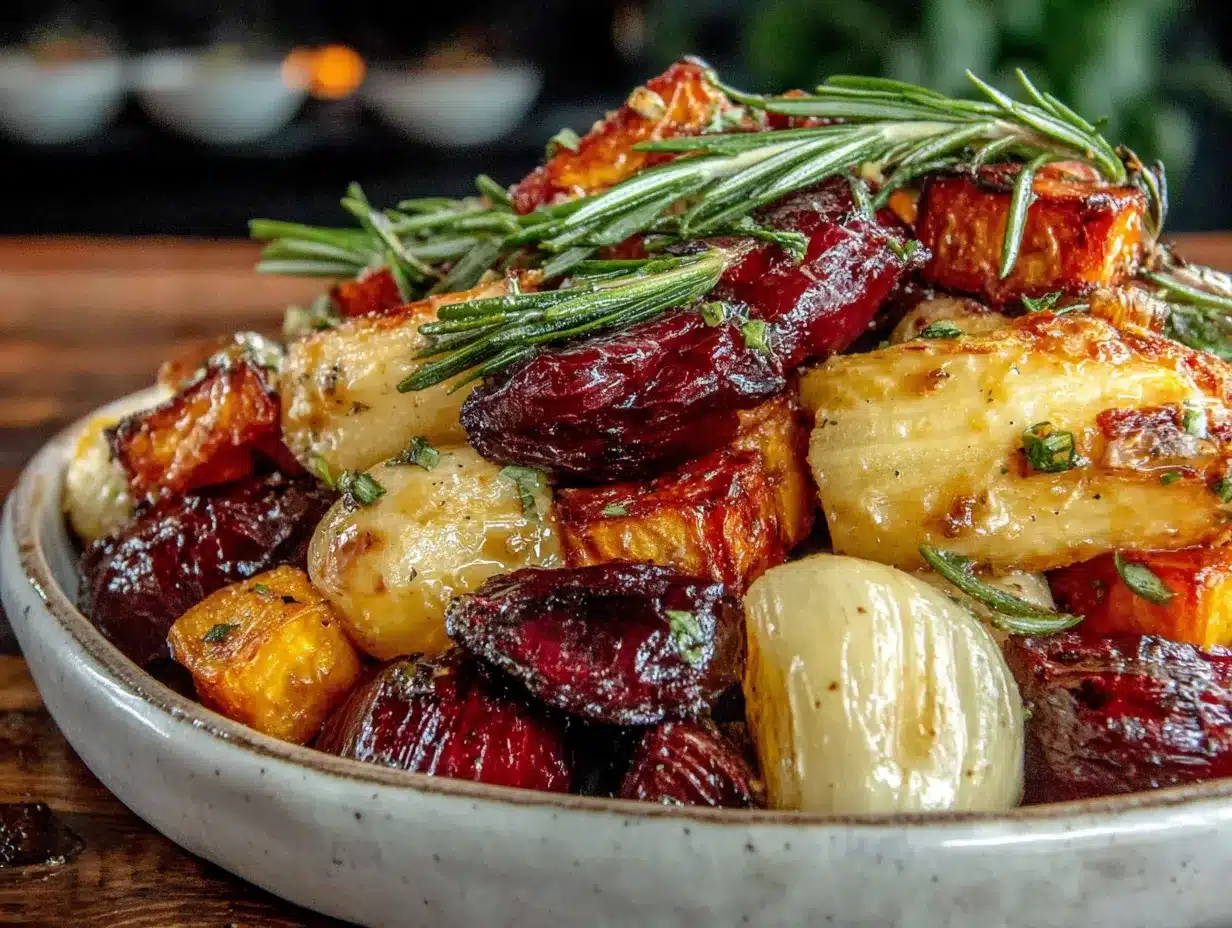
Visual cues: The beets will be deep burgundy with slightly wrinkled skin. Carrots should look glossy with dark orange edges. The potatoes will have crispy, golden-brown patches. If you see any black spots, your oven might run hot—adjust accordingly next time.
Cooking Tips & Techniques
I’ve made every mistake in the book so you don’t have to. Here are the lessons I learned the hard way:
Don’t skip the parboiling step. I know it seems like an extra hassle, but it’s the difference between perfectly cooked vegetables and a sad mix of crunchy and mushy. The 5-minute head start ensures the dense root vegetables finish at the same time as the beets and onions.
Cut everything the same size. I cannot stress this enough. If your sweet potato chunks are twice the size of your parsnips, one will burn while the other stays raw. Take the extra minute to make them uniform.
Use two-stage rosemary. Roasting rosemary sprigs whole infuses the oil gently without burning. Adding fresh chopped rosemary at the end brings a bright, piney note that feels fresh and lively. I once skipped the fresh garnish, and the dish felt flat—don’t make my mistake.
Don’t crowd the pan. This is the number one roasted vegetable mistake. If you pile everything on, you’re steaming, not roasting. Use two pans if needed. I’d rather wash an extra pan than eat soggy vegetables.
Flip halfway through. Yes, it’s tedious. Yes, it matters. The bottom of each piece gets browner than the top, so flipping ensures even caramelization. I use a thin metal spatula for this—it slides under the vegetables without disturbing the crust.
Let them rest. The 5-minute rest after roasting isn’t just for show. It allows the interior steam to redistribute, making the centers creamier and the edges crisper. I learned this from a pastry chef friend who applies the same logic to roasted vegetables.
Variations & Adaptations
One of the best things about this recipe is how adaptable it is. Here are some variations I’ve tried and loved:
Herb Swap: Replace rosemary with fresh thyme or sage for a different aromatic profile. Thyme pairs beautifully with roasted beets, while sage complements sweet potatoes. I made a thyme version for Thanksgiving last year, and it was a hit.
Spiced Variation: Add 1 teaspoon smoked paprika and ½ teaspoon cumin to the oil mixture for a smoky, warm flavor. This version is amazing with roasted chicken or pork. My husband requests this one regularly.
Maple-Mustard Glaze: Replace the balsamic vinegar with 1 tablespoon Dijon mustard and increase the maple syrup to 3 tablespoons. The mustard adds a tangy kick that balances the sweetness. I tried this after visiting a farm-to-table restaurant and reverse-engineering their recipe.
Dietary Adaptations: For a low-FODMAP version, skip the garlic and onion—use garlic-infused oil instead. For Whole30, omit the maple syrup. For keto, replace sweet potato and potatoes with cauliflower and radishes. All work beautifully.
Seasonal Swaps: In spring, add asparagus spears and radishes during the last 15 minutes of roasting. In summer, try zucchini and bell peppers (add them halfway through). In winter, add cubed butternut squash and Brussels sprouts.
Serving & Storage Suggestions
This medley is incredibly versatile when it comes to serving. Here’s how I like to enjoy it:
Serving Temperature: Serve warm, not straight-from-the-oven hot. The flavors settle and deepen after a few minutes. Room temperature is also lovely—I’ve served it as part of a fall salad bar with greens and vinaigrette.
Presentation: Transfer to a large, shallow serving platter. Sprinkle with fresh rosemary and a pinch of flaky sea salt. A drizzle of aged balsamic glaze over the top adds a beautiful finish. I sometimes add a handful of pomegranate seeds for color contrast.
Pairing Suggestions: This medley is a natural companion to roasted chicken, grilled pork chops, or a hearty lentil stew. It also works beautifully alongside a simple green salad with lemon vinaigrette. For a complete meal, add a grain like farro or quinoa.
Storage: Store leftovers in an airtight container in the refrigerator for up to 5 days. The flavors actually improve after a day—the rosemary infuses more deeply, and the vegetables become even more tender.
Reheating: The best way to reheat is in a 375°F (190°C) oven for 10-12 minutes. Spread them on a baking sheet and warm until sizzling. The microwave will make them mushy—avoid it if you can. If you’re in a hurry, a skillet over medium-high heat with a splash of olive oil works in 5 minutes.
Freezing: I don’t recommend freezing this dish—the texture of roasted vegetables suffers significantly upon thawing. Make a fresh batch instead; it’s quick enough.
Nutritional Information & Benefits
This medley isn’t just delicious—it’s genuinely good for you. Here’s a rough breakdown per serving (about 1 cup, serves 6):
- Calories: 220
- Protein: 4g
- Fat: 10g
- Carbohydrates: 32g
- Fiber: 7g
- Sugar: 12g (naturally occurring)
- Sodium: 400mg
Health Benefits: Root vegetables are packed with fiber, which supports digestive health and keeps you full longer. Carrots are rich in beta-carotene for eye health. Beets contain nitrates that support healthy blood pressure. Sweet potatoes provide vitamin A and potassium. The olive oil adds heart-healthy monounsaturated fats.
Dietary Considerations: This recipe is naturally gluten-free, dairy-free, and vegan (if using maple syrup instead of honey). It’s also nut-free and soy-free. For low-sodium diets, reduce the salt to ½ teaspoon.
I personally love that I can serve this to guests with different dietary needs without worrying. It’s one of those rare dishes that pleases everyone—from the paleo friend to the vegan cousin to the picky kid.
Conclusion
This cozy roasted root vegetable medley with rosemary has become my go-to fall side dish for good reason. It’s simple enough for a Tuesday night but impressive enough for a holiday table. The technique—parboiling, two-stage rosemary, high heat roasting—turns humble vegetables into something genuinely special.
I hope you give it a try and make it your own. Maybe you’ll add extra garlic, swap in your favorite root vegetables, or serve it over a bed of creamy polenta. That’s the beauty of this recipe—it’s a foundation, not a rigid formula. The first time I made it, I was trying to prove a point to Carol. Now I make it because it genuinely makes me happy, and I think it will do the same for you.
I’d love to hear how it turns out! Drop a comment below—tell me what variations you tried, what you served it with, or if you had a “Carol moment” of your own. Share this recipe with someone who needs a little cozy comfort this season. Happy cooking!
Frequently Asked Questions
Can I make this recipe ahead of time?
Yes! You can prep the vegetables up to 24 hours in advance—just store them in a bowl of cold water in the fridge. Drain and pat dry before tossing with oil and roasting. You can also roast them completely and reheat in the oven before serving.
Why are my roasted vegetables sometimes soggy?
This usually happens for one of three reasons: overcrowding the pan, not drying vegetables after washing, or removing them from the oven too early. Make sure your pan isn’t crowded, pat vegetables dry after washing, and let them roast until they’re deeply golden.
Can I use frozen vegetables for this recipe?
I don’t recommend it. Frozen vegetables release too much water during roasting, which leads to steaming instead of caramelization. Fresh vegetables are worth it here—they’re readily available and roast much better.
What’s the best way to cut beets without staining everything?
Wear kitchen gloves if you’re concerned about stains. I use a plastic cutting board (easier to clean than wood) and peel beets under running water. To remove stains from your hands, rub them with lemon juice or white vinegar.
How do I know when the vegetables are done?
They should be golden brown with crispy edges, and a fork should slide easily into the thickest piece. The beets will look slightly wrinkled and feel tender. If in doubt, give them another 5 minutes—it’s better to have slightly overdone vegetables than undercooked ones.
Pin This Recipe!
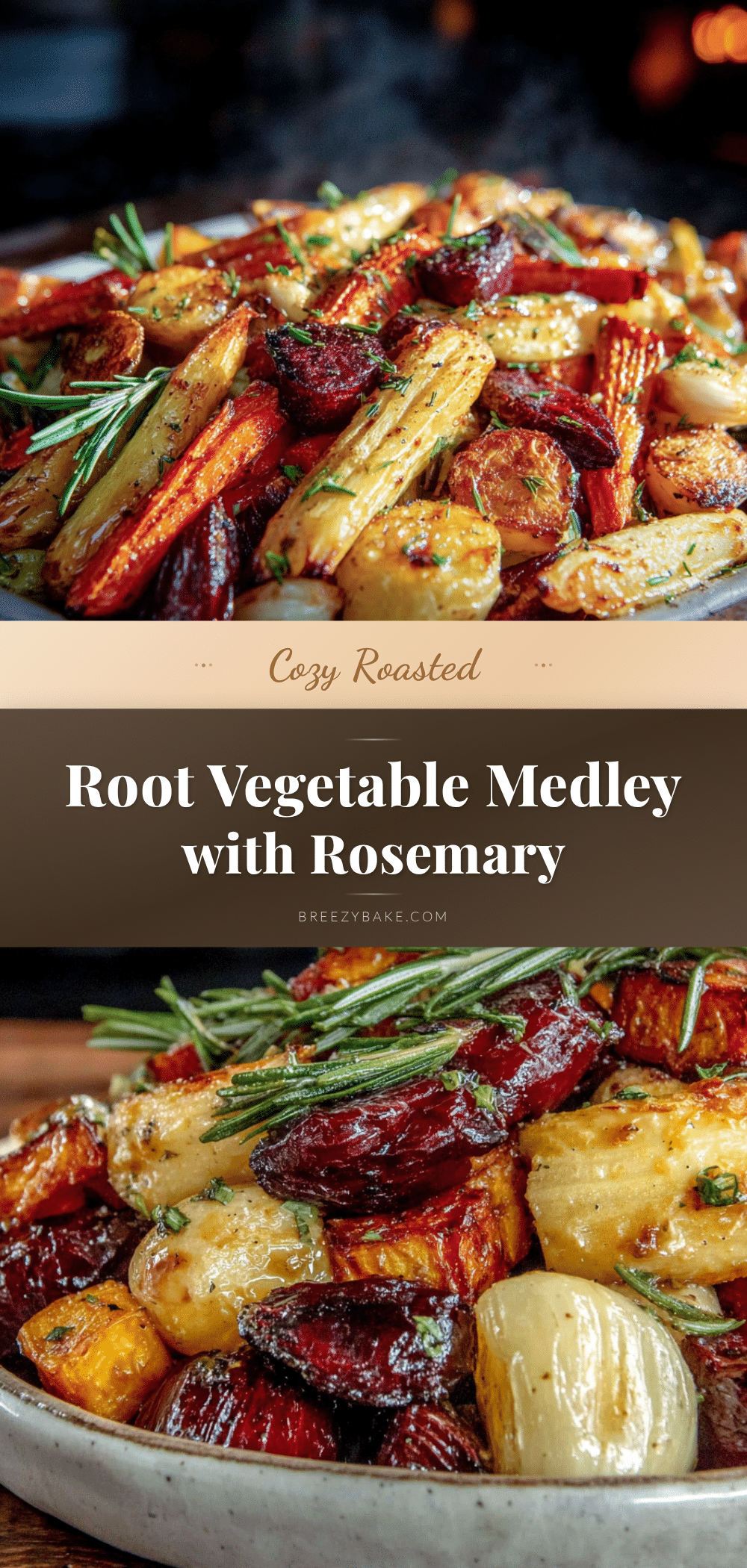
Cozy Roasted Root Vegetable Medley with Rosemary – Easy Fall Side Dish

A simple yet impressive roasted root vegetable medley with rosemary, featuring parboiled carrots, parsnips, potatoes, sweet potatoes, and beets for perfectly caramelized edges and tender interiors. This crowd-pleasing side dish is perfect for fall gatherings and holiday dinners.
- Prep Time: 15 minutes
- Cook Time: 40 minutes
- Total Time: 55 minutes
- Yield: 6 servings 1x
- Category: Side Dish
- Cuisine: American
Ingredients
- 2 large carrots, peeled and cut into 2-inch chunks (about 300g)
- 2 large parsnips, peeled and cut into 2-inch chunks (about 250g)
- 2 medium red potatoes, scrubbed and cut into 2-inch chunks (about 350g)
- 2 medium beets, peeled and cut into 1-inch wedges (about 250g)
- 1 large sweet potato, peeled and cut into 2-inch chunks (about 300g)
- 1 red onion, cut into 1-inch wedges
- 4 tablespoons olive oil (60ml)
- 4 sprigs fresh rosemary, plus 1 tablespoon finely chopped for garnish
- 4 cloves garlic, smashed
- 1 teaspoon sea salt (5g)
- ½ teaspoon black pepper (2g)
- 1 tablespoon balsamic vinegar (15ml)
- 2 tablespoons maple syrup or honey (30ml)
Instructions
- Preheat your oven to 425°F (220°C). Position the rack in the middle of the oven.
- Fill a large pot with water and bring it to a boil. Add a generous pinch of salt—about 1 tablespoon.
- Prep the vegetables: Peel the carrots, parsnips, beets, and sweet potato. Cut everything into uniform 2-inch chunks. The potatoes can stay unpeeled. Cut the red onion into wedges, keeping the root end intact.
- Parboil the dense vegetables: Add the carrots, parsnips, potatoes, and sweet potato to the boiling water. Cook for exactly 5 minutes. Drain well and let them steam dry for a minute.
- While the vegetables drain, prepare the seasoning mixture: In a large mixing bowl, combine 4 tablespoons olive oil, smashed garlic cloves, 2 sprigs of rosemary (leaves stripped and roughly chopped), salt, pepper, balsamic vinegar, and maple syrup. Whisk together.
- Toss the vegetables: Add the parboiled vegetables, raw beets, and red onion wedges to the bowl. Use your hands to toss everything until well coated.
- Arrange on the sheet pan: Line your pan with parchment paper. Spread the vegetables in a single layer without overcrowding.
- Add the remaining rosemary sprigs: Tuck 2 fresh sprigs of rosemary among the vegetables.
- Roast for 20 minutes.
- Flip and rotate: After 20 minutes, remove the pan and use tongs or a spatula to flip each piece. Rotate the pan front to back for even browning. Return to the oven.
- Roast for another 15-20 minutes until golden brown and caramelized on the edges. A fork should slide easily into the thickest piece.
- Finish and garnish: Remove from the oven. Discard the roasted rosemary sprigs. Sprinkle the tablespoon of fresh chopped rosemary over the top. Taste and adjust seasoning.
- Let rest for 5 minutes before serving warm.
Notes
Don’t skip the parboiling step—it ensures all vegetables finish cooking at the same time. Cut everything the same size for even cooking. Use two-stage rosemary: roast whole sprigs for infusion and add fresh chopped rosemary at the end for brightness. Don’t crowd the pan to avoid steaming. Let the vegetables rest for 5 minutes after roasting to allow caramelized edges to set. For best results, reheat leftovers in a 375°F oven for 10-12 minutes.
Nutrition
- Serving Size: 1 cup
- Calories: 220
- Sugar: 12
- Sodium: 400
- Fat: 10
- Saturated Fat: 1.5
- Carbohydrates: 32
- Fiber: 7
- Protein: 4
Keywords: roasted root vegetables, fall side dish, rosemary vegetables, easy vegetable recipe, Thanksgiving side dish, healthy side dish, vegan vegetable recipe, gluten-free side dish