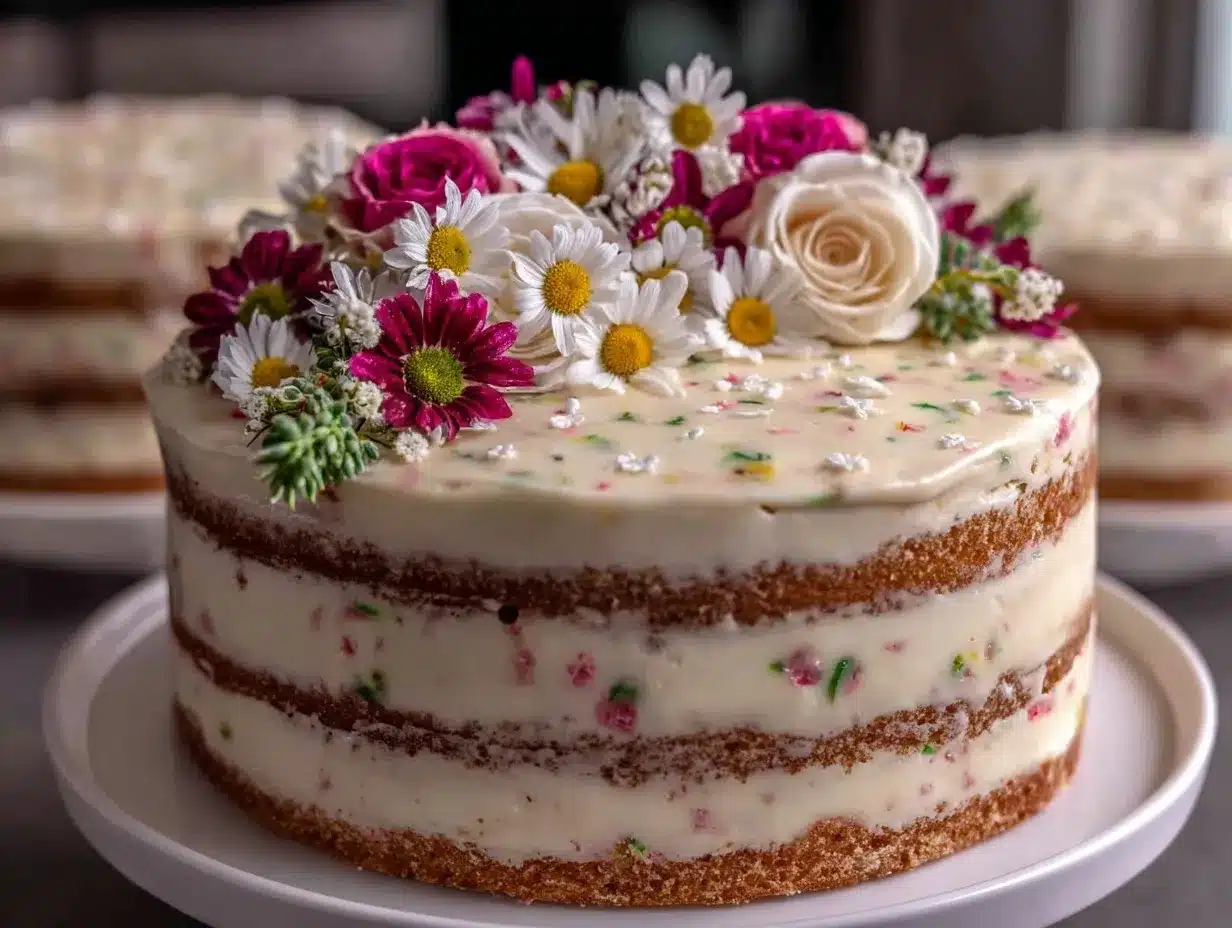
“Can we make it look like a painting?” That’s what my niece asked the minute she saw the idea for this perfect spring birthday cake with watercolor buttercream and fresh flowers. Honestly, I was skeptical at first—painting on cake? It sounded a bit too fancy, maybe even messy. But after a few tries in my tiny kitchen (and some smudges on the counter), I found a way to get this dreamy, soft watercolor effect that feels just like spring itself—light, fresh, and full of life.
It all started on a quiet Saturday afternoon when the sun spilled through my kitchen window just right, casting a glow on the fresh blooms I’d picked up at the farmer’s market. The colors reminded me of a gentle spring rain, the kind that makes the garden pop and every flower seem like it’s freshly painted by nature itself. I wanted a cake that captured that feeling, something simple but stunning, not too fussy but with a little wow factor.
After several batches of buttercream and a few moments of frustration, this recipe stuck. It’s become my go-to for spring birthdays and little celebrations when I want something homemade but still show-stopping. The fresh flowers add that natural touch that makes every bite feel special, like a gift from the garden. So here’s the story behind this perfect spring birthday cake—a little bit of trial, a lot of love, and a splash of color that made me fall for buttercream all over again.
Why You’ll Love This Recipe
This perfect spring birthday cake with watercolor buttercream and fresh flowers isn’t just a feast for the eyes—it’s a celebration in every bite. From my own kitchen to yours, this recipe has been tested until it’s just right, balancing ease and elegance for any home baker.
- Quick & Easy: You can have this beauty ready in about 2 hours from start to finish—ideal for those last-minute party plans or weekend projects.
- Simple Ingredients: No hunting for exotic stuff here. Most are pantry staples, and the fresh flowers? Just grab whatever’s blooming locally or from your garden.
- Perfect for Spring Celebrations: Whether it’s a birthday, a casual get-together, or a sunny brunch, this cake fits the vibe without fuss.
- Crowd-Pleaser: The light vanilla sponge paired with the silky buttercream always brings smiles—kids and adults alike can’t get enough.
- Unbelievably Delicious: The texture is airy but moist, with a buttercream that’s sweet without being heavy, and the fresh flowers add a subtle, natural fragrance that makes it feel like a fresh spring day.
What sets this cake apart is the watercolor technique on the buttercream—honestly, it’s easier than it looks and makes the cake feel like a little work of art. Plus, the fresh flowers aren’t just decoration; they bring a delicate aroma and a pop of nature’s beauty that turns a simple cake into a memorable centerpiece. If you’ve ever wondered how to make a cake that feels both homemade and special enough for guests, this one’s your answer.
It’s a little reminder that sometimes the best celebrations come from the simplest, most heartfelt touches—and this cake has plenty of that.
What Ingredients You Will Need
This recipe uses simple, wholesome ingredients to deliver bold flavor and that soft, airy texture without any complicated steps. Most are everyday items, with the fresh flowers bringing a seasonal, natural charm you can swap depending on what’s in bloom.
- For the Cake:
- All-purpose flour, 2 ¾ cups (345 g), sifted (for lightness)
- Baking powder, 2 ½ teaspoons (12 g), fresh for best rise
- Salt, ½ teaspoon (3 g)
- Unsalted butter, 1 cup (227 g), softened (I prefer Land O’Lakes for smooth creaming)
- Granulated sugar, 1 ¾ cups (350 g)
- Large eggs, 4, room temperature (helps with batter consistency)
- Whole milk, 1 cup (240 ml), room temperature (feel free to use almond milk for a dairy-free twist)
- Pure vanilla extract, 2 teaspoons (10 ml)
- For the Watercolor Buttercream:
- Unsalted butter, 1 cup (227 g), softened
- Powdered sugar, 4 cups (480 g), sifted
- Whole milk or heavy cream, 2 to 3 tablespoons (30-45 ml)
- Pure vanilla extract, 1 teaspoon (5 ml)
- Gel food coloring in pastel tones (pink, lavender, soft green) – I love AmeriColor for vibrant colors without watering down the frosting
- For Garnish:
- Fresh edible flowers (such as pansies, violets, or rose petals) – picked fresh or bought from a trusted source
- Optional: fresh berries for a pop of color and extra freshness
Substitution tips: If you want a gluten-free cake, swapping the all-purpose flour with a 1:1 gluten-free blend works well here. For a vegan version, use plant-based butter and milk alternatives, and consider an egg replacer. The key is maintaining the batter’s moisture and lightness, so keep an eye on the texture as you mix.
Equipment Needed
- Two 8-inch (20 cm) round cake pans – non-stick or greased and lined with parchment paper
- Electric hand mixer or stand mixer – makes creaming butter and sugar a breeze
- Mixing bowls – medium and large sizes
- Offset spatula and bench scraper – for smoothing and creating the watercolor effect on the buttercream
- Small paintbrushes (clean and food-safe) – to apply the watercolor colors gently
- Cooling racks – for the cakes to cool evenly
- Measuring cups and spoons – precise measurements are key
- Turntable (optional) – helpful for decorating but not required
If you don’t have a turntable, no worries! I’ve decorated plenty of cakes just by rotating the cake slowly with one hand while smoothing with the other. For the paintbrushes, I like to keep a few dedicated just for coloring buttercream—makes cleanup easier and keeps colors vibrant. If you’re on a budget, you can find small angled brushes in craft stores that work perfectly.
Preparation Method
- Preheat and Prep: Preheat your oven to 350°F (175°C). Grease your 8-inch pans and line the bottoms with parchment paper. This prevents sticking and helps the cakes come out clean.
- Mix Dry Ingredients: In a medium bowl, whisk together the sifted all-purpose flour, baking powder, and salt. Set aside to keep everything light and airy.
- Cream Butter and Sugar: Using your mixer, beat the softened butter and granulated sugar on medium speed for about 3 to 5 minutes until it’s pale and fluffy—this step is crucial for a tender crumb.
- Add Eggs: One at a time, add the eggs, beating well after each addition. Scrape down the sides of the bowl to keep everything even.
- Combine Wet and Dry: Alternate adding the dry ingredients and milk to the butter mixture, beginning and ending with the dry ingredients. Mix on low speed until just combined—don’t overmix or the cake will be dense.
- Stir in Vanilla: Add vanilla extract and mix briefly to incorporate.
- Bake: Divide the batter evenly between the two pans (about 3 cups or 720 ml batter each). Bake for 30 to 35 minutes, or until a toothpick inserted in the center comes out clean. Watch closely after 25 minutes as ovens vary.
- Cool: Let the cakes cool in the pans for 10 minutes, then turn them out onto cooling racks to cool completely. This prevents the buttercream from melting during frosting.
- Make Buttercream: Beat the softened butter on medium speed until creamy, about 2 minutes. Gradually add powdered sugar, alternating with milk or cream, until smooth and fluffy. Stir in vanilla extract.
- Prepare Watercolor Colors: Divide the buttercream into small bowls and tint each with a gel food color. Use a paintbrush to apply dabs of color randomly on the cake’s crumb coat.
- Apply Base Coat: Spread a thin, smooth layer of plain buttercream over the entire cake to seal in crumbs. Chill for 20 minutes to set.
- Create Watercolor Effect: Using a clean offset spatula or bench scraper, gently smooth the colored buttercream dabs, blending the colors softly. Repeat until the cake looks like a delicate watercolor painting—light, airy, and artistic.
- Decorate with Flowers: Place fresh edible flowers on top and around the sides, arranging them naturally. Rinse and dry flowers gently before use.
- Chill and Serve: Chill the cake for at least 30 minutes before serving to let the buttercream firm up. Bring to room temperature 15 minutes before slicing for best flavor and texture.
Pro tip: If your buttercream feels too soft while decorating, pop it in the fridge for 10 minutes to firm up. Also, keep your workspace cool to prevent melting. If you want a different flavor profile, swapping vanilla for lemon zest in the cake batter adds a fresh twist that pairs beautifully with the spring theme.
Cooking Tips & Techniques
Getting that perfect spring birthday cake with watercolor buttercream means paying attention to a few little things that make a big difference.
- Butter Temperature: Butter should be softened but not melting. If it’s too warm, your buttercream will be runny and hard to work with.
- Mixing Method: Creaming butter and sugar until fluffy traps air, which helps the cake rise and stay tender. Don’t rush this step!
- Watercolor Technique: Use gel colors sparingly. It’s easier to add more color than to fix an overly bright patch. Dab small spots, then smooth gently.
- Fresh Flowers: Use only edible flowers or flowers safe for cake decoration to avoid any unwanted chemicals. Always rinse and dry before placing them on the cake.
- Crumb Coat: A thin crumb coat seals in loose crumbs so your final buttercream layer stays smooth. Chill after applying to firm it up.
- Timing: Bake cakes early enough to cool completely before frosting. A warm cake will cause buttercream to melt.
- Efficiency: Prepare the buttercream while the cakes bake and cool. Multitasking saves time and keeps the process flowing.
One lesson I learned the hard way: trying to paint the watercolor effect on a warm cake just leads to a frosting mess. Patience really pays off here. Also, don’t be afraid to experiment with your colors and flowers—every cake is a little unique, and that’s part of the charm.
Variations & Adaptations
This perfect spring birthday cake recipe is a great canvas for your creativity. Here are some ways to make it your own:
- Flavor Variations: Swap vanilla extract for almond or lemon for a different twist. Adding a teaspoon of lavender extract pairs beautifully with the floral decorations.
- Dietary Adjustments: Use gluten-free flour blends for gluten sensitivity. Substitute dairy butter and milk with coconut or soy-based products for a vegan-friendly cake.
- Color and Flower Choices: Change up the gel colors to match any party theme—soft pastels for a baby shower, bold jewel tones for a grown-up bash. Swap fresh flowers with sugared violets or rose petals for an edible sparkle.
- Cooking Methods: If you don’t have round pans, use square pans or even muffin tins—just adjust baking time accordingly. Miniature versions are perfect for intimate celebrations or gifts.
- Personal Favorite: Once, I added a thin layer of homemade lemon curd between the cake layers for a bright surprise bite. It was a hit and felt just right for spring!
Serving & Storage Suggestions
This cake is best served at room temperature to let the flavors and buttercream shine. Before slicing, let it sit out for about 15 minutes if refrigerated.
Present it on a simple white cake stand or a rustic wooden board to complement the fresh flowers and soft colors. Pair with light beverages like elderflower lemonade or a delicate chamomile tea. It’s also lovely alongside a fresh berry salad to keep the spring theme going.
To store, keep the cake covered loosely with a cake dome or plastic wrap in the refrigerator for up to 3 days. The buttercream can harden a bit when chilled, so warming it to room temperature before serving brings back that creamy texture.
You can freeze the cake layers wrapped well in plastic wrap and foil for up to 3 months. Thaw overnight in the fridge and frost as usual. Keep in mind that fresh flowers are best added just before serving for maximum freshness.
Flavors tend to deepen with a bit of resting time, so if you make the cake a day ahead (without flowers), you’ll notice an even more harmonious taste the next day.
Nutritional Information & Benefits
This perfect spring birthday cake offers a moderate indulgence that balances taste and nutrition. One slice (about 1/12th of the cake) roughly contains:
| Calories | 350-400 kcal |
|---|---|
| Fat | 18-20 g |
| Carbohydrates | 45-50 g |
| Protein | 4-5 g |
| Sugar | 30-35 g |
The cake uses real butter and whole eggs, which provide essential fat-soluble vitamins, and fresh milk adds calcium and protein. Using fresh edible flowers adds a unique antioxidant touch, and swapping out ingredients for dairy-free or gluten-free options keeps it accessible for various dietary needs.
While this cake is a treat, it’s a reminder that homemade desserts can be part of a balanced lifestyle when enjoyed mindfully—especially when shared with loved ones during celebrations.
Conclusion
This perfect spring birthday cake with watercolor buttercream and fresh flowers is my kind of celebration cake—pretty enough to impress, but simple enough to make with a busy schedule. It’s the kind of recipe you return to because it feels personal, fresh, and just right every single time.
Don’t hesitate to tweak the colors, flowers, or flavors to fit your style. That’s the beauty of a homemade cake—it’s yours to shape and enjoy. If you’ve ever hesitated about trying a decorated cake, this recipe makes it approachable and fun, promising a little art and a lot of joy.
I’d love to hear how your cake turns out or any creative spins you try. Sharing these moments—whether it’s a birthday, a spring gathering, or just a treat to brighten the day—is what baking’s all about. Happy baking!
FAQs
Can I use artificial flowers instead of fresh flowers for decoration?
While artificial flowers can be used for decoration, they should not touch the cake directly unless they are food-safe. It’s best to use fresh edible flowers or place artificial flowers on a barrier like parchment paper to keep the cake safe.
How do I make sure the watercolor buttercream doesn’t get too messy?
Use gel food coloring sparingly and apply in small dabs. Then, gently smooth with a clean offset spatula or bench scraper to blend. Keep the buttercream chilled if it starts becoming too soft while decorating.
Can I make this cake a day ahead?
Yes! Bake and frost the cake a day in advance, but add fresh flowers just before serving to keep them vibrant and fresh.
What if I don’t have edible flowers?
You can decorate with fresh berries, sugared herbs, or even thinly sliced citrus for a fresh look. Just avoid any flowers or plants that haven’t been confirmed edible.
Is this cake suitable for beginners?
Absolutely. The recipe is designed to be straightforward, and the watercolor buttercream technique is forgiving. With a little patience, even first-time decorators can create a beautiful cake.
For more sweet inspiration, you might enjoy the pink velvet cookie crumble board or the chocolate-covered strawberry mousse cups, both perfect for sharing at your next celebration.
Pin This Recipe!
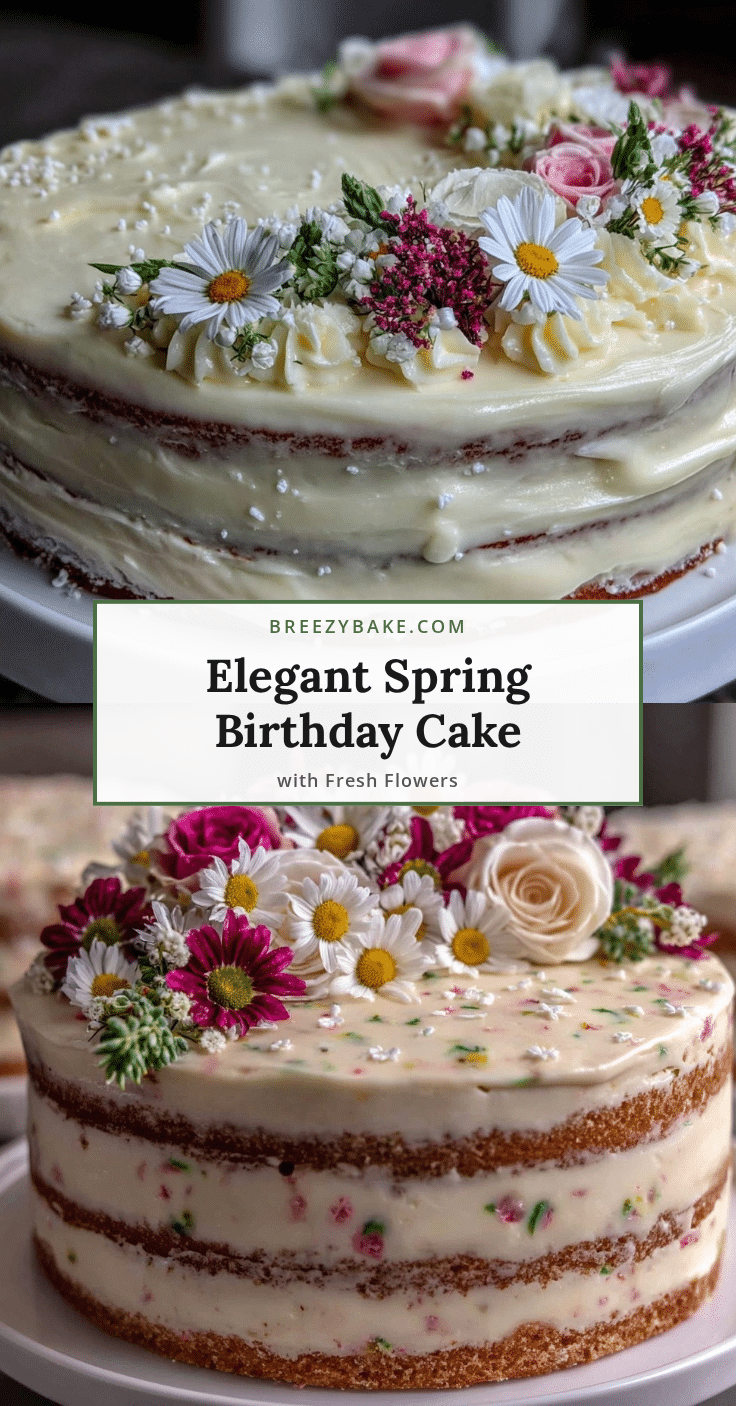
Perfect Spring Birthday Cake Recipe with Watercolor Buttercream and Fresh Flowers for Easy Homemade Celebration
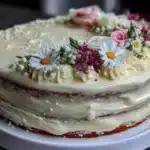
A light and airy vanilla sponge cake decorated with a soft watercolor buttercream and fresh edible flowers, perfect for spring celebrations and birthdays. This recipe balances ease and elegance for a show-stopping homemade cake.
- Prep Time: 30 minutes
- Cook Time: 35 minutes
- Total Time: 2 hours
- Yield: 12 servings
- Category: Dessert
- Cuisine: American
Ingredients
- All-purpose flour, 2 ¾ cups (345 g), sifted
- Baking powder, 2 ½ teaspoons (12 g)
- Salt, ½ teaspoon (3 g)
- Unsalted butter, 1 cup (227 g), softened
- Granulated sugar, 1 ¾ cups (350 g)
- Large eggs, 4, room temperature
- Whole milk, 1 cup (240 ml), room temperature
- Pure vanilla extract, 2 teaspoons (10 ml)
- Unsalted butter, 1 cup (227 g), softened (for buttercream)
- Powdered sugar, 4 cups (480 g), sifted
- Whole milk or heavy cream, 2 to 3 tablespoons (30-45 ml)
- Pure vanilla extract, 1 teaspoon (5 ml)
- Gel food coloring in pastel tones (pink, lavender, soft green)
- Fresh edible flowers (such as pansies, violets, or rose petals)
- Optional: fresh berries for garnish
Instructions
- Preheat oven to 350°F (175°C). Grease two 8-inch round cake pans and line bottoms with parchment paper.
- In a medium bowl, whisk together sifted all-purpose flour, baking powder, and salt. Set aside.
- Using a mixer, beat softened butter and granulated sugar on medium speed for 3 to 5 minutes until pale and fluffy.
- Add eggs one at a time, beating well after each addition and scraping down bowl sides.
- Alternate adding dry ingredients and milk to butter mixture, beginning and ending with dry ingredients. Mix on low speed until just combined.
- Add vanilla extract and mix briefly.
- Divide batter evenly between pans (about 3 cups or 720 ml each). Bake for 30 to 35 minutes or until a toothpick inserted in center comes out clean.
- Cool cakes in pans for 10 minutes, then turn out onto cooling racks to cool completely.
- For buttercream, beat softened butter on medium speed until creamy, about 2 minutes. Gradually add powdered sugar alternating with milk or cream until smooth and fluffy. Stir in vanilla extract.
- Divide buttercream into small bowls and tint each with gel food coloring. Use a clean paintbrush to apply dabs of color randomly on the cake’s crumb coat.
- Spread a thin, smooth layer of plain buttercream over entire cake to seal crumbs. Chill for 20 minutes to set.
- Using an offset spatula or bench scraper, gently smooth colored buttercream dabs, blending colors softly to create watercolor effect. Repeat until desired look is achieved.
- Decorate cake with fresh edible flowers, arranging naturally. Rinse and dry flowers gently before use.
- Chill cake for at least 30 minutes before serving. Bring to room temperature 15 minutes before slicing.
Notes
Use softened but not melting butter for best buttercream texture. Apply gel food coloring sparingly and blend gently for watercolor effect. Use only fresh edible flowers or food-safe artificial flowers with a barrier. Chill cake before decorating and serving to prevent melting. For vegan or gluten-free versions, substitute ingredients accordingly and monitor batter texture.
Nutrition
- Serving Size: 1 slice (1/12th of c
- Calories: 375
- Sugar: 32
- Sodium: 150
- Fat: 19
- Saturated Fat: 12
- Carbohydrates: 48
- Fiber: 1
- Protein: 4.5
Keywords: spring birthday cake, watercolor buttercream, fresh flowers, vanilla sponge cake, homemade cake, easy celebration cake, edible flowers, pastel cake