I wasn’t expecting cooking advice from my accountant, but there I was, stuck in a two-hour wait at the DMV, listening to Mr. Henderson describe exactly how to make the best stuffing of my life. He was this quiet guy who always wore cardigans and never made eye contact during tax season. But the moment I mentioned I was hosting Thanksgiving for the first time, something clicked behind those glasses. He pulled out a crinkled photo from his wallet—not of his kids, but of a golden, crispy baking dish. “Brown butter,” he said, like it was a secret password. “And sourdough. That’s the whole game.” Honestly, I almost laughed. My accountant. At the DMV. Giving me a stuffing recipe. But let me tell you, I scribbled every word on the back of an expired registration form. That was three winters ago, and I haven’t made a different stuffing since. This Best Brown Butter Sage Stuffing with Sourdough isn’t just a side dish—it’s the dish that made my mother-in-law ask for the recipe. The one that gets requested for Friendsgiving, Christmas, and random Tuesday dinners. You know that feeling when you take a bite and everything just clicks? That’s this recipe. The nutty richness of brown butter, the earthy warmth of sage, and those crispy, chewy sourdough cubes that soak up all the broth without turning to mush. It’s the kind of stuffing that makes people close their eyes after the first forkful. And the best part? It’s surprisingly simple to pull off, even when you’re juggling a dozen other dishes for a crowd.
Why You’ll Love This Recipe
Let me be real with you—I’ve tested a lot of stuffing recipes over the years. Some were too dry, others were a soggy mess, and a few just tasted like bread with herbs. This one? It’s different. I’ve refined it through countless holiday dinners, potlucks, and even a few “stuffing for dinner” nights when I needed comfort food fast. Here’s why this version stands out:
- Quick & Easy: Comes together in under an hour once your bread is prepped. Perfect for busy holiday mornings or last-minute dinner party additions.
- Simple Ingredients: No fancy grocery trips needed. Sourdough, butter, sage, onions, celery—you probably have most of these in your kitchen right now.
- Perfect for Hosting: This dish steals the table at any gathering. It’s impressive enough for a formal Thanksgiving but cozy enough for a casual Friendsgiving potluck.
- Crowd-Pleaser: I’ve served this to picky kids, gluten-free friends (use the right bread), and sage skeptics. It always gets rave reviews and empty dishes.
- Unbelievably Delicious: The brown butter adds this deep, nutty flavor that regular butter just can’t touch. Paired with fresh sage and crusty sourdough, it’s next-level comfort food.
What makes this recipe different from the rest? It’s the technique. Instead of just melting butter, we’re browning it—letting the milk solids toast to golden perfection. That single step transforms the entire dish. The sourdough holds its shape better than regular bread, giving you those perfect crispy edges and tender centers. And the sage? We’re using it two ways: fried in brown butter for a crispy garnish and folded into the bread mixture for earthy depth. This isn’t just another stuffing recipe—it’s your new holiday hero.
This recipe is the kind that makes you want to host a dinner party just so you can serve it. It’s comfort food reimagined—richer, more flavorful, but with the same soul-soothing satisfaction you crave during the holidays. Perfect for impressing your in-laws without stress, or turning a simple Sunday roast into something memorable.
What Ingredients You Will Need
This recipe uses simple, wholesome ingredients to deliver bold flavor and satisfying texture without the fuss. Most of these are pantry staples, but a few key choices make all the difference. Let me walk you through each one.
- Sourdough bread, cut into 1-inch cubes (about 1 large loaf, roughly 12 cups). Day-old or slightly stale sourdough works best—it soaks up the broth without falling apart. I prefer a crusty artisan loaf from the bakery section; the tanginess adds depth.
- Unsalted butter, 1 cup (2 sticks). We’re browning this, so don’t skimp on quality. I recommend Kerrygold or Plugrà for the best flavor.
- Fresh sage leaves, 1/2 cup packed, plus extra for garnish. Fresh is non-negotiable here—dried sage just won’t give you that same aromatic punch.
- Yellow onion, 2 medium, diced (about 2 cups). Look for firm, heavy onions with tight skins.
- Celery stalks, 4 large, diced (about 1 1/2 cups). The celery adds that classic savory backbone.
- Low-sodium chicken or vegetable broth, 2 1/2 to 3 cups. Homemade is lovely, but store-bought works great. Just use low-sodium so you can control the salt.
- Large eggs, 2, lightly beaten. These help bind everything together without making it heavy.
- Fresh parsley, 1/4 cup, chopped. For a pop of freshness at the end.
- Kosher salt, 1 1/2 teaspoons. I prefer Diamond Crystal—it’s less salty by volume, so you have more control.
- Black pepper, 1 teaspoon, freshly ground.
- Garlic cloves, 4, minced. Because everything’s better with garlic.
- Dried thyme, 1 teaspoon. Optional, but it rounds out the herb profile nicely.
Ingredient Selection Tips: For the sourdough, look for a loaf that’s at least a day old. Fresh bread can turn mushy. If you only have fresh bread, cube it and spread it on a baking sheet at 300°F for 10-15 minutes to dry it out. For the sage, choose leaves that are vibrant green without any brown spots. If you’re feeding a crowd, you can easily double this recipe—just use a larger baking dish and add 5-10 minutes to the baking time.
Substitution Guidance: Need it gluten-free? Use your favorite gluten-free sourdough or a sturdy gluten-free bread. The texture will be slightly different, but still delicious. Want it vegetarian? Use vegetable broth and skip the chicken broth. Dairy-free? Substitute the butter with a high-quality vegan butter—Miyoko’s or Earth Balance work well for browning. If you can’t find fresh sage, dried sage works in a pinch (use 2 tablespoons, but add it to the onion mixture rather than frying it).
Equipment Needed
You don’t need a professional kitchen to pull this off. Here’s what you’ll need:
- Large skillet or sauté pan (12-inch). This is for browning the butter and cooking the aromatics. A light-colored pan helps you see when the butter turns golden.
- Large mixing bowl (at least 4 quarts). For combining the bread cubes with the broth mixture.
- 9×13-inch baking dish (or similar 3-quart dish). Glass or ceramic works best for even heat distribution.
- Whisk for beating the eggs.
- Cutting board and sharp knife for dicing onions, celery, and herbs.
- Measuring cups and spoons.
- Aluminum foil for covering during the first part of baking.
- Wooden spoon or silicone spatula for stirring.
Budget-Friendly Alternatives: No 9×13 dish? Use a large cast-iron skillet or two smaller baking dishes. No whisk? Two forks work fine for beating eggs. If you don’t have a light-colored pan for browning butter, just watch it carefully—dark pans make it harder to see the color change. I learned that the hard way after burning three batches of butter in my black non-stick pan. Now I use my stainless steel skillet, and it’s a game-changer.
Maintenance Tip: After making this, soak your baking dish immediately to prevent the crispy bits from sticking. Trust me on this one—I’ve spent too many post-Thanksgiving evenings scrubbing dried stuffing off glass.
Preparation Method
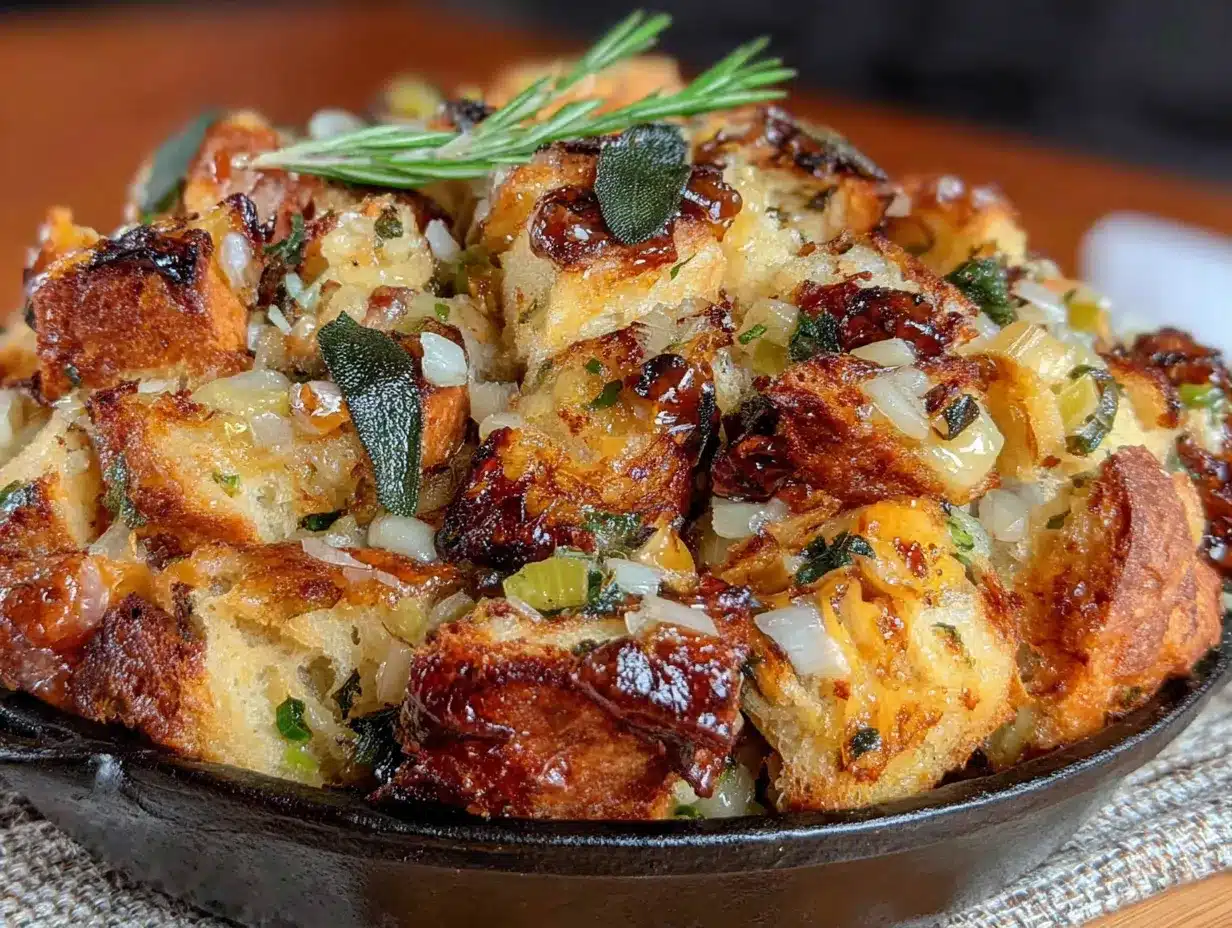
Let’s get cooking! This recipe comes together in layers of flavor, so take your time with each step. The total active time is about 30 minutes, plus 45-50 minutes of baking.
- Preheat your oven to 350°F. Position a rack in the middle of the oven. If you’re toasting fresh bread, do that now: spread the cubes on a baking sheet and bake for 10 minutes, until just dry but not browned. Set aside to cool slightly.
- Brown the butter. In your large skillet, melt the butter over medium heat. Swirl the pan occasionally. After about 5-7 minutes, you’ll hear it start to crackle and pop. Watch closely—the butter will foam up, then the foam will subside, and you’ll see golden-brown specks forming at the bottom. The smell will turn nutty and incredible. Immediately remove from heat and pour into a heat-safe bowl (including all those brown bits—that’s the flavor!). Set aside 2 tablespoons of the brown butter for later.
- Fry the sage leaves. Return the skillet to medium heat with 2 tablespoons of the reserved brown butter. Add about 10-12 fresh sage leaves and fry for 30-45 seconds per side, until crispy. Transfer to a paper towel-lined plate. They’ll crisp up more as they cool.
- Cook the aromatics. In the same skillet, add the remaining brown butter (you should have about 6 tablespoons left). Add the diced onion and celery. Cook over medium heat for 8-10 minutes, stirring occasionally, until softened and translucent. Add the minced garlic and cook for 1 more minute until fragrant. Season with 1 teaspoon of salt and 1/2 teaspoon of pepper.
- Combine the bread and broth mixture. In your large mixing bowl, combine the dried bread cubes, the cooked onion mixture, the chopped fresh sage (reserve a few leaves for garnish), and the dried thyme if using. Toss gently to combine.
- Whisk the eggs and broth. In a separate small bowl, whisk together the beaten eggs and 2 1/2 cups of broth. Pour this over the bread mixture. Toss gently with a wooden spoon until all the bread is moistened. The mixture should look wet but not swimming—if it seems dry, add the remaining 1/2 cup of broth. Let it sit for 5 minutes so the bread can absorb the liquid.
- Transfer to baking dish. Grease your 9×13-inch dish with a little butter or non-stick spray. Pour the stuffing mixture into the dish and spread it into an even layer. Drizzle the reserved 2 tablespoons of brown butter over the top. Crumble the fried sage leaves over everything.
- Bake covered. Cover the dish tightly with aluminum foil. Bake for 25 minutes. This steams the stuffing and keeps it moist.
- Bake uncovered. Remove the foil and bake for another 20-25 minutes, until the top is golden brown and crispy. The edges should be slightly caramelized. Let it rest for 5-10 minutes before serving—this helps it set and makes serving easier.
Sensory Cues: When browning the butter, you’re looking for a deep amber color and a nutty aroma. If it smells burnt, you’ve gone too far. When the stuffing is done, the top should be golden and crispy, and you should see some bubbling around the edges. The kitchen will smell like a cozy autumn day—sage, browned butter, and roasted onions.
Troubleshooting: If your stuffing seems too dry after baking, drizzle a little warm broth over it before serving. If it’s too wet, bake uncovered for an additional 10 minutes. If the top is browning too quickly but the center isn’t done, cover loosely with foil for the remaining time.
Cooking Tips & Techniques
After making this stuffing for more holiday dinners than I can count, I’ve picked up a few tricks that make all the difference. Let me share them so you don’t make the same mistakes I did.
Master the Brown Butter: This is the most important step. Use a light-colored pan so you can see the color change. Don’t walk away—brown butter can go from perfect to burnt in seconds. I once got distracted by a phone call and ended up with black butter that smelled like a campfire. Start over if that happens; burnt butter will ruin the whole dish. Also, pour it into a separate bowl immediately after it browns; the residual heat from the pan can continue cooking it.
Bread is Everything: Day-old sourdough is ideal because it’s dry enough to absorb the broth without disintegrating. If you only have fresh bread, cube it and let it sit out overnight, or toast it in a low oven. Don’t skip this step—I’ve made stuffing with fresh bread before, and it turned into a soggy, sad mess. The bread should be dry to the touch but not hard.
Don’t Overmix: When combining the bread with the broth mixture, toss gently. You want the bread to absorb the liquid, not get crushed into crumbs. Think of it like folding in chocolate chips—gentle and patient.
Layer the Flavors: The fried sage leaves on top aren’t just for looks. They add a crispy, concentrated sage flavor that contrasts with the soft stuffing. Don’t skip them. And that drizzle of reserved brown butter on top before baking? That’s what creates those irresistible crispy edges.
Timing and Multitasking: You can toast the bread cubes a day ahead and store them in an airtight container. You can also brown the butter and fry the sage up to 2 days ahead—just store them separately in the fridge. On the day of, all you need to do is cook the aromatics, mix everything, and bake. This makes hosting so much less stressful.
Variations & Adaptations
One of the best things about this stuffing is how adaptable it is. Here are a few variations I’ve tried and loved:
- Add Sausage: Brown 1 pound of bulk Italian sausage (sweet or spicy) in the skillet before cooking the onions. Remove the sausage, crumble it, and add it back when you combine everything. This makes the stuffing heartier and perfect for a main dish.
- Add Dried Fruit: Fold in 1/2 cup of dried cranberries, chopped dried apricots, or golden raisins along with the herbs. The sweetness balances the savory brown butter beautifully. I tried this for a Christmas dinner, and it was a hit.
- Add Nuts: Toast 1/2 cup of pecans or walnuts and fold them in just before baking. The crunch adds a lovely texture contrast. Make sure to toast them first—raw nuts can taste a bit bitter.
- Make it Vegan: Use vegan butter (Miyoko’s works great for browning), vegetable broth, and a flax egg (1 tablespoon ground flaxseed mixed with 3 tablespoons water, let sit for 5 minutes). The texture will be slightly different, but the flavor is still incredible.
- Gluten-Free Version: Use a good quality gluten-free sourdough or a sturdy gluten-free bread. Look for one that’s not too sweet. I’ve had good luck with Against the Grain brand.
- Add Mushrooms: Sauté 8 ounces of sliced cremini or shiitake mushrooms with the onions and celery. They add an earthy, umami depth that pairs perfectly with the sage.
My Personal Favorite Variation: I once made this with added crispy bacon bits and a handful of fresh thyme. It was the day after Thanksgiving, and I was using up leftovers. Honestly, it might have been better than the original. The smoky bacon and the nutty brown butter? A match made in heaven.
Serving & Storage Suggestions
This stuffing is incredibly versatile when it comes to serving. Here’s how to make the most of it:
Serving Temperature and Presentation: Serve the stuffing warm, straight from the baking dish. Garnish with a few extra fried sage leaves and a sprinkle of fresh parsley for color. If you’re hosting a dinner party, transfer it to a nice serving bowl and fluff it gently with a fork to show off those crispy edges. It pairs beautifully with roasted turkey, glazed ham, or a simple roast chicken. For a vegetarian spread, serve it alongside a hearty mushroom wellington or roasted root vegetables.
Complementary Dishes: This stuffing loves company. Serve it with creamy mashed potatoes, roasted Brussels sprouts with balsamic glaze, cranberry sauce, and a rich turkey gravy. For drinks, a crisp Chardonnay or a light Pinot Noir complements the sage and brown butter notes. Non-alcoholic options like sparkling apple cider or a sage-infused mocktail work beautifully too.
Storage Instructions: Leftover stuffing keeps well in the refrigerator for up to 4 days. Store it in an airtight container. The flavors actually meld and deepen overnight, so leftovers might taste even better the next day. To reheat, place it in a 350°F oven for 10-15 minutes, covered with foil to prevent drying. You can also microwave individual portions, but the crispy top won’t be as good.
Freezing Instructions: This stuffing freezes beautifully. Assemble the stuffing completely but don’t bake it. Cover the dish tightly with plastic wrap, then foil, and freeze for up to 3 months. To bake from frozen, remove the plastic wrap, cover with foil, and bake at 350°F for 45 minutes. Remove the foil and bake for another 20-25 minutes until golden and heated through. You can also freeze baked leftovers in a freezer-safe container for up to 3 months.
How Flavors Develop: The brown butter flavor becomes more pronounced after a day in the fridge. The sage mellows slightly, and the bread absorbs all the savory goodness. I actually prefer the leftovers—they’re more cohesive and the flavors have had time to get to know each other.
Nutritional Information & Benefits
While stuffing is definitely a comfort food, it does offer some nutritional perks. Here’s a rough breakdown per serving (about 1 cup, assuming 10 servings):
- Calories: Approximately 320-380
- Fat: 18-22g (mostly from butter, which provides healthy saturated fats and fat-soluble vitamins)
- Carbohydrates: 35-40g
- Protein: 8-10g
- Fiber: 3-4g (thanks to the sourdough and vegetables)
- Sodium: 500-700mg (can be reduced with low-sodium broth)
Health Benefits of Key Ingredients: Sage is packed with antioxidants and has anti-inflammatory properties. It’s also been traditionally used to support digestion—perfect for a heavy holiday meal. Sourdough bread is easier to digest than regular bread because the fermentation process breaks down some of the gluten and phytic acid. Onions and celery provide fiber, vitamin C, and various phytonutrients that support immune health.
Dietary Considerations: This recipe is vegetarian if you use vegetable broth. It can be made vegan and gluten-free with the substitutions mentioned above. It contains dairy (butter) and gluten (sourdough), so keep that in mind for guests with allergies. If you’re watching your sodium, use unsalted butter and low-sodium broth, and adjust the added salt to taste.
My Personal Wellness Perspective: I believe in balance. This stuffing is rich and indulgent, but it’s made with real, whole ingredients. I’d rather have a smaller portion of something truly delicious than a larger portion of something mediocre. And honestly, a little butter never hurt anyone—especially when it’s this good.
Conclusion
This Best Brown Butter Sage Stuffing with Sourdough has become my signature holiday dish, and I have my quiet accountant to thank for it. It’s the kind of recipe that proves the best things often come from the most unexpected places. The nutty brown butter, the earthy sage, the crispy sourdough—every bite is a reminder that simple ingredients, treated with care, can create something truly special.
I hope you give this recipe a try, whether for a big Thanksgiving gathering or a cozy Sunday dinner. Don’t be afraid to make it your own—add sausage, throw in some cranberries, or double the sage if you’re feeling bold. That’s the beauty of cooking; every version tells a different story.
I’d love to hear how it turns out for you! Drop a comment below and let me know your favorite variation, or tag me in your photos if you share them online. And if you’re looking for more holiday inspiration, check out my classic roast turkey and creamy mashed potatoes recipes—they make the perfect trio. Happy cooking, friends!
Frequently Asked Questions
Can I make this stuffing ahead of time?
Absolutely! You can assemble the stuffing completely (without baking) up to 24 hours in advance. Cover and refrigerate. When you’re ready to bake, add about 10-15 minutes to the covered baking time since you’re starting from cold. You can also toast the bread cubes and brown the butter up to 2 days ahead.
What if I don’t have sourdough bread?
No problem! You can use any sturdy bread like ciabatta, French bread, or even a good quality white bread. Just make sure it’s a day old or toasted to dry it out. The tanginess of sourdough adds a unique flavor, but the recipe still works beautifully with other breads.
Can I use dried sage instead of fresh?
Yes, but the flavor will be different. Use 2 tablespoons of dried sage (rubbed sage, not ground) and add it to the onion mixture rather than frying it. You’ll lose the crispy fried sage garnish, but the stuffing will still be delicious. If you have dried sage, skip the frying step entirely.
How do I prevent the stuffing from being too dry or too soggy?
The key is the bread-to-broth ratio. Start with 2 1/2 cups of broth, then let the mixture sit for 5 minutes. If the bread still looks dry, add the remaining 1/2 cup. The bread should be moist but not swimming in liquid. Also, make sure your bread is properly dried out—fresh bread absorbs less liquid and can lead to sogginess.
Can I cook this stuffing inside a turkey?
I don’t recommend it for food safety reasons. The stuffing needs to reach 165°F internally, and by the time the turkey is done, the stuffing can be overcooked or undercooked. This recipe is designed to be baked separately, which gives you that perfect crispy top and tender interior. Plus, baking it separately means you can make it vegetarian-friendly if needed.
PrintBest Brown Butter Sage Stuffing with Sourdough – Easy Holiday Side
This Best Brown Butter Sage Stuffing with Sourdough is a holiday hero—nutty brown butter, earthy sage, and crispy sourdough cubes that soak up broth without turning mushy. It’s the dish that makes people close their eyes after the first forkful, and it’s surprisingly simple to pull off even when juggling a dozen other dishes.
- Prep Time: 30 minutes
- Cook Time: 45-50 minutes
- Total Time: 1 hour 15-20 minutes
- Yield: 10 servings 1x
- Category: Side Dish
- Cuisine: American
Ingredients
- 1 large loaf sourdough bread, cut into 1-inch cubes (about 12 cups)
- 1 cup (2 sticks) unsalted butter
- 1/2 cup packed fresh sage leaves, plus extra for garnish
- 2 medium yellow onions, diced (about 2 cups)
- 4 large celery stalks, diced (about 1 1/2 cups)
- 2 1/2 to 3 cups low-sodium chicken or vegetable broth
- 2 large eggs, lightly beaten
- 1/4 cup fresh parsley, chopped
- 1 1/2 teaspoons kosher salt (preferably Diamond Crystal)
- 1 teaspoon freshly ground black pepper
- 4 garlic cloves, minced
- 1 teaspoon dried thyme (optional)
Instructions
- Preheat your oven to 350°F. Position a rack in the middle. If using fresh bread, spread cubes on a baking sheet and toast for 10 minutes until dry but not browned. Set aside to cool slightly.
- In a large skillet, melt the butter over medium heat. Swirl occasionally. After 5-7 minutes, the butter will crackle and foam; when the foam subsides and golden-brown specks form at the bottom, remove from heat immediately. Pour into a heat-safe bowl, reserving 2 tablespoons for later.
- Return the skillet to medium heat with 2 tablespoons of the reserved brown butter. Add 10-12 fresh sage leaves and fry for 30-45 seconds per side until crispy. Transfer to a paper towel-lined plate.
- In the same skillet, add the remaining brown butter (about 6 tablespoons). Add diced onion and celery. Cook over medium heat for 8-10 minutes, stirring occasionally, until softened and translucent. Add minced garlic and cook for 1 minute. Season with 1 teaspoon salt and 1/2 teaspoon pepper.
- In a large mixing bowl, combine the dried bread cubes, cooked onion mixture, chopped fresh sage (reserve a few leaves for garnish), and dried thyme if using. Toss gently.
- In a small bowl, whisk together the beaten eggs and 2 1/2 cups of broth. Pour over the bread mixture and toss gently until all bread is moistened. If it seems dry, add the remaining 1/2 cup broth. Let sit for 5 minutes.
- Grease a 9×13-inch baking dish with butter or non-stick spray. Pour the stuffing mixture into the dish and spread evenly. Drizzle the reserved 2 tablespoons of brown butter over the top. Crumble the fried sage leaves over everything.
- Cover tightly with aluminum foil and bake for 25 minutes.
- Remove the foil and bake for another 20-25 minutes, until the top is golden brown and crispy. Let rest for 5-10 minutes before serving.
Notes
Day-old sourdough works best—it soaks up broth without falling apart. If using fresh bread, cube and toast at 300°F for 10-15 minutes to dry it out. Brown butter can go from perfect to burnt in seconds; watch closely and pour into a separate bowl immediately. For make-ahead: assemble without baking up to 24 hours in advance, then add 10-15 minutes to covered baking time. Leftovers keep in the fridge for up to 4 days or freeze for up to 3 months.
Nutrition
- Serving Size: 1 cup
- Calories: 320380
- Sugar: 46
- Sodium: 500700
- Fat: 1822
- Saturated Fat: 1014
- Carbohydrates: 3540
- Fiber: 34
- Protein: 810
Keywords: stuffing, brown butter, sage, sourdough, holiday, Thanksgiving, side dish, easy, homemade