This was supposed to be a simple batch of classic deviled eggs for a Halloween potluck. I had the eggs boiling, the mayo measured, and the paprika ready to go. But then I grabbed the wrong piping tip—a tiny, star-shaped one instead of the plain round one—and I was already running twenty minutes late because I’d forgotten to pick up the garnishes. The piping bag was loaded, the pressure was on, and I was about to scrap the whole thing and just spoon the filling in like a normal person. What came out was nothing like the plan—and better. The star tip created these accidental little webs of filling on top of the yolks, and I just sat there staring at them. Honestly, I almost laughed. Instead of fighting it, I grabbed a toothpick and started dragging the filling into actual web patterns. By the time I was done, I had a dozen spooky spider web deviled eggs that looked way more intentional than they actually were. Maybe you’ve been there—the moment when a kitchen mistake turns into something you’re actually proud of. That’s this recipe. It’s not just a Halloween appetizer; it’s a happy accident that became my go-to party trick.
Why You’ll Love This Recipe
These spooky spider web deviled eggs are the kind of appetizer that makes people stop mid-conversation and point. I’ve tested this recipe through three different Halloween parties, and every single time, someone asks for the “secret” to that web pattern. Spoiler: it’s just a piping tip and a toothpick. No special tools, no steady hands required.
- Quick & Easy: Comes together in under 30 minutes, perfect for last-minute Halloween plans or potluck emergencies.
- Simple Ingredients: Eggs, mayo, mustard, and a few pantry staples. No fancy grocery trips needed.
- Perfect for Halloween: Great for parties, trick-or-treat gatherings, or just a fun spooky snack with the kids.
- Crowd-Pleaser: Always gets rave reviews from both kids and adults—deviled eggs are comfort food for everyone.
- Unbelievably Delicious: The creamy filling with that tangy mustard kick is next-level comfort food, and the web pattern makes it feel special.
What makes this recipe different from the rest? It’s the technique. Most deviled egg recipes just dollop the filling on top and call it a day. But here, you’re creating an actual spider web pattern that looks like it took hours. The trick is using a star piping tip and a gentle hand with the toothpick. I’ve tried it with round tips, with spoons, even with a zip-top bag—the star tip is the only way to get that distinct web texture. It’s not just another version of deviled eggs; it’s your best version for Halloween.
This recipe isnt just good—it is the kind that makes you close your eyes after the first bite. It’s comfort food reimagined—creamy, tangy, and with the same soul-soothing satisfaction as the classic version. Perfect for impressing guests without stress, or turning a simple Halloween snack into something memorable.
What Ingredients You Will Need
This recipe uses simple, wholesome ingredients to deliver bold flavor and satisfying texture without the fuss. Most of these are pantry staples, so you probably have them on hand already.
- 12 large eggs (room temperature, for easier peeling)
- 1/3 cup mayonnaise (I recommend Duke’s for best flavor, but Hellmann’s works great too)
- 1 tablespoon yellow mustard (adds tanginess; Dijon works for a sharper flavor)
- 1 teaspoon white vinegar (helps balance the richness)
- 1/2 teaspoon salt (fine sea salt preferred)
- 1/4 teaspoon black pepper (freshly ground is best)
- 1/4 teaspoon paprika (for garnish and a subtle smoky note)
- Black food coloring or activated charcoal powder (for the spider web pattern; optional but recommended for spooky effect)
- Small black olives or black sesame seeds (for the “spiders” on top)
Ingredient Tips & Substitutions: Look for eggs that are at least a week old—they peel much easier than fresh ones. If you’re using activated charcoal powder, start with just 1/4 teaspoon and mix it into a small portion of the filling. It doesn’t add flavor, just color. For a dairy-free version, swap the mayonnaise with vegan mayo. I’ve tried it with avocado oil mayo, and it works perfectly. If you don’t have black olives, you can use raisins or even small pieces of dried seaweed for the spider bodies. For the web pattern, you can also use squid ink if you’re feeling adventurous, but black food coloring is the easiest option.
Equipment Needed
You don’t need much for this recipe, which is part of the charm. Here’s what you’ll need:
- Large pot for boiling eggs (I use a 4-quart pot)
- Mixing bowls (one medium, one small)
- Piping bag or zip-top bag (a zip-top bag works in a pinch, but a piping bag gives better control)
- Star piping tip (I use a Wilton 1M tip for the web texture)
- Toothpick (for dragging the web pattern)
- Sharp knife (for cutting the eggs cleanly)
- Spoon or small cookie scoop (for removing yolks)
Budget-Friendly Alternatives: If you don’t have a piping bag, just use a zip-top bag and snip off a corner. The star tip is nice but not essential—you can achieve a similar effect by drizzling the filling with a spoon and using a toothpick to create the web pattern. I’ve done it both ways, and honestly, the toothpick is the real hero here.
Preparation Method

Let’s get those eggs spooky! Follow these steps carefully, and you’ll have a platter of spider web deviled eggs that look like they came from a haunted kitchen.
- Boil the eggs: Place the 12 eggs in a large pot and cover them with cold water by about an inch. Bring the water to a rolling boil over high heat. Once boiling, cover the pot, remove it from the heat, and let it sit for 12 minutes. This method gives you perfectly hard-boiled yolks without the green ring.
- Ice bath: While the eggs are resting, fill a large bowl with ice and cold water. After 12 minutes, transfer the eggs to the ice bath using a slotted spoon. Let them sit for at least 5 minutes. This stops the cooking process and makes peeling much easier.
- Peel and cut: Gently tap each egg on the counter to crack the shell, then roll it between your palms to loosen the shell. Peel under running water for best results. Pat the eggs dry, then slice each one in half lengthwise with a sharp knife. Carefully remove the yolks and place them in a medium bowl. Arrange the egg white halves on a serving platter.
- Make the filling: Mash the yolks with a fork until they’re crumbly and no large chunks remain. Add the mayonnaise, yellow mustard, white vinegar, salt, and black pepper. Stir until the mixture is smooth and creamy. Taste and adjust seasoning—I usually add a pinch more salt at this point.
- Divide the filling: Transfer about two-thirds of the filling to your piping bag fitted with the star tip. Set aside. To the remaining one-third of the filling, add the black food coloring or activated charcoal powder. Stir until the color is evenly distributed. This dark filling will be used for the “spider” details.
- Pipe the web pattern: Pipe a small mound of the plain filling into each egg white half, using a circular motion to create a small peak. Don’t worry about making it perfect—the web pattern will cover any imperfections. Take a toothpick and gently drag it from the center of the filling outward, creating lines that look like spider web strands. Repeat in different directions to create a web-like pattern.
- Add the spiders: Using the dark filling, pipe a small dot in the center of each web (this will be the spider’s body). Place a small black olive slice or a few black sesame seeds on top to form the spider. For legs, use a toothpick to drag tiny lines of dark filling outward from the spider body. You can also use thin strips of black olive for legs.
- Garnish and chill: Sprinkle a light dusting of paprika over the eggs for a pop of color. Refrigerate the deviled eggs for at least 30 minutes before serving. This helps the filling set and makes the web pattern more defined.
Sensory Cues: When you drag the toothpick through the filling, you should feel a slight resistance as the filling moves. If it’s too stiff, add a tiny bit more mayo. The web pattern should look like fine, delicate lines—not thick grooves. If the lines are too thick, you’re pressing too hard. Lighten up your touch.
Personal Tip: I always make an extra egg or two just in case one breaks during peeling. There’s nothing worse than being short an egg when you’re in the middle of piping. Trust me, I learned that the hard way.
Cooking Tips & Techniques
Here’s where the real magic happens. These tips come from my own trial-and-error journey with this recipe.
The Perfect Boiled Egg: The biggest mistake people make is overcooking the eggs. That green ring around the yolk? That’s from cooking them too long or at too high a temperature. The 12-minute resting method after boiling gives you a perfectly cooked yolk every time. I once left eggs on the stove for 20 minutes because I got distracted by a phone call. The yolks were dry and crumbly, and the filling was a disaster. Learn from my failure.
Web Pattern Technique: The key to a good spider web is a light hand. Start by piping a small mound of filling, then use the toothpick to drag lines from the center outward. Don’t drag all the way to the edge—stop about halfway. Then, drag lines from the outer edge inward, connecting them to the center lines. This creates that classic web look. I ruined my first batch by pressing too hard and turning the filling into a mushy mess. Gentle, gentle, gentle.
Timing Strategy: Boil the eggs the night before and store them in the refrigerator. This saves you time on the day of your party. Then, assemble the deviled eggs about an hour before serving. The filling holds up well in the fridge, so you can even pipe the webs a few hours ahead. Just add the spiders right before serving so they don’t get soggy.
Consistency Check: The filling should be smooth but stiff enough to hold its shape when piped. If it’s too runny, add more mashed yolk. If it’s too stiff, add a splash of vinegar or a tiny bit more mayo. I always test a small dollop on a plate before filling all the eggs.
Variations & Adaptations
Don’t be afraid to make this recipe your own. Here are a few ways I’ve adapted it over the years.
Dietary Variations: For a dairy-free version, use vegan mayonnaise. I’ve tried it with Follow Your Heart Vegenaise, and it works beautifully. For a low-carb option, this recipe is naturally keto-friendly—just skip the paprika garnish if you’re watching carbs. For a gluten-free version, this recipe is already gluten-free, but double-check your mustard and vinegar labels to be sure.
Flavor Twists: Add a teaspoon of pickle relish for a tangy crunch. Or mix in a pinch of cayenne pepper for a spicy kick. I once added a dash of smoked paprika to the filling, and it gave the eggs a subtle, smoky depth that paired perfectly with the Halloween theme. For a more savory version, mix in a teaspoon of finely chopped chives or dill.
Seasonal Adaptations: In the fall, use pumpkin-shaped cookie cutters to cut the egg whites into fun shapes before filling. In the summer, swap the black food coloring for a bright orange one and call them “pumpkin patch deviled eggs.” I tried this for a fall harvest party, and it was a hit with the kids.
Different Cooking Methods: If you have an Instant Pot, cook the eggs on high pressure for 5 minutes with a quick release, then transfer to an ice bath. This method is faster and gives you perfectly peeled eggs every time. For a smoky flavor, try smoking the eggs in a smoker at 225°F for 20 minutes before boiling. It’s a game-changer.
Serving & Storage Suggestions
These spooky spider web deviled eggs are best served chilled, straight from the refrigerator. Arrange them on a dark platter or a black serving tray to make the web pattern pop. I like to place them in a circular pattern with a small bowl of extra black olives in the center for a dramatic effect.
Complementary Dishes: Serve these alongside other Halloween treats like mummy hot dogs, ghost-shaped cheese slices, or pumpkin hummus with veggie sticks. For drinks, a dark red punch or a sparkling apple cider fits the spooky theme perfectly.
Storage Instructions: Store leftover deviled eggs in an airtight container in the refrigerator for up to 2 days. The filling may soften slightly, but the web pattern should hold. Do not freeze them—the texture will be ruined. I’ve tried it, and it’s not pretty.
Reheating: These are meant to be served cold, so no reheating is needed. If you’ve stored them in the fridge, let them sit at room temperature for about 10 minutes before serving to take the chill off.
Flavor Development: The flavors actually meld together and improve after a few hours in the fridge. The mustard and vinegar mellow out, and the filling becomes creamier. That’s why I recommend making them a few hours ahead of time.
Nutritional Information & Benefits
Here’s the nutritional breakdown per serving (2 deviled egg halves):
- Calories: 140
- Protein: 11g
- Fat: 10g
- Carbohydrates: 1g
- Fiber: 0g
- Sugar: 0g
Health Benefits: Eggs are a fantastic source of high-quality protein, vitamin B12, and choline, which supports brain health. The mayonnaise adds healthy fats that help your body absorb fat-soluble vitamins. This recipe is naturally low in carbs, making it a great option for keto and low-carb diets. It’s also gluten-free and can be made dairy-free with a simple swap.
Dietary Considerations: This recipe contains eggs and mayonnaise (which often contains eggs), so it’s not suitable for those with egg allergies. The black food coloring is typically vegan-friendly, but check the label if you’re serving vegans. The activated charcoal powder is also vegan and adds no flavor, just color.
Personal Wellness Perspective: I love that this recipe is both indulgent and nutritious. It’s a treat that doesn’t leave you feeling guilty, and the protein keeps you full through a long Halloween party. Plus, the fun presentation makes it a conversation starter without any extra effort.
Conclusion
These spooky spider web deviled eggs are proof that the best recipes often come from happy accidents. What started as a piping bag mishap turned into my most requested Halloween appetizer. They’re fun, easy, and guaranteed to impress your guests. I love that they’re both a treat for the eyes and the taste buds—creamy, tangy, and just a little bit spooky.
I encourage you to make this recipe your own. Experiment with different colors, flavors, and spider designs. Maybe you’ll discover your own happy accident along the way. If you try this recipe, I’d love to hear about it. Drop a comment below and let me know how your spider webs turned out. Share your photos on Pinterest and tag me—I’m always looking for new Halloween inspiration.
Happy Halloween, and happy cooking! Remember, the best kitchen mistakes are the ones that end up on your party platter.
Frequently Asked Questions
Can I make these spider web deviled eggs a day ahead?
Yes! You can prepare the deviled eggs up to 24 hours in advance. Just keep them covered in the refrigerator. Add the spider web pattern and spiders right before serving for the best visual effect.
What if I don’t have a star piping tip?
No problem! You can use a zip-top bag with a tiny corner snipped off. The web pattern comes from the toothpick dragging, not the tip itself. A spoon also works if you’re in a pinch.
Can I use a different color for the web pattern?
Absolutely! Try orange food coloring for a pumpkin theme, or green for a Frankenstein vibe. Just make sure the food coloring doesn’t alter the taste. Gel food coloring works best because it’s concentrated and won’t thin out the filling.
How do I get perfectly peeled eggs every time?
Use older eggs (at least a week old) and plunge them into an ice bath immediately after boiling. Rolling the egg gently on the counter to crack the shell all over before peeling also helps. I’ve found that peeling under running water is the most effective method.
Can I make these spider web deviled eggs vegan?
Yes! Use a vegan mayonnaise and a plant-based egg substitute like tofu or chickpea flour. The texture will be slightly different, but the web pattern technique works the same. I’ve tested it with silken tofu, and it’s surprisingly good.
Pin This Recipe!
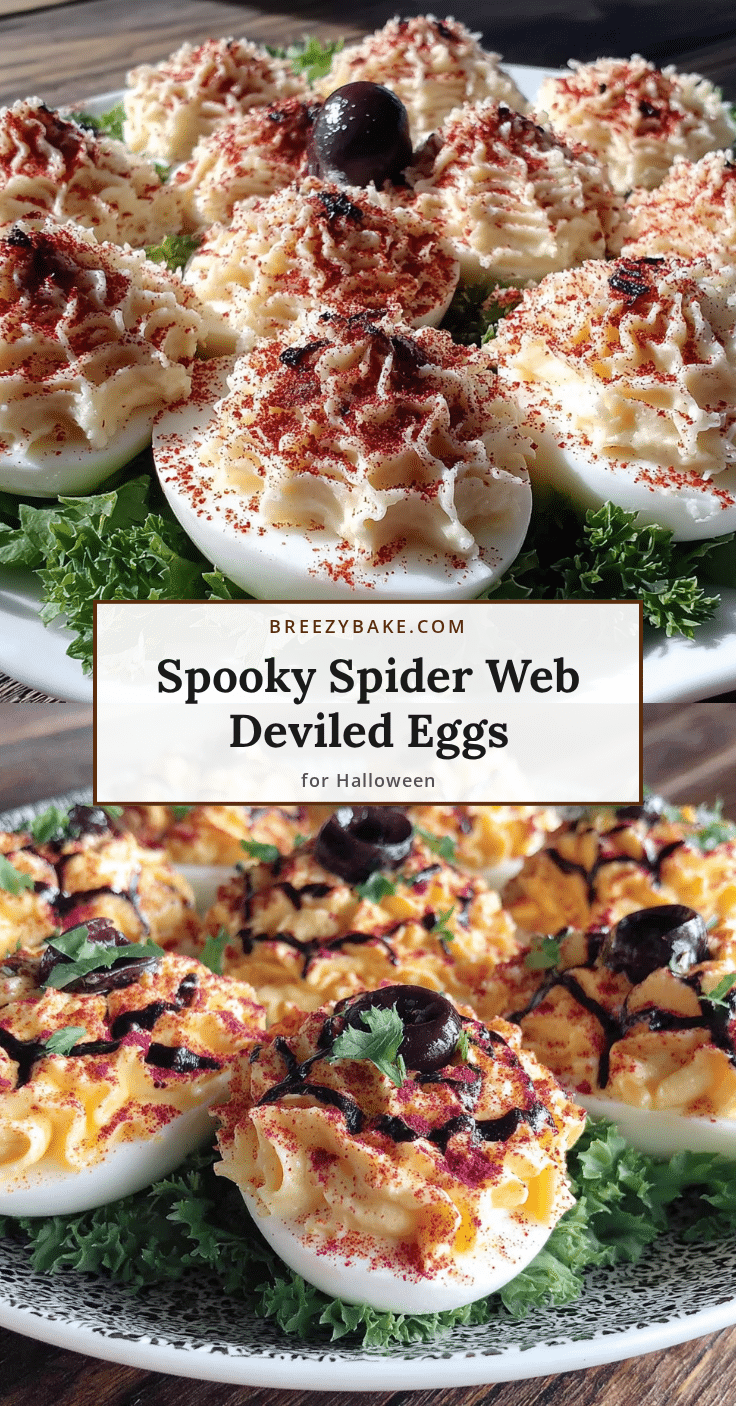
Best Spooky Spider Web Deviled Eggs for Halloween
These spooky spider web deviled eggs are a happy accident turned go-to Halloween appetizer. Creamy, tangy, and topped with an intricate web pattern, they’re sure to impress at any party.
- Prep Time: 15 minutes
- Cook Time: 12 minutes
- Total Time: 27 minutes
- Yield: 24 deviled egg halves (12 servings of 2 halves each) 1x
- Category: Appetizer
- Cuisine: American
Ingredients
- 12 large eggs (room temperature)
- 1/3 cup mayonnaise (Duke’s or Hellmann’s)
- 1 tablespoon yellow mustard (or Dijon for sharper flavor)
- 1 teaspoon white vinegar
- 1/2 teaspoon salt (fine sea salt preferred)
- 1/4 teaspoon black pepper (freshly ground)
- 1/4 teaspoon paprika (for garnish)
- Black food coloring or activated charcoal powder (optional, for spider web pattern)
- Small black olives or black sesame seeds (for spiders)
Instructions
- Boil the eggs: Place eggs in a large pot, cover with cold water by 1 inch. Bring to a rolling boil, cover, remove from heat, and let sit for 12 minutes.
- Ice bath: Transfer eggs to a bowl of ice water for at least 5 minutes to stop cooking and ease peeling.
- Peel and cut: Crack and peel eggs under running water. Pat dry, slice in half lengthwise, remove yolks to a medium bowl. Arrange whites on a platter.
- Make the filling: Mash yolks with a fork until crumbly. Add mayonnaise, mustard, vinegar, salt, and pepper. Stir until smooth and creamy. Adjust seasoning.
- Divide the filling: Transfer 2/3 of filling to a piping bag fitted with a star tip. To the remaining 1/3, add black food coloring or activated charcoal powder and stir until evenly colored.
- Pipe the web pattern: Pipe a small mound of plain filling into each egg white half. Use a toothpick to gently drag lines from the center outward, then from the outer edge inward to create a web pattern.
- Add the spiders: Pipe a small dot of dark filling in the center of each web. Place a black olive slice or black sesame seeds on top. Use a toothpick to drag tiny lines of dark filling outward for legs.
- Garnish and chill: Sprinkle paprika over eggs. Refrigerate for at least 30 minutes before serving to set the filling and define the web pattern.
Notes
Use older eggs (at least a week old) for easier peeling. For the web pattern, use a light hand with the toothpick—gentle dragging creates delicate lines. Make an extra egg or two in case one breaks during peeling. The filling can be made a day ahead; add spiders just before serving.
Nutrition
- Serving Size: 2 deviled egg halves
- Calories: 140
- Sodium: 280
- Fat: 10
- Saturated Fat: 2.5
- Carbohydrates: 1
- Protein: 11
Keywords: deviled eggs, spider web, Halloween, appetizer, spooky, party food, easy, quick