Lupita wasn’t trying to impress anyone. I’d stopped by to borrow a ladder—mine had mysteriously vanished after a neighbor’s garage sale—and the smell hit me before I even got through the gate. That warm, floral, yeasty scent wrapped around me like a hug I didn’t know I needed. She was in her tiny kitchen, flour dusted across her apron like she’d been caught in a delicious snowstorm, and she just waved me in with a floury hand.
“Grab a piece,” she said, not even looking up from the dough she was shaping. Like it was nothing. Like she hadn’t just created something that stopped me cold in her driveway. I mean, honestly, I’d never seen Pan de Muerto made outside a bakery before. It always felt like one of those things you buy, not something you make on a random Tuesday afternoon because you’re thinking about your grandmother.
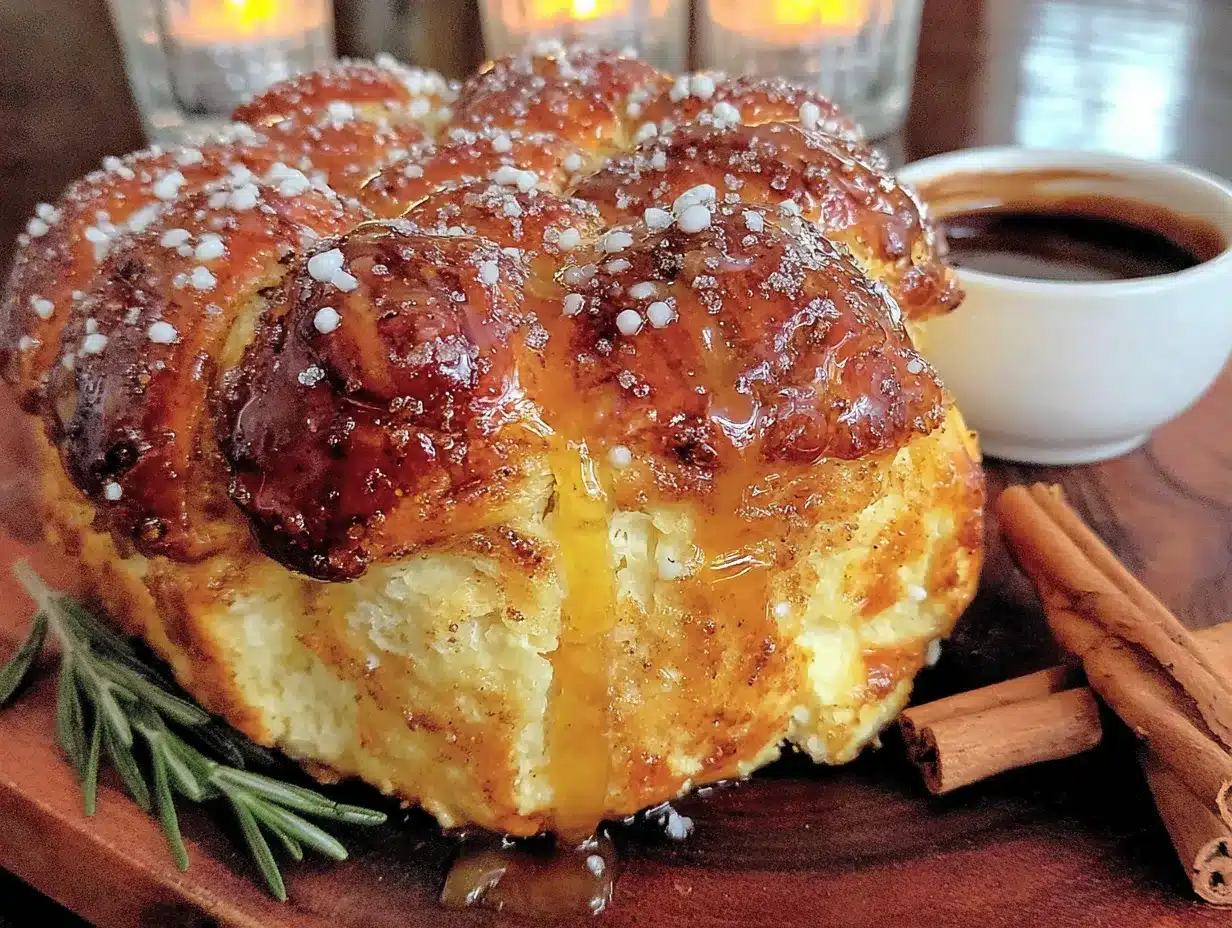
The bread was still warm when she handed me a slice, and that first bite had this unexpected softness—like a brioche and a cloud had a beautiful baby. The orange blossom glaze was barely there, just enough to catch the light and whisper sweetness. I think I made some kind of sound, because she laughed and said, “It’s just bread.” Just bread. You know that feeling when someone casually reveals they can do magic and calls it nothing? That was this moment.
I asked for the recipe, and she shrugged and scribbled it on a napkin. That napkin is still in my recipe box, slightly stained with vanilla extract and butter. This Traditional Pan de Muerto with Orange Blossom Glaze has become my November ritual. It’s the thing I make when the air gets crisp and the marigolds start appearing at the market. It’s the recipe that made me understand that some dishes aren’t about showing off—they’re about remembering.
Why You’ll Love This Recipe
Let me tell you why this Traditional Pan de Muerto with Orange Blossom Glaze has earned a permanent spot in my fall baking rotation. I’ve tested this recipe at least seven times across three different ovens (including a finicky rental that ran 25 degrees hot), and it works beautifully every single time.
- Authentic Flavor, No Shortcuts: This isn’t some simplified version that loses the soul of the bread. You get that signature floral aroma, the pillowy texture, and the delicate sweetness that makes Pan de Muerto so special.
- Surprisingly Simple Dough: Don’t let the yeast scare you off. This dough is forgiving and actually pretty hard to mess up. I’ve over-proofed it, under-kneaded it, and it still turned out gorgeous.
- Perfect for Día de Muertos: Whether you’re building an ofrenda or just want to honor the tradition, this bread belongs on your table. It connects you to something bigger than just breakfast.
- Crowd-Pleasing Texture: The crumb is tender, the crust is soft, and the orange blossom glaze adds this ethereal floral note that makes everyone ask what’s in it.
- Freezes Like a Dream: Make it ahead, freeze it, and glaze it fresh. Nobody will ever know it wasn’t baked that morning.
What makes this version different from the dozens of other recipes out there? It’s the balance. So many Pan de Muerto recipes are either too dry or too sweet. I spent weeks tweaking the hydration ratio and the amount of orange blossom water until I landed on a dough that stays moist for days and a glaze that perfumes without overwhelming. This is the version I’d serve to my abuela’s ghost—and I mean that with the deepest respect.
This recipe isn’t just good—it’s the kind that makes you close your eyes after the first bite. It’s comfort food reimagined with tradition at its heart. Perfect for impressing your family without stress, or turning a quiet November afternoon into something sacred.
What Ingredients You Will Need
This Traditional Pan de Muerto with Orange Blossom Glaze uses ingredients that are mostly pantry staples, with a couple of special finds that make all the difference. I’ve sourced these from my local Mexican market and regular grocery store, so nothing here is impossible to track down.
For the Dough:
- 4 cups all-purpose flour (500g) – I prefer King Arthur for consistent protein content, but any good brand works
- 1/2 cup granulated sugar (100g) – Regular white sugar, nothing fancy
- 1 packet active dry yeast (2 1/4 teaspoons) – I use Fleischmann’s, but instant yeast works too (just skip the proofing step)
- 1/2 cup whole milk (120ml), warmed to about 110°F – Don’t microwave it too long or you’ll kill the yeast
- 1/4 cup unsalted butter (57g), softened – Let it sit out for an hour, seriously, cold butter ruins the texture
- 3 large eggs, room temperature – This matters more than you think, cold eggs seize the butter
- 1 tablespoon orange blossom water – Find this in the international aisle or a Middle Eastern grocery, it’s worth the hunt
- 1 teaspoon vanilla extract – Pure, not imitation
- 1 teaspoon salt – Fine sea salt dissolves better
- 2 teaspoons orange zest – From one decent-sized orange, wash it first
For the Orange Blossom Glaze:
- 1 cup powdered sugar (120g) – Sift it if it’s lumpy, trust me
- 2 tablespoons orange blossom water – Start with less, you can always add more
- 1 tablespoon fresh orange juice – Squeeze it yourself, the bottled stuff is flat
- 1/2 teaspoon vanilla extract – That little extra depth matters
For Decoration:
- 2 tablespoons melted butter – For brushing after baking
- 2 tablespoons granulated sugar – Mixed with 1 teaspoon cinnamon if you’re feeling fancy
- Orange zest strips – For that Instagram-worthy finish
A quick note on the orange blossom water: I’ve tried several brands, and my favorite is Cortas. It’s not the cheapest, but it has a cleaner floral note that doesn’t taste like soap. If you can’t find it, you can substitute with orange extract diluted with water, but honestly, it’s not quite the same. Order it online if you have to—it lasts forever in the pantry.
For the eggs, I always use large, not extra-large. The hydration in this dough is carefully balanced, and too much egg liquid can make it sticky and unmanageable. I learned this the hard way during test batch number three, which turned into more of a batter than a dough.
Equipment Needed
You don’t need a professional bakery setup for this Traditional Pan de Muerto with Orange Blossom Glaze, but a few tools make the process much smoother.
- Stand mixer with dough hook: This is ideal because the dough is sticky in the beginning. I use my KitchenAid and it handles it beautifully. If you don’t have one, you can knead by hand—it’ll take about 12-15 minutes and some arm muscle.
- Large mixing bowl: Glass or stainless steel works best, plastic can hold onto odors
- Baking sheet: A half-sheet pan lined with parchment paper is perfect
- Pastry brush: For applying the melted butter and glaze. Silicone ones are easier to clean.
- Ruler or tape measure: I’m not kidding—you’ll need this to measure the bone shapes for the top decoration
- Wire cooling rack: Essential for even cooling, otherwise the bottom gets soggy
- Clean kitchen towel: For covering the dough while it rises. A damp one works best in dry climates.
- Instant-read thermometer: Not required, but it takes the guesswork out of water temperature and doneness
Budget-friendly option: If you don’t have a stand mixer, a wooden spoon and a sturdy countertop will work. I made my first Pan de Muerto by hand in a tiny apartment with a warped baking sheet, and it was still the best thing I’d baked all year. Don’t let fancy equipment stop you.
Preparation Method
Let’s walk through this step by step. I’ve included all the little details I wish someone had told me the first time I made this Traditional Pan de Muerto with Orange Blossom Glaze.
- Proof the yeast (5 minutes): In a small bowl, combine the warm milk (110°F, about the temperature of a comfortable bath) with 1 tablespoon of the sugar and the yeast. Stir gently and let it sit for 5-7 minutes until it gets foamy and smells like toast. If nothing happens after 10 minutes, your yeast is dead—start over with fresh yeast. I’ve been there, it’s frustrating, but it happens.
- Mix the dry ingredients (2 minutes): In the bowl of your stand mixer, whisk together the flour, remaining sugar, and salt. Make a well in the center.
- Combine the wet ingredients (3 minutes): In a separate bowl, whisk the eggs, orange blossom water, vanilla extract, and orange zest until smooth.
- Bring it together (5 minutes): Pour the yeast mixture and the egg mixture into the well of the dry ingredients. Mix on low speed with the dough hook until a shaggy dough forms. It’ll look rough and sticky—that’s normal. Add the softened butter, one tablespoon at a time, while the mixer runs on low. This takes patience. Don’t dump it all in at once or the dough gets greasy.
- Knead the dough (8-10 minutes): Increase the speed to medium-low and knead until the dough is smooth, elastic, and pulls away from the sides of the bowl. It should still be slightly tacky but not sticky. If it’s sticking to everything, add flour one tablespoon at a time. If it’s too dry, add milk one teaspoon at a time. The dough should pass the windowpane test—stretch a small piece thin enough to see light through without it tearing.
- First rise (1.5 to 2 hours): Shape the dough into a smooth ball and place it in a lightly oiled bowl, turning once to coat. Cover with a clean kitchen towel and let it rise in a warm, draft-free spot until doubled in size. I use my oven with just the light on—it stays around 80°F which is perfect. Don’t rush this step. Under-proofed dough makes dense bread.
- Shape the dough (15 minutes): Punch down the dough gently to release the gas. Turn it out onto a lightly floured surface. Divide it into two pieces: one larger piece (about 2/3 of the dough) for the base, and one smaller piece (1/3) for the decorations. From the smaller piece, roll out four “bones” (about 6 inches long, tapered at the ends) and one small round ball for the top. Shape the large piece into a smooth round loaf and place it on your parchment-lined baking sheet. Arrange the bones in an X pattern on top, crossing in the center, and place the small ball where they meet. Press gently to adhere.
- Second rise (45 minutes to 1 hour): Cover the shaped loaf loosely with the towel and let it rise again until puffy and almost doubled. It should feel light and airy when you gently press it. About 20 minutes before the end of the rise, preheat your oven to 350°F (175°C).
- Bake (25-30 minutes): Bake the bread on the middle rack until it’s deep golden brown and sounds hollow when you tap the bottom. The internal temperature should reach 190°F if you’re using a thermometer. If the top is browning too fast, tent it loosely with foil after 15 minutes.
- Cool and glaze (20 minutes): Let the bread cool on the baking sheet for 5 minutes, then transfer to a wire rack. While it’s still warm, brush with melted butter. Let it cool completely before glazing—about 20 minutes. Whisk together the glaze ingredients until smooth, adjusting with more orange blossom water or powdered sugar to reach a drizzling consistency. Drizzle over the cooled bread and sprinkle with the cinnamon sugar and orange zest strips.
Cooking Tips & Techniques
After making this Traditional Pan de Muerto with Orange Blossom Glaze more times than I care to count, I’ve collected some hard-won wisdom. Let me save you from my mistakes.
The temperature trap: I once killed my yeast with milk that was too hot. I was in a hurry and didn’t check the temperature. The dough never rose, and I ended up with a dense, sad disc that my dog politely refused. Always use a thermometer for the milk. 110°F is the sweet spot—warm to the touch but not hot.
The humidity factor: Flour absorbs moisture from the air, so on rainy days you might need an extra tablespoon or two. On dry days, you might need less. Don’t follow the recipe blindly—trust your hands. The dough should feel soft and supple, not stiff and dry. I learned this when I moved from humid Florida to dry Colorado and my first batch was like a brick.
The bone-shaping secret: To get those iconic bone shapes right, roll each piece into a log, then use your fingers to taper the ends. Place the bones on the loaf in a relaxed X, not a tight one. The dough will expand during the second rise, so leave some space. I used to make them too tight and they’d merge into one blob during baking.
Multitasking strategy: While the dough is doing its first rise, clean your kitchen, measure out your glaze ingredients, and set out the butter for brushing. This makes the second half of the process feel effortless. I also like to prep my coffee during this time—baking and coffee go together like Pan de Muerto and marigolds.
The glaze timing: Don’t glaze the bread while it’s still warm or the glaze will melt and soak in, leaving you with a sticky mess. Wait until it’s completely cool. I learned this when I got impatient and ended up with a bread that looked like it had been caught in a sugar rainstorm.
Variations & Adaptations
This Traditional Pan de Muerto with Orange Blossom Glaze is beautiful as written, but I love playing with variations. Here are some I’ve tried and loved.
Chocolate Pan de Muerto: Replace 1/4 cup of the flour with unsweetened cocoa powder. Add 1/2 cup of dark chocolate chips to the dough after kneading. The chocolate pairs surprisingly well with the orange blossom. I made this for a friend who doesn’t love floral flavors, and she ate half the loaf in one sitting.
Vegan Version: Substitute the butter with vegan butter (I like Miyoko’s), the milk with oat milk, and the eggs with flax eggs (3 tablespoons ground flaxseed mixed with 9 tablespoons water, let sit for 10 minutes). The texture is slightly denser but still delicious. My vegan sister-in-law requests this every year.
Spiced Variation: Add 1 teaspoon of ancho chile powder and 1/2 teaspoon of cinnamon to the dry ingredients. The subtle heat with the sweet orange glaze is unexpected and wonderful. This one surprised me—I was skeptical but now it’s my secret favorite.
Gluten-Free Adaptation: Use a 1:1 gluten-free flour blend (I recommend Cup4Cup). Add 1 teaspoon of xanthan gum if your blend doesn’t include it. The dough will be stickier and harder to shape, but the flavor is still there. Wet your hands with water to make shaping easier.
Lighter Glaze Option: Instead of the powdered sugar glaze, brush the warm bread with a mixture of 2 tablespoons honey, 1 tablespoon orange blossom water, and 1 tablespoon melted butter. It gives a more subtle sweetness and a beautiful shine. This is actually how Lupita does it, and her version is the one I still dream about.
Serving & Storage Suggestions
This Traditional Pan de Muerto with Orange Blossom Glaze is best served at room temperature, ideally the same day it’s made. The texture is at its peak—soft, tender, with just the right amount of give. I love serving it with a cup of Mexican hot chocolate or café de olla. The spicy, sweet warmth of the drinks complements the floral bread perfectly.
For a Día de Muertos celebration, arrange the bread on a beautiful platter with marigolds (cempasúchil) around it. Place it near your ofrenda if you’re building one. It’s also wonderful for breakfast the next day, toasted lightly and spread with butter or cream cheese. The orange blossom flavor becomes more subtle after toasting, which some people prefer.
Storage: Keep the bread in an airtight container at room temperature for up to 3 days. Do not refrigerate—it will dry out and go stale faster. If you live in a humid climate, leave the container slightly open to prevent mold. I learned this the hard way during a particularly damp Florida fall.
Freezing: This bread freezes beautifully. Wrap it tightly in plastic wrap, then in foil, and freeze for up to 2 months. Thaw at room temperature, then warm in a 300°F oven for 5-10 minutes. Glaze it after thawing for the best presentation. I always make a double batch and freeze one loaf for Thanksgiving week.
Reheating: For that fresh-baked taste, wrap the bread in foil and warm it in a 325°F oven for 8-10 minutes. The microwave works in a pinch but makes the texture slightly rubbery. If you’re glazing it, reheat first, let it cool slightly, then glaze.
The flavors actually develop over time. Day-old Pan de Muerto has a more pronounced orange blossom note and the crumb becomes slightly denser and more cake-like. Some people prefer it this way. I like both, honestly—fresh for the texture, day-old for the flavor.
Nutritional Information & Benefits
Let’s be real—this Traditional Pan de Muerto with Orange Blossom Glaze is a treat, not a health food. But it does have some redeeming qualities worth mentioning.
Per serving (1/8 of the loaf): Approximately 320 calories, 8g fat, 55g carbohydrates, 7g protein, 2g fiber. These are estimates and will vary based on exact ingredients and portion sizes.
The eggs provide high-quality protein and choline, which supports brain health. The orange zest offers vitamin C and antioxidants. The butter, while indulgent, contains fat-soluble vitamins A, D, E, and K. And let’s be honest—there’s something nourishing about food made with intention and tradition. That counts for something too.
Dietary considerations: This recipe contains gluten, dairy, and eggs. It’s not suitable for vegans without modifications (see variations above). For a lower-sugar option, reduce the sugar in the dough to 1/3 cup and use the honey glaze instead of the powdered sugar version.
I believe in balance. This bread is part of a cultural tradition that honors loved ones who have passed. That’s a beautiful thing. Enjoy it without guilt, share it with people you love, and maybe take a walk afterward. That’s my wellness philosophy in a nutshell.
Conclusion
This Traditional Pan de Muerto with Orange Blossom Glaze is more than just a recipe—it’s a connection to something deeper. Every time I make it, I think about Lupita in her flour-dusted kitchen, about her grandmother who taught her, and about all the hands that have shaped this same dough across generations. That’s the magic of food, isn’t it? It carries memories.
I hope you’ll try this recipe and make it your own. Maybe you’ll add a little more orange zest, or skip the glaze altogether, or shape the bones differently. That’s the beauty of tradition—it lives and breathes through each person who carries it forward. Don’t be afraid to experiment. The bread is forgiving, and the process is meditative.
I’d love to hear how it turns out for you. Drop a comment below and tell me about your experience. Did you make it for a special occasion? Did your family love it? Did you discover a variation I haven’t tried? Share your photos on Pinterest and tag me—I want to see your beautiful Pan de Muerto. And if you have questions, ask away. I’m here to help.
Go ahead, preheat that oven. Your kitchen is about to smell incredible. And somewhere, someone’s memory is waiting to be honored with every warm, fragrant bite.
Frequently Asked Questions
Can I use instant yeast instead of active dry yeast?
Yes, absolutely. If using instant yeast, skip the proofing step and mix it directly with the dry ingredients. Reduce the milk temperature slightly to around 105°F, and the first rise may be a bit faster. I’ve done this many times when I realized I was out of active dry yeast at 10 PM.
Why did my dough not rise?
This usually happens for one of three reasons: the yeast was too old (check the expiration date), the milk was too hot (killed the yeast), or the room was too cold. Try proofing your yeast first to make sure it’s active, and find a warm spot for rising—the top of the fridge or an oven with just the light on works great.
Can I make this bread ahead of time?
You can! Bake the bread a day ahead, let it cool completely, and store it wrapped tightly at room temperature. Glaze it the day you plan to serve it for the prettiest presentation. You can also freeze the unglazed bread for up to two months.
What can I substitute for orange blossom water?
If you can’t find orange blossom water, use 2 teaspoons of orange extract mixed with 1 tablespoon of water. The flavor won’t be quite as floral, but it’ll still be delicious. You can also use rose water for a completely different but equally lovely flavor profile.
How do I get the bone shapes to stay on top of the bread?
Press them gently into the dough after shaping, and make sure the dough underneath isn’t too dry. If the decorations are lifting during the second rise, you can brush a tiny bit of water under them to help them stick. Don’t press too hard or you’ll deflate the loaf.
Pin This Recipe!
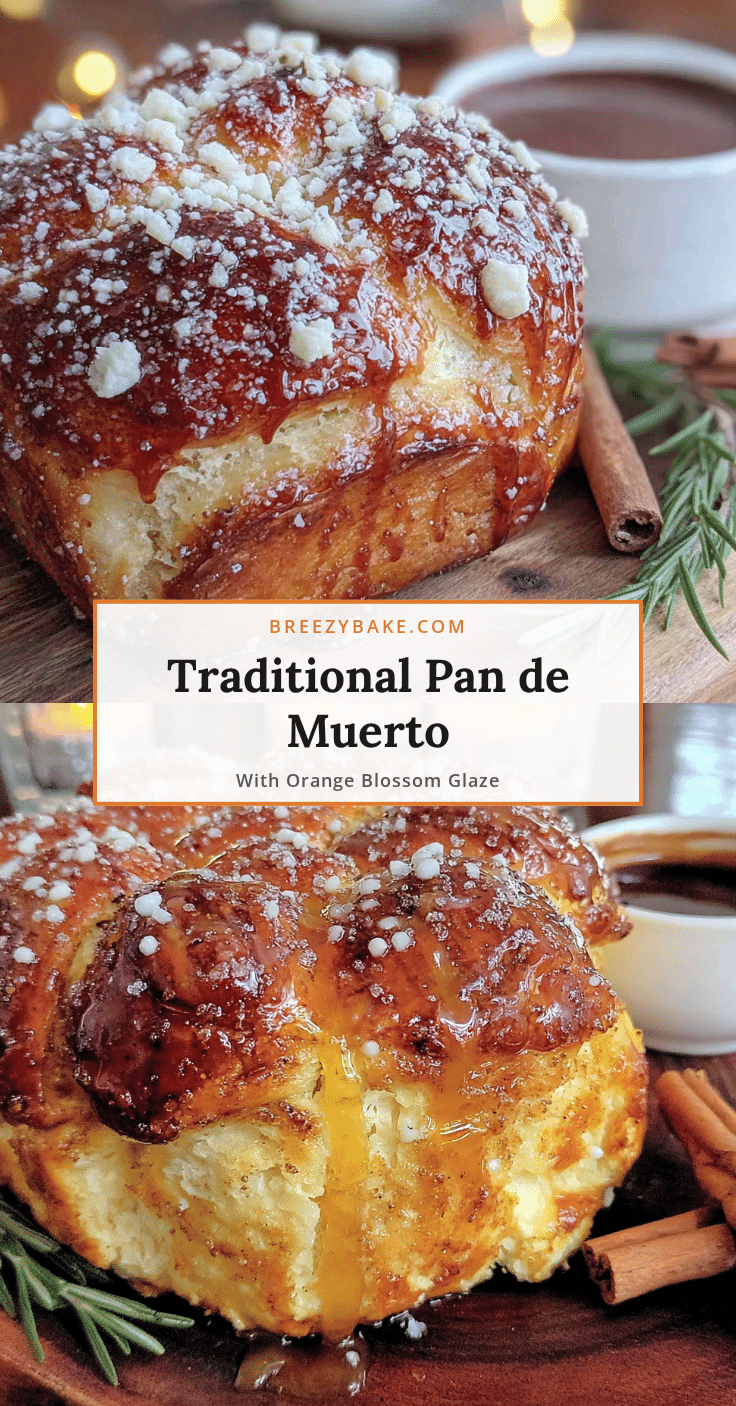
Best Traditional Pan de Muerto with Orange Blossom Glaze
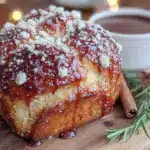
This Traditional Pan de Muerto with Orange Blossom Glaze is a soft, pillowy bread with a delicate floral sweetness, perfect for Día de Muertos. It’s an authentic recipe that honors tradition while being surprisingly simple to make at home.
- Prep Time: 30 minutes
- Cook Time: 30 minutes
- Total Time: 3 hours 30 minutes
- Yield: 8 servings 1x
- Category: Bread
- Cuisine: Mexican
Ingredients
- 4 cups all-purpose flour (500g)
- 1/2 cup granulated sugar (100g)
- 1 packet active dry yeast (2 1/4 teaspoons)
- 1/2 cup whole milk (120ml), warmed to about 110°F
- 1/4 cup unsalted butter (57g), softened
- 3 large eggs, room temperature
- 1 tablespoon orange blossom water
- 1 teaspoon vanilla extract
- 1 teaspoon salt
- 2 teaspoons orange zest
- 1 cup powdered sugar (120g)
- 2 tablespoons orange blossom water
- 1 tablespoon fresh orange juice
- 1/2 teaspoon vanilla extract
- 2 tablespoons melted butter
- 2 tablespoons granulated sugar
- Orange zest strips
Instructions
- Proof the yeast: In a small bowl, combine the warm milk (110°F) with 1 tablespoon of the sugar and the yeast. Stir gently and let it sit for 5-7 minutes until foamy.
- Mix the dry ingredients: In the bowl of a stand mixer, whisk together the flour, remaining sugar, and salt. Make a well in the center.
- Combine the wet ingredients: In a separate bowl, whisk the eggs, orange blossom water, vanilla extract, and orange zest until smooth.
- Bring it together: Pour the yeast mixture and egg mixture into the well of the dry ingredients. Mix on low speed with the dough hook until a shaggy dough forms. Add the softened butter, one tablespoon at a time, while the mixer runs on low.
- Knead the dough: Increase speed to medium-low and knead for 8-10 minutes until smooth, elastic, and pulls away from the sides of the bowl. It should be slightly tacky but not sticky.
- First rise: Shape the dough into a smooth ball and place in a lightly oiled bowl, turning once to coat. Cover with a clean kitchen towel and let rise in a warm, draft-free spot for 1.5 to 2 hours until doubled in size.
- Shape the dough: Punch down the dough gently. Divide into two pieces: 2/3 for the base, 1/3 for decorations. From the smaller piece, roll four ‘bones’ (about 6 inches long, tapered at ends) and one small round ball. Shape the large piece into a smooth round loaf and place on a parchment-lined baking sheet. Arrange the bones in an X pattern on top, place the small ball where they meet, and press gently to adhere.
- Second rise: Cover the shaped loaf loosely with a towel and let rise for 45 minutes to 1 hour until puffy and almost doubled. About 20 minutes before the end, preheat oven to 350°F (175°C).
- Bake: Bake on the middle rack for 25-30 minutes until deep golden brown and hollow-sounding when tapped. Internal temperature should reach 190°F. If browning too fast, tent with foil after 15 minutes.
- Cool and glaze: Let cool on the baking sheet for 5 minutes, then transfer to a wire rack. While still warm, brush with melted butter. Let cool completely. Whisk together glaze ingredients until smooth, drizzle over cooled bread, and sprinkle with cinnamon sugar and orange zest strips.
Notes
The dough is forgiving and can be made by hand if you don’t have a stand mixer. For best results, use a thermometer to ensure milk is at 110°F. The bread freezes well for up to 2 months; glaze after thawing. Orange blossom water can be found in international aisles or online; Cortas brand is recommended.
Nutrition
- Serving Size: 1/8 of loaf
- Calories: 320
- Sugar: 20
- Sodium: 300
- Fat: 8
- Saturated Fat: 4
- Carbohydrates: 55
- Fiber: 2
- Protein: 7
Keywords: Pan de Muerto, Day of the Dead bread, orange blossom glaze, Mexican bread, traditional bread, Día de Muertos