I burned peach cobbler three times before I figured out what I was actually doing wrong. Not a little scorched on the edges—I mean blackened, smoke-alarm-going-off, why-did-I-invite-people-over levels of burned. The first time, I used canned peaches and didn’t drain them, which turned the filling into sugary soup. The second time, I threw a box of yellow cake mix on top and called it a day, which honestly tasted fine but wasn’t anything special. The third time, I followed a recipe from a famous chef that called for peeling fresh peaches, making a complicated syrup, and chilling the dough for an hour. I got impatient, skipped the chilling step, and ended up with a biscuit topping that sank into the fruit like a stone. I was ready to give up on peach cobbler entirely.
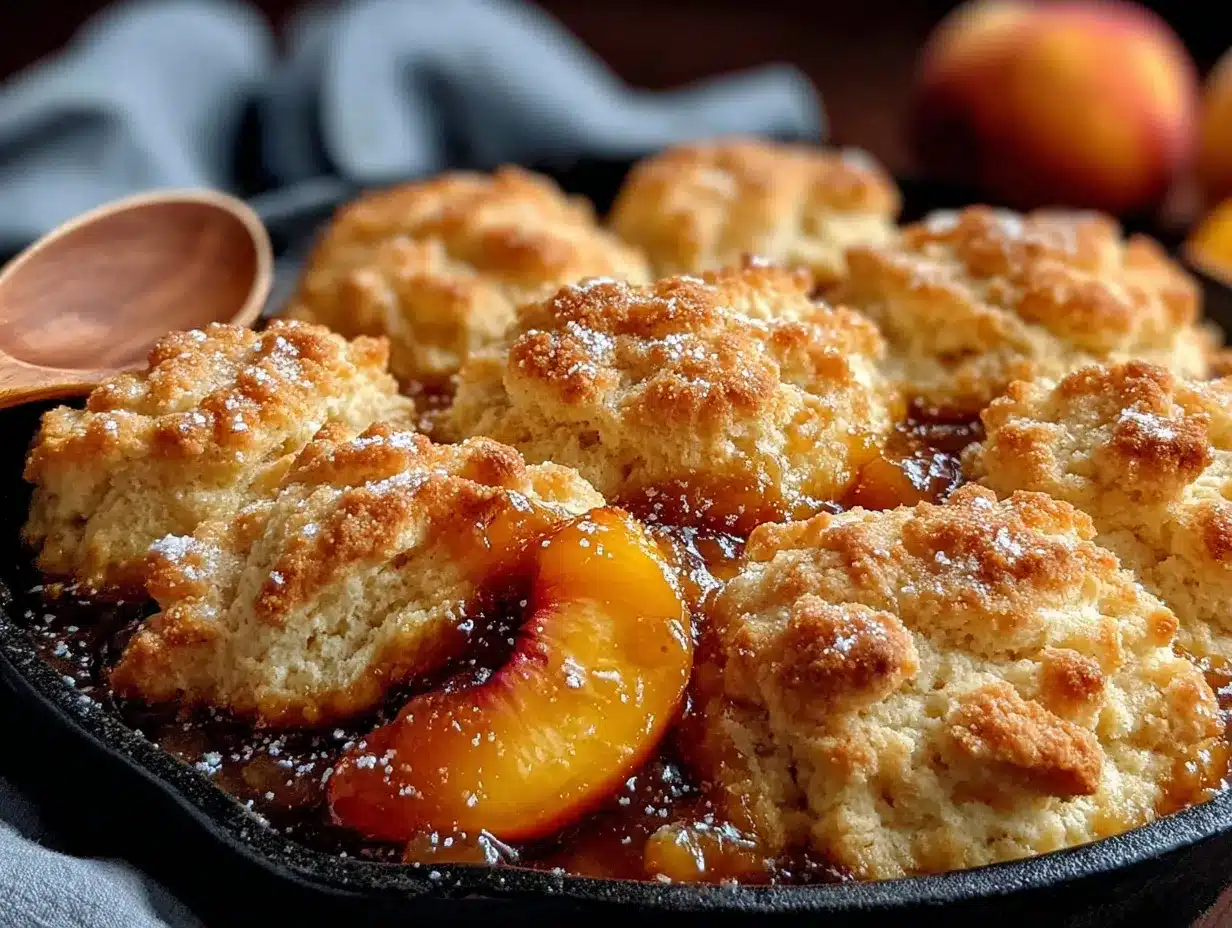
Then my neighbor brought over a dish of this brown sugar peach cobbler with buttermilk biscuit topping after I helped her move a couch, and I nearly cried into the bowl. The peaches were soft but still held their shape, swimming in a syrupy sauce that tasted like caramel and sunshine. And the topping—those golden, craggy buttermilk biscuits soaked up just enough juice on the bottom while staying fluffy and tender on top. I asked for the recipe, and she laughed and said it was basically “the lazy version” she threw together on a Tuesday. That’s when it clicked. Sometimes the best recipes come from not trying so hard.
This brown sugar peach cobbler is the one I make now for potlucks, family dinners, and quiet Sunday afternoons when I need something sweet. It’s forgiving, it’s simple, and it tastes like something you’d find at a roadside stand in Georgia in July. I’ve made it so many times I could assemble it in my sleep, and somehow it keeps getting better.
Why You’ll Love This Recipe
Let me tell you why this cobbler has earned a permanent spot in my dessert rotation. I’ve tested this recipe more times than I care to count, tweaking the sugar ratio, the butter temperature, and the baking time until everything clicked into place.
- Simple Ingredients : You probably have most of these in your pantry right now. No fancy extracts, no obscure spices, no trips to specialty stores. Just peaches, butter, sugar, flour, and buttermilk.
- Quick & Easy : From start to oven in about 20 minutes. The topping comes together in one bowl, and you don’t need a mixer or food processor.
- Perfect for Any Occasion : This works for summer barbecues, holiday dinners, or random Tuesday cravings. It’s fancy enough for company but easy enough for a weeknight.
- Crowd-Pleaser : I’ve served this to picky kids, dessert snobs, and people who claim they “don’t like cooked fruit.” Every single person has asked for seconds.
- Unbelievably Delicious : The brown sugar adds this deep, molasses-like sweetness that regular white sugar just can’t match. Combined with tangy buttermilk biscuits and juicy peaches, it’s pure comfort.
What makes this version different from all the others? It’s the brown sugar. Most cobblers rely on granulated sugar, which gives you sweetness but not depth. Brown sugar brings warmth and complexity, like the difference between a regular chocolate chip cookie and one with browned butter. The buttermilk biscuit topping is the other secret—it’s tender, slightly tangy, and sturdy enough to hold up to all that juicy fruit without turning into a soggy mess.
This is the kind of dessert that makes you close your eyes after the first bite. It’s simple enough for a Tuesday but special enough for a celebration. And honestly? It’s the recipe that made me stop being afraid of baking fruit desserts.
What Ingredients You Will Need
This recipe uses straightforward ingredients that work together to create something genuinely special. Here’s what you’ll need and why each one matters.
For the Peach Filling
- 6 cups fresh or frozen peaches, sliced (about 6-7 medium peaches). If using frozen, don’t thaw them first—they’ll release too much liquid. I prefer freestone peaches for easier slicing, but any variety works.
- 1/2 cup packed brown sugar (light or dark). Dark brown sugar gives a deeper molasses flavor, while light is more subtle. I use dark because I like the intensity.
- 2 tablespoons cornstarch. This thickens the juices so you get a syrupy filling instead of watery soup. Don’t skip it.
- 1 tablespoon fresh lemon juice. Brightens the flavor and balances the sweetness. Bottled lemon juice works in a pinch, but fresh really does taste better here.
- 1 teaspoon vanilla extract. Pure vanilla, not imitation. Trust me on this one.
- 1/4 teaspoon cinnamon. Optional, but I love the warmth it adds. You could also use a pinch of nutmeg or cardamom.
- Pinch of salt. Just a tiny bit to make everything pop.
For the Buttermilk Biscuit Topping
- 1 1/2 cups all-purpose flour. I use King Arthur Flour because it’s consistently reliable, but any brand works. Don’t use self-rising flour unless you adjust the leavening.
- 1/3 cup packed brown sugar. This gives the biscuits sweetness and a warm color. Light or dark both work.
- 1 1/2 teaspoons baking powder. Make sure it’s fresh—old baking powder won’t give you fluffy biscuits.
- 1/2 teaspoon baking soda. Reacts with the buttermilk for extra lift.
- 1/4 teaspoon salt. Balances the sweetness.
- 6 tablespoons cold unsalted butter, cut into small cubes. Cold butter is non-negotiable here. It creates steam pockets in the dough, which gives you flaky layers. I pop mine in the freezer for 10 minutes before cutting.
- 3/4 cup cold buttermilk. Shake the carton before measuring because it separates. If you don’t have buttermilk, you can make a quick substitute: add 1 tablespoon lemon juice or white vinegar to a measuring cup, then fill with regular milk to the 3/4 cup line. Let it sit for 5 minutes until it curdles slightly.
- Turbinado or coarse sugar for sprinkling (optional). That crunchy top is worth the extra step.
For the peaches, I’ve used both fresh and frozen with great results. Fresh peaches from peak season are incredible, but frozen peaches in January work just fine. Just don’t use canned peaches in heavy syrup—they’re too soft and sweet, and the texture turns mushy. If you want to try something similar, these cozy heart-shaped waffle dessert board recipes use a similar approach to fruit and biscuit combinations.
Equipment Needed
You don’t need a fancy kitchen to make this cobbler. Here’s what I use:
- 9×13-inch baking dish or a 10-inch cast iron skillet. I prefer cast iron because it holds heat evenly and gives the bottom of the cobbler a nice caramelized crust. A ceramic dish works great too.
- Large mixing bowl for the filling ingredients
- Medium mixing bowl for the biscuit dough
- Pastry cutter or two forks for cutting butter into flour. You could also use a food processor, but I find it easy to overmix that way.
- Measuring cups and spoons. Please use dry measuring cups for flour and sugar, and a liquid measuring cup for the buttermilk.
- Chef’s knife and cutting board for slicing peaches
- Rubber spatula for folding the dough
- Cooling rack so the bottom of the dish doesn’t stay hot and continue cooking the cobbler
If you don’t have a pastry cutter, don’t run out and buy one. Two forks work perfectly fine—just work quickly so the butter stays cold. I actually used forks for years before I finally bought a pastry cutter, and honestly, the results were the same.
Preparation Method
Let’s make this cobbler. I’ll walk you through every step so you can nail it on your first try.
Step 1: Preheat and Prep
Preheat your oven to 375°F (190°C). Place your baking dish or cast iron skillet on a baking sheet lined with foil—this catches any bubble-over and saves you from scrubbing the bottom of your oven later. Trust me, I learned this the hard way.
Step 2: Make the Peach Filling
In a large bowl, combine the sliced peaches, brown sugar, cornstarch, lemon juice, vanilla, cinnamon, and salt. Stir gently until the peaches are evenly coated. Let this sit while you make the biscuit topping—about 10 minutes. The peaches will start releasing their juices, which is exactly what you want. If you’re using frozen peaches, they’ll release more liquid, so don’t worry if it looks a little watery at this stage. The cornstarch will handle it during baking.
Step 3: Make the Biscuit Topping
In a medium bowl, whisk together the flour, brown sugar, baking powder, baking soda, and salt. Make sure there are no lumps of brown sugar—break them up with your fingers if needed.
Add the cold butter cubes to the flour mixture. Using a pastry cutter or two forks, cut the butter into the flour until the mixture looks like coarse meal with some pea-sized butter pieces remaining. You want visible specks of butter here—that’s what creates flaky layers. Work quickly so the butter doesn’t soften.
Make a well in the center and pour in the cold buttermilk. Stir with a spatula just until the dough comes together. It will be sticky and shaggy, not smooth like bread dough. Do not overmix, or your biscuits will be tough. Overmixing develops gluten, and we want tender, fluffy biscuits, not hockey pucks.
Step 4: Assemble the Cobbler
Pour the peach mixture into your baking dish and spread it into an even layer. Drop spoonfuls of the biscuit dough over the top—about 8 to 10 dollops. Don’t spread them out or smooth them; the craggy texture gets beautifully golden and crisp in the oven. If you want to get fancy, sprinkle the tops with turbinado sugar for extra crunch.
Step 5: Bake
Place the dish on the middle rack of your preheated oven. Bake for 35 to 40 minutes, until the filling is bubbly and thickened and the biscuit topping is golden brown. If the biscuits are browning too quickly but the filling isn’t bubbling yet, tent loosely with foil for the last 10 minutes.
Here’s a sensory cue: when it’s done, you’ll see thick, syrupy bubbles breaking through the biscuits around the edges. The kitchen will smell like butter, brown sugar, and peaches—basically heaven.
Step 6: Cool and Serve
Let the cobbler cool on a wire rack for at least 15 minutes before serving. This is crucial—the filling needs time to set, or it will run all over your plate. I know it’s hard to wait, but I promise it’s worth it.
Serve warm, preferably with a scoop of vanilla ice cream or a drizzle of heavy cream. The contrast between warm, syrupy peaches and cold, creamy ice cream is one of life’s great pleasures.
Cooking Tips & Techniques
I’ve made this cobbler probably thirty times by now, and I’ve learned a few things the hard way. Here are my best tips:
Keep everything cold. The butter for the biscuits needs to be cold. Like, straight-from-the-fridge cold. If your kitchen is warm, pop the butter in the freezer for 10 minutes before cutting it in. Cold butter creates steam pockets in the oven, which gives you those beautiful flaky layers. Warm butter melts into the flour and makes dense, flat biscuits.
Don’t overwork the dough. I cannot stress this enough. Mix until the flour is just moistened and the dough comes together. A few dry spots are fine. Overmixing develops gluten, and gluten makes biscuits tough. You want tender, not tough.
Use ripe but firm peaches. If your peaches are super ripe and soft, they’ll break down too much during baking and turn into mush. You want peaches that give slightly when pressed but still hold their shape. If all you have are rock-hard peaches, let them sit on the counter for a day or two.
Let it rest. That 15-minute cooling period isn’t optional. The filling needs time to thicken, and the biscuits need time to set. If you dig in right away, you’ll get a soupy mess. I learned this when I served cobbler to guests five minutes out of the oven, and it ran all over the plates like a peach flood.
Double the topping if you like more biscuit. Some people prefer a thin layer of topping, and some want a thick, pillowy blanket. I’m in the latter camp. If you love biscuit topping, feel free to multiply the topping ingredients by 1.5. Just increase the baking time by a few minutes.
If you enjoy this kind of cozy, fruit-forward dessert, you might also like these chocolate-covered strawberry shortcake minis for another take on fruit and baked topping combinations.
Variations & Adaptations
This recipe is endlessly adaptable. Here are some of my favorite variations:
Gluten-Free Version : Substitute the all-purpose flour with a good gluten-free baking blend that contains xanthan gum. I’ve used Bob’s Red Mill 1-to-1 Baking Flour with great results. The biscuits will be slightly more tender and less flaky, but still delicious.
Dairy-Free Version : Use cold vegan butter (I like Miyoko’s) and unsweetened oat milk mixed with 1 tablespoon lemon juice instead of buttermilk. Let the “buttermilk” sit for 5 minutes before using. The texture won’t be exactly the same, but it’s still really good.
Seasonal Fruit Swaps : This works beautifully with other fruits. Try sliced nectarines, plums, or apricots in summer. In fall, use sliced apples or pears with a teaspoon of pumpkin pie spice. In winter, frozen mixed berries work great—just reduce the sugar slightly since berries are less sweet than peaches.
Spiced Variation : Add 1/4 teaspoon cardamom or ginger to the peach filling for a warm, aromatic twist. I made this once with cardamom and it was so good I wrote it down in my recipe binder.
Bourbon Peach Cobbler : Add 2 tablespoons bourbon to the peach filling along with the vanilla. The alcohol cooks off, leaving behind a subtle warmth that pairs perfectly with the brown sugar. This is my go-to for adult dinner parties.
Individual Servings : Divide the filling among 6 to 8 ramekins and top each with a spoonful of biscuit dough. Bake for 20 to 25 minutes. These are perfect for portion control and look adorable on a dessert table.
For a fun twist on traditional desserts, try these rainbow breakfast biscuit pops for a completely different take on biscuit-based treats.
Serving & Storage Suggestions
Serving : This cobbler is best served warm, about 15 to 20 minutes after it comes out of the oven. The filling should be thick and syrupy, not runny. A scoop of vanilla ice cream is the classic pairing—the cold creaminess balances the warm, sweet fruit perfectly. Whipped cream, crème fraîche, or a drizzle of heavy cream also work beautifully.
For presentation, I like to serve it straight from the cast iron skillet. It looks rustic and inviting, and it keeps the cobbler warm at the table. If you want to get fancy, top each serving with a sprig of mint or a dusting of powdered sugar.
Storage : Cover the baking dish tightly with foil or plastic wrap and store in the refrigerator for up to 4 days. The flavors actually meld and deepen overnight, so leftovers might taste even better the next day.
Reheating : The best way to reheat is in a 350°F oven for 10 to 15 minutes, which restores the biscuit topping’s crispness. You can also microwave individual servings for 30 to 45 seconds, but the topping will be softer. If you’re reheating in the microwave, I recommend adding a fresh scoop of ice cream to make up for the texture loss.
Freezing : You can freeze the unbaked cobbler for up to 3 months. Assemble it in a freezer-safe dish, wrap tightly in plastic wrap and foil, and freeze. Bake directly from frozen, adding 15 to 20 minutes to the baking time. Baked cobbler can also be frozen, but the texture of the biscuits will be softer after thawing.
How Flavors Develop : The brown sugar and peach flavors mellow and meld overnight, creating a more complex, caramel-like sweetness. I actually prefer day-old cobbler cold from the fridge with a dollop of yogurt for breakfast. Don’t judge me until you try it.
Nutritional Information & Benefits
Here’s the approximate nutritional breakdown per serving (based on 8 servings):
- Calories: 320
- Total Fat: 12g
- Saturated Fat: 7g
- Carbohydrates: 52g
- Fiber: 3g
- Sugar: 34g
- Protein: 4g
Peaches are a good source of vitamin C, vitamin A, and fiber, especially if you leave the skins on. They also contain antioxidants like chlorogenic acid, which may help reduce inflammation. The buttermilk adds calcium and probiotics (if you use cultured buttermilk), and the brown sugar provides small amounts of molasses-derived minerals like calcium, potassium, and iron.
This recipe is vegetarian and can be made gluten-free and dairy-free with the substitutions mentioned above. It contains wheat and dairy in its standard form. For a lower-sugar version, you can reduce the brown sugar in the filling to 1/3 cup and skip the turbinado topping.
Is this a health food? No. But it’s a dessert made with real ingredients, and there’s something to be said for that. I’d rather enjoy a reasonable portion of homemade cobbler than a box of processed snacks any day.
Conclusion
This brown sugar peach cobbler with buttermilk biscuit topping is the dessert I turn to when I need something reliable, comforting, and genuinely delicious. It’s the recipe that taught me that simple ingredients, handled with care, can produce something extraordinary.
I love that this cobbler doesn’t demand perfection. The biscuits can be lumpy, the peaches don’t need to be perfectly sliced, and a little overflow onto the baking sheet just adds character. It’s forgiving in a way that makes baking feel like a pleasure instead of a chore.
If you make this recipe, I’d love to hear about it. Leave a comment below and tell me how it turned out—did you add any twists? Did you serve it with ice cream or whipped cream? Did your family fight over the last spoonful like mine does? Share your photos, your questions, and your variations. That’s what makes cooking fun—sharing what we make with people who get it.
Go ahead and preheat that oven. You’ve got a cobbler to make.
Frequently Asked Questions
Can I use canned peaches instead of fresh or frozen?
I don’t recommend it. Canned peaches are packed in syrup and are much softer than fresh or frozen. They’ll break down too much during baking and make the filling mushy and overly sweet. If canned peaches are all you have, drain them well and reduce the sugar in the recipe by half.
Why did my biscuit topping sink into the filling?
This usually happens if the filling is too thin or if the dough was overmixed. Make sure you’re using the correct amount of cornstarch to thicken the peach juices. Also, drop the dough onto the filling gently—don’t press it down. The biscuits should sit on top, not sink in.
Can I make this ahead of time?
Absolutely. You can assemble the cobbler (without baking) up to 24 hours in advance. Cover and refrigerate, then bake straight from the fridge, adding 5 to 10 minutes to the baking time. Baked cobbler also keeps well for 3 to 4 days in the fridge.
How do I know when the cobbler is done?
The filling should be thick and bubbly, especially around the edges. The biscuit topping should be golden brown and firm to the touch. If you insert a toothpick into a biscuit, it should come out clean or with a few moist crumbs. If the filling isn’t bubbling, it needs more time.
Can I use a different type of sugar?
Yes, but the flavor will change. Granulated white sugar will make a sweeter, less complex filling. Coconut sugar works as a 1:1 substitute for brown sugar but has a slightly different flavor profile. Maple sugar is another option, though it’s harder to find. I strongly recommend sticking with brown sugar for the best results.
Pin This Recipe!
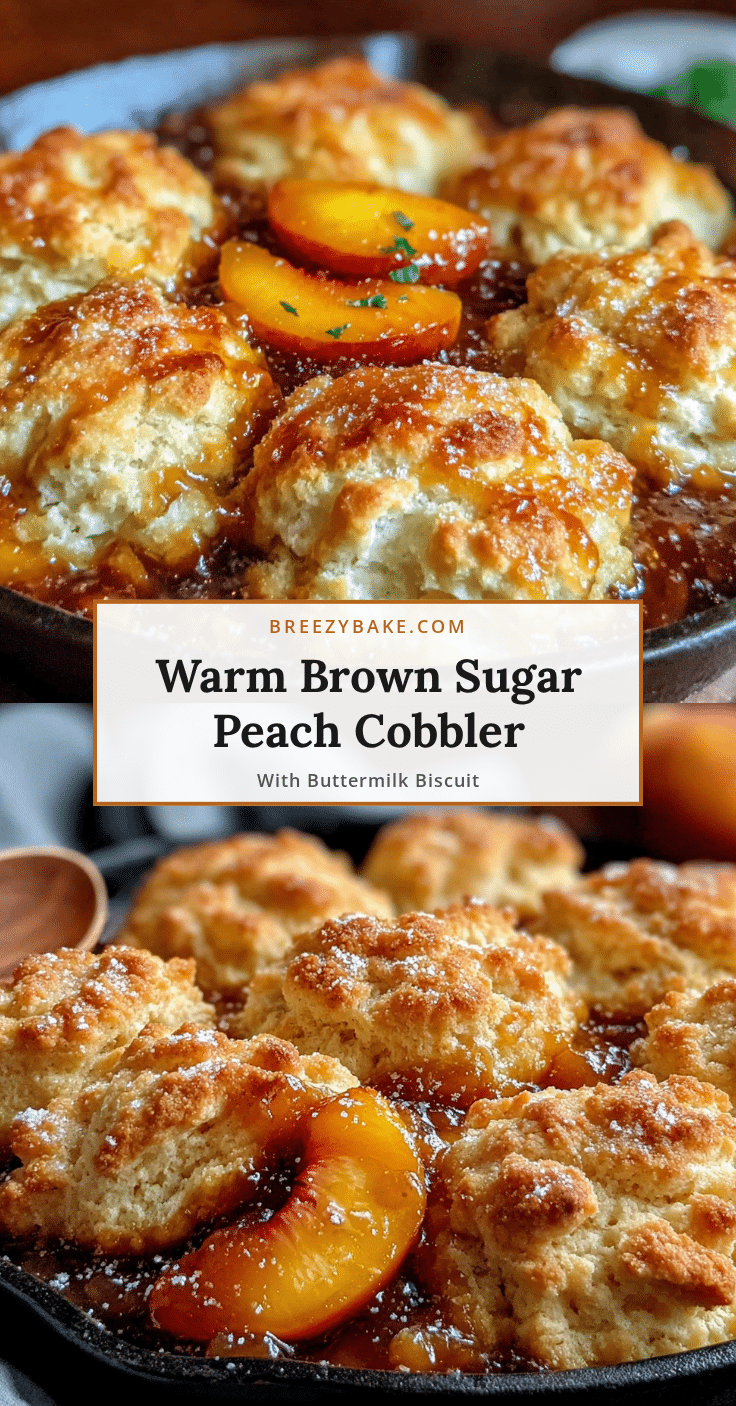
Cozy Brown Sugar Peach Cobbler: Easy Buttermilk Recipe

This brown sugar peach cobbler features a buttermilk biscuit topping that’s tender, slightly tangy, and sturdy enough to hold up to juicy peaches without turning soggy. It’s a forgiving, simple dessert that tastes like something from a roadside stand in Georgia.
- Prep Time: 20 minutes
- Cook Time: 35-40 minutes
- Total Time: 55-60 minutes
- Yield: 8 servings 1x
- Category: Dessert
- Cuisine: American
Ingredients
- 6 cups fresh or frozen peaches, sliced (about 6–7 medium peaches)
- 1/2 cup packed brown sugar (light or dark)
- 2 tablespoons cornstarch
- 1 tablespoon fresh lemon juice
- 1 teaspoon vanilla extract
- 1/4 teaspoon cinnamon
- Pinch of salt
- 1 1/2 cups all-purpose flour
- 1/3 cup packed brown sugar
- 1 1/2 teaspoons baking powder
- 1/2 teaspoon baking soda
- 1/4 teaspoon salt
- 6 tablespoons cold unsalted butter, cut into small cubes
- 3/4 cup cold buttermilk
- Turbinado or coarse sugar for sprinkling (optional)
Instructions
- Preheat your oven to 375°F (190°C). Place your baking dish or cast iron skillet on a baking sheet lined with foil to catch any bubble-over.
- In a large bowl, combine the sliced peaches, brown sugar, cornstarch, lemon juice, vanilla, cinnamon, and salt. Stir gently until the peaches are evenly coated. Let this sit while you make the biscuit topping—about 10 minutes.
- In a medium bowl, whisk together the flour, brown sugar, baking powder, baking soda, and salt. Break up any lumps of brown sugar with your fingers.
- Add the cold butter cubes to the flour mixture. Using a pastry cutter or two forks, cut the butter into the flour until the mixture looks like coarse meal with some pea-sized butter pieces remaining.
- Make a well in the center and pour in the cold buttermilk. Stir with a spatula just until the dough comes together. It will be sticky and shaggy. Do not overmix.
- Pour the peach mixture into your baking dish and spread it into an even layer. Drop spoonfuls of the biscuit dough over the top—about 8 to 10 dollops. Do not spread them out or smooth them. If desired, sprinkle the tops with turbinado sugar.
- Place the dish on the middle rack of your preheated oven. Bake for 35 to 40 minutes, until the filling is bubbly and thickened and the biscuit topping is golden brown. If the biscuits are browning too quickly but the filling isn’t bubbling yet, tent loosely with foil for the last 10 minutes.
- Let the cobbler cool on a wire rack for at least 15 minutes before serving. Serve warm, preferably with a scoop of vanilla ice cream or a drizzle of heavy cream.
Notes
Keep the butter for the biscuits cold to create flaky layers. Do not overwork the dough. Use ripe but firm peaches. Let the cobbler rest for 15 minutes before serving to allow the filling to set. For a gluten-free version, use a gluten-free baking blend with xanthan gum. For a dairy-free version, use cold vegan butter and oat milk mixed with lemon juice instead of buttermilk.
Nutrition
- Serving Size: 1 serving
- Calories: 320
- Sugar: 34
- Fat: 12
- Saturated Fat: 7
- Carbohydrates: 52
- Fiber: 3
- Protein: 4
Keywords: peach cobbler, brown sugar, buttermilk biscuits, summer dessert, easy cobbler, fruit dessert, comfort food