I had been looking for a way to use sourdough discard that actually tasted like something you’d want to eat on a cool October morning, not just a science experiment you felt obligated to finish. For a while, I just accepted that most discard recipes were either hockey-puck dense or so heavily spiced you couldn’t taste the fermentation tang at all. That gap—the one between “I need to use this starter” and “I genuinely crave this bread”—felt wider than my kitchen counter.
Then one drizzly Saturday, with a jar of amber discard staring at me from the fridge and a pumpkin that had been sitting on the counter for two weeks, I started throwing things together. No grand plan. Just flour, discard, pumpkin puree, and the kind of cinnamon-heavy optimism that only happens when you’re wearing wool socks and listening to rain hit the window. The first loaf came out lopsided and a little too moist in the center. The second one? That one had the crumb I was after—tender, slightly tangy, with that unmistakable autumn glow.
Honestly, I didn’t set out to make anything special. I just wanted bread that didn’t feel like a compromise. And after a few tweaks (and one memorable incident where I forgot the salt entirely), this recipe settled into something worth sharing. It’s the kind of bread that makes your kitchen smell like a bakery in late September, even when it’s raining outside and your starter is acting finicky.
This cozy pumpkin sourdough discard bread doesn’t try to be fancy. It just sits there, warm and speckled with spices, quietly proving that you don’t need a perfect starter or a special occasion to bake something worth eating.
Why You’ll Love This Recipe
- No Waste, All Flavor : This is the perfect way to use up that jar of discard sitting in your fridge. Instead of tossing it, you get a loaf that tastes like fall in every bite.
- Simple Ingredients : You probably already have most of this in your pantry. No weird flours or specialty extracts—just real, straightforward baking staples.
- Beginner-Friendly : If you’re new to working with sourdough discard, this recipe is forgiving. The pumpkin keeps the crumb moist, so even if your shaping is a little sloppy, the bread still turns out beautifully.
- Perfect for Cozy Mornings : This bread is made for toasting. Slather it with butter or cream cheese, pour yourself a coffee, and you’ve got a breakfast that feels like a hug.
- That Tangy-Pumpkin Combo : The sourdough discard adds a subtle tang that balances the sweetness of the pumpkin and spices. It’s not overpowering—just enough to make you go back for another slice.
What sets this apart from other pumpkin breads is the texture. The discard gives it a structure that’s both tender and sturdy—not too cakey, not too dense. It slices cleanly, toasts beautifully, and holds up to generous spreads without falling apart. This isn’t just another pumpkin bread recipe. It’s the one you’ll make when you want something that feels both familiar and a little bit special.
What Ingredients You Will Need
This recipe uses simple, wholesome ingredients that come together to create a loaf with deep flavor and a tender, moist crumb. Most of these are pantry staples, which makes this an easy weeknight bake or a lazy Sunday project.
- All-purpose flour (2 ½ cups / 300g) – The backbone of the bread. I usually stick with unbleached all-purpose for the best texture. If you want a heartier loaf, you can swap in up to ½ cup of whole wheat flour, but the crumb will be a bit denser.
- Sourdough discard (1 cup / 240g, unfed, at room temperature) – This is the star ingredient. Use discard straight from the fridge—no need to feed it first. The tanginess it adds is subtle but essential. I’ve used both white flour discard and whole wheat discard with good results.
- Pumpkin puree (1 cup / 240g) – Not pumpkin pie filling. Just plain canned pumpkin puree. I prefer Libby’s for its consistent texture, but any brand works. If you’re feeling ambitious, homemade pumpkin puree works too—just make sure it’s not too watery. Pat it with a paper towel if it looks loose.
- Brown sugar (¾ cup / 150g, packed) – Adds moisture and that deep, caramel-like sweetness. Light or dark brown sugar both work. Dark brown sugar will give you a richer flavor and a darker crumb.
- Granulated sugar (¼ cup / 50g) – Balances the molasses notes of the brown sugar. You can reduce this slightly if you prefer a less sweet bread, but don’t cut it entirely—it helps with browning.
- Vegetable oil (⅓ cup / 80ml) – Keeps the bread incredibly moist. Canola or avocado oil work too. Melted coconut oil is fine, but make sure it’s cooled slightly so it doesn’t scramble the egg.
- Eggs (2 large, room temperature) – Provide structure and richness. If your eggs are cold, place them in a bowl of warm water for 5 minutes before using.
- Vanilla extract (1 teaspoon) – Enhances the warm spices. Use pure vanilla if you have it, but imitation works in a pinch.
- Pumpkin pie spice (2 teaspoons) – A shortcut blend of cinnamon, nutmeg, ginger, and cloves. If you don’t have it, substitute 1 teaspoon cinnamon, ½ teaspoon nutmeg, ¼ teaspoon ginger, and ¼ teaspoon cloves.
- Cinnamon (1 teaspoon) – Because you can never have too much cinnamon in pumpkin bread.
- Baking soda (1 teaspoon) – The leavening agent. Make sure it’s fresh—stale baking soda will leave you with a flat loaf.
- Salt (½ teaspoon) – Balances the sweetness and enhances all the flavors. I use fine sea salt.
Equipment Needed
- 9×5-inch loaf pan – The standard size for this recipe. If your pan is slightly smaller, just increase the bake time by 5-10 minutes and keep an eye on it.
- Mixing bowls – One large, one medium. Glass or stainless steel works best.
- Whisk – For combining dry ingredients and smoothing out the wet mixture.
- Spatula or wooden spoon – For folding the batter together without overmixing.
- Parchment paper – Lining the pan makes removal effortless. I never grease a loaf pan without it anymore—lesson learned after one too many stuck loaves.
- Cooling rack – Essential for even cooling. If you let the bread sit in the pan too long, the bottom can get soggy.
- Measuring cups and spoons – For accuracy. I know some bakers eyeball it, but with discard recipes, precision matters more than you’d think.
If you don’t have a stand mixer, don’t worry. This batter comes together by hand in under 10 minutes. A sturdy spatula and a little elbow grease is all you need.
Preparation Method
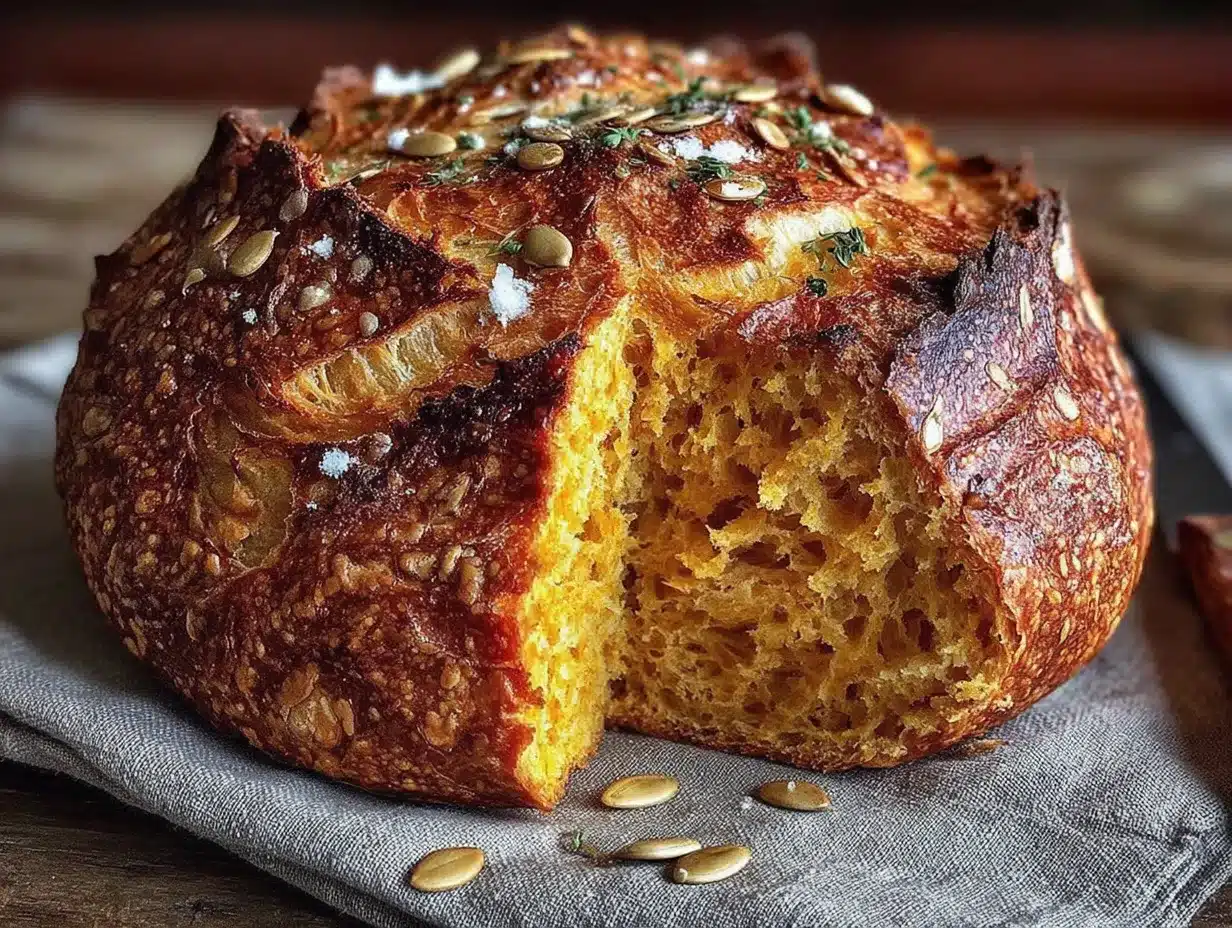
- Preheat your oven to 350°F (175°C). Position the rack in the center. Line your 9×5-inch loaf pan with parchment paper, leaving an overhang on the long sides. This makes lifting the bread out later so much easier—trust me on this one.
- In a medium bowl, whisk together the dry ingredients: 2 ½ cups all-purpose flour, 2 teaspoons pumpkin pie spice, 1 teaspoon cinnamon, 1 teaspoon baking soda, and ½ teaspoon salt. Set this aside. Give it a quick whisk to break up any clumps in the spices.
- In a large bowl, combine the wet ingredients: 1 cup sourdough discard, 1 cup pumpkin puree, ¾ cup packed brown sugar, ¼ cup granulated sugar, ⅓ cup vegetable oil, 2 large eggs, and 1 teaspoon vanilla extract. Whisk until smooth and fully combined. The mixture will look thick and slightly glossy—that’s normal.
- Pour the dry ingredients into the wet mixture. Use a spatula to fold everything together gently. Stop as soon as you no longer see streaks of flour. A few lumps are fine—overmixing will make the bread tough, and nobody wants that.
- Scrape the batter into the prepared loaf pan. Spread it evenly with the spatula. The batter will be thick, almost like a quick bread batter. Don’t worry if it doesn’t level itself perfectly—just give it a gentle nudge.
- Bake for 50-60 minutes. Start checking at the 50-minute mark. Insert a toothpick into the center—if it comes out clean or with just a few moist crumbs, it’s done. If the top is browning too quickly around the 40-minute mark, tent the pan loosely with aluminum foil.
- Let the bread cool in the pan for 10 minutes. Then lift it out using the parchment overhang and transfer it to a cooling rack. Let it cool completely before slicing—about 1 to 1.5 hours. I know it’s hard to wait, but slicing too early will give you a gummy interior.
Sensory cues to watch for: The batter should be thick but scoopable, like a muffin batter. During baking, your kitchen will fill with the smell of pumpkin and cinnamon—that’s your cue that things are going well. The finished loaf should be deep golden brown, with a slight crack across the top. When you tap the center, it should feel firm, not jiggly.
My personal tip: If you want a bakery-style domed top, let the batter rest in the pan for 15 minutes before baking. This gives the baking soda a head start and creates a better rise.
Cooking Tips & Techniques
One mistake I made early on was using cold ingredients straight from the fridge. The batter seized up, and the bread came out dense and uneven. Room temperature eggs and discard really do make a difference—they emulsify better and create a more tender crumb. Set everything out 30 minutes before you start.
Another thing I learned the hard way: don’t overmix. I know it’s tempting to keep stirring until the batter looks perfectly smooth, but that develops the gluten too much. You’ll end up with a bread that’s more chewy than tender. Fold just until the flour disappears, and then stop. Seriously. Put the spatula down.
If you’re using a dark nonstick loaf pan, reduce the oven temperature by 25°F. Dark pans absorb more heat and can cause the crust to brown too quickly while the inside stays underdone. I learned this after pulling out a loaf that looked perfect on the outside but was still raw in the middle—disappointing doesn’t even begin to cover it.
For consistent results, use a kitchen scale. Measuring flour by volume can be inconsistent—too much flour makes the bread dry. If you don’t have a scale, fluff the flour with a spoon before scooping it into your measuring cup, then level it off with a knife.
Timing tip: This bread actually tastes better the next day. The flavors meld overnight, and the texture becomes even more moist. Bake it in the evening, let it cool completely, wrap it tightly in plastic wrap, and slice it the next morning.
Variations & Adaptations
- Gluten-Free Version : Substitute the all-purpose flour with a 1:1 gluten-free baking blend that contains xanthan gum. I’ve used King Arthur’s Measure for Measure with good results. The crumb will be slightly more delicate, so let it cool completely before slicing.
- Dairy-Free Option : This recipe is already dairy-free if you use vegetable oil. But if you want to add a streusel topping, use coconut oil or a plant-based butter alternative.
- Chocolate Chip Pumpkin Bread : Fold in ½ cup of semi-sweet chocolate chips at the end. The bitterness of the chocolate pairs beautifully with the pumpkin and spices. I’ve made this version for holiday brunches, and it disappears fast.
- Nutty Crunch : Add ½ cup of toasted pecans or walnuts, roughly chopped. Toast them in a dry skillet over medium heat for 3-4 minutes until fragrant, then fold them into the batter. The crunch adds a lovely contrast to the soft crumb.
- Vegan Adaptation : Replace the eggs with two flax eggs (2 tablespoons ground flaxseed mixed with 5 tablespoons water, left to sit for 10 minutes). The bread will be a bit denser, but still delicious. Use a vegan-friendly brown sugar as well.
I once tried adding dried cranberries and orange zest to the batter—it was a happy accident that turned into a new favorite. The tartness of the cranberries cuts through the sweetness, and the orange zest brightens up all the warm spices. If you’re feeling adventurous, give it a try.
Serving & Storage Suggestions
This cozy pumpkin sourdough discard bread is at its best when toasted. Slice it about ¾-inch thick, pop it in the toaster until golden brown, and slather it with salted butter. The contrast between the crispy edges and the soft, moist center is pure comfort. For a sweeter option, try it with cream cheese and a drizzle of honey.
It also makes an excellent base for breakfast French toast. Dip thick slices in a mixture of beaten egg, milk, and a pinch of cinnamon, then fry in butter until golden. Serve with maple syrup and a dusting of powdered sugar. Honestly, it’s one of the best ways to use leftover slices.
Storage: Wrap the cooled loaf tightly in plastic wrap or store it in an airtight container at room temperature for up to 3 days. The moisture from the pumpkin helps keep it soft, but it will dry out if left uncovered. For longer storage, wrap it in plastic wrap, then foil, and freeze for up to 3 months. Thaw overnight in the refrigerator, then reheat slices in the toaster.
Reheating: The toaster is your best friend here. For a whole loaf, wrap it in foil and warm it in a 300°F oven for 10-15 minutes. The aroma alone is worth the effort.
Flavor note: The tanginess from the sourdough discard becomes more pronounced on the second day. If you’re someone who loves that fermented edge, this bread only gets better with time. If you prefer a milder flavor, eat it the day you bake it.
Nutritional Information & Benefits
Per slice (based on 10 slices per loaf): Approximately 280 calories, 9g fat, 44g carbohydrates, 3g fiber, 18g sugar, 5g protein. These values are estimates and will vary based on specific ingredients and substitutions.
Pumpkin puree is packed with vitamin A and fiber, which supports eye health and digestion. The sourdough discard adds beneficial fermentation byproducts that can make the bread easier to digest than conventional quick breads. Plus, using discard means you’re reducing food waste—always a win in my book.
This recipe is naturally dairy-free and can be adapted to be vegan or gluten-free. It contains wheat and eggs, so keep that in mind for anyone with allergies. If you’re watching your sugar intake, you can reduce the brown sugar to ½ cup, but the texture will be slightly less moist.
I love that this bread feels indulgent but uses simple, whole ingredients. It’s the kind of treat you can feel good about eating for breakfast—or dessert, honestly. No judgment here.
Conclusion
This cozy pumpkin sourdough discard bread is proof that you don’t need a perfect starter or a complicated recipe to bake something truly satisfying. It’s forgiving, flavorful, and makes your whole kitchen smell like autumn. Whether you’re a seasoned sourdough baker or someone just looking for a way to use up that discard jar, this recipe delivers every time.
I hope you give it a try and make it your own. Add chocolate chips, throw in some nuts, or keep it simple—there’s no wrong way to enjoy it. And if you do bake it, I’d love to hear how it turned out. Drop a comment below or tag me in your photos. Happy baking, friends.
Frequently Asked Questions
Can I use active sourdough starter instead of discard?
Yes, you can. The bread will be slightly less tangy and may rise a bit more since active starter has more fermentation power. Reduce the baking soda to ¾ teaspoon to compensate for the extra acidity.
Why did my bread sink in the middle?
This usually happens if the batter was overmixed or if the oven door was opened too early. Mix just until combined, and resist the urge to peek until the 45-minute mark. A slight dip is normal, but a deep crater means the structure wasn’t set.
Can I make this into muffins instead?
Absolutely. Divide the batter into a lined muffin tin and bake at 350°F for 18-22 minutes. You’ll get about 12-14 muffins. They’re perfect for grab-and-go breakfasts or lunchbox treats.
How do I know when the bread is fully baked?
Insert a toothpick into the center—it should come out clean or with a few moist crumbs, not wet batter. The internal temperature should read around 200°F. The top should be firm to the touch and golden brown.
Can I use fresh pumpkin instead of canned?
Yes, but you’ll need to roast and puree it first, then drain off any excess liquid. Fresh pumpkin tends to be more watery than canned, so pat the puree with a paper towel or let it sit in a fine-mesh strainer for 15 minutes before using.
Pin This Recipe!
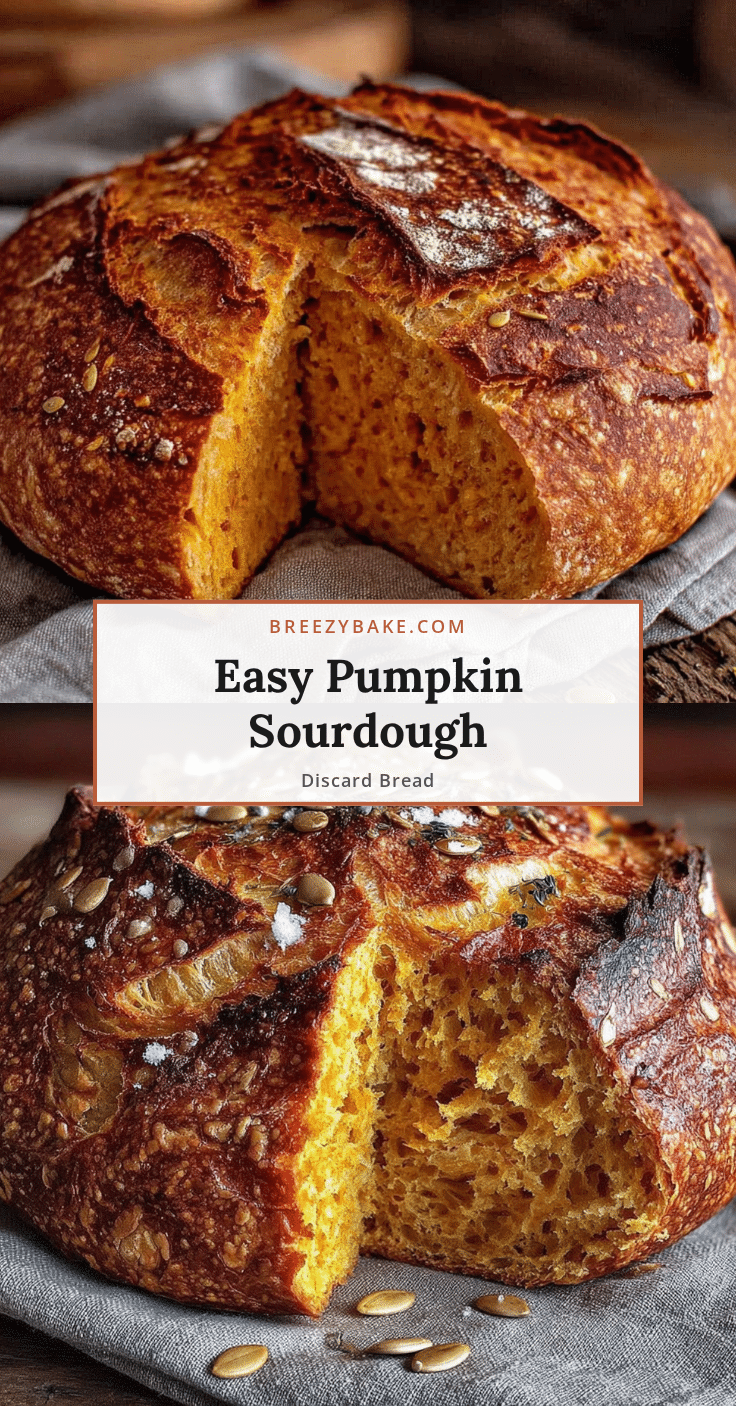
Cozy Pumpkin Sourdough Discard Bread: Best Easy Recipe
This cozy pumpkin sourdough discard bread is a forgiving, flavorful loaf that uses up your sourdough discard and tastes like fall in every bite. It’s tender, slightly tangy, and perfect for toasting on cool autumn mornings.
- Prep Time: 15 minutes
- Cook Time: 55 minutes
- Total Time: 1 hour 10 minutes
- Yield: 10 servings 1x
- Category: Bread
- Cuisine: American
Ingredients
- 2 ½ cups (300g) all-purpose flour
- 1 cup (240g) sourdough discard, unfed, at room temperature
- 1 cup (240g) pumpkin puree (not pumpkin pie filling)
- ¾ cup (150g) packed brown sugar
- ¼ cup (50g) granulated sugar
- ⅓ cup (80ml) vegetable oil
- 2 large eggs, room temperature
- 1 teaspoon vanilla extract
- 2 teaspoons pumpkin pie spice
- 1 teaspoon cinnamon
- 1 teaspoon baking soda
- ½ teaspoon salt
Instructions
- Preheat your oven to 350°F (175°C). Position the rack in the center. Line your 9×5-inch loaf pan with parchment paper, leaving an overhang on the long sides.
- In a medium bowl, whisk together the dry ingredients: 2 ½ cups all-purpose flour, 2 teaspoons pumpkin pie spice, 1 teaspoon cinnamon, 1 teaspoon baking soda, and ½ teaspoon salt. Set aside.
- In a large bowl, combine the wet ingredients: 1 cup sourdough discard, 1 cup pumpkin puree, ¾ cup packed brown sugar, ¼ cup granulated sugar, ⅓ cup vegetable oil, 2 large eggs, and 1 teaspoon vanilla extract. Whisk until smooth and fully combined.
- Pour the dry ingredients into the wet mixture. Use a spatula to fold everything together gently. Stop as soon as you no longer see streaks of flour. A few lumps are fine.
- Scrape the batter into the prepared loaf pan. Spread it evenly with the spatula.
- Bake for 50-60 minutes. Start checking at the 50-minute mark. Insert a toothpick into the center—if it comes out clean or with just a few moist crumbs, it’s done. If the top is browning too quickly around the 40-minute mark, tent the pan loosely with aluminum foil.
- Let the bread cool in the pan for 10 minutes. Then lift it out using the parchment overhang and transfer it to a cooling rack. Let it cool completely before slicing—about 1 to 1.5 hours.
Notes
For a bakery-style domed top, let the batter rest in the pan for 15 minutes before baking. This bread tastes even better the next day—the flavors meld overnight. Store wrapped tightly at room temperature for up to 3 days, or freeze for up to 3 months.
Nutrition
- Serving Size: 1 slice (1/10 of loa
- Calories: 280
- Sugar: 18
- Sodium: 320
- Fat: 9
- Saturated Fat: 1.5
- Carbohydrates: 44
- Fiber: 3
- Protein: 5
Keywords: pumpkin bread, sourdough discard, pumpkin sourdough, fall baking, easy bread recipe, sourdough discard recipe, pumpkin spice bread