I didn’t trust salmon bites. That’s the honest truth. Every version I’d tried before—whether at a restaurant or from a friend’s kitchen—ended up dry, rubbery, or worse, fishy in that unpleasant way that makes you reach for your water glass. So when my sister texted me raving about some crispy honey garlic glazed salmon bites she’d made for dinner, I nodded politely and changed the subject. I’d been burned before, you know?
A week later, she showed up at my door with a small container. “Just try one,” she said, holding it out like she was offering me gold. I took a bite—mostly to get her off my back—and honestly, I had to sit down. The outside had this shatteringly crisp coating, like the best fried chicken you’ve ever had, but it was salmon. And inside? Perfectly tender, flaky, almost buttery. The glaze was sticky-sweet with honey, punched up with garlic, and had this little kick at the end that made me go back for another piece before I’d even finished chewing the first.
I asked for the recipe on the spot. She laughed and said she’d found it online but tweaked it about five times before getting it right. That night, I made my own batch and understood exactly what she meant—there’s a fine line between crispy and burnt, between glazed and soggy. But when you nail it? These little bites are dangerous. I’ve made them four times in two weeks, and I’m not sorry about it. They’ve officially replaced takeout on my busiest nights, and that’s saying something.
Why You’ll Love This Recipe
Let me tell you why these crispy honey garlic glazed salmon bites have become my most-requested dish. First off, they come together in under 25 minutes from start to finish. That’s faster than waiting for delivery, and I promise you, the payoff is ten times better.
- Quick & Easy: From cutting board to plate in about 20 minutes. Perfect for those nights when you’re staring at the fridge at 6:30 wondering what’s for dinner.
- Simple Ingredients: You probably have most of this in your kitchen right now. No fancy trips to specialty stores. Just good, honest ingredients that work together beautifully.
- Perfect for Weeknights or Company: I’ve served these for quick family dinners and also piled them onto a platter for game day—they disappeared both times. They’re fancy enough to impress but simple enough to make on a Tuesday.
- Crowd-Pleaser: My kids, who usually pick around salmon, fought over the last pieces. My husband asked me to make them again three days later. Even my mom, who’s picky about seafood, went back for seconds.
- Unbelievably Delicious: That crispy exterior gives way to tender, juicy salmon, all coated in a sweet and savory glaze that caramelizes perfectly. It’s the kind of combination that makes you close your eyes after the first bite.
What makes this different from every other salmon recipe out there? It’s the technique. Instead of just pan-searing and adding a sauce, we’re coating the salmon pieces in a light cornstarch dusting before cooking. That’s the secret to getting that ultra-crispy crust that stays crunchy even after the glaze goes on. I’ve tested this with just salt and pepper, with flour, with breadcrumbs—nothing works quite like cornstarch. It’s the little detail that turns good salmon into something you’ll crave.
What Ingredients You Will Need
This recipe uses simple, everyday ingredients to create something truly special. The magic happens when these humble staples come together in just the right way.
- Salmon fillets, 1.5 pounds, skin removed, cut into 1-inch cubes. Look for wild-caught if you can—it has a firmer texture and cleaner flavor. I prefer Coho or Sockeye for this recipe, but Atlantic works great too.
- Cornstarch, 1/3 cup. This is non-negotiable for that crispy coating. Don’t substitute with flour or you’ll end up with a gummy texture.
- Garlic powder, 1 teaspoon. Adds a subtle savory depth to the coating.
- Salt, 1/2 teaspoon, plus more to taste. I use fine sea salt here.
- Black pepper, 1/4 teaspoon, freshly ground.
- Olive oil, 2 tablespoons, for pan-frying. Avocado oil works too—it has a high smoke point which is perfect for getting that golden crust.
- Butter, 2 tablespoons, unsalted. This adds richness to the glaze and helps with browning.
- Honey, 1/4 cup. Use a good-quality honey here—the flavor really comes through. I like local wildflower honey for its floral notes.
- Soy sauce, 3 tablespoons. Low-sodium is best so you can control the saltiness.
- Garlic cloves, 4-5, minced fresh. Please don’t use the jarred stuff here. Fresh garlic makes a huge difference in the glaze.
- Rice vinegar, 1 tablespoon. Adds brightness and cuts through the sweetness.
- Sriracha, 1 teaspoon, or more if you like heat. This is optional but highly recommended—it balances the honey beautifully.
- Sesame oil, 1/2 teaspoon, for finishing. Adds that nutty, toasty flavor at the end.
- Sesame seeds, 1 tablespoon, toasted, for garnish.
- Green onions, 2-3, sliced thin, for garnish.
A quick note on the salmon: if you’re using frozen fillets, make sure they’re fully thawed and patted bone-dry with paper towels. Excess moisture is the enemy of crispy crust. I’ve learned this the hard way—my first attempt ended up steaming instead of searing because I was in a hurry.
Equipment Needed
You don’t need a professional kitchen to make these crispy honey garlic glazed salmon bites. Here’s what you’ll actually use:
- Large non-stick skillet or cast-iron pan: A 12-inch skillet gives you enough room to cook the salmon in a single layer without overcrowding. I prefer cast iron for the best sear, but non-stick works perfectly too.
- Sharp knife: A good chef’s knife makes cutting the salmon into uniform cubes much easier. Dull knives crush the delicate flesh.
- Cutting board: Preferably one designated for raw fish.
- Mixing bowls: One medium bowl for the cornstarch coating, one small bowl for the glaze ingredients.
- Tongs: For flipping the salmon pieces without breaking them apart.
- Paper towels: Essential for drying the salmon thoroughly before coating.
- Measuring spoons and cups: For accuracy—this glaze is all about balance.
- Small whisk or fork: For mixing the glaze ingredients together.
If you don’t have a cast-iron pan, don’t worry. A good non-stick skillet will give you excellent results. Just make sure it’s large enough so the pieces aren’t touching each other—crowding the pan drops the temperature and your salmon will steam instead of sear.
Preparation Method
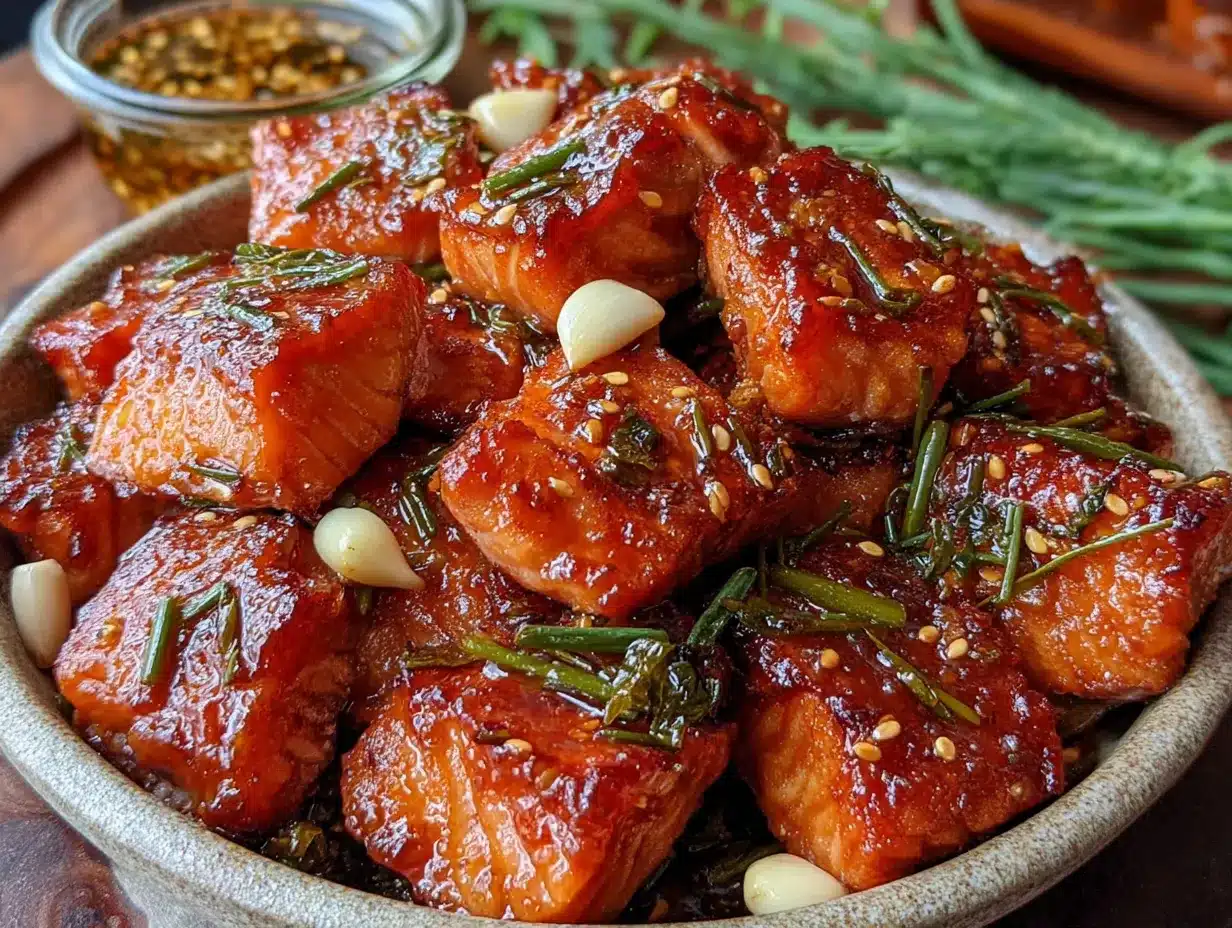
Let’s get cooking. I’ll walk you through every step so you get that perfect crispy exterior and tender, flaky interior every single time.
- Prep the salmon: Start by cutting your salmon fillets into 1-inch cubes. Try to keep them uniform in size so they cook evenly. Pat each piece dry with paper towels—this is crucial. Any moisture on the surface will create steam and prevent that golden crust from forming. Season the cubes lightly with salt and pepper.
- Make the coating: In a medium bowl, whisk together the cornstarch, garlic powder, 1/2 teaspoon salt, and 1/4 teaspoon black pepper. Drop the salmon cubes into the bowl and toss gently until each piece is evenly coated. Shake off any excess—you want a thin, even layer, not a thick paste. Let the coated pieces sit for 5 minutes. This helps the coating adhere better during cooking.
- Prepare the glaze: While the salmon rests, make the glaze. In a small bowl, combine the honey, soy sauce, minced garlic, rice vinegar, and sriracha. Whisk until smooth. Set it near the stove—you’ll need it quickly later.
- Heat the pan: Place your skillet over medium-high heat and add the olive oil. Let it heat until it shimmers—about 2 minutes. You want the oil hot enough that a piece of cornstarch sizzles immediately when dropped in.
- Sear the salmon: Carefully place the coated salmon cubes in the skillet in a single layer. Don’t overcrowd—work in batches if needed. Let them cook undisturbed for 2-3 minutes until the bottoms are deep golden brown and crispy. Use tongs to flip each piece. Cook for another 2-3 minutes on the other side. The salmon should be cooked through but still tender in the center—about 145°F internal temperature.
- Remove and rest: Transfer the crispy salmon bites to a plate lined with paper towels. Let them rest while you make the glaze. Don’t skip this step—it keeps them crispy while you finish the sauce.
- Make the glaze: Reduce the heat to medium-low. Add the butter to the same skillet and let it melt, scraping up any browned bits from the bottom. Pour in the honey-soy mixture and stir constantly for 1-2 minutes until it thickens slightly and becomes glossy. You’ll know it’s ready when it coats the back of a spoon.
- Toss and finish: Return the salmon bites to the skillet. Toss gently with tongs to coat each piece evenly in the glaze. Drizzle the sesame oil over the top and give it one more gentle toss. The glaze should cling to each piece without making them soggy—if it seems too thin, let it cook for another 30 seconds while tossing.
- Garnish and serve: Transfer the glazed salmon bites to a serving platter. Sprinkle with toasted sesame seeds and sliced green onions. Serve immediately while they’re still warm and crispy.
One thing I’ve learned: don’t let the glazed salmon sit in the pan too long after tossing. The residual heat will continue to cook the glaze, and you’ll end up with a sticky mess instead of a beautiful glossy coating. Get it onto the platter within a minute of tossing.
Cooking Tips & Techniques
I’ve made this recipe more times than I care to count, and I’ve made every mistake in the book so you don’t have to. Here’s what I’ve learned:
The cornstarch trick: I mentioned this earlier, but it bears repeating. Cornstarch creates a much crispier crust than flour because it absorbs moisture and creates a thin, crunchy shell when fried. Don’t skip it, and don’t substitute it. I once tried almond flour for a low-carb version and ended up with sad, soggy pieces that fell apart in the pan.
Patience is key: The biggest mistake people make is moving the salmon around too much in the pan. Let it sear undisturbed for a full 2-3 minutes before attempting to flip. You’ll know it’s ready when the edges look golden and the piece releases easily from the pan. If it sticks, it’s not ready yet.
Batch cooking matters: If you’re making a double batch, cook the salmon in two separate batches. Crowding the pan lowers the temperature too quickly, and you’ll end up with steamed salmon instead of crispy bites. I learned this the hard way when I tried to rush through a batch for a party—the first batch was perfect, the second was a sad, pale mess.
Glaze timing: The glaze comes together fast, so have everything measured and ready before you start. Once you add the butter and honey mixture to the hot pan, it can go from perfect to burnt in about 30 seconds. Keep stirring and watch for that glossy, thickened consistency.
Double coating for extra crunch: If you’re feeding a crowd and want maximum crunch, try double-coating the salmon. After the first cornstarch coating, dip each piece in beaten egg, then coat again in cornstarch. It creates an even thicker, crunchier crust that holds up beautifully to the glaze.
Variations & Adaptations
One of the best things about this recipe is how flexible it is. Here are some ways I’ve adapted it over the months:
Spicy Korean-style: Swap the honey and soy sauce for gochujang (Korean chili paste) mixed with a little honey and sesame oil. The result is spicy, savory, and deeply umami. I made this version for a friend who loves bold flavors, and she asked for the recipe before she finished eating.
Lemon herb version: Omit the sriracha and add the zest of one lemon and a tablespoon of fresh thyme to the glaze. Finish with a squeeze of lemon juice and fresh parsley. This lighter version is perfect for spring or summer when you want something bright and fresh.
Air fryer adaptation: If you want to cut down on oil, this recipe adapts beautifully to an air fryer. Toss the coated salmon pieces with a tablespoon of oil, then air fry at 400°F for 6-8 minutes, shaking the basket halfway through. Make the glaze in a separate pan on the stove, then toss the cooked salmon in it. The texture is slightly different—a bit drier on the outside—but still delicious.
Gluten-free option: This recipe is naturally gluten-free as written (cornstarch and soy sauce—just make sure your soy sauce is certified gluten-free or use tamari). I’ve tested it with coconut aminos too, and it works well, though the flavor is slightly milder.
Milder version for kids: My kids love these, but they’re not fans of spice. For them, I skip the sriracha entirely and add an extra teaspoon of honey. The garlic still gives it plenty of flavor without any heat.
Serving & Storage Suggestions
These crispy honey garlic glazed salmon bites are best served immediately while the exterior is still crunchy and the glaze is warm and sticky. But here’s how to make the most of them:
Serving ideas: Pile them onto a bed of steamed jasmine rice or cauliflower rice for a complete meal. They’re also fantastic over a simple green salad with a light vinaigrette—the sweet glaze contrasts beautifully with fresh greens. For a fun appetizer, serve them on toothpicks with a side of extra glaze for dipping.
What to serve with them: I love pairing these with roasted asparagus or steamed broccoli. The slight bitterness of the greens balances the sweetness of the glaze. A side of healthy chicken veggie skillet wraps would make a great light meal alongside these bites. For a heartier option, try them with garlic butter noodles or a simple cucumber salad.
Storage: Leftover salmon bites will keep in an airtight container in the refrigerator for up to 3 days. The texture will soften as they sit—the glaze continues to soak into the coating—but the flavor is still fantastic. I often make a double batch just for leftovers.
Reheating: The best way to reheat these is in a skillet over medium heat for 2-3 minutes per side. This helps restore some of the crispiness. You can also use an air fryer at 350°F for 3-4 minutes. Please don’t microwave them—it turns the coating into a sad, soggy mess.
Freezing: You can freeze the cooked, unglazed salmon bites for up to 2 months. Arrange them in a single layer on a baking sheet and freeze until solid, then transfer to a freezer bag. When ready to serve, reheat in a skillet and toss with fresh glaze. This is my go-to meal prep hack for busy weeks.
Nutritional Information & Benefits
These crispy honey garlic glazed salmon bites aren’t just delicious—they’re packed with nutrition too. Here’s the breakdown per serving (about 6-8 pieces):
- Calories: Approximately 380-420
- Protein: 32-35 grams
- Fat: 18-22 grams
- Carbohydrates: 22-25 grams
- Fiber: 0-1 gram
- Sugar: 14-16 grams (mostly from honey)
Health benefits: Salmon is one of the best sources of omega-3 fatty acids, which support heart health, brain function, and reduce inflammation. It’s also rich in high-quality protein, B vitamins, and selenium. The honey provides natural sweetness with some antioxidant properties, while garlic is known for its immune-supporting compounds.
Dietary considerations: This recipe is naturally gluten-free (check your soy sauce), dairy-free (if you use oil instead of butter), and can be made low-carb by serving over cauliflower rice instead of regular rice. It’s also egg-free and nut-free, making it suitable for many common allergies.
Potential allergens: Contains fish (salmon) and soy (soy sauce). If you have a soy allergy, coconut aminos make an excellent substitute.
Conclusion
These crispy honey garlic glazed salmon bites have honestly changed the way I think about weeknight dinners. They’re fast enough for a busy Tuesday but impressive enough for company—and that’s a rare combination. The first time I made them, I stood at the counter eating them straight from the pan, and I’m not ashamed to admit it.
What I love most about this recipe is how forgiving it is. Even on nights when I’m rushing, when the kids are arguing, and I’m multitasking like crazy, these still turn out beautifully. The glaze caramelizes perfectly, the salmon stays tender, and that crispy coating delivers every single time.
I’d love to hear how yours turn out. Did you try a variation? Add extra heat? Serve them over something unexpected? Drop a comment below and let me know—I read every single one, and your adaptations might inspire someone else’s dinner tonight. And if you’re looking for another quick weeknight winner, my healthy air fryer BBQ chicken lettuce wraps are another go-to in my kitchen.
Happy cooking, friends. Go make some salmon bites—you deserve them.
Frequently Asked Questions
Can I use frozen salmon for this recipe?
Yes, absolutely. Just make sure the salmon is fully thawed in the refrigerator overnight, then pat it extremely dry with paper towels before cutting and coating. Frozen salmon tends to release more water as it cooks, so drying it thoroughly is even more important than with fresh salmon.
Why did my salmon bites turn out soggy instead of crispy?
The most common culprit is moisture. Either the salmon wasn’t patted dry enough before coating, the oil wasn’t hot enough when you added the pieces, or you overcrowded the pan. Make sure your oil is shimmering hot before adding the salmon, and cook in batches if needed. Also, don’t skip the 5-minute rest after coating—it helps the cornstarch adhere better.
Can I make the glaze ahead of time?
You can mix the honey, soy sauce, garlic, rice vinegar, and sriracha together up to 24 hours in advance and store it in the refrigerator. Just give it a good stir before using, as the honey will settle at the bottom. However, I recommend making the glaze fresh for the best texture and flavor.
How do I know when the salmon is cooked through?
Salmon is done when it flakes easily with a fork and the internal temperature reaches 145°F. For 1-inch cubes, this usually takes about 4-6 minutes total (2-3 minutes per side). The exterior should be golden brown and crispy, and the center should be opaque but still moist. If you see white albumin (that white stuff that sometimes appears on salmon) forming, you’ve cooked it a touch too long—still edible, just slightly drier.
Can I bake these instead of pan-frying?
Yes, you can bake them at 425°F for 10-12 minutes on a parchment-lined baking sheet. Toss the coated salmon pieces with a tablespoon of oil before baking to help them crisp up. The texture won’t be quite as crunchy as pan-frying, but it’s a good hands-off option when you’re multitasking. Make the glaze on the stovetop while the salmon bakes, then toss everything together at the end.
Pin This Recipe!
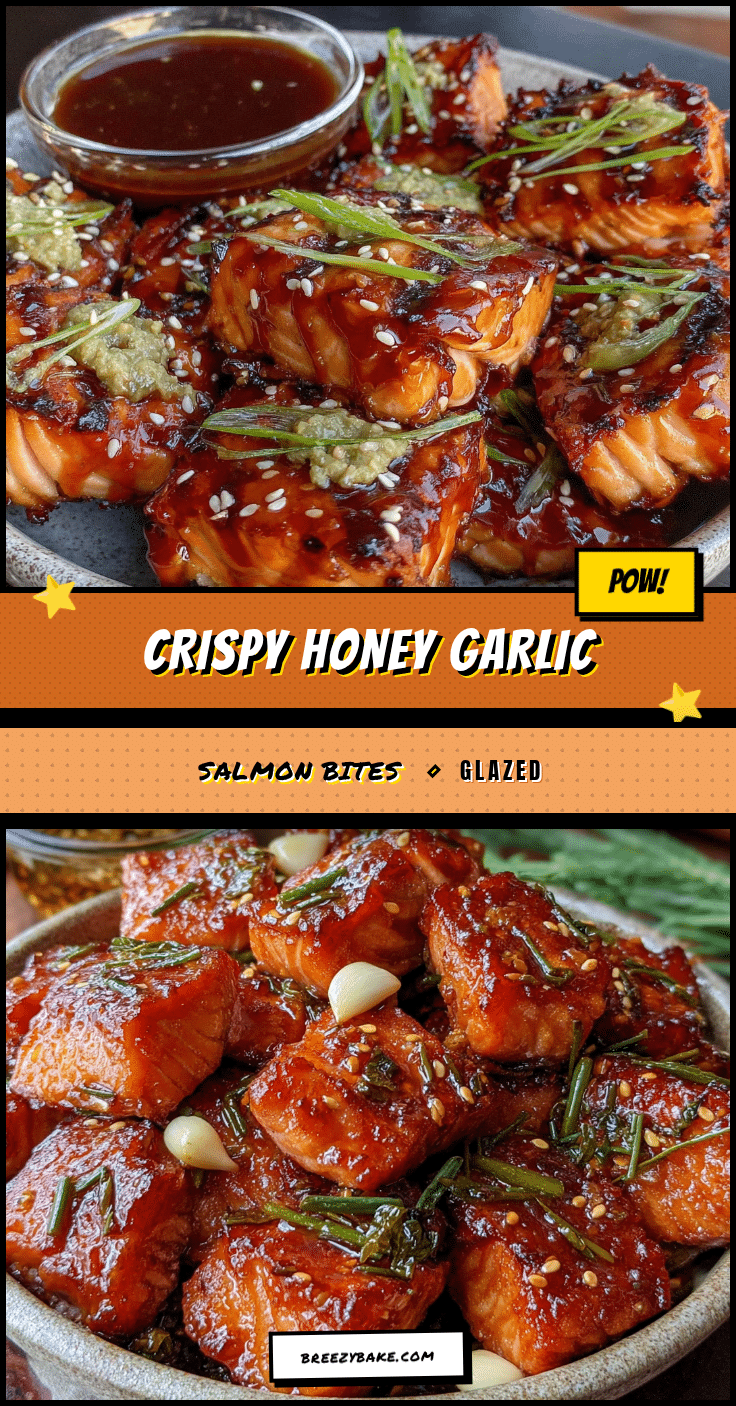
Easy Crispy Honey Garlic Glazed Salmon Bites

These crispy honey garlic glazed salmon bites are quick, easy, and incredibly delicious. With a shatteringly crisp coating and a sweet-savory glaze, they’re perfect for weeknight dinners or entertaining.
- Prep Time: 10 minutes
- Cook Time: 10 minutes
- Total Time: 20 minutes
- Yield: 4 servings 1x
- Category: Main Course
- Cuisine: American
Ingredients
- 1.5 pounds salmon fillets, skin removed, cut into 1-inch cubes
- 1/3 cup cornstarch
- 1 teaspoon garlic powder
- 1/2 teaspoon salt, plus more to taste
- 1/4 teaspoon black pepper, freshly ground
- 2 tablespoons olive oil
- 2 tablespoons unsalted butter
- 1/4 cup honey
- 3 tablespoons low-sodium soy sauce
- 4–5 garlic cloves, minced
- 1 tablespoon rice vinegar
- 1 teaspoon sriracha (optional)
- 1/2 teaspoon sesame oil
- 1 tablespoon toasted sesame seeds, for garnish
- 2–3 green onions, sliced thin, for garnish
Instructions
- Prep the salmon: Cut salmon fillets into 1-inch cubes. Pat each piece dry with paper towels. Season lightly with salt and pepper.
- Make the coating: In a medium bowl, whisk together cornstarch, garlic powder, 1/2 teaspoon salt, and 1/4 teaspoon black pepper. Add salmon cubes and toss gently until evenly coated. Shake off excess. Let rest for 5 minutes.
- Prepare the glaze: In a small bowl, combine honey, soy sauce, minced garlic, rice vinegar, and sriracha. Whisk until smooth. Set aside.
- Heat the pan: Place a large non-stick or cast-iron skillet over medium-high heat. Add olive oil and heat until shimmering, about 2 minutes.
- Sear the salmon: Carefully place coated salmon cubes in a single layer in the skillet. Cook undisturbed for 2-3 minutes until deep golden brown. Flip and cook another 2-3 minutes. Salmon should be cooked through (145°F internal temperature).
- Remove and rest: Transfer salmon to a plate lined with paper towels.
- Make the glaze: Reduce heat to medium-low. Add butter to the same skillet, scraping up browned bits. Pour in honey-soy mixture and stir constantly for 1-2 minutes until thickened and glossy.
- Toss and finish: Return salmon to skillet. Toss gently to coat evenly. Drizzle with sesame oil and toss once more.
- Garnish and serve: Transfer to a platter. Sprinkle with toasted sesame seeds and sliced green onions. Serve immediately.
Notes
Pat salmon very dry for maximum crispiness. Don’t overcrowd the pan—cook in batches if needed. For extra crunch, double-coat salmon by dipping in beaten egg then cornstarch again. Serve immediately for best texture.
Nutrition
- Serving Size: 6-8 pieces
- Calories: 400
- Sugar: 15
- Sodium: 600
- Fat: 20
- Saturated Fat: 5
- Carbohydrates: 23
- Protein: 33
Keywords: salmon bites, crispy salmon, honey garlic salmon, easy salmon recipe, weeknight dinner, gluten-free salmon