This was supposed to be a simple sourdough boule. You know, the kind you see all over Instagram—gorgeous, crusty, with that perfect ear. I had my starter bubbling away, my flour measured, my whole Sunday morning planned around the slow, meditative process of stretch-and-folds. Then my three-year-old woke up from her nap early, grumpy and clingy, and the power flickered during a storm that rolled in out of nowhere. I was already behind, already distracted, already wondering if I should just scrap the whole thing and order pizza.
In my haste, I grabbed the wrong pan—a half-sheet pan instead of my Dutch oven. I dumped the dough in, stretched it out thin because it wouldn’t fit otherwise, and drizzled it with olive oil because that’s what you do when you’re panicking and don’t know what else to do. I threw some rosemary on top because it was wilting in the fridge, sprinkled salt because it felt right, and shoved it in the oven. Honestly, I was expecting a flat, sad cracker.
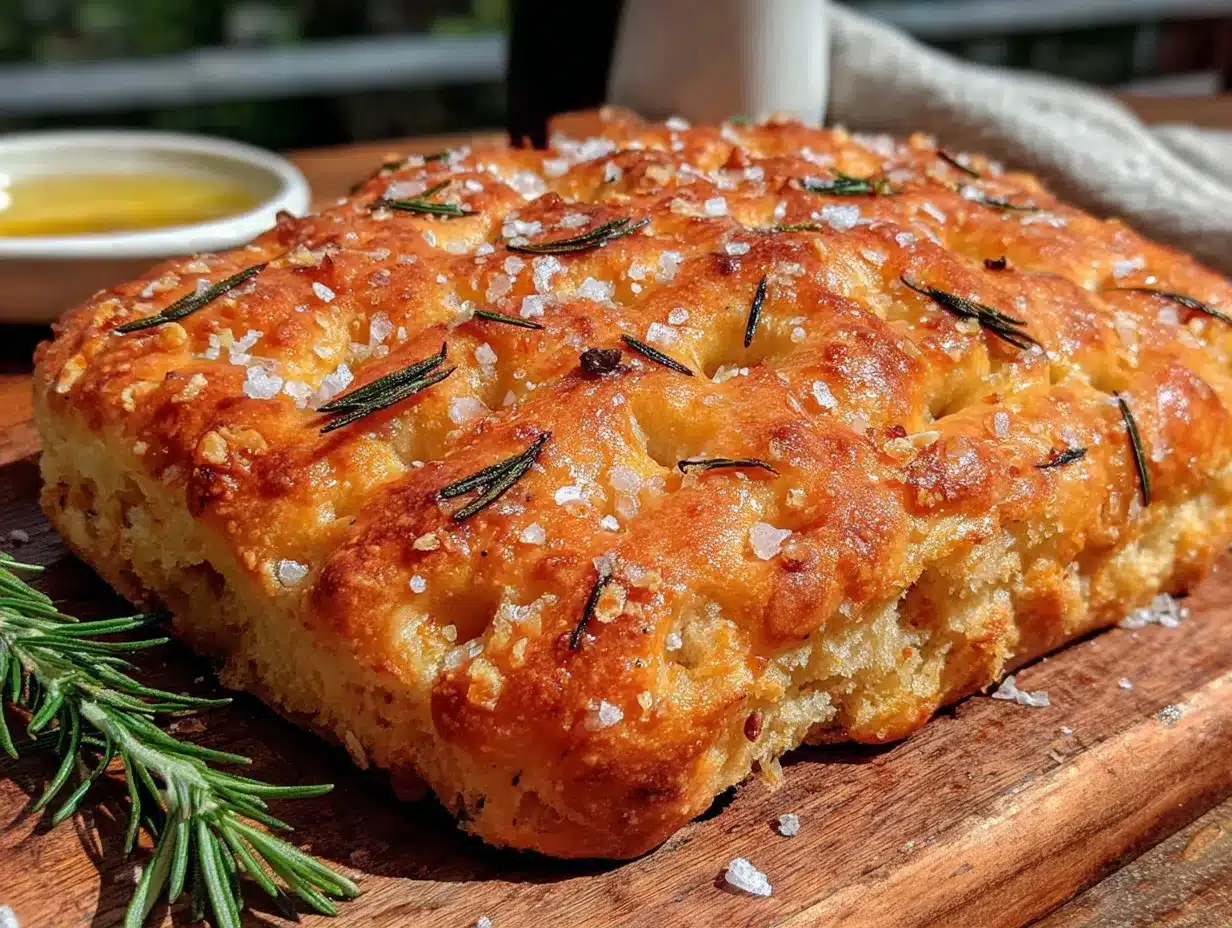
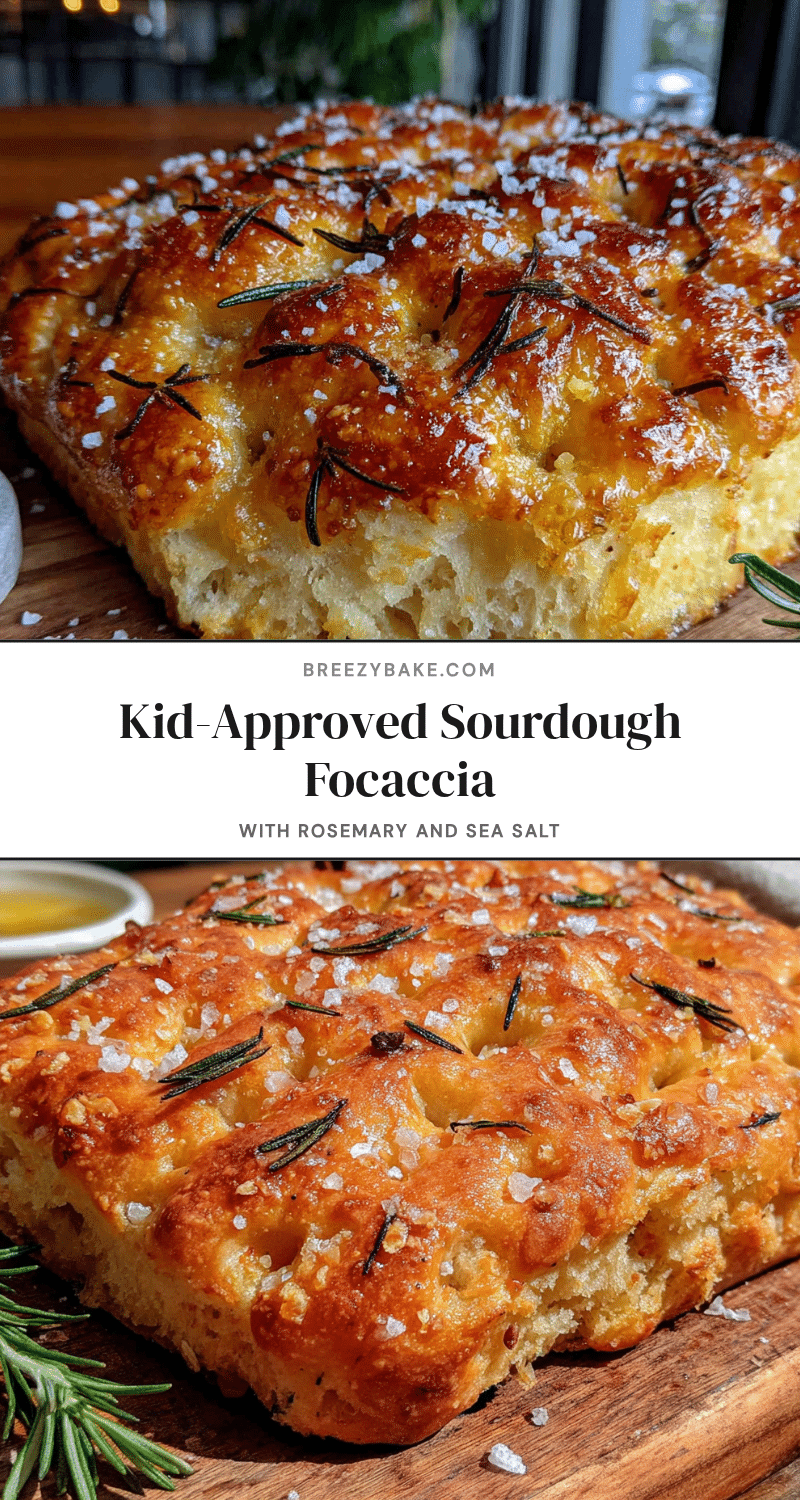
What came out was nothing like the plan. It was golden, pillowy, with those signature dimples and a crispy, oily bottom that crackled when I tapped it. My daughter, who refuses to eat anything green, grabbed a piece before I could even take a photo. She ate three more. My husband, who claims sourdough is “too tangy,” asked for the recipe. I stood there, flour on my forehead, half-laughing, half-stunned. Maybe you’ve been there—when a kitchen disaster turns into a happy accident that becomes a family staple. This is that recipe.
Why You’ll Love This Recipe
Let’s be honest—most sourdough recipes feel like a science experiment. They require precision, patience, and a level of focus that’s hard to muster when you’re also trying to keep a toddler from dumping an entire bag of goldfish on the floor. This kid-approved sourdough focaccia is different. It’s forgiving, it’s fast (for sourdough, anyway), and it’s practically foolproof. I’ve tested it on busy weeknights, rainy weekends, and even after a particularly chaotic playdate. It works every time.
- Quick & Easy: While it does require a bulk fermentation, the hands-on time is about 15 minutes. Perfect for a lazy Sunday or a Tuesday when you need a carb hug.
- Simple Ingredients: You probably have everything already—flour, water, salt, olive oil, and a sourdough starter. No fancy grocery trips needed.
- Perfect for Family Meals: This focaccia is a crowd-pleaser. Kids love the soft, chewy texture and the crispy edges. Adults love the savory rosemary and salt.
- Unbelievably Delicious: The texture is next-level—crispy on the bottom, airy in the middle, and golden on top. The olive oil soaks into every nook and cranny.
- Budget-Friendly: Flour and oil are cheap. A single batch costs pennies but feels like a bakery splurge.
What makes this recipe different from the rest? It’s the technique. By using a higher hydration dough and a generous amount of olive oil, you get that signature focaccia crumb without the fuss of traditional sourdough shaping. Plus, the rosemary and sea salt combo is classic for a reason—it just works. This isn’t just another bread recipe; it’s the one your kids will ask for by name.
What Ingredients You Will Need
This recipe uses simple, wholesome ingredients to deliver bold flavor and satisfying texture without the fuss. Most of these are pantry staples, which makes this sourdough focaccia perfect for those weeks when you don’t want to make a special trip to the store.
- Bread flour (500g / about 4 cups) – I prefer King Arthur for its consistent protein content, but any good bread flour works. The higher protein gives the focaccia its chewy structure.
- Warm water (400g / about 1 ¾ cups) – Use filtered water if your tap water is heavily chlorinated. It can kill the yeast activity in your starter.
- Sourdough starter (150g / about ¾ cup), active and bubbly – This is your leavening agent. Make sure it’s been fed within the last 6-8 hours and is doubled in volume.
- Extra-virgin olive oil (80g / about ⅓ cup, plus more for the pan and drizzling) – Use a good quality oil here; it’s a major flavor component. I like California Olive Ranch for a balanced, fruity taste.
- Fine sea salt (10g / about 1 ½ tsp) – This goes into the dough. Don’t skip it; salt controls fermentation and adds flavor.
- Flaky sea salt (for topping) – Maldon is my go-to. The large, crunchy flakes make a big difference in texture.
- Fresh rosemary (2-3 sprigs, leaves stripped and roughly chopped) – Dried rosemary works in a pinch, but fresh is so much more fragrant and less prickly. If using dried, use about half as much.
Ingredient Selection Tips: For the best texture, use bread flour, not all-purpose. The extra protein builds a stronger gluten network. If you don’t have a sourdough starter, you can use 1 teaspoon of active dry yeast mixed with the warm water and a pinch of sugar—let it sit for 5 minutes until foamy, then proceed. It won’t have the same tangy depth, but it’ll still be delicious.
Substitution Guidance: You can swap the bread flour for whole wheat or spelt, but the texture will be denser and less airy. For a gluten-free version, use a 1:1 gluten-free flour blend, but note that the hydration may need adjustment. I haven’t tested this with gluten-free flour, so proceed with caution.
Equipment Needed
You don’t need a lot of fancy gear to make this sourdough focaccia. Here’s what I use:
- Large mixing bowl – Glass or stainless steel works best. I use a 4-quart bowl for the initial mix.
- Digital kitchen scale – Honestly, this is non-negotiable for consistent results. Measuring by volume is too imprecise for sourdough. A $15 scale from Amazon is fine.
- Half-sheet pan (13×18 inches) – This gives the focaccia its classic shape. A 9×13 baking dish works too, but the bread will be thicker and need a few extra minutes in the oven.
- Bench scraper – Handy for stretching the dough and cleaning up sticky messes. A plastic dough scraper is gentler on non-stick pans.
- Plastic wrap or a damp kitchen towel – To cover the dough during its long rise.
- Parchment paper – Optional, but it makes cleanup a breeze. I use it every time.
Budget-Friendly Options: If you don’t have a half-sheet pan, use a cast-iron skillet or a round cake pan. The shape will be different, but the taste won’t suffer. A bench scraper can be replaced by a stiff spatula or even a butter knife in a pinch.
Preparation Method
Here’s the step-by-step. Trust me, it’s easier than it looks. The key is patience—the dough does most of the work while you do other things.
- Mix the dough (5 minutes): In your large bowl, combine the warm water and active sourdough starter. Stir until the starter dissolves and the water looks milky. Add the bread flour and fine sea salt. Mix with a stiff spatula or your hands until no dry flour remains. It will look shaggy and sticky—that’s normal. Cover the bowl with plastic wrap and let it rest for 30 minutes. This is called the autolyse, and it gives the flour time to absorb the water, making the dough easier to handle.
- Bulk fermentation with stretch and folds (2-3 hours): Over the next 2-3 hours, you’ll perform a series of stretch and folds. Every 30 minutes, wet your hands (this prevents sticking), grab a section of dough, stretch it up, and fold it over the center. Rotate the bowl and repeat 4-5 times until you’ve gone all the way around. Do this 4 times total. You’ll notice the dough becoming smoother and more elastic with each fold. After the last fold, cover the bowl and let it rest for the remaining time. The dough should be bubbly, puffy, and about doubled in size. If your kitchen is cold, this may take up to 4 hours. If it’s warm, check it at 2 hours.
- Prepare the pan (5 minutes): Drizzle about 2 tablespoons of olive oil into your half-sheet pan. Use your fingers to spread it all over the bottom and up the sides. This prevents sticking and creates that crispy, golden bottom.
- Transfer and stretch (5 minutes): Gently scrape the dough out of the bowl and into the oiled pan. Don’t punch it down—you want to keep those air bubbles. Using oiled fingers, gently stretch the dough to fill the pan. It may resist and try to spring back. That’s okay. Let it rest for 10 minutes, then stretch it again. Repeat until the dough fills the pan evenly.
- Second rise (1-2 hours): Cover the pan loosely with plastic wrap or a damp towel. Let it rise until the dough is puffy and bubbly and has risen to about 1 inch thick. This can take 1-2 hours depending on your starter’s strength and room temperature. You’ll know it’s ready when you poke it gently and the indentation stays.
- Dimple and top (5 minutes): Preheat your oven to 425°F (220°C). Drizzle another 2 tablespoons of olive oil over the top of the dough. Using your fingertips, press deep dimples all over the surface—right down to the bottom of the pan. The oil will pool in the dimples, creating those iconic pockets. Sprinkle the chopped rosemary and a generous pinch of flaky sea salt over the top.
- Bake (20-25 minutes): Place the pan on the middle rack of your preheated oven. Bake for 20-25 minutes, or until the top is deep golden brown and the bottom is crispy. If you lift a corner with a spatula, you should hear a satisfying crackle. For an extra-crispy top, switch to the broiler for the last 1-2 minutes—but watch it like a hawk. Burnt rosemary is not fun.
- Cool (10 minutes): Let the focaccia cool in the pan for 10 minutes. Then transfer it to a wire rack. This prevents the bottom from getting soggy. If you can wait that long, that is. I usually can’t.
Sensory Cues: During the stretch and folds, the dough should feel like a soft, slightly tacky earlobe. When it’s ready to bake, it should jiggle when you shake the pan. The smell of baking bread and rosemary will fill your kitchen—it’s the best kind of aromatherapy.
Cooking Tips & Techniques
I’ve made this sourdough focaccia more times than I can count, and I’ve learned a few things the hard way. Here are my best tips:
- Don’t skip the stretch and folds. I tried to rush this step once, and the focaccia came out dense and flat. Those folds build the gluten structure that creates the airy crumb. Set a timer if you have to.
- Use cold water on hot days. If your kitchen is above 80°F, the dough can over-ferment and turn into a sticky mess. Using cold water slows things down and gives you more control.
- Go heavy on the olive oil. I know it feels like a lot, but the oil is what gives focaccia its signature texture. It also prevents the dough from sticking to the pan and your fingers. Don’t be shy.
- Make deep dimples. This is not the time for gentle pokes. Press your fingers all the way down to the bottom of the pan. The deeper the dimples, the more oil pools, and the more flavor pockets you get.
- Watch the broiler. I once got distracted by a phone call and turned my focaccia into a charcoal briquette. The line between golden and burnt is thin. Stay close.
Timing and Multitasking: The bulk fermentation is the perfect time to clean the kitchen, fold laundry, or play with the kids. The second rise is when I usually start prepping dinner. This recipe fits into real life—you don’t have to hover over it.
Variations & Adaptations
This sourdough focaccia is a blank canvas. Here are a few ways to switch it up:
- Cheesy Focaccia: After dimpling, sprinkle ½ cup of shredded Parmesan or grated cheddar over the top before baking. The cheese gets crispy and golden. My kids go nuts for this version.
- Garlic and Herb: Skip the rosemary and add 3-4 minced garlic cloves and 1 tablespoon of mixed dried herbs (thyme, oregano, basil) to the olive oil before dimpling. Let the garlic infuse the oil for 10 minutes for a milder flavor.
- Everything Bagel Focaccia: After the dimples, sprinkle with everything bagel seasoning (sesame seeds, poppy seeds, dried garlic, dried onion, salt). It’s incredible for breakfast or sandwiches.
- Kid-Friendly Sweet Version: Omit the rosemary and salt. Instead, after baking, brush with melted butter and sprinkle with cinnamon sugar. Serve it warm with a glass of milk. My daughter calls it “pancake bread.”
Seasonal Adaptations: In summer, top with halved cherry tomatoes and fresh basil before baking. In fall, add thinly sliced apples and a drizzle of honey. The possibilities are endless.
Dietary Adjustments: For a dairy-free version, simply skip the cheese. For a lower-sodium option, use less flaky salt on top. I’ve also made this with a 50/50 blend of bread flour and whole wheat flour—it’s heartier but still delicious.
Serving & Storage Suggestions
This sourdough focaccia is best served warm, fresh from the oven, with a pat of butter melting into the dimples. But honestly, it’s also amazing at room temperature. I’ve been known to eat it for breakfast, lunch, and dinner.
- Serving Temperature: Warm or room temperature. If it’s been sitting for a few hours, pop it in a 350°F oven for 5 minutes to revive the crispiness. Don’t use the microwave—it turns the bread rubbery.
- Complementary Dishes: Serve it alongside a bowl of tomato soup, a simple green salad, or a hearty pasta. It’s also perfect for dipping in balsamic vinegar and olive oil. For a full meal, pair it with roasted chicken or grilled vegetables.
- Storage Instructions: Store leftover focaccia in an airtight container at room temperature for up to 2 days. Do not refrigerate—it will dry out and go stale faster. For longer storage, wrap it tightly in plastic wrap and then foil, and freeze for up to 3 months.
- Reheating Methods: From frozen, thaw at room temperature, then reheat in a 350°F oven for 5-7 minutes. From the fridge (if you must), wrap in foil and heat for 10 minutes. The texture won’t be quite as good as fresh, but it’s still way better than store-bought.
Flavor Development: This focaccia actually tastes better the next day. The flavors meld together, and the texture becomes even more tender. It’s perfect for making ahead of a gathering.
Nutritional Information & Benefits
While I wouldn’t call focaccia health food, it does have some redeeming qualities. Here’s a rough estimate per serving (based on 12 servings):
| Nutrient | Amount per Serving |
|---|---|
| Calories | 220 |
| Protein | 6g |
| Carbohydrates | 35g |
| Fat | 7g |
| Saturated Fat | 1g |
| Sodium | 350mg |
| Fiber | 1g |
Health Benefits: Sourdough fermentation breaks down phytic acid, making the minerals in the flour more bioavailable. It also produces beneficial lactic acid bacteria, which can support gut health. The olive oil is rich in monounsaturated fats and antioxidants. Rosemary has anti-inflammatory properties. So while it’s still bread, it’s bread with benefits.
Dietary Considerations: This recipe is vegetarian and dairy-free (if you skip the cheese). It contains gluten. For a lower-carb option, serve it in smaller portions alongside a protein-rich meal.
Personal Wellness Perspective: I believe in balance. This focaccia is comfort food, and comfort food has a place in a healthy diet. It’s made with real ingredients, fermented naturally, and shared with people you love. That counts for something.
Conclusion
This kid-approved sourdough focaccia started as a mistake, but it’s become a staple in our house. It’s the bread I make when I want to feel like a domestic goddess without actually trying that hard. It’s the bread my kids ask for when they’re hungry, the bread that disappears at parties, the bread that makes me look like I have my life together when I absolutely do not.
I hope you give it a try. Don’t worry if your first batch isn’t perfect—mine wasn’t either. The beauty of this recipe is its forgiveness. Use whatever herbs you have, adjust the salt to your taste, and don’t stress about the timing. It’s just bread, after all. But honestly? It’s so much more than that.
I’d love to hear how it turns out for you. Drop a comment below with your favorite topping combination, or tag me in your photos on social media. Happy baking, friends!
Frequently Asked Questions
Can I use all-purpose flour instead of bread flour?
Yes, you can. The focaccia will be slightly less chewy and a bit softer, but it will still be delicious. If using all-purpose, consider adding an extra tablespoon of water to compensate for the lower protein absorption.
My dough is too sticky to handle. What should I do?
That’s normal! Sourdough focaccia has a high hydration, which means it’s meant to be sticky. Wet your hands with water or oil before handling the dough. Avoid adding extra flour, as it will make the bread dense. Trust the process—the stretch and folds will develop the gluten and make the dough manageable.
Can I make this without a sourdough starter?
Absolutely. Use 1 teaspoon of active dry yeast mixed with the warm water and a pinch of sugar. Let it sit for 5 minutes until foamy, then proceed with the recipe. The fermentation time will be shorter (about 1-2 hours for bulk fermentation), so keep an eye on it.
How do I know when the focaccia is fully baked?
The top should be deep golden brown, and the bottom should be crispy. Lift a corner with a spatula—it should sound hollow when tapped. If you have an instant-read thermometer, the internal temperature should be around 200°F (93°C).
Can I freeze the unbaked dough?
Yes. After the second rise (step 5), cover the pan tightly with plastic wrap and foil, and freeze for up to 1 month. To bake, thaw in the refrigerator overnight, then let it come to room temperature for 30 minutes before dimpling and baking. Add 5-10 minutes to the baking time.
Pin This Recipe!
Easy Kid-Approved Sourdough Focaccia with Rosemary & Sea Salt

A forgiving, foolproof sourdough focaccia that started as a happy accident. With a crispy bottom, airy crumb, and classic rosemary and sea salt topping, this kid-approved bread is perfect for busy weeknights or lazy weekends.
- Prep Time: 15 minutes
- Cook Time: 25 minutes
- Total Time: 4 hours 40 minutes (including fermentation)
- Yield: 12 servings 1x
- Category: Bread
- Cuisine: Italian
Ingredients
- 500g bread flour (about 4 cups)
- 400g warm water (about 1 ¾ cups)
- 150g active sourdough starter (about ¾ cup)
- 80g extra-virgin olive oil (about ⅓ cup), plus more for the pan and drizzling
- 10g fine sea salt (about 1 ½ tsp)
- Flaky sea salt (for topping, e.g., Maldon)
- 2–3 sprigs fresh rosemary, leaves stripped and roughly chopped
Instructions
- Mix the dough (5 minutes): In a large bowl, combine warm water and active sourdough starter. Stir until dissolved. Add bread flour and fine sea salt. Mix with a stiff spatula or hands until no dry flour remains. Cover with plastic wrap and let rest for 30 minutes (autolyse).
- Bulk fermentation with stretch and folds (2-3 hours): Over 2-3 hours, perform 4 sets of stretch and folds every 30 minutes. Wet your hands, stretch a section of dough up and fold over the center. Rotate bowl and repeat 4-5 times. After the last fold, cover and let rest until dough is bubbly, puffy, and doubled in size.
- Prepare the pan (5 minutes): Drizzle about 2 tablespoons of olive oil into a half-sheet pan (13×18 inches). Spread oil all over the bottom and up the sides.
- Transfer and stretch (5 minutes): Gently scrape dough into the oiled pan. Using oiled fingers, gently stretch dough to fill the pan. Let rest 10 minutes, then stretch again until dough fills pan evenly.
- Second rise (1-2 hours): Cover pan loosely with plastic wrap or a damp towel. Let rise until dough is puffy, bubbly, and about 1 inch thick. It’s ready when a gentle poke leaves an indentation.
- Dimple and top (5 minutes): Preheat oven to 425°F (220°C). Drizzle another 2 tablespoons of olive oil over the dough. Using fingertips, press deep dimples all over the surface. Sprinkle chopped rosemary and a generous pinch of flaky sea salt on top.
- Bake (20-25 minutes): Place pan on middle rack. Bake until top is deep golden brown and bottom is crispy. For extra-crispy top, broil for the last 1-2 minutes, watching carefully.
- Cool (10 minutes): Let focaccia cool in pan for 10 minutes, then transfer to a wire rack to prevent soggy bottom.
Notes
Don’t skip the stretch and folds; they build gluten for an airy crumb. Use cold water on hot days to prevent over-fermentation. Go heavy on olive oil for signature texture. Make deep dimples for oil pools. Watch the broiler closely to avoid burning. The focaccia tastes even better the next day.
Nutrition
- Serving Size: 1 serving (1/12 of r
- Calories: 220
- Sodium: 350
- Fat: 7
- Saturated Fat: 1
- Carbohydrates: 35
- Fiber: 1
- Protein: 6
Keywords: sourdough focaccia, kid-approved, rosemary, sea salt, easy bread, homemade focaccia, sourdough recipe