My neighbor, a guy named Leo who once told me he “didn’t do salad,” had his hand halfway into my mixing bowl before I could even say a word. It was a Tuesday afternoon. I was testing this Mediterranean pasta salad for a potluck that weekend, and Leo had come over to borrow a wrench. He stood there, wrench in one hand, fork in the other, fishing out a kalamata olive like he was being paid for it. “This isn’t salad,” he said, mouth full. “This is… different.”
I mean, honestly, that moment pretty much sums up the whole story of this recipe. I’d spent years thinking pasta salad was that sad, mayonnaise-drenched thing from grocery store deli counters—the one with the mushy macaroni and the pale, flavorless cubes of cheese. You know the one. I avoided it at every barbecue, every picnic, every family gathering. I’d fill my plate with coleslaw and potato salad instead, just to be polite.
Then I made this version. And Leo caught me in the act of proving myself wrong.
The thing that cracked it open for me was the dressing—a bright, garlicky lemon vinaigrette instead of anything creamy. And the feta. Salty, briny feta that crumbles into every nook and cranny of the pasta. Plus those olives, which Leo was now hoarding. The combination was so punchy and fresh that it didn’t feel like a compromise. It felt like the main event. I kept making it, tweaking it, adding roasted red peppers and fresh herbs until it became the thing I brought to every gathering. The thing people asked for by name. The thing that made Leo, a self-proclaimed salad-hater, ask for the recipe twice.
This recipe stayed with me because it changed what I thought was possible. It’s the kind of dish that makes you look like a hero at a party without breaking a sweat. And let me tell you—if you’ve been burned by bad pasta salad before, I get it. But this one’s different. I promise.
Why You’ll Love This Recipe
This Mediterranean pasta salad isn’t just another side dish. It’s the one that disappears first from the table, every single time. I’ve tested it at backyard barbecues, holiday potlucks, and casual weeknight dinners, and the reaction is always the same—people go quiet for a second, then reach for seconds. Here’s why this version stands out from the crowd:
- Quick & Easy: Comes together in under 30 minutes, with most of that time being hands-off while the pasta cooks. Perfect for last-minute hosting or meal prep Sunday.
- Simple Ingredients: No fancy grocery trips needed. Feta, olives, cherry tomatoes, cucumber, and a lemon vinaigrette—all pantry and fridge staples you likely already have.
- Perfect for Gatherings: This salad is a workhorse for potlucks, picnics, and dinner parties. It travels well, doesn’t wilt, and actually gets better after a few hours in the fridge.
- Crowd-Pleaser: I’ve served it to kids, picky eaters, and self-proclaimed salad-haters like Leo. It always gets rave reviews. The combination of salty feta, briny olives, and tangy dressing is universally appealing.
- Unbelievably Delicious: The texture is what gets you—al dente pasta, crunchy cucumbers, creamy feta, and juicy tomatoes all coated in that bright, garlicky dressing. It’s comfort food that feels fresh and light at the same time.
What makes this recipe different from the rest is the dressing. Most pasta salads drown in heavy mayo or bland Italian dressing. This one uses a simple lemon vinaigrette that’s emulsified with a touch of Dijon mustard and honey. It coats every piece of pasta without weighing it down, and the acidity cuts through the richness of the feta and olives perfectly. I’ve had friends tell me they’ve never liked pasta salad until they tried this one. And honestly, I believe them.
This isn’t just good—it’s the kind of recipe that makes you close your eyes after the first bite. It’s perfect for impressing guests without stress, or turning a simple weeknight dinner into something memorable. Plus, it’s endlessly adaptable, so you can make it your own.
What Ingredients You Will Need
This recipe uses simple, wholesome ingredients to deliver bold, Mediterranean flavor without the fuss. Most of these are pantry staples or easy to find at any grocery store. Here’s what you’ll need and why each one matters:
For the Pasta Salad
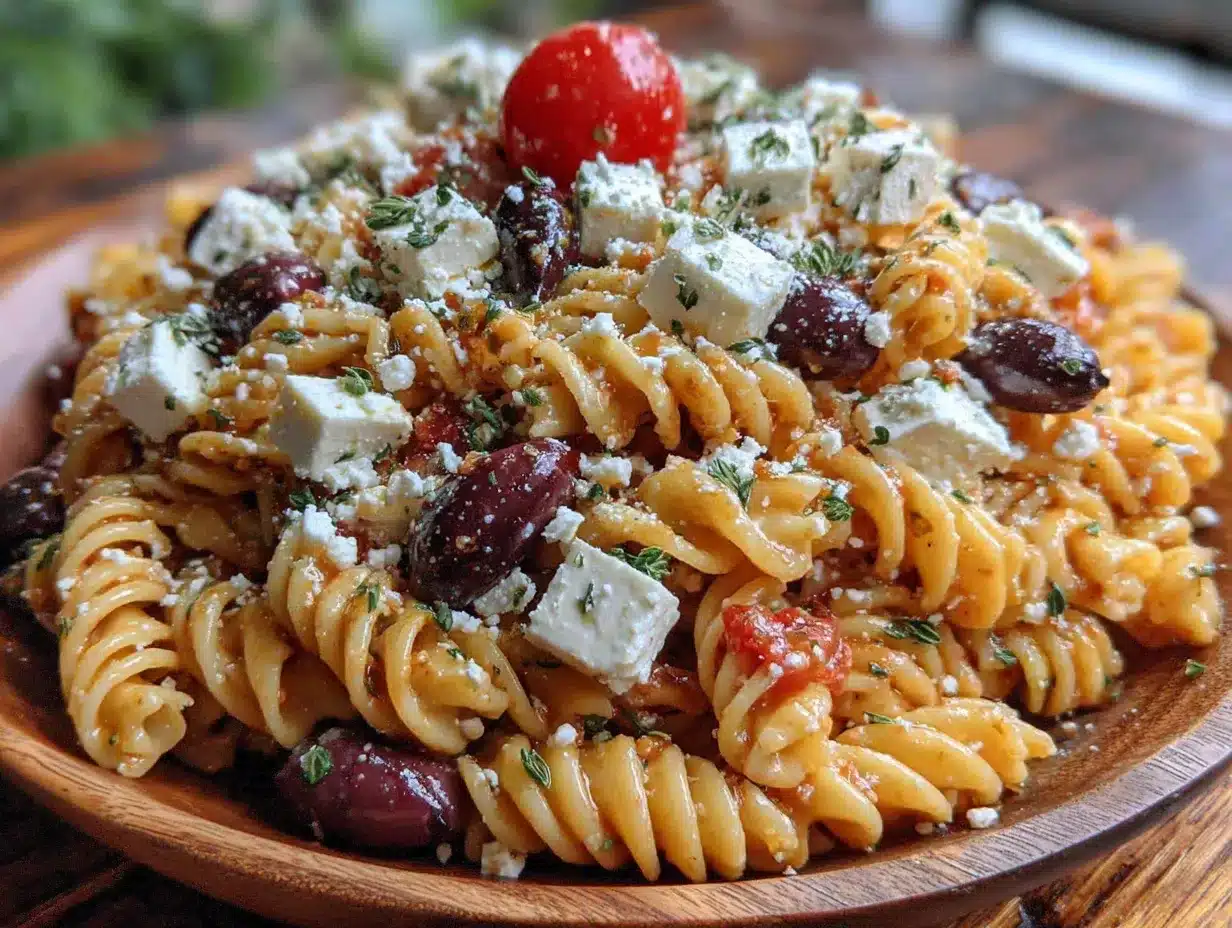
- Pasta (1 pound / 450g): I recommend a short, sturdy shape like rotini, fusilli, or farfalle. The nooks and crannies catch the dressing and bits of feta perfectly. Avoid long, delicate pasta like spaghetti—it doesn’t hold up well in a salad. (I personally prefer De Cecco or Barilla for their texture.)
- Cherry Tomatoes (2 cups / 300g), halved: Use ripe, sweet cherry tomatoes for the best flavor. In summer, I swap in heirloom cherry tomatoes from the farmers’ market for extra color and sweetness.
- English Cucumber (1 large), diced: English cucumbers have thin skins and fewer seeds, so they stay crunchy without getting watery. If using regular cucumbers, peel them first and scoop out the seeds.
- Kalamata Olives (1 cup / 150g), halved: These add that briny, tangy punch that defines Mediterranean flavor. I use pitted kalamatas for convenience. You can also use Castelvetrano olives for a milder, buttery taste.
- Feta Cheese (8 ounces / 225g), crumbled: Use a good-quality block feta packed in brine, not the pre-crumbled stuff. The texture is creamier and the flavor is more pronounced. (I recommend Mt. Vikos or Valbreso for best results.)
- Red Onion (1 small), thinly sliced: Soak the slices in cold water for 10 minutes to mellow the sharpness if you’re sensitive to raw onion.
- Roasted Red Peppers (1 cup / 150g), chopped: You can use jarred roasted red peppers for convenience—just drain and pat them dry. They add sweetness and a smoky depth.
- Fresh Parsley (1/2 cup / 15g), chopped: Flat-leaf parsley is preferred for its robust flavor. Don’t skip it—it brightens the whole dish.
- Fresh Basil (1/4 cup / 10g), chiffonade: Adds a fragrant, peppery note that complements the lemon dressing beautifully.
For the Lemon Vinaigrette
- Extra Virgin Olive Oil (1/2 cup / 120ml): Use a good-quality olive oil—it’s the backbone of the dressing. (I like California Olive Ranch for everyday cooking.)
- Fresh Lemon Juice (1/4 cup / 60ml): About 2 lemons. Roll them on the counter before juicing to get the most juice. Never use bottled lemon juice—the flavor is flat and metallic.
- Dijon Mustard (1 tablespoon): Helps emulsify the dressing and adds a subtle tang. Grey Poupon is my go-to.
- Honey (1 teaspoon): Balances the acidity of the lemon and mustard. You can substitute maple syrup for a vegan version.
- Garlic (2 cloves), minced: Fresh garlic is non-negotiable here. It adds a pungent kick that wakes up the whole salad.
- Dried Oregano (1 teaspoon): A classic Mediterranean herb that ties all the flavors together.
- Salt and Black Pepper (to taste): I use kosher salt and freshly cracked black pepper for the best flavor.
Substitution Guidance: For a gluten-free option, use your favorite gluten-free pasta—just be careful not to overcook it. For a dairy-free version, omit the feta or use a plant-based feta alternative. You can swap the kalamata olives with green olives or even capers for a different briny kick. If you don’t have fresh herbs, use 1 tablespoon each of dried parsley and basil, but fresh really does make a difference here.
Equipment Needed
You don’t need a fancy kitchen to pull this off. Here’s what I use and what I’ve learned along the way:
- Large Pot (6-8 quarts): For cooking the pasta. I use a heavy-bottomed stainless steel pot—it heats evenly and doesn’t scorch the pasta. If you don’t have one, any large stockpot will do.
- Colander: For draining the pasta. A fine-mesh colander is best, especially if you’re using small pasta shapes.
- Large Mixing Bowl: I prefer a wide, shallow bowl for tossing the salad—it makes mixing easier and prevents ingredients from spilling over. Glass or ceramic works well.
- Small Jar or Bowl: For making the vinaigrette. A mason jar with a tight-fitting lid is my favorite—just shake it up. If you don’t have one, a small bowl and a whisk work perfectly.
- Chef’s Knife and Cutting Board: For chopping vegetables and herbs. A sharp knife makes all the difference—dull knives crush herbs and bruise tomatoes.
- Measuring Cups and Spoons: For accuracy. I’ve learned the hard way that eyeballing the olive oil can lead to a greasy dressing.
- Wooden Spoon or Silicone Spatula: For tossing the salad. A wooden spoon is gentle on the pasta and won’t scratch your bowls.
Budget-Friendly Tips: You don’t need a fancy knife set—a single good chef’s knife under $30 will do the job. Skip the expensive salad spinner; just pat your herbs dry with paper towels. And if you don’t have a mason jar, any small container with a lid works for shaking the dressing.
Preparation Method
Here’s how to make this crowd-pleasing Mediterranean pasta salad step by step. I’ve added timing and sensory cues so you know exactly what to look for.
- Cook the Pasta (10-12 minutes): Bring a large pot of generously salted water to a rolling boil. Add the pasta and cook according to package directions until al dente—firm to the bite, not mushy. I usually start checking a minute before the recommended time. While the pasta cooks, prepare the dressing.
- Make the Lemon Vinaigrette (5 minutes): In a small jar or bowl, combine the olive oil, lemon juice, Dijon mustard, honey, minced garlic, dried oregano, and a pinch of salt and pepper. If using a jar, screw the lid on tight and shake vigorously for about 30 seconds until the dressing is emulsified and creamy-looking. If using a bowl, whisk continuously while drizzling in the olive oil. Taste and adjust seasoning—it should be bright and tangy with a hint of sweetness. Set aside.
- Drain and Cool the Pasta (5 minutes): Once the pasta is al dente, drain it in a colander and rinse briefly with cool water to stop the cooking process. Shake the colander well to remove excess water. I like to spread the pasta on a baking sheet in a single layer to cool faster—this prevents it from clumping together. Let it cool for about 5 minutes while you prep the vegetables.
- Prep the Vegetables (10 minutes): While the pasta cools, halve the cherry tomatoes, dice the cucumber, halve the olives, thinly slice the red onion, and chop the roasted red peppers. If you’re sensitive to raw onion, soak the slices in cold water for 10 minutes while the pasta cools—it mellows the bite significantly. Chiffonade the basil by stacking the leaves, rolling them tightly, and slicing into thin ribbons. Chop the parsley.
- Combine Everything (5 minutes): In a large mixing bowl, combine the cooled pasta, cherry tomatoes, cucumber, olives, red onion, roasted red peppers, parsley, and basil. Pour the lemon vinaigrette over the top and toss gently with a wooden spoon or silicone spatula until everything is evenly coated. The pasta should look glossy, not drenched—add more dressing if needed.
- Add the Feta (2 minutes): Gently fold in the crumbled feta cheese. Be careful not to overmix, or the feta will break down into tiny pieces. You want distinct, creamy chunks throughout the salad. Taste and adjust salt and pepper—remember that feta and olives are already salty, so go easy on the salt.
- Let It Rest (30 minutes to 2 hours): This is the most important step. Cover the bowl and refrigerate for at least 30 minutes before serving. The flavors meld and deepen as the pasta absorbs the dressing. I’ve found that 2 hours is the sweet spot—the salad is perfectly chilled and the flavors are fully developed. If you’re in a rush, 15 minutes will do, but it won’t be as good.
Troubleshooting Tip: If the salad seems dry after chilling, don’t panic. The pasta absorbs the dressing over time. Just add a splash of olive oil and a squeeze of fresh lemon juice, toss again, and it will bounce right back. I learned this the hard way after bringing a dry salad to a potluck—now I always reserve a little extra dressing for just this purpose.
Cooking Tips & Techniques
After making this salad more times than I can count, I’ve picked up a few tricks that make a real difference. Here are the ones I swear by:
- Salt the pasta water generously: Pasta water should taste like the sea. This is your only chance to season the pasta from the inside out. I use about 1 tablespoon of kosher salt per 4 quarts of water. Don’t skip this—it’s the foundation of flavor.
- Don’t overcook the pasta: Mushy pasta is the enemy of a good pasta salad. Cook it al dente, then rinse with cool water to stop the cooking immediately. The pasta will continue to absorb dressing as it sits, so starting with firm pasta ensures it stays toothsome even after a few hours.
- Dress the pasta while it’s still warm: Warm pasta absorbs dressing better than cold pasta. I toss the cooked, cooled pasta with about half the dressing while it’s still slightly warm, then add the vegetables and remaining dressing after it’s fully cooled. This two-step method ensures every piece of pasta is flavorful without being soggy.
- Let the salad rest: I cannot stress this enough. The salad needs at least 30 minutes in the fridge for the flavors to meld. The feta softens slightly, the olives release their brine, and the dressing seeps into every crevice. It’s a completely different (and better) dish after resting.
- Reserve extra dressing: Pasta salad is notorious for drying out in the fridge. I always make a double batch of the vinaigrette and keep half aside. Before serving, I toss the salad with a few tablespoons of the reserved dressing to revive it. This trick has saved me more times than I can count.
Common Mistake to Avoid: Adding the feta too early. I once added the feta right after making the salad, and by the next day, it had dissolved into a grainy mess. Now I always add the feta just before serving, or at least within an hour of serving. The texture stays creamy and distinct.
Variations & Adaptations
This salad is endlessly adaptable. Here are some of my favorite variations, all tested and approved:
- Add Protein: Grilled chicken, shrimp, or chickpeas turn this into a complete meal. I often grill chicken breasts seasoned with oregano and lemon, slice them thin, and toss them in. For a vegetarian option, add a can of drained and rinsed chickpeas—they soak up the dressing beautifully.
- Swap the Cheese: If you’re not a feta fan (though I can’t imagine why), try crumbled goat cheese or fresh mozzarella pearls. Goat cheese adds a tangy creaminess, while mozzarella pearls give a mild, milky contrast to the briny olives.
- Seasonal Twist: In summer, I add grilled zucchini and yellow squash, diced small. In fall, roasted butternut squash cubes and a sprinkle of pomegranate seeds work beautifully. In winter, I use roasted red peppers and artichoke hearts for a heartier version.
- Herb Swap: If you don’t have basil and parsley, try fresh mint and dill. Mint adds a bright, unexpected freshness that pairs surprisingly well with the feta and olives. Dill gives it a more Greek-inspired flavor profile.
- Spice It Up: Add a pinch of red pepper flakes to the dressing for a subtle kick. Or toss in some chopped pepperoncini for heat and tang. My husband loves this version—he says it wakes up the whole dish.
Personal Variation: My favorite twist is adding a handful of toasted pine nuts and a drizzle of balsamic glaze just before serving. The nuts add crunch, and the balsamic glaze adds a sweet-tart finish that makes the salad feel extra special. I first tried this for a holiday potluck, and it was the first bowl to empty.
Serving & Storage Suggestions
This salad is designed for gatherings, so here’s how to serve and store it like a pro:
- Serving Temperature: Serve cold or at room temperature. I prefer it chilled—the flavors are more pronounced and the texture is crisper. If you’re serving it at a potluck, let it sit out for about 15 minutes before serving to take the chill off.
- Presentation Tips: Transfer the salad to a wide, shallow serving bowl. Garnish with extra crumbled feta, a sprinkle of fresh parsley, and a few whole kalamata olives on top. A drizzle of olive oil and a crack of black pepper right before serving makes it look restaurant-quality.
- What to Serve Alongside: This salad pairs beautifully with grilled meats like lamb chops, chicken souvlaki, or grilled fish. For a vegetarian spread, serve it alongside hummus, pita bread, and a Greek salad. It’s also perfect as a side for burgers and hot dogs at a backyard barbecue.
- Storage Instructions: Store leftovers in an airtight container in the refrigerator for up to 4 days. The flavors will continue to develop, but the vegetables will soften slightly. If the salad seems dry after a day or two, add a splash of olive oil and a squeeze of lemon juice before serving.
- Freezing: I don’t recommend freezing this salad. The texture of the vegetables and feta will suffer significantly. If you have a large batch, it’s better to share it with friends or enjoy it throughout the week.
- Reheating: This salad is meant to be served cold, so no reheating needed. If you prefer it at room temperature, let it sit out for 20-30 minutes before serving.
Flavor Development Note: The salad actually gets better after a day in the fridge. The pasta absorbs the dressing, the flavors meld, and the feta softens into a creamy coating. I often make this a day ahead for potlucks—it’s one less thing to worry about on the day of the event.
Nutritional Information & Benefits
This Mediterranean pasta salad is not just delicious—it’s also packed with nutrients. Here’s a rough estimate per serving (based on 8 servings):
- Calories: ~350-400
- Protein: 10-12g
- Fat: 18-22g (mostly from olive oil and feta)
- Carbohydrates: 40-45g
- Fiber: 4-5g
- Sodium: 600-700mg (varies based on feta and olives)
Health Benefits: The olive oil is rich in heart-healthy monounsaturated fats and antioxidants. Feta cheese provides calcium and protein, while the vegetables offer vitamins A, C, and K. The olives are a good source of iron and vitamin E. Plus, the fresh herbs add anti-inflammatory compounds. This salad is a great way to get a serving of vegetables in a satisfying, crowd-pleasing package.
Dietary Considerations: This recipe is vegetarian and can be made gluten-free by using gluten-free pasta. It’s naturally low in added sugar (just a teaspoon of honey in the dressing). For a lower-sodium version, use low-sodium feta and rinse the olives before adding them. For a vegan version, omit the feta or use a plant-based alternative.
Potential Allergens: Contains dairy (feta) and gluten (pasta). The olives may be processed in facilities that handle other allergens, so check labels if you have concerns.
Conclusion
This Mediterranean pasta salad has become my go-to for every gathering, from casual weeknight dinners to holiday potlucks. It’s the dish that changed Leo’s mind about pasta salad, and it’s changed a lot of other minds too. The combination of al dente pasta, creamy feta, briny olives, and bright lemon vinaigrette is simply unbeatable. It’s easy enough for a beginner, impressive enough for a party, and forgiving enough for last-minute prep.
I encourage you to make this recipe your own. Add your favorite vegetables, swap the cheese, or spice it up to your liking. The beauty of this salad is that it’s a canvas for whatever you have on hand. And don’t forget to let it rest—that’s the secret to the best flavor.
I’d love to hear how it turns out for you. Leave a comment below and let me know if you tried any variations. Did you add chicken? Swap the feta for goat cheese? Make it spicy? Share your experience—I read every comment and I’m always looking for new ideas. Happy cooking, and here’s to changing a few minds about pasta salad!
Frequently Asked Questions
Can I make this Mediterranean pasta salad ahead of time?
Absolutely! In fact, I recommend it. Make the salad up to 24 hours in advance, but hold back the feta and a little dressing until just before serving. The flavors meld beautifully overnight, and the pasta absorbs the dressing for a more cohesive dish. Just give it a good toss and add the feta right before you serve it.
How do I keep the pasta from getting mushy?
The key is to cook the pasta al dente—firm to the bite—and rinse it with cool water immediately after draining. This stops the cooking process and washes away excess starch that can make the salad gummy. Also, dress the pasta while it’s still slightly warm, as it absorbs the dressing better without getting soggy.
Can I use a different type of pasta?
Yes, any short, sturdy pasta shape works well. I’ve used rotini, fusilli, farfalle, penne, and even orecchiette. Avoid long, thin pasta like spaghetti or angel hair—it doesn’t hold up well in a salad and tends to clump together. Gluten-free pasta works fine, just be careful not to overcook it.
What if I don’t like olives or feta?
No problem! You can omit the olives altogether or swap them for capers or chopped artichoke hearts for a similar briny flavor. For the feta, try crumbled goat cheese, fresh mozzarella pearls, or even cubed avocado for a creamy texture. The dressing is versatile enough to work with many different flavor profiles.
How long does this pasta salad last in the fridge?
Stored in an airtight container, this salad will keep for up to 4 days in the refrigerator. The flavors actually improve over the first 24-48 hours. After that, the vegetables will start to soften, but it’s still perfectly edible. If it seems dry, just add a splash of olive oil and a squeeze of lemon juice before serving.
Pin This Recipe!
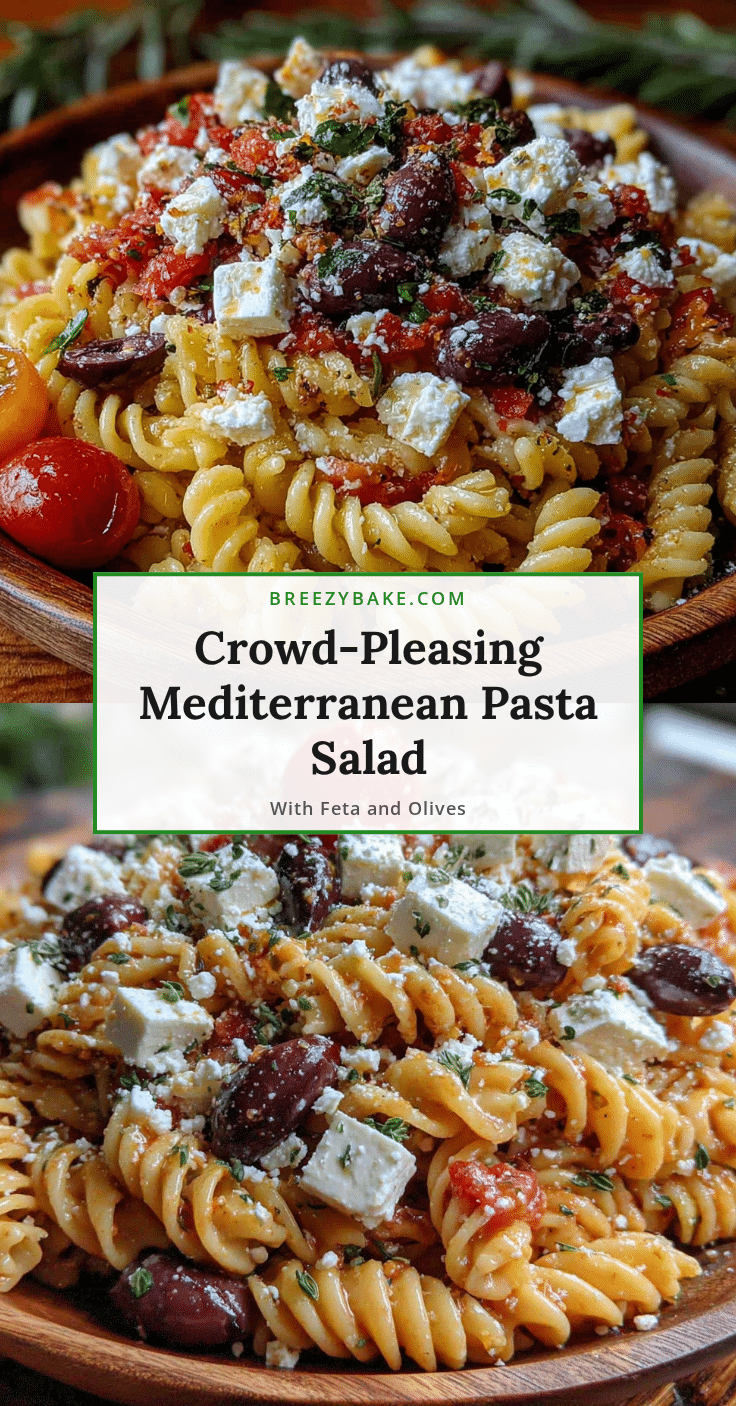
Easy Mediterranean Pasta Salad: Best with Feta & Olives
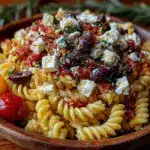
A bright, garlicky lemon vinaigrette coats al dente pasta, salty feta, briny kalamata olives, and fresh vegetables in this crowd-pleasing salad that changes minds about pasta salad. Perfect for potlucks, picnics, and weeknight dinners.
- Prep Time: 15 minutes
- Cook Time: 12 minutes
- Total Time: 27 minutes (plus resting time)
- Yield: 8 servings 1x
- Category: Side Dish
- Cuisine: Mediterranean
Ingredients
- 1 pound (450g) short pasta (rotini, fusilli, or farfalle)
- 2 cups (300g) cherry tomatoes, halved
- 1 large English cucumber, diced
- 1 cup (150g) kalamata olives, halved
- 8 ounces (225g) feta cheese, crumbled
- 1 small red onion, thinly sliced
- 1 cup (150g) roasted red peppers, chopped
- 1/2 cup (15g) fresh flat-leaf parsley, chopped
- 1/4 cup (10g) fresh basil, chiffonade
- 1/2 cup (120ml) extra virgin olive oil
- 1/4 cup (60ml) fresh lemon juice (about 2 lemons)
- 1 tablespoon Dijon mustard
- 1 teaspoon honey
- 2 cloves garlic, minced
- 1 teaspoon dried oregano
- Salt and black pepper to taste
Instructions
- Cook the pasta: Bring a large pot of generously salted water to a rolling boil. Add the pasta and cook according to package directions until al dente. Drain and rinse briefly with cool water to stop the cooking. Spread on a baking sheet to cool for about 5 minutes.
- Make the lemon vinaigrette: In a small jar or bowl, combine olive oil, lemon juice, Dijon mustard, honey, minced garlic, dried oregano, and a pinch of salt and pepper. Shake or whisk until emulsified and creamy. Set aside.
- Prep the vegetables: Halve the cherry tomatoes, dice the cucumber, halve the olives, thinly slice the red onion, and chop the roasted red peppers. If desired, soak the onion slices in cold water for 10 minutes to mellow the bite. Chiffonade the basil and chop the parsley.
- Combine the salad: In a large mixing bowl, combine the cooled pasta, cherry tomatoes, cucumber, olives, red onion, roasted red peppers, parsley, and basil. Pour the lemon vinaigrette over the top and toss gently until evenly coated.
- Add the feta: Gently fold in the crumbled feta cheese. Be careful not to overmix. Taste and adjust salt and pepper as needed.
- Let it rest: Cover the bowl and refrigerate for at least 30 minutes (up to 2 hours) before serving. The flavors meld and deepen as the pasta absorbs the dressing.
- Serve: Transfer to a serving bowl, garnish with extra feta, parsley, and a few whole olives if desired. Serve cold or at room temperature.
Notes
For best flavor, let the salad rest in the fridge for at least 30 minutes. If the salad seems dry after chilling, add a splash of olive oil and a squeeze of lemon juice. Reserve extra dressing to revive leftovers. Add feta just before serving to keep it creamy.
Nutrition
- Serving Size: 1 serving (about 1.5
- Calories: 375
- Sugar: 6
- Sodium: 650
- Fat: 20
- Saturated Fat: 6
- Carbohydrates: 42
- Fiber: 4
- Protein: 11
Keywords: Mediterranean pasta salad, feta, olives, lemon vinaigrette, potluck, easy, vegetarian