There used to be a tiny French bistro tucked between a dry cleaner and a hardware store on the corner of Elm and 4th that made a roasted butternut squash soup I still dream about. When they closed unexpectedly two winters ago—a hand-painted “Merci” sign taped to the door—I honestly felt a little lost. That soup was my go-to comfort on cold, dark weeknights when cooking felt like the last thing I wanted to do. After 12 tries—some burnt, some bland, one that somehow tasted like cinnamon-scented sadness—I finally cracked the code.
The secret? Roasting the squash until the edges caramelize into little flavor bombs, then serving it all in a mini pumpkin bowl that you can actually eat. I mean, let me tell you, the first time I pulled those little pumpkins out of the oven, I stood there grinning like an idiot. The kitchen smelled like autumn had moved in permanently.
Maybe you’ve been there—craving something warm and cozy but absolutely not wanting to spend hours in the kitchen after a long day. This soup is the answer. It’s throw-it-together easy, looks ridiculously impressive, and tastes like you fussed for hours. The best part? You can have it on the table in about 45 minutes, and the only thing you’ll really dirty is a sheet pan and a blender. Honestly, this is the kind of recipe that makes you look like a weeknight hero without actually trying that hard.
Why You’ll Love This Recipe
Let me be real with you—I’ve tested this recipe more times than I care to admit, and every single time, it gets better. After burning my first batch (and my pride), I learned exactly what makes this work. Here’s why this version is the one you’ll come back to:
- Quick & Easy: From fridge to table in about 45 minutes, most of which is hands-off roasting time. Perfect for those “I need dinner now” weeknights.
- Simple Ingredients: No fancy grocery store runs needed. Butternut squash, onions, garlic, broth, and a few pantry staples—that’s it.
- Perfect for Fall Weeknights: When the weather turns chilly and you want something warm and comforting without spending your whole evening in the kitchen.
- Crowd-Pleaser: I’ve served this at dinner parties and to my picky 8-year-old nephew, and both gave it two thumbs up. The mini pumpkin bowls seal the deal.
- Unbelievably Delicious: The roasted flavor is deep and nutty, the texture is velvety smooth, and that tiny bit of pumpkin flesh you scrape from the bowl adds an earthy sweetness you just can’t get any other way.
What makes this recipe different from every other squash soup out there? It’s the roasting technique—getting that squash dark and caramelized before blending—and serving it in edible bowls that make the whole experience feel special. This isn’t just another soup recipe. It’s the one that makes you close your eyes after that first spoonful and forget about your stressful day for a minute.
What Ingredients You Will Need
This recipe uses simple, wholesome ingredients that come together to create something truly special. Most of these are probably already in your kitchen, which is exactly what you want on a busy weeknight.
For the Soup
- 1 medium butternut squash (about 2-2.5 pounds), peeled, seeded, and cubed into 1-inch pieces
- 1 medium yellow onion, roughly chopped
- 3 cloves garlic, peeled (leave them whole—they’ll roast beautifully)
- 2 tablespoons olive oil (I prefer a good extra virgin for roasting)
- 1 teaspoon salt (plus more to taste)
- ½ teaspoon black pepper
- ½ teaspoon dried thyme (or 1 teaspoon fresh thyme leaves)
- ¼ teaspoon ground nutmeg (freshly grated if you have it—it makes a difference)
- 3 cups vegetable broth (or chicken broth if you’re not keeping it vegetarian)
- ½ cup full-fat coconut milk (or heavy cream for a richer soup)
For the Mini Pumpkin Bowls
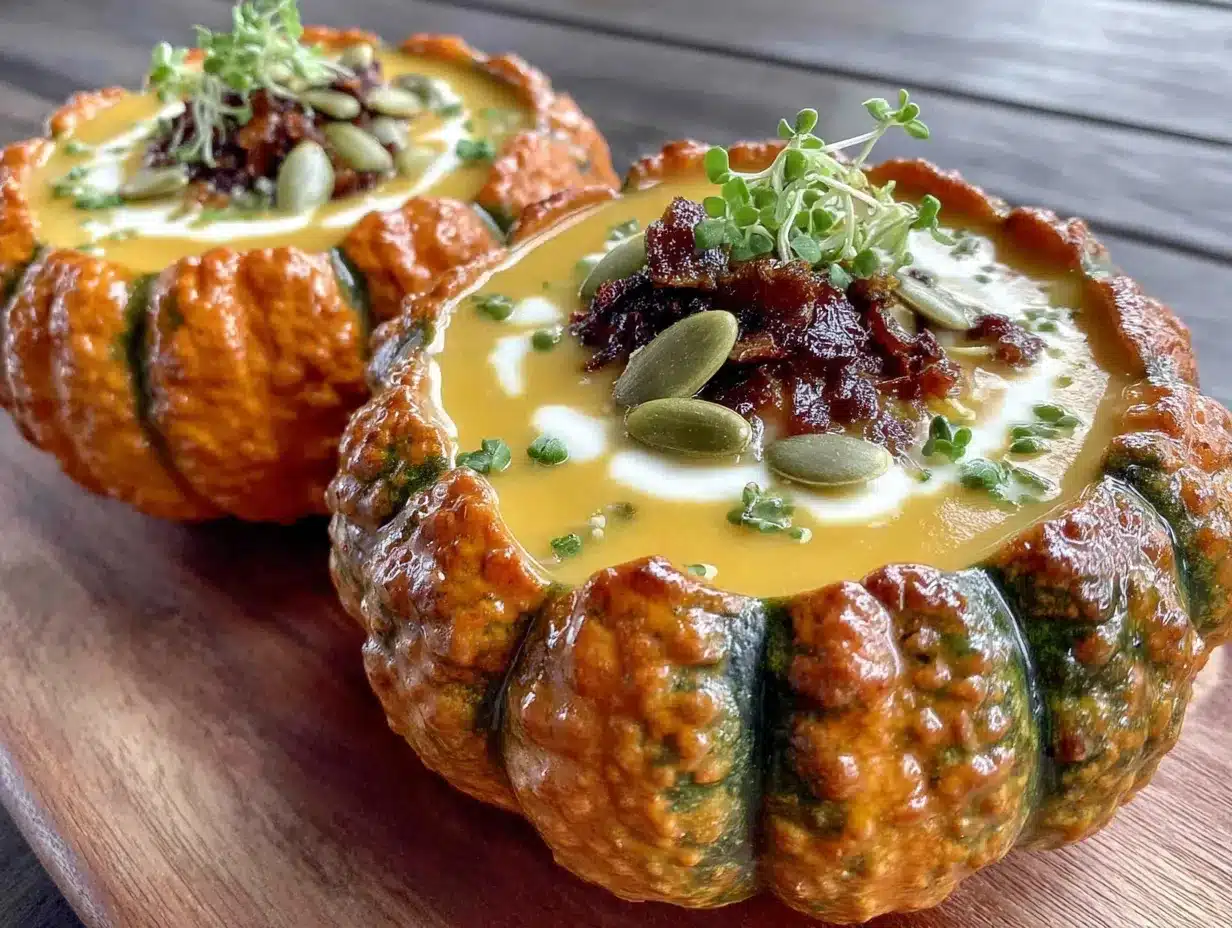
- 4-6 mini pumpkins (sugar pumpkins or pie pumpkins work best—they’re sweeter and more tender)
- 1 tablespoon olive oil
- Salt and pepper for seasoning
Optional Toppings
- Toasted pumpkin seeds (pepitas)
- A drizzle of coconut milk or cream
- Fresh thyme or sage leaves
- A sprinkle of red pepper flakes for a little heat
When picking your butternut squash, look for one that feels heavy for its size and has a matte, not shiny, skin. That means it’s ripe and sweet. For the mini pumpkins, skip the big carving pumpkins—they’re watery and bland. Sugar pumpkins are where it’s at. I usually grab mine at the farmers’ market or the grocery store in the fall section.
If you’re dairy-free, the coconut milk works beautifully here. Honestly, I actually prefer it—it adds a subtle richness that complements the squash without overpowering it. For a lighter version, you can use regular milk or even skip the cream altogether and just use extra broth. The soup will still be delicious, just a little less indulgent.
Equipment Needed
You don’t need a fancy kitchen to pull this off. Here’s what you’ll actually use:
- Large baking sheet (half-sheet pan size is perfect—gives everything room to roast instead of steam)
- Sharp chef’s knife (peeling and cubing butternut squash requires a good one—I learned this the hard way)
- Vegetable peeler
- Large pot or Dutch oven (for blending everything together)
- Immersion blender (my absolute favorite tool—less cleanup than a regular blender, and no risk of hot soup exploding)
- Small paring knife (for carving the mini pumpkins)
- Mixing spoon
- Measuring cups and spoons
If you don’t have an immersion blender, no worries—a regular blender works fine. Just let the soup cool slightly before blending, and only fill the blender halfway at a time. Trust me, hot soup explosions are not fun to clean up. I speak from experience.
For the mini pumpkin bowls, you don’t need any special tools. A sturdy paring knife and a spoon are all it takes. If you’re feeling fancy, you can use a small cookie scoop to clean out the seeds, but a regular spoon works perfectly well.
Preparation Method
Alright, let’s get cooking. This comes together faster than you’d think, and most of the time is just letting the oven do the work.
- Preheat your oven to 400°F (200°C). Get that heat going while you prep everything. Line your baking sheet with parchment paper for easier cleanup—you’ll thank me later.
- Prep the butternut squash. Peel the squash with a vegetable peeler, cut it in half lengthwise, and scoop out the seeds with a spoon. Cut it into 1-inch cubes. Don’t stress about making them perfect—just try to keep them roughly the same size so they roast evenly. This should take about 5-7 minutes.
- Roast the vegetables. Toss the cubed squash, chopped onion, and whole garlic cloves with 2 tablespoons olive oil, salt, pepper, and dried thyme. Spread everything in a single layer on your baking sheet. Roast for 25-30 minutes, flipping halfway through, until the squash is tender and the edges are starting to caramelize and turn golden brown. Your kitchen will smell amazing at this point.
- While the vegetables roast, prep the mini pumpkins. Cut the tops off each mini pumpkin (about ½ inch from the stem). Use a spoon to scoop out all the seeds and stringy pulp from the inside. Brush the inside and outside of each pumpkin with olive oil, and sprinkle lightly with salt and pepper. Place them on a separate baking sheet, cut side up.
- Bake the pumpkins. When the squash has about 10 minutes left, pop the pumpkins into the oven. They only need about 15-20 minutes—you want them tender but still holding their shape. They should be easy to pierce with a fork but not collapsing. Set them aside to cool slightly while you finish the soup.
- Blend the soup. Transfer the roasted vegetables to a large pot or Dutch oven. Add the vegetable broth and bring to a simmer over medium heat. Let it bubble gently for about 5 minutes so all the flavors meld together. Remove from heat.
- Blend until smooth. Using an immersion blender, blend the soup directly in the pot until it’s silky smooth. If using a regular blender, work in batches and hold the lid down with a kitchen towel—hot liquids expand, and you don’t want a mess. The soup should be thick and velvety at this point.
- Finish the soup. Stir in the coconut milk (or cream) and ground nutmeg. Taste and adjust seasoning—you might want a pinch more salt or a crack of black pepper. If the soup is too thick, add a little more broth or water until it reaches your desired consistency.
- Assemble and serve. Ladle the hot soup into the roasted mini pumpkins. Top with toasted pumpkin seeds, a drizzle of coconut milk, and a few fresh thyme leaves if you have them. Serve immediately, and don’t forget to eat the pumpkin bowl when you’re done—it’s the best part.
One thing I learned the hard way: don’t skip roasting the garlic whole. It gets sweet and mellow in the oven, and it blends right into the soup without that sharp raw garlic bite. Also, if your soup tastes a little flat at the end, a tiny squeeze of lemon juice or a splash of apple cider vinegar can brighten everything right up.
Cooking Tips & Techniques
After making this soup more times than I can count, I’ve picked up a few tricks that make a real difference. Here’s what I wish someone had told me from the start:
Don’t overcrowd the baking sheet. I know it’s tempting to cram everything onto one pan to save cleanup, but if the squash pieces are touching or overlapping, they’ll steam instead of roast. You want caramelization, not soggy squash. Use two pans if you need to—it’s worth the extra dish.
Cut the squash evenly. I’m not saying you need a ruler, but try to keep your cubes around the same size. Little pieces will burn before big pieces are done, and nobody wants bitter, burnt bits in their soup. Aim for 1-inch cubes and you’ll be fine.
Toast your pumpkin seeds. If you’re using the seeds from the mini pumpkins, rinse them, pat them dry, toss them with a little oil and salt, and toast them in the oven for 5-7 minutes at 350°F. They make the perfect crunchy topping and reduce food waste. Win-win.
Season in layers. I season the vegetables before roasting, then again after blending. It makes a big difference. Under-seasoned soup is the most common mistake I see. Don’t be shy with the salt—it brings out all the natural sweetness of the squash.
Make it ahead. This soup actually gets better after a day in the fridge. The flavors meld and deepen, and it’s even more delicious the next day. Make it on Sunday, and you’ve got an easy dinner waiting for you on Monday. Just reheat gently on the stove or in the microwave.
One of my biggest failures? I once forgot to add the coconut milk and wondered why the soup tasted thin and sad. Don’t skip it—that little bit of fat is what makes the texture velvety and luxurious. It’s the secret weapon.
Variations & Adaptations
This recipe is super flexible, so feel free to make it your own. Here are some ways I’ve tweaked it depending on what I have on hand or who I’m feeding:
Vegan Version: This recipe is already vegan if you use coconut milk and vegetable broth. The coconut milk adds a lovely richness that works perfectly with the squash. If you’re not a fan of coconut, try oat milk or cashew cream instead.
Spicy Kick: Add a chopped jalapeño or a pinch of cayenne pepper to the roasting pan with the vegetables. The heat balances the sweetness of the squash beautifully. I did this on a whim one night and now it’s my go-to version.
Apple Squash Soup: Toss one peeled and chopped apple (Granny Smith or Honeycrisp work great) onto the baking sheet with the squash. It adds a subtle fruity sweetness that’s absolutely lovely. My neighbor brought me a bunch of apples from her tree, and this was born out of necessity. Now I make it every fall.
Curried Version: Add 1-2 teaspoons of curry powder to the roasting vegetables, and stir in a teaspoon of grated fresh ginger along with the coconut milk. It transforms the soup into something completely different but equally delicious. Perfect for when you’re craving something with a little more warmth.
Lower-Carb Option: Skip the mini pumpkin bowls (I know, I know—they’re the fun part) and serve the soup in regular bowls. You can also swap half the butternut squash for cauliflower to reduce the carbs. Roast the cauliflower the same way, and you honestly won’t notice the difference.
Whatever variation you try, the basic method stays the same. Roast everything, blend it up, and adjust the seasoning. It’s hard to go wrong.
Serving & Storage Suggestions
This soup is at its best served piping hot, straight from the pot into those adorable mini pumpkin bowls. But it’s also incredibly forgiving and stores beautifully.
Serving Temperature: Serve the soup hot, but not boiling. Let it cool for a minute or two after ladling it into the pumpkins. The pumpkins themselves will keep the soup warm for a good 15-20 minutes, which is perfect for a relaxed dinner.
What to Serve With It: A simple green salad with a tangy vinaigrette is the perfect side—the acidity cuts through the richness of the soup. Crusty bread or garlic bread is also amazing for dipping. I’ve also served this with grilled cheese sandwiches for the ultimate comfort food combo. For drinks, a dry white wine like Sauvignon Blanc or a crisp apple cider pairs beautifully.
Storing Leftovers: Store the soup separately from the pumpkin bowls (the bowls won’t keep well). Transfer the soup to an airtight container and refrigerate for up to 5 days. The flavor actually deepens overnight, so leftovers are a treat. You can also freeze the soup for up to 3 months—just thaw overnight in the fridge and reheat gently on the stove.
Reheating: Reheat the soup on the stovetop over medium-low heat, stirring occasionally. If it’s too thick after refrigeration, add a splash of broth or water to thin it out. You can also microwave individual portions in 30-second bursts, stirring in between. Just be careful not to overheat it—it can separate if it gets too hot too fast.
Flavor Development: I honestly think this soup tastes even better the next day. The roasted flavors have time to meld, and it somehow gets even more comforting. Don’t be surprised if you find yourself looking forward to leftovers.
Nutritional Information & Benefits
This soup is packed with good-for-you ingredients that make it as nourishing as it is delicious. Here’s a rough breakdown per serving (based on 4 servings, without toppings):
| Nutrient | Amount Per Serving |
|---|---|
| Calories | 210 |
| Total Fat | 9g |
| Saturated Fat | 4g |
| Carbohydrates | 32g |
| Fiber | 6g |
| Sugar | 8g |
| Protein | 4g |
| Vitamin A | 457% DV |
| Vitamin C | 35% DV |
| Potassium | 15% DV |
Butternut squash is a superstar when it comes to vitamin A—just one serving gives you over four times your daily needs. It’s also rich in fiber, which helps keep you full and satisfied. The coconut milk adds healthy fats that help your body absorb all those fat-soluble vitamins. And the garlic? It’s great for your immune system, especially during cold and flu season.
This soup is naturally gluten-free, dairy-free (if using coconut milk), and vegan. The only potential allergen is coconut, so if you’re serving someone with a coconut allergy, just swap in oat milk or heavy cream instead.
Conclusion
This roasted butternut squash soup in mini pumpkins is the kind of recipe that makes weeknight dinners feel special without actually requiring much effort. It’s warm, comforting, and honestly a little bit magical—especially when you eat the bowl at the end.
I love that this recipe brings a little bit of that bistro magic into my own kitchen, even on the busiest nights. It reminds me that you don’t need a restaurant or a lot of time to create something beautiful and delicious. Just a good oven, a few simple ingredients, and the willingness to try.
I’d love to hear how yours turns out! Did you try any variations? Did you eat the pumpkin bowl? Drop a comment below and let me know—I read every single one. And if you loved this recipe, please share it with a friend who needs a little weeknight comfort. Happy cooking, friends!
Frequently Asked Questions
Can I use frozen butternut squash instead of fresh?
Yes, you can! Frozen butternut squash works in a pinch, but you won’t get the same caramelized flavor from roasting since frozen squash releases a lot of water. If using frozen, I recommend roasting it a little longer (about 40 minutes) and spreading it in a single layer so it dries out and browns slightly.
Can I make this soup in a slow cooker or Instant Pot?
Absolutely. For a slow cooker, sauté the onions and garlic first, then add everything except the coconut milk and cook on low for 6-8 hours or high for 3-4 hours. Blend and stir in the coconut milk at the end. For an Instant Pot, sauté the onions and garlic, add the squash and broth, and cook on high pressure for 10 minutes. Quick release, blend, and finish with coconut milk.
Do I have to use mini pumpkins, or can I serve it in regular bowls?
You can absolutely serve this in regular bowls! The mini pumpkins are mostly for presentation and a little extra flavor (the roasted pumpkin flesh is delicious). If you’re short on time or don’t have mini pumpkins, just skip them—the soup is still wonderful on its own.
Can I freeze this soup?
Yes, this soup freezes beautifully. Let it cool completely, then transfer it to freezer-safe containers or zip-top bags. It will keep for up to 3 months. Thaw overnight in the refrigerator and reheat gently on the stovetop. Just leave out the coconut milk until you’re reheating it—it can separate during freezing.
How can I make this soup thicker or thinner?
To make it thicker, use less broth or let it simmer longer after blending to reduce it. You can also add a peeled and diced potato to the roasting pan—it will thicken the soup naturally when blended. To make it thinner, simply stir in more broth, water, or even a splash of milk until it reaches your desired consistency.
Pin This Recipe!
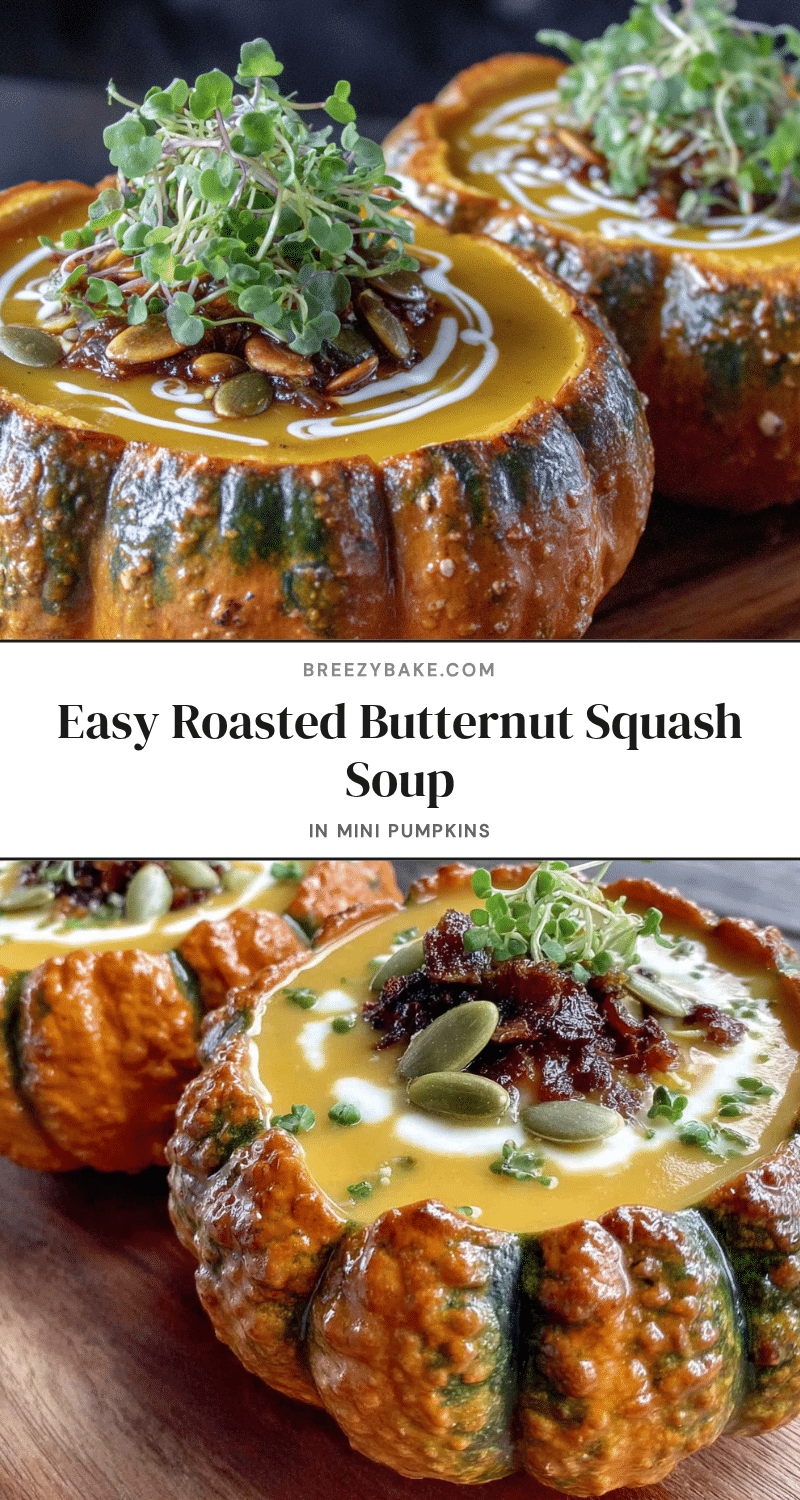
Easy Roasted Butternut Squash Soup in Mini Pumpkins

A velvety roasted butternut squash soup served in edible mini pumpkin bowls. This quick and easy recipe delivers deep, caramelized flavor with simple ingredients, perfect for cozy fall weeknights.
- Prep Time: 15 minutes
- Cook Time: 30 minutes
- Total Time: 45 minutes
- Yield: 4 servings 1x
- Category: Soup
- Cuisine: American
Ingredients
- 1 medium butternut squash (about 2–2.5 pounds), peeled, seeded, and cubed into 1-inch pieces
- 1 medium yellow onion, roughly chopped
- 3 cloves garlic, peeled
- 2 tablespoons olive oil
- 1 teaspoon salt
- ½ teaspoon black pepper
- ½ teaspoon dried thyme
- ¼ teaspoon ground nutmeg
- 3 cups vegetable broth
- ½ cup full-fat coconut milk
- 4–6 mini pumpkins (sugar pumpkins or pie pumpkins)
- 1 tablespoon olive oil (for pumpkins)
- Salt and pepper (for pumpkins)
- Toasted pumpkin seeds (optional topping)
- A drizzle of coconut milk or cream (optional topping)
- Fresh thyme or sage leaves (optional topping)
- A sprinkle of red pepper flakes (optional topping)
Instructions
- Preheat your oven to 400°F (200°C). Line a baking sheet with parchment paper.
- Prep the butternut squash: Peel with a vegetable peeler, cut in half lengthwise, scoop out seeds, and cut into 1-inch cubes.
- Toss cubed squash, chopped onion, and whole garlic cloves with 2 tablespoons olive oil, salt, pepper, and dried thyme. Spread in a single layer on the baking sheet.
- Roast for 25-30 minutes, flipping halfway through, until squash is tender and edges are caramelized.
- While vegetables roast, prep mini pumpkins: Cut tops off (about ½ inch from stem), scoop out seeds and pulp. Brush inside and outside with olive oil, sprinkle with salt and pepper. Place on a separate baking sheet, cut side up.
- When squash has about 10 minutes left, bake pumpkins for 15-20 minutes until tender but still holding shape.
- Transfer roasted vegetables to a large pot or Dutch oven. Add vegetable broth and bring to a simmer over medium heat. Let bubble gently for about 5 minutes.
- Remove from heat. Using an immersion blender, blend soup until smooth. (If using a regular blender, work in batches and hold lid down with a towel.)
- Stir in coconut milk and ground nutmeg. Taste and adjust seasoning. Add more broth if needed for desired consistency.
- Ladle hot soup into roasted mini pumpkins. Top with toasted pumpkin seeds, a drizzle of coconut milk, and fresh thyme leaves if desired. Serve immediately.
Notes
Don’t overcrowd the baking sheet to ensure caramelization. Roast garlic whole for a mellow, sweet flavor. Season in layers—before roasting and after blending. For a brighter flavor, add a squeeze of lemon juice or splash of apple cider vinegar. Soup tastes even better the next day. Store soup separately from pumpkin bowls; refrigerate up to 5 days or freeze up to 3 months.
Nutrition
- Serving Size: 1 serving (about 1.5
- Calories: 210
- Sugar: 8
- Sodium: 600
- Fat: 9
- Saturated Fat: 4
- Carbohydrates: 32
- Fiber: 6
- Protein: 4
Keywords: butternut squash soup, roasted squash soup, fall soup, pumpkin bowl, easy soup recipe, vegetarian soup, gluten-free soup, dairy-free soup