“Wait, this is it? That’s dinner?” My husband stood over the stove, peering at the single sheet pan I’d just pulled from the oven. He was expecting a sink full of pots, a counter covered in flour, maybe a few pans sizzling on the stove. Instead, there it was—one pan, perfectly roasted salmon fillets, and a little bowl of creamy lemon dill sauce. He looked at me like I’d pulled off some kind of kitchen magic trick.
And honestly? It kind of felt that way.
I used to think a proper dinner required at least three dirty dishes and a running oven timer. But this easy sheet pan salmon with lemon dill sauce changed everything. It’s the kind of meal that makes you feel like you have your life together, even on a Tuesday night when you’re running on four hours of sleep and a leftover granola bar. The salmon comes out flaky and tender, the veggies roast up with those caramelized edges, and that sauce—tangy, creamy, bright—ties it all together like a little edible hug.
What I love most about this recipe isn’t just how fast it comes together. It’s how it makes a weeknight feel a little special without any of the stress. You know those recipes you keep in your back pocket for when you need a win? This is that recipe. One pan, a few simple ingredients, and thirty minutes later, you’ve got a dinner that tastes like you actually tried.
Why You’ll Love This Recipe
I’ve tested this recipe more times than I can count—through different oven temperatures, varying thicknesses of salmon, and even a few sauce experiments that went sideways. What I landed on is the version I actually make for my family on repeat. Here’s why it works:
- Quick & Easy: From start to finish, this meal comes together in 30 minutes. That’s less time than it takes to decide what to order for takeout.
- Simple Ingredients: You probably already have most of these items in your fridge and pantry. No fancy trips to a specialty store required.
- Perfect for Busy Weeknights: Whether you’re juggling work, kids, or just a serious case of the “I don’t want to cook” blues, this recipe has your back.
- Crowd-Pleaser: Even people who claim they “don’t really like fish” have asked me for seconds. The lemon dill sauce does something magical here.
- Minimal Cleanup: One sheet pan. That’s it. No scrubbing, no soaking, no wondering why there’s a mysterious grease splatter on the ceiling.
What makes this recipe different from the dozens of other salmon recipes out there? It’s the balance. The salmon stays moist and flaky because we roast it at the right temperature with the right timing. The vegetables get crispy without burning. And that lemon dill sauce—it’s not an afterthought. It’s the star that brings everything together, made with simple ingredients you can whisk together while the salmon roasts.
This is the kind of meal that makes you close your eyes after the first bite. It’s comfort food reimagined—lighter, fresher, but with the same soul-soothing satisfaction. And it’s perfect for impressing guests without breaking a sweat, or turning a regular Tuesday into something memorable.
What Ingredients You Will Need
This recipe uses simple, wholesome ingredients to deliver bold flavor and satisfying texture without the fuss. Most of these are pantry staples or easy to find at any grocery store.
For the Salmon & Vegetables
- Salmon fillets (4 fillets, about 6 ounces each): Look for fillets that are similar in thickness so they cook evenly. I prefer wild-caught when it’s available, but farm-raised works beautifully too. Pat them dry with paper towels before seasoning for the best sear.
- Fresh asparagus (1 bunch, trimmed): Thicker spears hold up better to roasting. If asparagus isn’t in season, green beans or broccoli florets work great as substitutes.
- Cherry tomatoes (1 cup, halved): They burst in the oven and create little pockets of sweetness. Grape tomatoes work too.
- Olive oil (3 tablespoons, divided): Use a good quality extra virgin olive oil for the best flavor. It helps everything roast and crisp up.
- Garlic (4 cloves, minced): Fresh garlic is non-negotiable here. The pre-minced stuff in a jar just doesn’t deliver the same punch.
- Lemon (1 large, sliced into rounds): You’ll use some for roasting and the rest for the sauce. Always roll your lemon on the counter before juicing to get the most out of it.
- Dried dill (1 teaspoon): I use dried dill here because it’s more concentrated and holds up better during roasting. Fresh dill goes into the sauce.
- Salt and black pepper (to taste): Don’t be shy with the seasoning. Salmon can handle a generous hand.
- Paprika (½ teaspoon, optional): Adds a subtle smokiness and a beautiful color to the salmon.
For the Lemon Dill Sauce
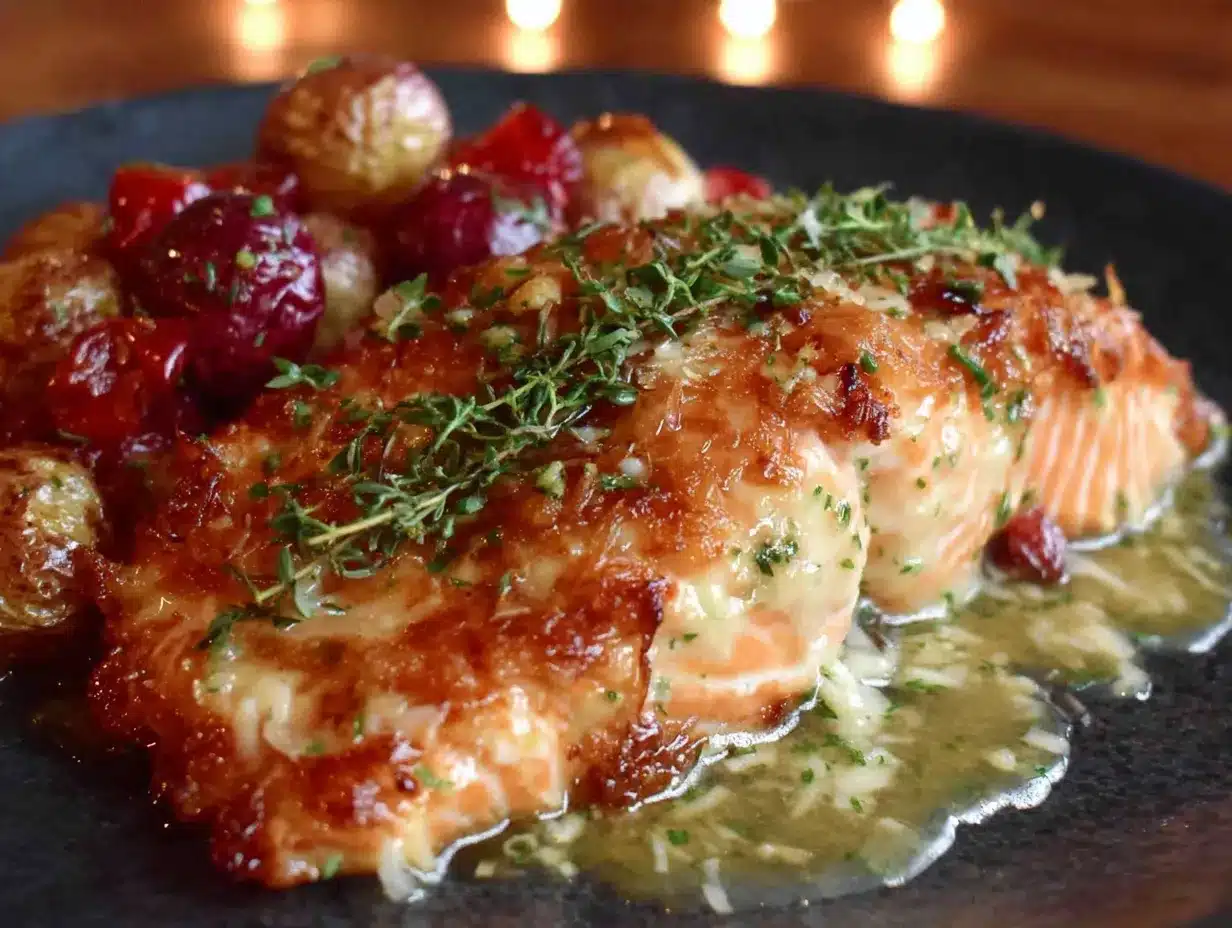
- Greek yogurt (½ cup, plain full-fat): Full-fat gives the creamiest texture, but 2% works too. Avoid non-fat—it can turn watery. I recommend Fage or Chobani for the best consistency.
- Fresh dill (2 tablespoons, chopped): This is where the fresh herb really shines. Don’t substitute dried here if you can help it.
- Lemon juice (2 tablespoons, fresh): Bottled lemon juice has a flat, almost metallic taste. Fresh makes a noticeable difference.
- Lemon zest (1 teaspoon): The zest adds brightness that juice alone can’t achieve. Make sure to zest before you juice the lemon.
- Garlic (1 small clove, minced): Adds a gentle kick without overpowering the fresh herbs.
- Salt (¼ teaspoon): Just enough to bring everything together.
- Honey (½ teaspoon, optional): Balances the tartness of the lemon. You can skip it or use maple syrup if you prefer.
Equipment Needed
You don’t need a professional kitchen to pull this off. Here’s what you’ll need:
- Sheet pan (rimmed, 13×18 inches): A rimmed baking sheet is essential to catch any juices and prevent spills. I use a Nordic Ware half-sheet pan—it’s sturdy, doesn’t warp, and has lasted me years.
- Parchment paper or aluminum foil: Lining the pan makes cleanup even easier. I prefer parchment for non-stick results.
- Chef’s knife and cutting board: For trimming asparagus and halving tomatoes.
- Small mixing bowl: For whisking together the lemon dill sauce.
- Whisk or fork: Either works for combining the sauce ingredients smoothly.
- Instant-read thermometer (optional but helpful): Salmon is perfectly cooked at 125°F to 130°F in the thickest part. This takes the guesswork out.
- Citrus juicer or reamer: Makes juicing lemons less messy. A fork works in a pinch.
If you don’t have a sheet pan, a large baking dish works too. Just keep an eye on cooking times, as heat distribution may vary slightly.
Preparation Method
Let’s get cooking! This recipe moves fast, so I recommend prepping all your ingredients before you turn on the oven.
- Preheat your oven to 400°F (200°C). Give it a full 15 minutes to come to temperature. A properly preheated oven makes all the difference for even roasting.
- Line your sheet pan with parchment paper or aluminum foil. This isn’t just about easy cleanup—it also prevents the salmon from sticking to the pan.
- Prep the vegetables: Trim the woody ends off the asparagus (about an inch from the bottom). Halve the cherry tomatoes. Slice the lemon into thin rounds. Place the asparagus and tomatoes on the sheet pan, drizzle with 2 tablespoons of olive oil, sprinkle with salt and pepper, and toss gently to coat. Spread them in a single layer, leaving space in the center for the salmon.
- Season the salmon: Pat the salmon fillets dry with paper towels. Place them skin-side down in the center of the sheet pan, nestled among the vegetables. Drizzle the remaining 1 tablespoon of olive oil over the fillets. Season with salt, pepper, dried dill, and paprika (if using). Rub the seasoning gently into the flesh. Top each fillet with a lemon slice and a sprinkle of minced garlic.
- Roast for 12-15 minutes: The cooking time depends on the thickness of your salmon. For fillets that are about 1 inch thick, start checking at 12 minutes. The salmon should be opaque and flake easily with a fork. The asparagus should be tender-crisp, and the tomatoes should be softened and starting to burst. If you’re using an instant-read thermometer, look for 125°F to 130°F in the thickest part.
- While the salmon roasts, make the sauce: In a small bowl, combine the Greek yogurt, fresh dill, lemon juice, lemon zest, minced garlic, salt, and honey (if using). Whisk until smooth and creamy. Taste and adjust—add more lemon for brightness, more dill for herbiness, or a pinch more salt if needed. Set aside in the refrigerator while the salmon finishes cooking.
- Rest for 2-3 minutes: Once the salmon is out of the oven, let it rest on the pan for a couple of minutes. This allows the juices to redistribute and keeps the fish moist.
- Serve immediately: Transfer the salmon and vegetables to plates or a serving platter. Drizzle generously with the lemon dill sauce, or serve it on the side for dipping. Garnish with extra fresh dill or lemon wedges if you’re feeling fancy.
Pro tip: If your asparagus is thin, add it to the pan about 5 minutes after the salmon starts roasting so it doesn’t overcook. For thicker spears, roast everything together from the start.
Cooking Tips & Techniques
I’ve made this recipe enough times to learn a few things the hard way. Here’s what I wish someone had told me:
Don’t overcrowd the pan. If your sheet pan is too crowded, the vegetables will steam instead of roast, and the salmon won’t get those beautiful caramelized edges. Use two pans if needed, or halve the recipe if your pan is on the smaller side.
Pat the salmon dry. This is one of those steps that seems unnecessary but makes a huge difference. Moisture on the surface of the fish creates steam, which prevents browning. Dry fillets = better texture and flavor.
Let the salmon come to room temperature. Take the fillets out of the fridge about 15 minutes before cooking. Cold salmon cooks unevenly—the outside can overcook while the center stays raw. A quick rest on the counter helps everything cook more evenly.
Watch the clock. Salmon can go from perfectly flaky to dry and sad in about two minutes. Start checking at the lower end of the cooking time range. Remember that the salmon will continue to cook slightly from residual heat after it comes out of the oven.
Make the sauce first. I learned this one the messy way. If you try to make the sauce while the salmon is roasting, you’ll be frantically chopping dill while the timer beeps. Make the sauce before you even start prepping the vegetables. It takes five minutes and keeps beautifully in the fridge.
Use a microplane for the lemon zest. A regular grater can leave bitter white pith in your sauce. A microplane gives you fine, fluffy zest without the bitterness. It’s a small tool that pays for itself in moments like this.
I once forgot to line my pan and spent twenty minutes scrubbing off baked-on salmon skin. Learn from my mistakes—always line the pan!
Variations & Adaptations
This recipe is wonderfully flexible. Here are some ways to make it your own:
Dietary Adaptations: For a dairy-free version, swap the Greek yogurt in the sauce with a thick coconut yogurt or a cashew cream. For a low-carb or keto option, this recipe is naturally friendly—just skip the honey in the sauce. If you’re avoiding gluten, everything here is already gluten-free, but double-check your spice blends for any hidden additives.
Seasonal Swaps: In the spring, asparagus and peas are perfect. In summer, swap in zucchini, bell peppers, and cherry tomatoes. Fall calls for roasted butternut squash cubes and Brussels sprouts. Winter? Try wedges of fennel and orange slices for a bright, unexpected twist.
Flavor Variations: Try a spicy harissa version by rubbing the salmon with harissa paste before roasting. Or go Mediterranean with oregano, olives, and a feta crumble on top. For an Asian-inspired twist, swap the dill for cilantro and the lemon for lime, and add a drizzle of sesame oil before serving.
Different Cooking Methods: If you don’t want to use the oven, this recipe works beautifully on the grill. Place the salmon and vegetables in a foil packet and grill over medium heat for about 12-15 minutes. You can also cook everything in an air fryer at 375°F for 10-12 minutes, working in batches if needed.
I once tried a version with smoked paprika and a pinch of cayenne—it turned out incredible. Sometimes the best variations come from raiding your spice cabinet and seeing what happens.
Serving & Storage Suggestions
This sheet pan salmon is best served fresh out of the oven, but here’s how to make the most of it:
Serving: Serve the salmon warm, directly from the sheet pan or transferred to a platter. The lemon dill sauce can be served at room temperature or chilled—both are delicious. I like to drizzle it over the salmon and vegetables right before serving, with extra sauce on the side for dipping. A sprinkle of fresh dill or a few extra lemon wedges makes it look restaurant-worthy.
What to serve with it: This dish is a complete meal on its own, but it pairs beautifully with a side of healthy ranch chicken grain bowls for a heartier dinner, or alongside healthy chicken veggie skillet wraps for a fresh, veggie-forward meal. For a lighter option, serve it over a bed of arugula or mixed greens with a simple vinaigrette. If you’re feeding a crowd, roasted potatoes or a crusty baguette round out the meal nicely.
Storage: Store leftover salmon and vegetables in an airtight container in the refrigerator for up to 3 days. Keep the sauce separate—it will stay fresh for up to 5 days. The flavors actually meld and deepen overnight, so leftovers are still delicious.
Reheating: The best way to reheat salmon is gently. Place it in a 300°F oven for about 5-7 minutes, just until warmed through. You can also reheat it in a skillet over medium-low heat with a splash of water or broth, covered, for about 3-4 minutes. Avoid the microwave—it tends to dry out the fish and make the vegetables rubbery.
Freezing: Cooked salmon can be frozen for up to 2 months. Wrap each fillet tightly in plastic wrap and then in foil, or place in a freezer-safe bag. Thaw overnight in the refrigerator and reheat gently. The sauce doesn’t freeze well, so make a fresh batch when you’re ready to serve.
Nutritional Information & Benefits
This recipe is as good for you as it is delicious. Here’s an approximate breakdown per serving (one fillet with vegetables and sauce):
- Calories: 420-450
- Protein: 38-42g
- Fat: 22-25g (mostly healthy omega-3s)
- Carbohydrates: 12-15g
- Fiber: 4-5g
- Sugar: 6-8g (natural from vegetables and honey)
Salmon is packed with omega-3 fatty acids, which support heart and brain health. It’s also an excellent source of high-quality protein, vitamin D, and B vitamins. Asparagus is rich in fiber, folate, and antioxidants, while tomatoes provide vitamin C and lycopene. The Greek yogurt in the sauce adds probiotics and calcium.
This meal is naturally gluten-free, low-carb friendly, and can easily be made dairy-free. It’s also a great option for anyone following a Mediterranean or heart-healthy eating plan.
Conclusion
This easy sheet pan salmon with lemon dill sauce is the kind of recipe that makes you wonder why you ever thought dinner had to be complicated. It’s fast enough for a busy weeknight, impressive enough for guests, and so delicious that you’ll find yourself making it on repeat. The salmon comes out perfectly flaky every time, the vegetables roast to tender perfection, and that creamy, tangy sauce ties everything together in the best way.
I love this recipe because it proves that eating well doesn’t have to mean spending hours in the kitchen. It’s proof that simple ingredients, treated with a little care, can create something truly special. Whether you’re cooking for yourself, your family, or a dinner party, this meal delivers every single time.
I’d love to hear how yours turns out! Did you try any variations? Swapped in different veggies? Made the sauce extra lemony? Drop a comment below and let me know. And if you loved this recipe, share it with a friend who needs a quick, healthy dinner idea. Happy cooking!
Frequently Asked Questions
Can I use frozen salmon for this recipe?
Yes, you can use frozen salmon, but it’s best to thaw it completely in the refrigerator overnight before cooking. If you cook it from frozen, the outside will overcook before the center is done. Pat it dry thoroughly after thawing to remove excess moisture.
What if I don’t have fresh dill for the sauce?
Fresh dill really makes the sauce shine, but in a pinch, you can use 1 teaspoon of dried dill instead. The flavor won’t be as bright, so you might want to add a little extra lemon zest to compensate. Alternatively, try fresh parsley or chives for a different but still delicious flavor.
How do I know when the salmon is done?
The easiest way is to use an instant-read thermometer—look for 125°F to 130°F in the thickest part. Without a thermometer, check that the salmon is opaque and flakes easily with a fork. The flesh should separate into clean flakes, not be mushy or still translucent in the center.
Can I make the lemon dill sauce ahead of time?
Absolutely! The sauce can be made up to 3 days in advance and stored in an airtight container in the refrigerator. Give it a good stir before serving, as it may separate slightly. The flavors actually meld and deepen overnight, so it might taste even better the next day.
What other vegetables can I use on the sheet pan?
Almost any vegetable works here. Try broccoli florets, bell pepper strips, zucchini rounds, red onion wedges, or green beans. Just cut them into similar-sized pieces so they cook evenly. If you’re using denser vegetables like carrots or potatoes, give them a 5-10 minute head start in the oven before adding the salmon.
Pin This Recipe!
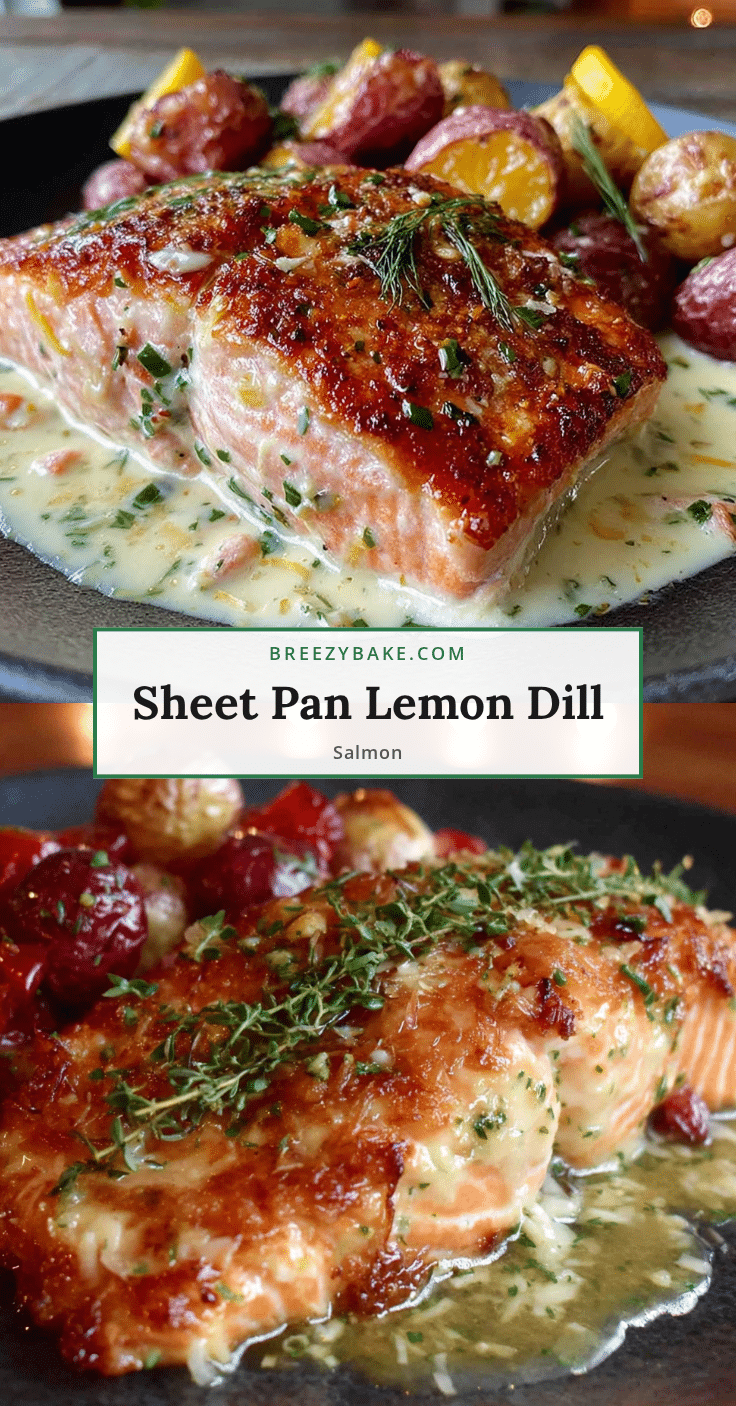
Easy Sheet Pan Salmon with Lemon Dill Sauce (Best 30-Min Meal)
A quick and easy sheet pan salmon recipe with roasted vegetables and a creamy lemon dill sauce, ready in 30 minutes. Perfect for busy weeknights with minimal cleanup.
- Prep Time: 15 minutes
- Cook Time: 15 minutes
- Total Time: 30 minutes
- Yield: 4 servings 1x
- Category: Main Course
- Cuisine: American
Ingredients
- 4 salmon fillets (about 6 ounces each)
- 1 bunch fresh asparagus, trimmed
- 1 cup cherry tomatoes, halved
- 3 tablespoons olive oil, divided
- 4 cloves garlic, minced
- 1 large lemon, sliced into rounds
- 1 teaspoon dried dill
- Salt and black pepper to taste
- ½ teaspoon paprika (optional)
- ½ cup plain full-fat Greek yogurt
- 2 tablespoons fresh dill, chopped
- 2 tablespoons fresh lemon juice
- 1 teaspoon lemon zest
- 1 small clove garlic, minced
- ¼ teaspoon salt
- ½ teaspoon honey (optional)
Instructions
- Preheat your oven to 400°F (200°C).
- Line your sheet pan with parchment paper or aluminum foil.
- Prep the vegetables: Trim the woody ends off the asparagus. Halve the cherry tomatoes. Slice the lemon into thin rounds. Place the asparagus and tomatoes on the sheet pan, drizzle with 2 tablespoons of olive oil, sprinkle with salt and pepper, and toss gently to coat. Spread them in a single layer, leaving space in the center for the salmon.
- Season the salmon: Pat the salmon fillets dry with paper towels. Place them skin-side down in the center of the sheet pan, nestled among the vegetables. Drizzle the remaining 1 tablespoon of olive oil over the fillets. Season with salt, pepper, dried dill, and paprika (if using). Rub the seasoning gently into the flesh. Top each fillet with a lemon slice and a sprinkle of minced garlic.
- Roast for 12-15 minutes. The salmon should be opaque and flake easily with a fork. The asparagus should be tender-crisp, and the tomatoes should be softened and starting to burst. If using an instant-read thermometer, look for 125°F to 130°F in the thickest part.
- While the salmon roasts, make the sauce: In a small bowl, combine the Greek yogurt, fresh dill, lemon juice, lemon zest, minced garlic, salt, and honey (if using). Whisk until smooth and creamy. Taste and adjust. Set aside in the refrigerator.
- Rest for 2-3 minutes after removing from the oven.
- Serve immediately: Transfer the salmon and vegetables to plates or a serving platter. Drizzle generously with the lemon dill sauce, or serve it on the side. Garnish with extra fresh dill or lemon wedges if desired.
Notes
Pat the salmon dry for better browning. Let salmon come to room temperature for 15 minutes before cooking for even cooking. Make the sauce first to avoid last-minute prep. If asparagus is thin, add it to the pan 5 minutes after the salmon starts roasting. For thicker spears, roast everything together. Don’t overcrowd the pan; use two pans if needed. Salmon is done at 125°F to 130°F internal temperature.
Nutrition
- Serving Size: 1 fillet with vegeta
- Calories: 435
- Sugar: 7
- Sodium: 450
- Fat: 23
- Saturated Fat: 4
- Carbohydrates: 13
- Fiber: 4
- Protein: 40
Keywords: sheet pan salmon, lemon dill sauce, quick dinner, healthy salmon recipe, 30-minute meal, easy weeknight dinner