Last March, a woman named Colleen watched me staring at a raw brisket in the grocery store like it was a puzzle I couldn’t solve. I was holding a packet of seasoning, completely lost. She didn’t say anything at first. She just picked up a second brisket, put it in my cart next to mine, and said, “You’re overthinking it. Let me tell you what my mother did every Sunday.”
Colleen was from Boston, and she had this way of making everything sound simple. She told me about her mother’s slow-cooked corned beef, the kind that filled their small apartment with a smell you could almost chew. She didn’t give me a formal recipe—she just talked while we stood in the aisle. “Throw it in a pot with some spices,” she said, waving her hand. “Low and slow. That’s the whole trick.” I nodded like I understood, but honestly, I was still lost. I mean, what spices? How low? How slow?
That conversation stayed with me, though. I went home and tried to recreate what she described. The first attempt was okay—edible, but tough. The second was better. By the third try, I had something that felt like a real Sunday dinner. The trick, I learned, was letting the slow cooker do all the heavy lifting. You know that feeling when you finally crack a recipe and it feels like a secret you’ve been let in on? That’s this one. This slow cooker corned beef and cabbage is the version I wish I had that day in the grocery store. It’s forgiving, it’s hands-off, and it makes your whole house smell like someone who actually knows what they’re doing is in the kitchen. Spoiler: that someone is you.
Why You’ll Love This Recipe
Let me be real with you. I’ve tested this recipe on a Tuesday night after a long workday, and it passed the “I don’t have energy for this” test. That’s the highest bar for me. Here’s why this slow cooker corned beef and cabbage will become your go-to for a stress-free, satisfying meal.
- Quick & Easy: The active prep time is about 15 minutes. After that, the slow cooker takes over. You can set it and forget it while you handle the rest of your evening.
- Simple Ingredients: You don’t need anything fancy. A corned beef brisket, some cabbage, carrots, potatoes, and a few pantry spices. That’s it. No special trips to a specialty store.
- Perfect for Weeknights or Celebrations: It’s hearty enough for St. Patrick’s Day, but it’s also just a great meal for a cold Wednesday. It feels like a celebration without the fuss.
- Crowd-Pleaser: I’ve served this to picky eaters and food snobs. The meat comes out so tender it practically falls apart, and the vegetables soak up all that savory, salty goodness. Everyone goes back for seconds.
- Unbelievably Delicious: The slow cooking process breaks down the brisket until it’s melt-in-your-mouth tender. The cabbage gets soft but not mushy, and the potatoes soak up the broth. It’s comfort food at its finest.
What makes this recipe different from the rest? It’s the low-and-slow approach that turns a tough cut of meat into something luxurious. I’ve tried boiling it, roasting it, and even pressure cooking it. The slow cooker wins every time because it gives you that perfect texture without any babysitting. Plus, I’ve added a few tweaks—like searing the brisket first for extra flavor and adding the cabbage later so it doesn’t turn into mush. These small steps make a big difference.
This isn’t just another corned beef recipe. It’s the one that makes you close your eyes after the first bite and let out a little sigh. It’s comfort food reimagined—simpler, slower, but with the same soul-soothing satisfaction. Perfect for impressing guests without stress, or turning a simple Tuesday into something memorable.
What Ingredients You Will Need
This recipe uses simple, wholesome ingredients to deliver bold flavor and satisfying texture without the fuss. Most of these are pantry staples or easy to find at any grocery store. Here’s what you need:
For the Corned Beef
- 3 to 4 pounds corned beef brisket (with the spice packet that comes with it) – Look for a flat-cut brisket for even cooking. I prefer the brand Boar’s Head or Grocery Store Brand—they’re both reliable. (The spice packet adds a nice layer of flavor, but don’t worry if you lose it; you can use pickling spice instead.)
- 1 tablespoon olive oil – For searing the brisket. This step is optional but highly recommended for a richer flavor. (Use avocado oil if you prefer a higher smoke point.)
- 1 large yellow onion, cut into wedges – The onion adds sweetness and depth to the broth as it cooks.
- 4 cloves garlic, smashed – Garlic is non-negotiable here. It infuses the meat with that savory, aromatic goodness.
- 2 bay leaves – A small addition that makes a big difference in the overall flavor profile.
- 1 teaspoon black peppercorns – Adds a subtle warmth. (You can use ground black pepper in a pinch, but the whole peppercorns are better.)
- 4 cups water or low-sodium beef broth – Broth gives more flavor, but water works just fine. (If using broth, choose low-sodium so you can control the salt level.)
For the Vegetables
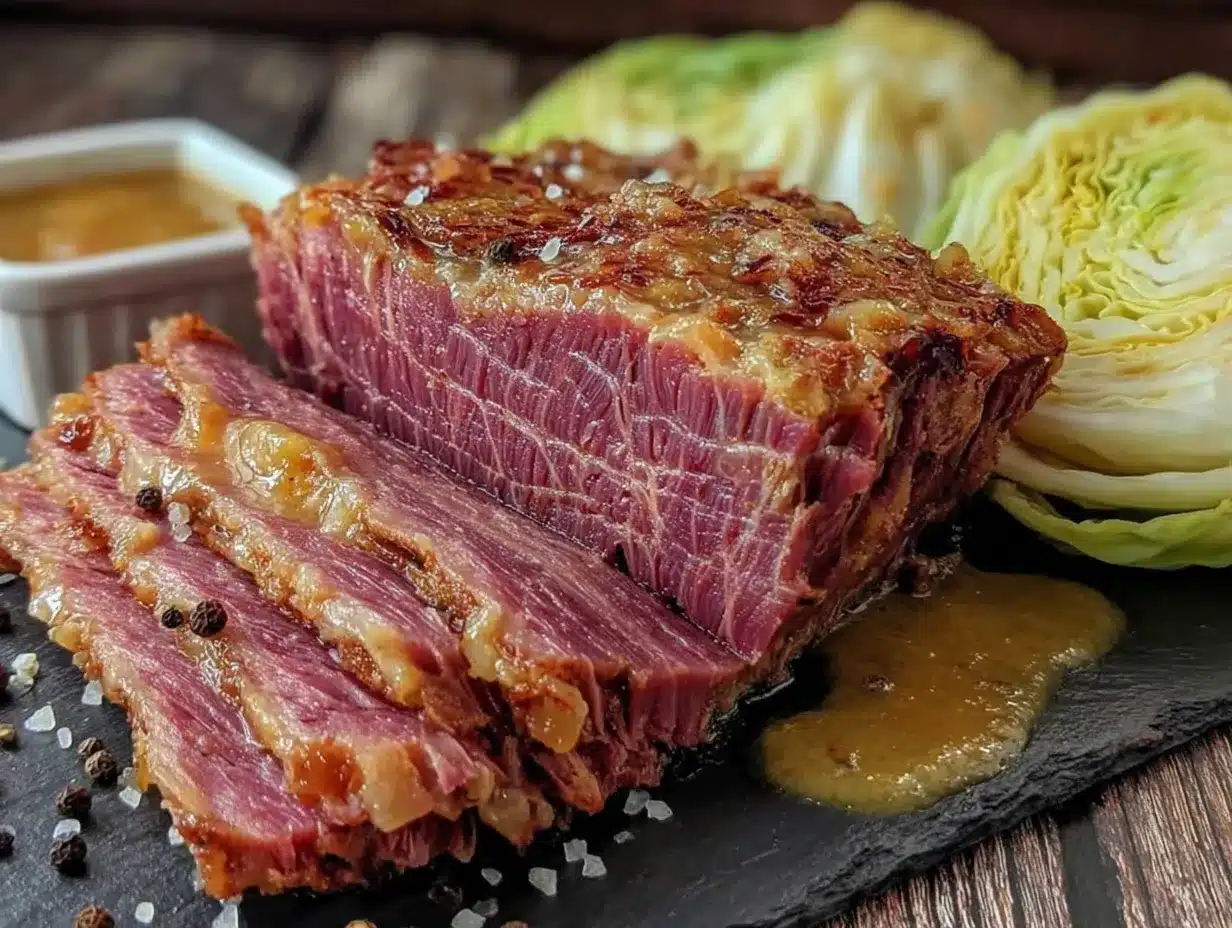
- 1 head green cabbage, cut into 6-8 wedges – Don’t cut the core out completely; it helps the wedges hold their shape during cooking. (For a milder flavor, use savoy cabbage.)
- 1 ½ pounds baby potatoes or Yukon Gold potatoes, halved – Baby potatoes are convenient because you don’t need to peel them. Yukon Golds have a buttery texture that’s perfect here. (Red potatoes also work well.)
- 4 large carrots, peeled and cut into 2-inch chunks – Carrots add sweetness and color. (Use rainbow carrots for a pretty presentation.)
For Serving (Optional but Recommended)
- Whole-grain mustard or horseradish – A classic pairing. The tang cuts through the richness of the beef. (I love Grey Poupon country mustard or Beaver horseradish.)
- Fresh parsley, chopped – For a pop of color and freshness at the end.
Substitution Guidance: To make this gluten-free, just check your spice packet—some contain wheat. You can also use a gluten-free beef broth. If you’re watching your sodium, use low-sodium broth and skip the spice packet (use pickling spice instead). For a dairy-free option, this recipe is naturally dairy-free. If you don’t have baby potatoes, any waxy potato will do. Avoid starchy potatoes like Russets, as they can fall apart.
Equipment Needed
You don’t need a ton of fancy equipment for this one. Here’s what you’ll need:
- 6-quart or larger slow cooker – This is the star of the show. I use a Crock-Pot brand, but any brand works. Make sure it’s big enough to fit the brisket and vegetables. If your slow cooker is smaller, you can cut the brisket in half.
- Large skillet or Dutch oven – For searing the brisket. A cast-iron skillet is ideal for getting a good crust, but any heavy-bottomed pan works. (Don’t skip this step if you can help it—it adds so much flavor.)
- Tongs – For flipping the brisket in the hot pan. Metal tongs with silicone tips are my favorite because they don’t scratch the pan.
- Cutting board and sharp knife – For prepping the vegetables and slicing the finished brisket. A good chef’s knife makes all the difference. (I use a Victorinox—it’s affordable and stays sharp.)
- Measuring cups and spoons – For the broth and spices. Nothing fancy needed.
- Fork or meat thermometer – To check if the brisket is tender. A fork should slide in easily. If you want to be precise, the internal temperature should be around 195-205°F.
Budget-friendly tip: Don’t have a slow cooker? You can use a large Dutch oven in a 300°F oven for about 3-4 hours. Just keep the lid on tight. It won’t be exactly the same, but it’ll be close.
Preparation Method
Here’s the step-by-step. I’ve broken it down so you can follow along without any stress. Remember, the slow cooker does most of the work.
- Prep the brisket (5 minutes). Remove the corned beef brisket from its packaging. Rinse it under cold water to remove any excess brine. Pat it completely dry with paper towels. This is important for getting a good sear later. If there’s a spice packet, set it aside.
- Sear the brisket (8-10 minutes). Heat the olive oil in a large skillet over medium-high heat. Once the oil is shimmering, place the brisket fat-side down. Let it cook undisturbed for 4-5 minutes, until the fat is golden brown and crispy. Flip it and sear the other side for another 3-4 minutes. Don’t rush this step—the browning adds a layer of flavor that you just can’t get from the slow cooker alone. (If your brisket is too big for the pan, cut it in half and sear in batches.)
- Layer the aromatics (5 minutes). Place the onion wedges and smashed garlic cloves in the bottom of the slow cooker. This creates a little bed for the brisket to sit on, which helps it cook evenly and infuses the meat with flavor. Add the bay leaves and peppercorns.
- Add the brisket and liquid (3 minutes). Place the seared brisket on top of the onions and garlic, fat-side up. Sprinkle the contents of the spice packet over the top (or about 2 tablespoons of pickling spice). Pour in the water or beef broth. The liquid should come about halfway up the sides of the brisket—not covering it completely. This is key. You want the meat to steam, not boil. (If you need more liquid, add a little more water or broth.)
- Cook low and slow (8-10 hours on low, or 4-5 hours on high). Cover the slow cooker and set it to low for the most tender results. I know it’s tempting to use the high setting, but low gives you that fall-apart texture. If you’re in a rush, high will work, but the meat won’t be as tender. (I always go for low. It’s worth the wait.)
- Add the vegetables (30-40 minutes before serving). About 30-40 minutes before you want to eat, gently remove the brisket from the slow cooker and place it on a cutting board. Cover it loosely with foil to keep it warm. Add the potatoes, carrots, and cabbage wedges to the broth in the slow cooker. Stir gently to coat them. Cover and cook on high for 30-40 minutes, until the potatoes are fork-tender and the cabbage is soft but not mushy. (If your slow cooker runs hot, check at 25 minutes.)
- Slice and serve (5 minutes). While the vegetables cook, slice the brisket against the grain. This is important—slicing against the grain makes the meat more tender. Cut it into ¼-inch thick slices. If you’re not sure which way the grain runs, look for the lines of muscle fiber running through the meat. Slice perpendicular to those lines. (I’ve made the mistake of slicing with the grain before. It was chewy and disappointing. Learn from my error.)
- Plate it up (2 minutes). Arrange the sliced brisket on a platter with the cooked vegetables. Spoon a little of the cooking broth over the top to keep everything moist. Garnish with fresh parsley if you’re feeling fancy. Serve with whole-grain mustard or horseradish on the side.
Troubleshooting tip: If your brisket is still tough after 8 hours on low, don’t panic. It might just need more time. Corned beef can be stubborn. Let it cook for another hour or two until a fork slides in easily. Also, if your vegetables are done before the meat, just remove them and keep the brisket cooking. The vegetables can sit out at room temperature for a bit while the meat finishes.
Cooking Tips & Techniques
I’ve made this recipe more times than I can count, and I’ve learned a few things the hard way. Here are my best tips for getting it right every time.
Don’t skip the sear. I know it’s an extra step, and when you’re tired, it’s tempting to just throw everything in the slow cooker. But that browning adds a depth of flavor that makes the dish taste like you spent hours in the kitchen. Trust me on this. The Maillard reaction—that chemical process that creates the brown crust—is where the magic happens. You can’t replicate it in the slow cooker.
Watch the salt. Corned beef is already brined, so it’s salty. That’s why I recommend using low-sodium broth or just water. If you use regular broth, your final dish might be too salty. Also, don’t add extra salt during cooking. Taste the broth at the end and adjust if needed. (I usually don’t need any extra salt.)
Add the cabbage later. This is a common mistake. If you add the cabbage at the beginning, it will turn into a limp, gray mess. Cabbage only needs about 30 minutes to cook through. Adding it later keeps it vibrant and gives it a pleasant texture—tender but with a little bite. Same goes for the potatoes and carrots. They don’t need to cook for 8 hours. Adding them toward the end prevents them from turning to mush.
Let the meat rest before slicing. When you take the brisket out of the slow cooker, let it sit for about 10 minutes before you slice it. This allows the juices to redistribute throughout the meat. If you slice it right away, all those juices will run out onto the cutting board, leaving you with dry meat. (I learned this one the hard way during a dinner party. The brisket was good, but it could have been better.)
Multitasking tip: While the brisket is cooking, you can prep the vegetables and store them in a bag in the fridge. That way, when it’s time to add them, you just dump them in. No last-minute chopping. Also, I like to make the mustard or horseradish sauce ahead of time. It takes 5 minutes and one less thing to do at serving time.
Variations & Adaptations
This recipe is forgiving, and you can tweak it to fit your preferences or what you have on hand. Here are some variations I’ve tried and loved.
1. Low-Carb/Keto Version. Skip the potatoes and add more cabbage and carrots. You can also add turnips or radishes for a potato-like texture without the carbs. The broth will still be flavorful, and you won’t miss the spuds. (I’ve done this for a keto friend, and she raved about it.)
2. Spicy Kick. Add a sliced jalapeño or a teaspoon of red pepper flakes to the broth along with the aromatics. The heat cuts through the richness of the beef beautifully. Or, serve it with a spicy horseradish sauce made with prepared horseradish, sour cream, and a pinch of cayenne. (I made this version for a Super Bowl party, and it was a hit.)
3. Beer-Braised Corned Beef. Replace 1 cup of the water or broth with a dark beer like Guinness or a stout. The beer adds a malty, slightly bitter note that complements the salty beef. Just be careful—the beer can make the broth bitter if you use too much. Start with 1 cup and see how you like it. (I tried this on a whim one St. Patrick’s Day, and it’s now my go-to.)
4. Gluten-Free Adaptation. As I mentioned, check your spice packet. If it contains wheat, use pickling spice instead. Also, make sure your broth is certified gluten-free. Everything else in the recipe is naturally gluten-free. (I have a friend with celiac, and this version works perfectly for her.)
5. Instant Pot Version. If you’re short on time, you can make this in an Instant Pot. Sear the brisket using the sauté function, then add the aromatics and liquid. Pressure cook on high for 90 minutes, then do a natural release for 15 minutes. Remove the brisket, add the vegetables, and pressure cook for another 5 minutes. It’s not quite as tender as the slow cooker version, but it’s close. (I use this method when I forget to start the slow cooker in the morning.)
Serving & Storage Suggestions
This dish is best served hot, right after the vegetables are done. The aroma alone will have everyone gathered around the kitchen. Here’s how to serve and store it.
Serving Temperature and Presentation: Slice the brisket and arrange it on a large platter with the potatoes, carrots, and cabbage wedges around it. Spoon a little of the cooking broth over everything to keep it moist. I like to garnish with a sprinkle of fresh parsley and serve with whole-grain mustard or horseradish on the side. The tangy condiment cuts through the richness of the beef and adds a nice contrast. (If you’re feeling fancy, you can also serve it with a side of Irish soda bread to soak up the broth.)
Complementary Dishes: This meal is pretty complete on its own, but if you want to round it out, a simple green salad with a vinaigrette works well. The acidity of the vinaigrette complements the rich beef. You could also serve it with roasted asparagus or a side of sautéed greens. For drinks, a stout or an Irish red ale is a classic pairing, but a crisp lager or even a glass of red wine (like a Pinot Noir) works too.
Storage Instructions: Leftovers can be stored in an airtight container in the refrigerator for up to 4 days. The flavors actually get better as they meld together overnight. I love having leftovers for lunch the next day. The meat is even more tender after sitting in the broth.
Reheating Methods: The best way to reheat is in a covered pot on the stovetop over medium-low heat, with a splash of the reserved broth or water. This prevents the meat from drying out. You can also microwave it, but the texture won’t be as good. If you have a lot of leftovers, you can reheat the whole thing in a 300°F oven for about 20 minutes, covered with foil.
Freezer Instructions: You can freeze the cooked brisket and vegetables for up to 3 months. Let everything cool completely, then transfer to a freezer-safe container or zip-top bag. To thaw, place it in the refrigerator overnight. Reheat as directed above. Note that the potatoes might be a bit softer after freezing, but the flavor will still be great. (I’ve done this with a double batch, and it’s a lifesaver on busy weeks.)
How Flavors Develop: Like many braised dishes, this corned beef and cabbage tastes even better the next day. The flavors have time to meld and deepen. The meat becomes even more tender, and the vegetables soak up more of the savory broth. So don’t be afraid to make it a day ahead. Just cook the brisket, add the vegetables the next day, and reheat everything together. It’s a great make-ahead strategy for a party or holiday.
Nutritional Information & Benefits
This dish is hearty and satisfying, and it also offers some nutritional benefits. Here’s a rough estimate per serving (based on 8 servings):
| Nutrient | Amount per Serving |
|---|---|
| Calories | 450-550 |
| Protein | 35-40g |
| Fat | 25-30g |
| Carbohydrates | 30-35g |
| Fiber | 6-8g |
| Sodium | 1200-1500mg (varies by broth and spice packet) |
| Vitamin C | 60% DV (from cabbage) |
| Vitamin A | 100% DV (from carrots) |
| Potassium | 20% DV |
Health Benefits of Key Ingredients: Cabbage is a cruciferous vegetable packed with vitamin C, vitamin K, and fiber. It’s known for its anti-inflammatory properties. Carrots are rich in beta-carotene, which supports eye health. Potatoes provide potassium and vitamin B6, and the protein from the beef helps keep you full and satisfied. This is a balanced meal that provides a good mix of protein, carbohydrates, and vegetables.
Dietary Considerations: This recipe is naturally gluten-free (check your spice packet and broth) and dairy-free. It is not low-carb due to the potatoes, but you can make the keto version I mentioned above. The sodium content is high, so if you’re watching your salt intake, use low-sodium broth and skip the spice packet. You can also boil the brisket for 5 minutes before cooking to remove some of the brine, but this will also reduce flavor.
Potential Allergens: None of the common allergens (dairy, eggs, nuts, soy) are present in this recipe, but always check your spice packet and broth for hidden ingredients. Some spice packets contain wheat or soy.
Personal Wellness Perspective: I love that this meal feels indulgent but is actually pretty balanced. It’s a great way to get a serving of vegetables in a way that doesn’t feel like a chore. The slow cooking process also makes the meat more digestible, and the broth is full of minerals from the vegetables. It’s comfort food that you can feel good about eating.
Conclusion
This slow cooker corned beef and cabbage is the kind of recipe that makes you look forward to dinner all day. It’s simple enough for a Tuesday night but special enough for a holiday. The meat is tender, the vegetables are flavorful, and the whole thing comes together with minimal effort. Honestly, it’s one of those recipes that makes you feel like a kitchen pro, even if you’re just starting out.
I love that this recipe is forgiving. You can tweak the vegetables, adjust the spices, or swap the cooking method. It’s a template, not a strict rulebook. So feel free to make it your own. Add more garlic. Use a different mustard. Throw in some parsnips. The slow cooker will take care of the rest.
If you make this, I’d love to hear how it turned out. Drop a comment below and let me know if you tried any variations. Did you add beer? Did you skip the sear? (No judgment, but seriously, try the sear next time.) Share this recipe with a friend who needs a little comfort food in their life. And if you post a photo on Pinterest, tag me—I always love seeing your creations.
Happy cooking, friend. You’ve got this.
Frequently Asked Questions
Can I use a different cut of meat?
Corned beef is typically made from brisket, but you can also use a round or rump roast. Just keep in mind that these cuts are leaner and might not be as tender. If you use a different cut, you might need to adjust the cooking time. A fork should slide in easily when it’s done.
Do I have to rinse the corned beef before cooking?
Yes, I recommend rinsing it. The corned beef is packed in a salty brine, and rinsing removes some of that excess salt. It also helps the sear work better because the surface is drier. Just pat it dry with paper towels afterward.
Can I cook this on high instead of low?
You can, but the meat won’t be as tender. Cooking on low for 8-10 hours gives the connective tissue time to break down, resulting in that fall-apart texture. If you’re short on time, high for 4-5 hours will work, but the meat will be firmer. I always recommend low if you can manage it.
Why is my corned beef tough?
There are a few reasons. It might not have cooked long enough. Corned beef needs time to break down. It could also be that you sliced it with the grain instead of against it. Slicing against the grain shortens the muscle fibers, making the meat easier to chew. Finally, if you added the cabbage too early, the acidity from the cabbage can toughen the meat. Add the cabbage later in the cooking process.
Can I make this ahead of time?
Absolutely! In fact, it tastes even better the next day. Cook the brisket as directed, but don’t add the vegetables. Let the brisket cool in the broth, then refrigerate it overnight. The next day, remove the solidified fat from the top, reheat the brisket in the broth, and add the vegetables about 30 minutes before serving. This is a great strategy for a party or holiday dinner.
Pin This Recipe!
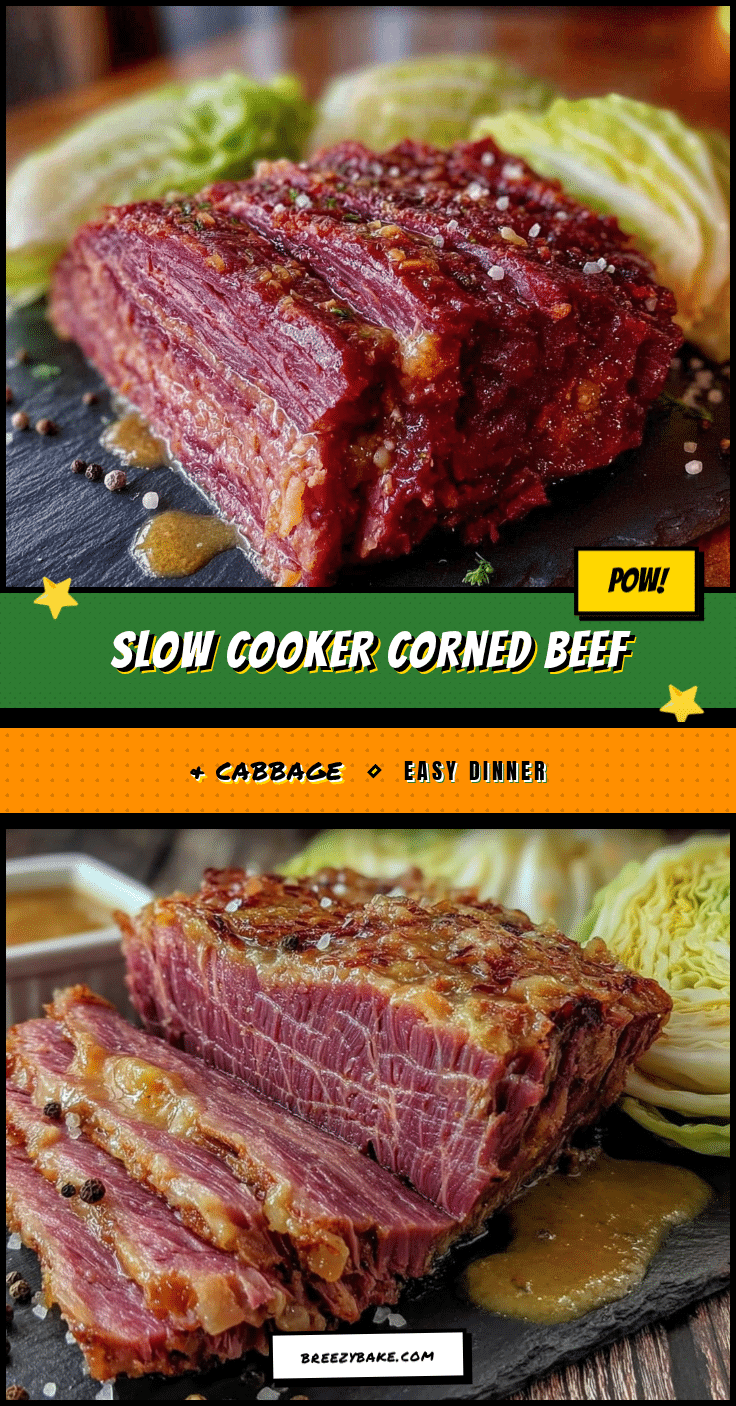
Easy Slow Cooker Corned Beef and Cabbage Recipe
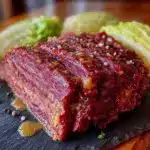
This slow cooker corned beef and cabbage is tender, flavorful, and incredibly easy to make. With minimal prep and a hands-off cooking method, it’s perfect for weeknights or St. Patrick’s Day celebrations.
- Prep Time: 15 minutes
- Cook Time: 8 hours 30 minutes
- Total Time: 8 hours 45 minutes
- Yield: 8 servings 1x
- Category: Main Course
- Cuisine: Irish
Ingredients
- 3 to 4 pounds corned beef brisket (with spice packet)
- 1 tablespoon olive oil
- 1 large yellow onion, cut into wedges
- 4 cloves garlic, smashed
- 2 bay leaves
- 1 teaspoon black peppercorns
- 4 cups water or low-sodium beef broth
- 1 head green cabbage, cut into 6–8 wedges
- 1 ½ pounds baby potatoes or Yukon Gold potatoes, halved
- 4 large carrots, peeled and cut into 2-inch chunks
- Whole-grain mustard or horseradish (for serving, optional)
- Fresh parsley, chopped (for garnish, optional)
Instructions
- Prep the brisket: Remove the corned beef brisket from its packaging. Rinse it under cold water to remove excess brine. Pat it completely dry with paper towels. Set aside the spice packet if included.
- Sear the brisket: Heat olive oil in a large skillet over medium-high heat. Once shimmering, place the brisket fat-side down. Cook undisturbed for 4-5 minutes until golden brown. Flip and sear the other side for 3-4 minutes.
- Layer the aromatics: Place onion wedges and smashed garlic cloves in the bottom of a 6-quart or larger slow cooker. Add bay leaves and peppercorns.
- Add brisket and liquid: Place the seared brisket on top of the onions and garlic, fat-side up. Sprinkle the spice packet (or 2 tablespoons pickling spice) over the top. Pour in water or beef broth until it comes about halfway up the sides of the brisket.
- Cook low and slow: Cover and cook on low for 8-10 hours, or on high for 4-5 hours, until the brisket is fork-tender.
- Add vegetables: About 30-40 minutes before serving, remove the brisket from the slow cooker and place on a cutting board. Cover loosely with foil. Add potatoes, carrots, and cabbage wedges to the broth. Stir gently. Cover and cook on high for 30-40 minutes until vegetables are tender.
- Slice and serve: Slice the brisket against the grain into ¼-inch thick slices. Arrange on a platter with the vegetables. Spoon some cooking broth over the top. Garnish with parsley if desired. Serve with whole-grain mustard or horseradish.
Notes
For best results, don’t skip searing the brisket. Add cabbage later to avoid mushiness. Let meat rest before slicing. Leftovers keep for up to 4 days in the fridge or 3 months in the freezer.
Nutrition
- Serving Size: 1 serving (approxima
- Calories: 500
- Sugar: 8
- Sodium: 1350
- Fat: 28
- Saturated Fat: 10
- Carbohydrates: 33
- Fiber: 7
- Protein: 38
Keywords: slow cooker corned beef and cabbage, corned beef, cabbage, St. Patrick's Day, easy dinner, comfort food