“You really gotta try these burnt ends,” my buddy Dave insisted last summer, waving me over at the neighborhood barbecue. I was skeptical—brisket is brisket, right? But when he handed me a chunk of those smoky, caramelized bites, I was hooked instantly. The way the Kansas City BBQ glaze clung to the edges, sticky and sweet with just the right smoky punch, was unlike anything I’d made before. Honestly, I didn’t think burnt ends were worth the fuss until that moment. Turns out, they’re little nuggets of pure joy, and making them at home isn’t as daunting as I imagined.
Since that weekend, I’ve ended up making this recipe more times than I can count—sometimes twice in one week if I’m honest. What started as a casual taste test became a full-on obsession, with me tweaking the glaze and smoke times until it hit that perfect balance of tender, crispy, and richly flavored. The brisket burnt ends with Kansas City BBQ glaze have become my go-to for impressing friends and unwinding after hectic workdays. It’s just that kind of dish that slows things down—smoky, sweet, a little messy, and totally worth every minute of the wait.
I keep coming back to this recipe not just for the flavor, but because it reminds me that some of the best meals come from moments of surprise—like a friendly nudge to try something new. If you’ve ever grilled or smoked meat and thought, “There’s gotta be a better way,” this brisket burnt ends recipe might just be the answer you didn’t know you were looking for.
Why You’ll Love This Recipe
Having spent countless afternoons perfecting this smoked brisket burnt ends recipe, I can confidently say it stands out in the crowded BBQ world. Here’s why it’s become such a favorite among my family and friends:
- Quick & Easy: While smoking brisket might sound intimidating, the burnt ends themselves come together in under 4 hours of active prep and cooking time—ideal for weekend gatherings or a special dinner without the endless wait.
- Simple Ingredients: No need for exotic spices or hard-to-find sauces. The Kansas City BBQ glaze uses pantry staples like ketchup, molasses, and a blend of spices you probably already have on hand.
- Perfect for Entertaining: These bite-sized smoky morsels are a hit at backyard BBQs, game days, or casual get-togethers. They pair beautifully with classic sides like baked beans or a crunchy coleslaw.
- Crowd-Pleaser: Kids and adults alike can’t seem to get enough of the sweet, tangy glaze combined with the deep smokiness of the brisket.
- Unbelievably Delicious: The magic lies in the caramelized edges and tender interior. The Kansas City BBQ glaze adds a signature sweet and spicy kick that’s both comforting and crave-worthy.
This isn’t just another burnt ends recipe—it’s the one that balances smoky depth with a glossy, sticky finish. The secret? Low and slow smoking combined with finishing the burnt ends in the sauce to build layers of flavor. Whether you’re firing up the smoker for the first time or looking to impress seasoned BBQ fans, these burnt ends deliver a satisfying, melt-in-your-mouth experience that’ll keep everyone coming back for seconds.
What Ingredients You Will Need
This recipe uses simple, wholesome ingredients to deliver bold flavor and satisfying texture without the fuss. Most of these are pantry staples and easy to find at your local grocery store or butcher.
- Brisket Point: 4-5 pounds of well-marbled brisket point—the fatty, flavorful part ideal for burnt ends
- BBQ Rub:
- 2 tablespoons paprika (smoked if available for extra depth)
- 1 tablespoon coarse black pepper
- 1 tablespoon kosher salt
- 1 tablespoon garlic powder
- 1 tablespoon onion powder
- 1 teaspoon cayenne pepper (optional for heat)
- Kansas City BBQ Glaze:
- 1 cup ketchup (I like Heinz for that perfect tang)
- 1/4 cup molasses (adds rich sweetness)
- 1/4 cup apple cider vinegar (balances the sweetness)
- 2 tablespoons Worcestershire sauce
- 2 tablespoons brown sugar (dark brown preferred)
- 1 teaspoon smoked paprika
- 1/2 teaspoon black pepper
- 1/2 teaspoon garlic powder
- 1/4 teaspoon cayenne pepper (optional)
- Wood chips or chunks: Hickory or oak for smoking
- Optional: Yellow mustard as a binder for the rub (classic BBQ trick)
If you want to swap the brisket point for a whole flat cut, just be aware that the texture will be a bit leaner and less fatty, which changes the burnt ends vibe. For a gluten-free option, check your Worcestershire sauce label or substitute with tamari. The glaze is forgiving, so feel free to adjust sweetness or tanginess to your liking—it’s all about your personal BBQ style.
Equipment Needed
- Smoker: A charcoal, pellet, or electric smoker works great. I’ve used a Weber kettle smoker and a Traeger pellet grill with solid results.
- Meat Thermometer: Essential for monitoring internal temperature—either a wireless instant-read or leave-in probe style. I can’t stress enough how this saves you from guesswork.
- Sharp Knife: For trimming the brisket and cutting burnt ends into cubes.
- Mixing Bowls: For preparing rub and glaze.
- Aluminum Foil or Pans: For wrapping brisket during the stall and for saucing burnt ends.
- Spray Bottle: Optional, for spritzing the brisket with apple juice or water during smoking to keep it moist.
If you don’t have a dedicated smoker, a charcoal grill set up for indirect heat can work. Just add wood chips wrapped in foil with holes poked in them for smoke. For a budget-friendly option, a digital instant-read thermometer like Thermapen or ThermoPro gives accurate readings without breaking the bank. Keeping your tools clean and well-maintained, especially your smoker grates, will make a difference in flavor and ease of cooking.
Preparation Method
- Trim the Brisket Point: Trim excess fat from the brisket point, leaving about 1/4 inch for moisture and flavor. Cut the brisket into roughly 1.5-inch cubes for even cooking, but keep size consistent so they smoke evenly. (Prep time: 15 minutes)
- Apply the Rub: Lightly coat the brisket cubes with yellow mustard (optional) to help the rub stick. Generously sprinkle the BBQ rub all over each piece, making sure every side is covered. Let the meat rest at room temperature for 30 minutes while you prepare the smoker.
- Preheat the Smoker: Bring your smoker to a steady 225°F (107°C). Add hickory or oak wood chunks for that classic BBQ smoke flavor. (Allow 15-20 minutes)
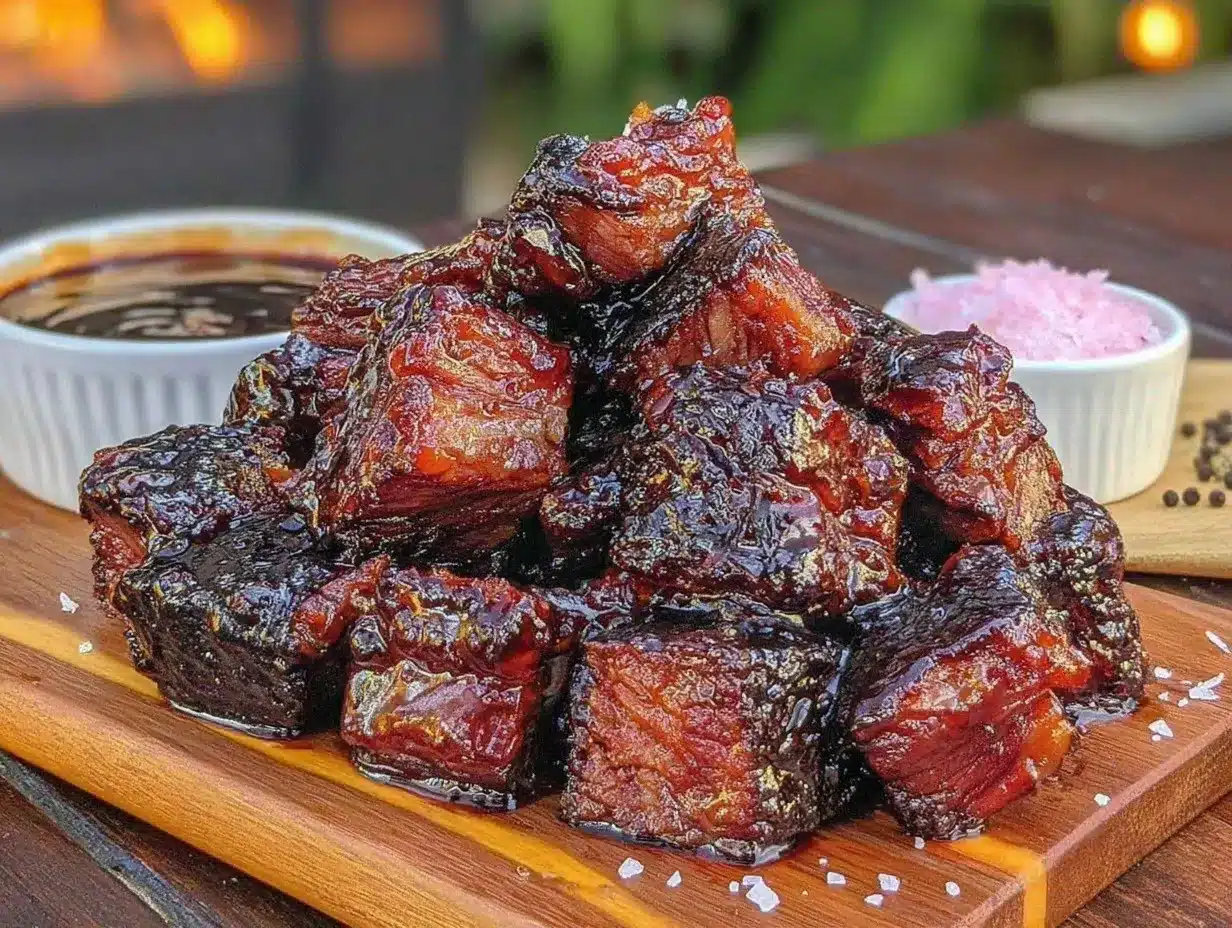
- Smoke the Brisket Cubes: Place the cubes directly on the smoker rack or in a perforated pan for airflow. Smoke for around 2 to 2.5 hours until a deep mahogany bark forms and internal temperature reaches about 190°F (88°C). During smoking, you can spritz with apple juice every 45 minutes to keep the meat moist.
- Prepare the Kansas City BBQ Glaze: While smoking, whisk together ketchup, molasses, apple cider vinegar, Worcestershire sauce, brown sugar, and spices in a bowl. Adjust seasoning to taste.
- Sauce and Finish: Transfer smoked cubes to a foil pan, toss thoroughly with the BBQ glaze, ensuring every piece is glossy and coated. Place the pan back in the smoker for an additional 45 minutes to 1 hour, allowing the glaze to caramelize and thicken. The burnt ends should be sticky, tender, and slightly charred on the edges.
- Rest and Serve: Remove from smoker and let rest for 10 minutes before serving. This step helps juices redistribute, making each bite succulent.
Watch for signs of dryness or over-smoking—if the burnt ends feel too firm or dry, add a bit more glaze or spritz during the final cook. The visual cue is a dark, almost candy-like crust with tender meat inside. This multi-step approach ensures you get that signature burnt end texture rather than just smoked beef cubes.
Cooking Tips & Techniques
Smoking brisket burnt ends can be a bit tricky if you’re new to low-and-slow BBQ, but a few tips will make your life way easier:
- Don’t Rush the Smoke: Keep your smoker steady at 225°F (107°C). Fluctuations can mess with the bark development and texture.
- Choose the Right Cut: The brisket point has more fat marbling, which breaks down during cooking, creating that tender, juicy burnt end. The flat is leaner and less forgiving.
- Spritzing Helps: Using apple juice or a 50/50 mix of apple cider vinegar and water keeps the meat moist and helps the smoke adhere better.
- Use a Reliable Thermometer: Don’t guess internal temperature—aim for about 190°F (88°C) before saucing and finishing.
- Don’t Skip the Rest: Resting the burnt ends lets the juices settle, so they aren’t dry or tough.
- Watch the Glaze: Too much sugar in the glaze can burn quickly—keep an eye on the last 30-45 minutes to avoid bitterness.
Honestly, my first batch ended up a little dry because I underestimated the importance of fat content and resting time. After a few tries, I learned that paying attention to the bark and temperature is more important than rushing. Multitasking while the smoker does its thing helps—you can prep sides or get your crispy loaded bacon mac and cheese casserole ready to complement the burnt ends.
Variations & Adaptations
This recipe is great as-is, but it’s also super adaptable depending on your taste or dietary needs:
- Spicy Kick: Add more cayenne or some chipotle powder to the rub and glaze for a smoky heat that wakes up your palate.
- Sweet & Tangy Swap: Replace molasses with honey or maple syrup for a different kind of sweetness with a floral note.
- Smoker-Free Version: Cook the brisket cubes low and slow in an oven at 250°F (121°C) until tender, then finish under the broiler with glaze to get that caramelized crust.
- Gluten-Free: Use gluten-free Worcestershire sauce and check your ketchup label to keep it safe for gluten sensitivities.
- Personal Twist: I like to toss the finished burnt ends with a splash of bourbon or whiskey before the last 15 minutes in the smoker for an extra layer of depth and warmth.
Trying these burnt ends with a tangy vinegar-based sauce instead of the Kansas City glaze is another option, especially if you prefer Carolina-style BBQ. But honestly, that Kansas City sweetness is hard to beat.
Serving & Storage Suggestions
Serve your smoked brisket burnt ends warm, straight out of the smoker or foil pan. They’re perfect piled on a wooden board or a rustic platter, garnished with fresh parsley or sliced green onions for color. Pair them with classic BBQ sides—like creamy coleslaw, baked beans, or even a crunchy cucumber salad for contrast.
Leftovers keep beautifully refrigerated in an airtight container for 3-4 days. When reheating, gently warm them in a covered pan over low heat to retain moisture—microwaving can dry them out fast. Alternatively, pop them in a 300°F (149°C) oven covered with foil for about 15 minutes.
If you want to freeze burnt ends, wrap tightly in foil and place in a freezer-safe bag for up to 3 months. Thaw overnight in the fridge before reheating. The flavors actually deepen after a day or two in the fridge, so making them ahead is a smart move for parties or busy weekends.
For a fun twist, serve these burnt ends alongside a fresh dessert like the chocolate-covered strawberry ice cream mousse cups—the smoky, savory notes balance beautifully with something cool and sweet.
Nutritional Information & Benefits
Estimated per serving (based on 6 servings):
| Calories | 350 |
|---|---|
| Protein | 28g |
| Fat | 22g |
| Carbohydrates | 8g |
| Sugar | 6g |
The brisket provides a great source of protein and essential B vitamins, while the molasses and brown sugar add natural sweetness with some minerals like iron and calcium. Using a homemade Kansas City BBQ glaze lets you avoid unnecessary preservatives and control sugar levels. This recipe is naturally gluten-free if you check labels on sauces, making it suitable for many dietary needs.
From a wellness perspective, brisket’s fat content can be high but balanced by pairing it with fresh sides like grilled vegetables or salads. The smoky cooking method adds flavor without added calories or fat, making it a satisfying treat that doesn’t require heavy sauces or frying.
Conclusion
These flavorful smoked brisket burnt ends with Kansas City BBQ glaze are the kind of recipe that turns casual weekend cooks into BBQ fans. Tender, smoky, sticky-sweet, and with that perfect bite-sized crunch, they bring a little celebration to any meal. Whether you’re feeding a crowd or just treating yourself, this recipe invites you to savor the process and the results.
Feel free to tweak the glaze, spice level, or wood choice to make it your own. I love how this recipe has become a reliable way to impress friends and enjoy a comforting meal without complicated steps. If you try it, I’d love to hear your twists or favorite pairings—nothing beats swapping BBQ stories and recipes over a plate of burnt ends!
Frequently Asked Questions
What cut of brisket is best for burnt ends?
The brisket point is ideal due to its higher fat content and marbling, which breaks down during cooking to create tender, juicy burnt ends.
Can I make burnt ends without a smoker?
Yes! You can slow-cook the brisket cubes in an oven at 250°F (121°C) until tender, then finish under the broiler with BBQ glaze for that caramelized crust.
How long does it take to smoke brisket burnt ends?
Smoking usually takes around 2 to 2.5 hours at 225°F (107°C), plus an additional 45 minutes to 1 hour after glazing to caramelize the sauce.
What wood is best for smoking burnt ends?
Hickory and oak are classic choices that provide a robust, smoky flavor perfect for brisket burnt ends.
How do I store leftover burnt ends?
Store in an airtight container in the refrigerator for up to 4 days. Reheat gently in the oven or on the stove to keep them moist and tender.
Pin This Recipe!
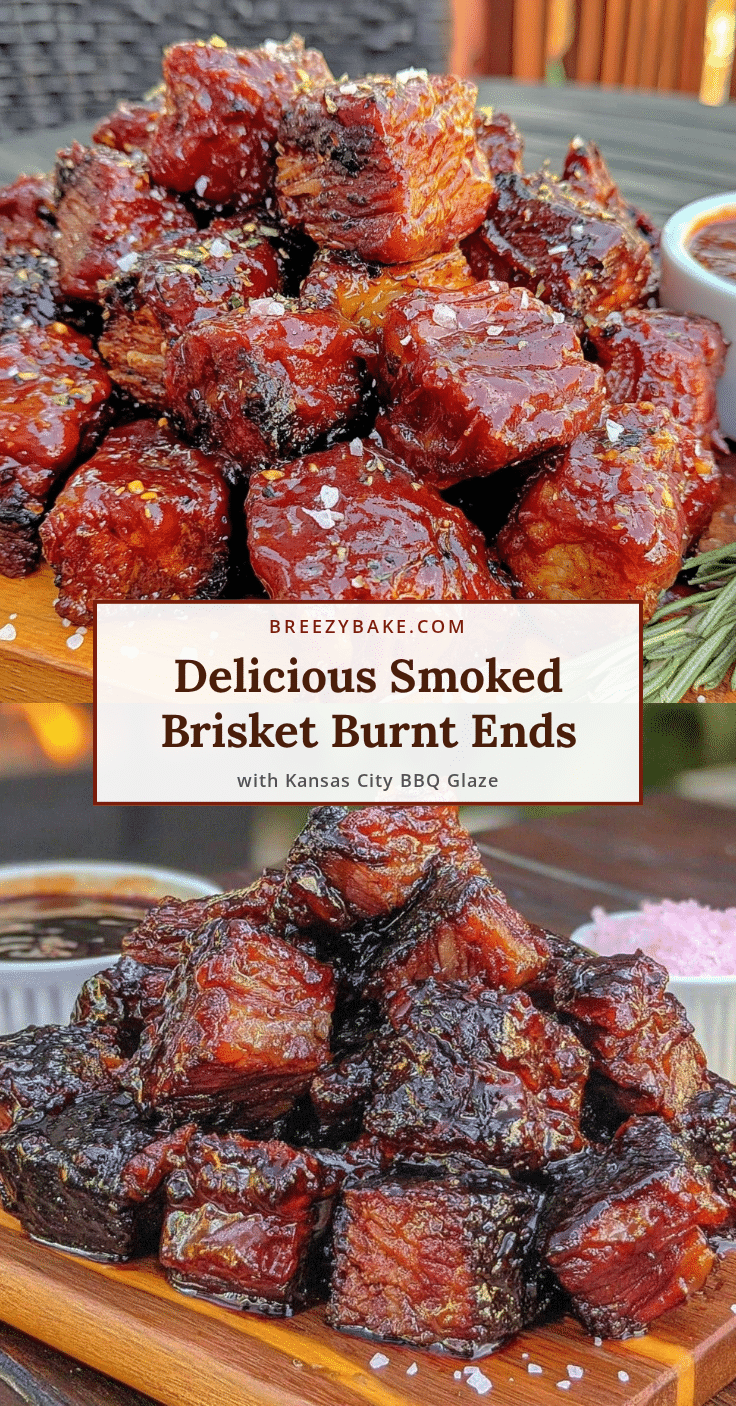
Flavorful Smoked Brisket Burnt Ends with Kansas City BBQ Glaze
Tender, smoky, and sticky-sweet burnt ends made from brisket point, smoked low and slow, and finished with a rich Kansas City BBQ glaze. Perfect for BBQ gatherings and easy to make at home.
- Prep Time: 45 minutes
- Cook Time: 3 hours
- Total Time: 3 hours 45 minutes
- Yield: 6 servings 1x
- Category: Main Course
- Cuisine: American
Ingredients
- 4–5 pounds brisket point, well-marbled
- 2 tablespoons paprika (smoked if available)
- 1 tablespoon coarse black pepper
- 1 tablespoon kosher salt
- 1 tablespoon garlic powder
- 1 tablespoon onion powder
- 1 teaspoon cayenne pepper (optional)
- 1 cup ketchup
- 1/4 cup molasses
- 1/4 cup apple cider vinegar
- 2 tablespoons Worcestershire sauce
- 2 tablespoons dark brown sugar
- 1 teaspoon smoked paprika
- 1/2 teaspoon black pepper
- 1/2 teaspoon garlic powder
- 1/4 teaspoon cayenne pepper (optional)
- Hickory or oak wood chips or chunks for smoking
- Yellow mustard (optional, as a binder for rub)
Instructions
- Trim excess fat from the brisket point, leaving about 1/4 inch for moisture and flavor. Cut the brisket into roughly 1.5-inch cubes for even cooking.
- Optionally coat the brisket cubes lightly with yellow mustard to help the rub stick.
- Generously sprinkle the BBQ rub (paprika, black pepper, kosher salt, garlic powder, onion powder, cayenne pepper) all over each piece, covering every side.
- Let the meat rest at room temperature for 30 minutes while preparing the smoker.
- Preheat the smoker to 225°F (107°C) and add hickory or oak wood chunks for smoke flavor.
- Place the brisket cubes directly on the smoker rack or in a perforated pan for airflow.
- Smoke for 2 to 2.5 hours until a deep mahogany bark forms and internal temperature reaches about 190°F (88°C). Spritz with apple juice every 45 minutes to keep moist.
- While smoking, whisk together ketchup, molasses, apple cider vinegar, Worcestershire sauce, brown sugar, smoked paprika, black pepper, garlic powder, and cayenne pepper to make the Kansas City BBQ glaze. Adjust seasoning to taste.
- Transfer smoked cubes to a foil pan and toss thoroughly with the BBQ glaze, coating every piece.
- Place the pan back in the smoker for an additional 45 minutes to 1 hour to caramelize and thicken the glaze, creating sticky, tender burnt ends with slightly charred edges.
- Remove from smoker and let rest for 10 minutes before serving to allow juices to redistribute.
Notes
Keep smoker temperature steady at 225°F to develop good bark. Spritz with apple juice or a 50/50 apple cider vinegar and water mix to keep meat moist. Use a reliable thermometer to avoid guesswork. Rest burnt ends before serving to retain juices. Watch glaze during final cooking to prevent burning. For a smoker-free version, cook brisket cubes in oven at 250°F until tender and finish under broiler with glaze.
Nutrition
- Serving Size: Approximately 1/6th
- Calories: 350
- Sugar: 6
- Fat: 22
- Carbohydrates: 8
- Protein: 28
Keywords: smoked brisket burnt ends, Kansas City BBQ glaze, BBQ recipe, smoked meat, brisket burnt ends, backyard BBQ, smoked brisket