“Are you serious? Lemon and elderflower in a cake?” my friend asked over the phone, her tone dripping with skepticism. I laughed, because honestly, I was half-skeptical myself the first time I played around with this combo. It started as a bit of an experiment on a slow Sunday afternoon when I couldn’t decide whether I wanted something floral or citrusy—why not both?
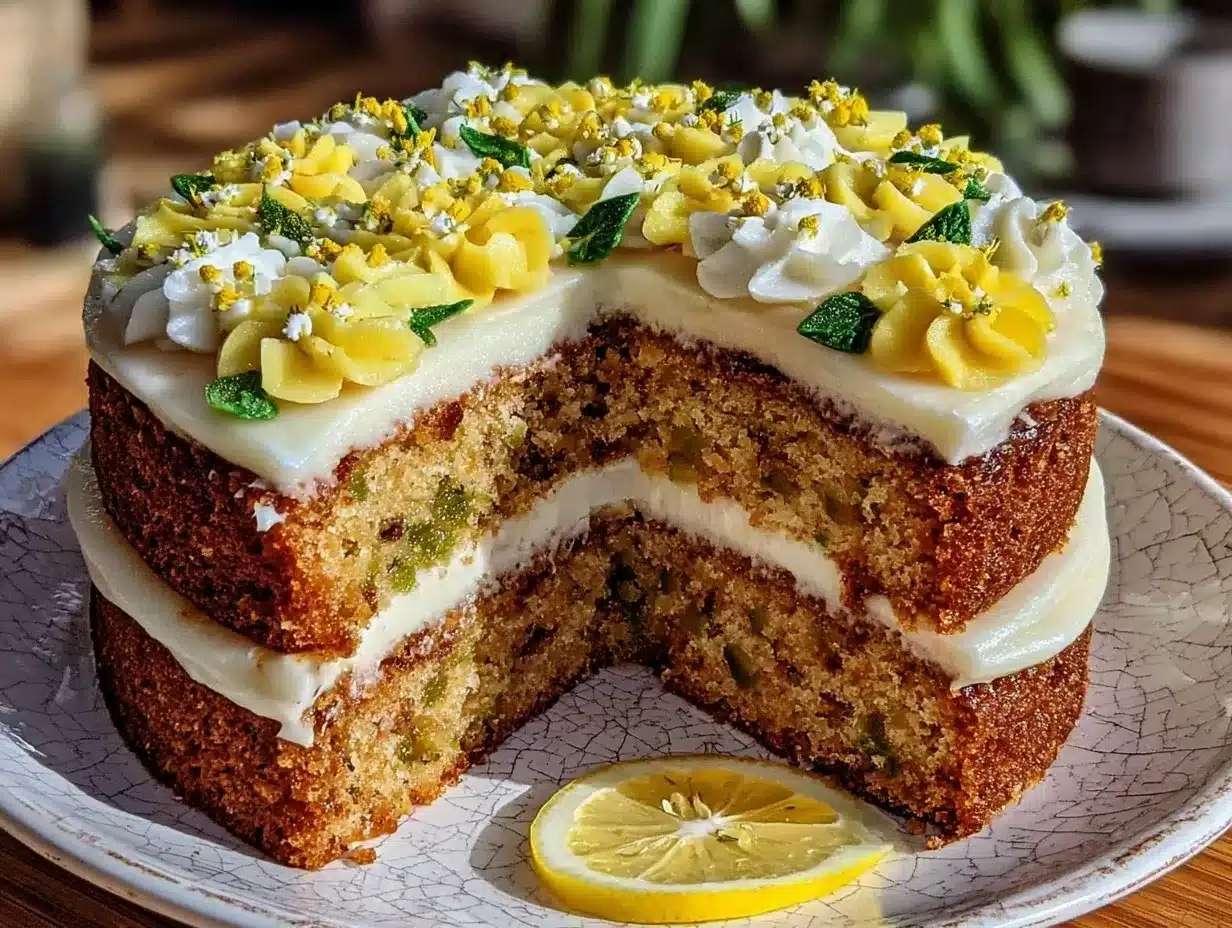
The kitchen smelled like a spring garden in no time: sharp, fresh lemon zest mingling with the delicate, almost honeyed notes of elderflower syrup. That mix alone was enough to make me pause mid-bite. And then came the buttercream flowers—yeah, I’m not really a baker, but these simple buttercream blossoms turned out way better than expected. The cake looked like something out of a fancy bakery window, not my modest kitchen counter.
It’s funny how this recipe snuck up on me. I’d made layered cakes before, but this one? It’s got a softness and brightness that feels like a quiet celebration every time you slice into it. No fuss, no stress, just a cake that somehow makes you feel like you’ve got all the time in the world—when really, it just takes a couple of hours and a few easy steps. It stuck with me because it’s more than just dessert; it’s a small moment of joy wrapped in buttercream and springtime flavors.
Why You’ll Love This Recipe
After testing this Perfect Lemon Elderflower Layer Cake more times than I care to admit, I’m convinced it’s one of those recipes that hits all the right notes. Here’s why it could be your new favorite:
- Quick & Easy: Even with the delicate buttercream flowers, this cake comes together in under 3 hours, making it doable for a weekend treat or a last-minute gathering.
- Simple Ingredients: You won’t need to hunt down anything obscure. Most of the ingredients are pantry staples, and elderflower syrup is easy to find online or at specialty stores.
- Perfect for Special Occasions: Whether it’s a birthday, bridal shower, or just a sunny afternoon tea, this cake’s light, floral flair feels especially festive.
- Crowd-Pleaser: The balance between zesty lemon and subtle elderflower makes it appealing to both kids and adults—no one’s turning this down.
- Unbelievably Delicious: The moist crumb with that hint of elderflower is unlike any lemon cake you’ve had before. Plus, the buttercream flowers add a charming, homemade touch without being intimidating.
What really sets this cake apart is the way the elderflower syrup softens the lemon’s brightness, creating a perfectly balanced flavor profile. And the buttercream flowers? They’re easier to make than you’d think—no piping pro needed. Honestly, it’s one of those recipes that makes you close your eyes on the first bite, savoring the surprising harmony of floral and citrus. This isn’t just a cake; it’s a little moment of delight you can bake and share.
What Ingredients You Will Need
This Perfect Lemon Elderflower Layer Cake uses simple, wholesome ingredients that come together to create a tender, flavorful treat without fuss. Most are pantry staples, with the elderflower syrup adding that unique twist.
- For the Cake Batter:
- 2 ½ cups (315g) all-purpose flour, sifted (I prefer King Arthur for a reliable texture)
- 2 ½ teaspoons baking powder
- ½ teaspoon baking soda
- ½ teaspoon salt
- 1 cup (227g) unsalted butter, softened (use European-style butter if possible for richness)
- 1 ¾ cups (350g) granulated sugar
- 4 large eggs, room temperature
- 1 tablespoon lemon zest (freshly grated for maximum zing)
- ⅔ cup (160ml) buttermilk, room temperature (swap with dairy-free milk plus 1 tbsp vinegar for a vegan option)
- 2 tablespoons elderflower syrup (brands like Stirrings work well; adjust to taste)
- 1 teaspoon pure vanilla extract
- ¼ cup (60ml) fresh lemon juice
- For the Buttercream Flowers and Frosting:
- 1 cup (227g) unsalted butter, softened
- 4 cups (480g) powdered sugar, sifted
- 2 tablespoons elderflower syrup
- 2 tablespoons fresh lemon juice
- 1 teaspoon vanilla extract
- 2-3 tablespoons heavy cream or milk (use canned coconut milk for dairy-free)
- Food coloring gels (optional, for flower petals and leaves)
Pro tip: Look for small-curd buttermilk for the best cake crumb. If you don’t have elderflower syrup, you can substitute with a light honey or agave, but it won’t have quite the same floral note. When it comes to the butter, using European-style butter really makes the buttercream silkier and more flavorful, but if you’re on a budget, regular unsalted butter works just fine.
Equipment Needed
Here’s what you’ll need to whip up this lemon elderflower cake and those pretty buttercream flowers:
- Two 8-inch (20 cm) round cake pans – I like nonstick, but greased and parchment-lined pans work great too.
- Electric mixer – preferably a stand mixer, but a hand mixer will also do the job.
- Mixing bowls – a couple of medium to large bowls for batter and frosting.
- Zester or microplane – for that fresh lemon zest (fresh zest beats pre-grated, trust me).
- Measuring cups and spoons – precise measurements are key here.
- Offset spatula and bench scraper – helps with smooth frosting and layering.
- Piping bags and flower piping tips (like Wilton 104 and 352) – to create those easy buttercream flowers. If you don’t have these, you can also use plastic sandwich bags with a small corner snipped off.
- Cooling racks – for letting your cakes cool evenly.
If you don’t have a stand mixer, a sturdy hand mixer can handle the buttercream, but it’ll take a bit longer to get that fluffy texture. Also, keep your piping tips clean and dry for the best flower shapes—learned that the hard way when my flowers turned out a bit droopy the first time!
Preparation Method
- Preheat and Prep: Set your oven to 350°F (175°C). Grease two 8-inch cake pans and line the bottoms with parchment paper. This helps the cakes release perfectly after baking. Let the butter and eggs come to room temperature while you prep.
- Mix Dry Ingredients: In a medium bowl, whisk together the sifted all-purpose flour, baking powder, baking soda, and salt. Set aside.
- Cream Butter and Sugar: In your mixer bowl, beat the softened butter on medium speed for about 2 minutes until creamy. Gradually add the granulated sugar and keep beating for another 3-4 minutes until the mixture is light and fluffy. This step is important for a tender crumb.
- Add Eggs and Flavor: Add eggs one at a time, beating well after each addition. Mix in the lemon zest and vanilla extract. The batter will smell wonderfully fresh and bright here.
- Combine Wet Ingredients: In a small bowl or measuring cup, mix the buttermilk, elderflower syrup, and fresh lemon juice.
- Alternate Adding Dry and Wet: Reduce mixer speed to low. Add the dry ingredients in three additions, alternating with the wet mixture, starting and ending with the dry. Mix just until combined—don’t overbeat or the cake will be dense.
- Pour and Bake: Divide the batter evenly between the prepared pans. Smooth the tops gently with a spatula. Bake for 25-30 minutes or until a toothpick inserted into the center comes out clean. The cakes should spring back when lightly pressed.
- Cool Properly: Let the cakes cool in the pans for 10 minutes, then run a knife around the edges and invert onto cooling racks. Peel off parchment paper and cool completely before frosting (this prevents the buttercream from melting).
- Make the Buttercream: Beat softened butter on medium speed for 2 minutes. Gradually add powdered sugar, beating on low speed first to avoid a sugar cloud. Add elderflower syrup, lemon juice, and vanilla extract. Increase speed to medium-high and beat until fluffy, about 4-5 minutes. Add cream or milk to reach desired consistency.
- Color and Pipe Flowers: Divide the buttercream into small bowls and tint with your chosen food coloring gels. Fill piping bags fitted with flower tips. Practice a few flowers on parchment before decorating the cake.
- Assemble the Cake: Place one cake layer on your serving plate. Spread a generous layer of buttercream on top. Add the second layer and crumb coat the entire cake. Chill for 20 minutes, then apply the final smooth layer of frosting.
- Decorate: Pipe buttercream flowers and leaves around the cake top and sides. Don’t worry about perfection—natural-looking flowers have charm!
Tip: If your cake layers dome slightly, level them with a serrated knife or cake leveler before stacking. This makes frosting easier and the cake sturdier.
Cooking Tips & Techniques
Making this Perfect Lemon Elderflower Layer Cake a success comes down to a few key tips I’ve picked up over time:
- Don’t Skip Room Temperature: Butter, eggs, and buttermilk at room temp blend better, giving you a smoother batter and fluffier cake. Cold ingredients can cause curdling or dense texture.
- Measure Flour Correctly: Spoon flour into your measuring cup and level it off with a knife—don’t scoop directly from the bag. Too much flour = dry cake.
- Buttercream Consistency: The buttercream should be soft enough to pipe but firm enough to hold its shape. If it’s too soft, chill it briefly; if too firm, beat in a little cream.
- Practice Piping: Don’t stress if your buttercream flowers aren’t perfect on the first try. I’ve learned that a steady hand and a little patience go a long way. Try piping a few test flowers before the cake.
- Chill Between Steps: The crumb coat sets the base for smooth frosting. Chilling the cake after crumb coating makes the final layer easier to apply without crumbs mixing in.
- Keep it Fresh: If you’re not serving the cake right away, keep it refrigerated but bring it to room temperature before slicing for the best texture.
I once rushed the cooling step and ended up with a messy frosting session—lesson learned! Taking your time with chilling really pays off in cleaner layers and prettier flowers.
Variations & Adaptations
Feel like mixing things up? This recipe is surprisingly flexible:
- Gluten-Free: Swap the all-purpose flour for a 1-to-1 gluten-free baking blend. The cake will be just as tender, though a bit more delicate.
- Vegan Version: Use flax eggs (1 tbsp ground flaxseed + 3 tbsp water per egg), dairy-free butter, and coconut yogurt instead of buttermilk. Elderflower syrup is typically vegan-friendly, but double-check your brand.
- Seasonal Fruits: Add a layer of fresh berries or a berry compote between the layers for extra freshness. Elderflower pairs beautifully with strawberries or raspberries, similar to the ones in my creamy pink strawberry cream puff bars.
- Alternative Floral Flavors: Substitute elderflower syrup with rose water or lavender syrup for a different floral twist.
- Buttercream Colors: Try pastel shades for a spring look or bold jewel tones for a dramatic effect—makes it perfect for celebrations like St. Patrick’s Day treats.
One time, I swapped elderflower syrup for homemade orange blossom water and added candied orange peel—delicious, but the lemon elderflower combo keeps winning for its fresh, balanced flavor.
Serving & Storage Suggestions
This cake tastes best served at room temperature, about 30 minutes after coming out of the fridge. The buttercream softens just enough to melt in your mouth, and the lemon flavors brighten up beautifully.
Pair the cake with a cup of Earl Grey tea or a light sparkling wine to complement the floral notes. It’s a lovely choice for afternoon tea parties or spring brunch gatherings.
To store, wrap the cake loosely with plastic wrap or place it in an airtight container. It keeps well in the fridge for up to 4 days. If you want to freeze it, wrap individual slices tightly in plastic and foil—freeze for up to 2 months. Thaw overnight in the fridge before serving.
Reheating isn’t really necessary, but if you want to serve it slightly warmer, leave slices on the counter for 30 minutes or warm gently in a low oven (around 200°F/93°C) for 5-7 minutes. Flavors tend to deepen after a day, so leftovers can be even better!
Nutritional Information & Benefits
One slice of this cake (about 1/12th of the whole cake) contains approximately:
| Calories | 370 kcal |
|---|---|
| Fat | 20g (mostly from butter) |
| Carbohydrates | 45g (includes sugars) |
| Protein | 4g |
| Fiber | 1g |
The elderflower syrup adds a touch of natural sweetness and floral antioxidants, while lemon zest gives a burst of vitamin C. Using real butter and buttermilk provides richness but also some calcium and vitamin A. For those avoiding gluten or dairy, the substitutions in the variations section keep this cake accessible without sacrificing flavor.
While this cake is definitely a treat, the fresh ingredients and homemade buttercream make it a little less guilty than store-bought options, in my humble opinion.
Conclusion
This Perfect Lemon Elderflower Layer Cake with Buttercream Flowers has become one of those recipes I reach for when I want something that feels both special and manageable. It’s not fussy, but it still impresses—and that balance is rare, you know?
Feel free to adjust the floral notes or colors to match your mood or occasion. I love how customizable it is, whether you keep it classic or get creative with berries or different syrups. It’s proof you don’t have to be a piping pro to make a showstopper cake.
If you try this recipe, I’d love to hear about your buttercream flower attempts or any tasty tweaks you make. Baking (and sharing) moments like these are what keep me coming back to the kitchen. Here’s to your next sweet success!
FAQs
Can I make this cake ahead of time?
Yes! The cake layers can be baked a day ahead and wrapped tightly. Assemble and decorate the day you plan to serve for the freshest look and taste.
What if I don’t have elderflower syrup?
You can substitute with a mild honey or agave syrup, but the unique floral flavor will be missing. Alternatively, try rose water or lavender syrup for a different floral profile.
How do I prevent the buttercream flowers from melting?
Keep the buttercream cool and pipe in a cool environment if possible. If your kitchen is warm, chill the buttercream and cake between piping sessions.
Can I use a different size cake pan?
Yes, but baking times will vary. For 9-inch pans, expect a slightly shorter baking time; for smaller pans, bake longer and check doneness with a toothpick.
Is this recipe suitable for beginners?
Definitely! The cake batter is straightforward, and the buttercream flower tutorial uses simple piping techniques that even less experienced bakers can master with a bit of practice.
Pin This Recipe!
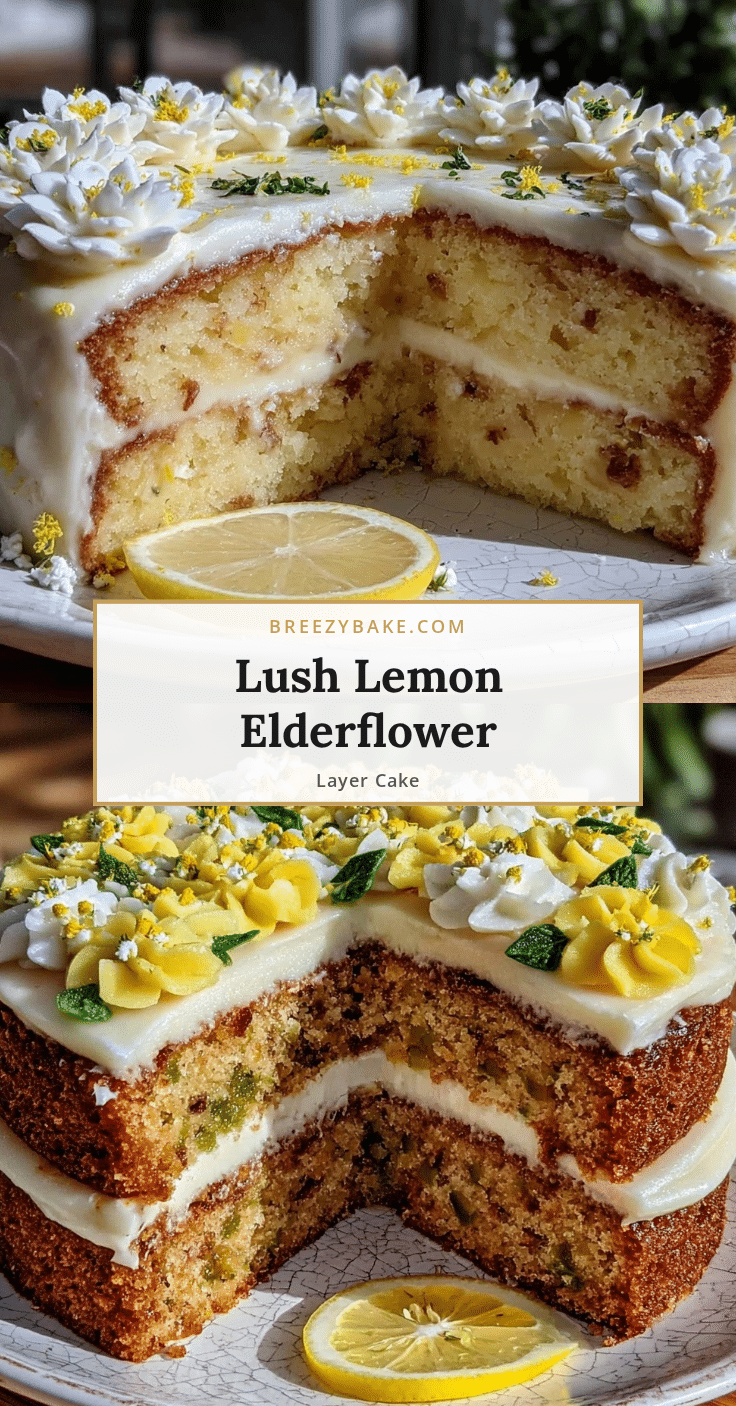
Perfect Lemon Elderflower Layer Cake
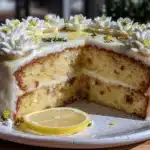
A tender and flavorful layered cake combining bright lemon zest and delicate elderflower syrup, topped with easy-to-make buttercream flowers for a charming finish.
- Prep Time: 30 minutes
- Cook Time: 30 minutes
- Total Time: 3 hours
- Yield: 12 servings 1x
- Category: Dessert
- Cuisine: American
Ingredients
- 2 ½ cups (315g) all-purpose flour, sifted
- 2 ½ teaspoons baking powder
- ½ teaspoon baking soda
- ½ teaspoon salt
- 1 cup (227g) unsalted butter, softened
- 1 ¾ cups (350g) granulated sugar
- 4 large eggs, room temperature
- 1 tablespoon lemon zest, freshly grated
- ⅔ cup (160ml) buttermilk, room temperature
- 2 tablespoons elderflower syrup
- 1 teaspoon pure vanilla extract
- ¼ cup (60ml) fresh lemon juice
- 1 cup (227g) unsalted butter, softened (for buttercream)
- 4 cups (480g) powdered sugar, sifted
- 2 tablespoons elderflower syrup (for buttercream)
- 2 tablespoons fresh lemon juice (for buttercream)
- 1 teaspoon vanilla extract (for buttercream)
- 2–3 tablespoons heavy cream or milk (use canned coconut milk for dairy-free)
- Food coloring gels (optional)
Instructions
- Preheat oven to 350°F (175°C). Grease two 8-inch cake pans and line bottoms with parchment paper. Let butter and eggs come to room temperature.
- In a medium bowl, whisk together sifted flour, baking powder, baking soda, and salt. Set aside.
- In a mixer bowl, beat softened butter on medium speed for about 2 minutes until creamy. Gradually add granulated sugar and beat for 3-4 minutes until light and fluffy.
- Add eggs one at a time, beating well after each addition. Mix in lemon zest and vanilla extract.
- In a small bowl, mix buttermilk, elderflower syrup, and fresh lemon juice.
- Reduce mixer speed to low. Add dry ingredients in three additions, alternating with wet mixture, starting and ending with dry. Mix just until combined.
- Divide batter evenly between prepared pans. Smooth tops gently with spatula. Bake 25-30 minutes or until toothpick inserted comes out clean.
- Let cakes cool in pans for 10 minutes, then invert onto cooling racks. Remove parchment and cool completely before frosting.
- For buttercream, beat softened butter on medium speed for 2 minutes. Gradually add powdered sugar on low speed to avoid sugar cloud.
- Add elderflower syrup, lemon juice, and vanilla extract. Beat on medium-high speed until fluffy, about 4-5 minutes. Add cream or milk to desired consistency.
- Divide buttercream into small bowls and tint with food coloring gels if desired. Fill piping bags fitted with flower tips and practice piping flowers.
- Place one cake layer on serving plate. Spread generous layer of buttercream on top. Add second layer and crumb coat entire cake. Chill 20 minutes.
- Apply final smooth layer of frosting. Pipe buttercream flowers and leaves around cake top and sides.
Notes
Use room temperature butter, eggs, and buttermilk for best results. Spoon and level flour when measuring to avoid dry cake. Chill buttercream if too soft and add cream if too firm. Practice piping flowers before decorating. Chill cake after crumb coating for easier final frosting. Store cake in fridge and bring to room temperature before serving.
Nutrition
- Serving Size: 1 slice (1/12th of c
- Calories: 370
- Fat: 20
- Carbohydrates: 45
- Fiber: 1
- Protein: 4
Keywords: lemon cake, elderflower cake, layered cake, buttercream flowers, spring cake, floral cake, easy buttercream, special occasion cake