My neighbor Priya asked me why I couldn’t just skip peeling the acorn squash. I stared at her, spoon mid-air, ready to launch into my usual spiel about texture and even cooking. Then I stopped. I mean, honestly, I had no good reason other than “that’s how I’ve always done it.” So I tried it her way. Roasted it skin-on, scooped it out, and blended it up without a single minute spent hacking at raw squash with a vegetable peeler. It worked. Completely. The skin softened in the oven, the flesh got sweeter, and I saved myself a solid ten minutes of frustration. I felt a little sheepish, honestly. Here I was, the one who writes recipes for a living, and my neighbor with zero culinary training had just taught me the best trick of the week.
That moment stuck with me. Every time I make this quick roasted acorn squash soup with coconut milk, I think about how I almost argued with her. How I almost stuck to my old, fussy ways. But this soup isn’t about fuss. It’s about getting a deeply comforting, velvety bowl of something good on the table on a Tuesday night when you’re tired and hungry and the last thing you want is a complicated project. The squash roasts away in the oven while you chop an onion and measure out some broth. Twenty minutes later, you’ve got a soup that tastes like it simmered for hours. I’ve made it for friends who asked for the recipe before they finished their first bowl. I’ve made it on nights when I needed something warm and grounding after a long day. And every single time, I’m glad I listened to Priya.
Maybe you’ve been there too — stuck in a cooking rut, doing things a certain way just because. This soup is an invitation to let go of a little perfection and trust the process. It’s quick, it’s forgiving, and it’s honestly one of the best things I’ve made all year. Let me show you how it’s done.
Why You’ll Love This Recipe
This quick roasted acorn squash soup with coconut milk isn’t just another soup recipe. It’s the one I turn to when I need dinner on the table in under 45 minutes, and I want it to feel like a warm hug in a bowl. Here’s why I think you’ll love it too:
- Quick & Easy: From start to finish, this soup comes together in about 40 minutes. The oven does most of the work while you handle a few simple stovetop steps. Perfect for those nights when you walk in the door at 6:00 and need to eat by 6:45.
- Simple Ingredients: You probably already have olive oil, an onion, and garlic in your kitchen. The rest is just an acorn squash, a can of coconut milk, and some vegetable broth. No fancy grocery store runs required.
- Perfect for Weeknights: This soup was designed for busy people who still want a real meal. It’s filling enough to stand alone, but light enough that you won’t feel sluggish after eating it.
- Crowd-Pleaser: I’ve served this to picky eaters, to friends who claim they don’t like squash, and to my own family on a random Wednesday. It gets rave reviews every single time. The coconut milk makes it creamy without any dairy, so even lactose-intolerant guests can dig in.
- Unbelievably Delicious: The flavor combo here is next-level. The natural sweetness of roasted acorn squash pairs beautifully with the rich, silky coconut milk. A pinch of cinnamon and a dash of cayenne add warmth and just a hint of heat. It’s comfort food that feels a little bit fancy, but without the effort.
What makes this recipe different from the rest is the technique. Roasting the squash with the skin on, as Priya taught me, saves time and adds a subtle depth of flavor you don’t get from boiling or steaming. The coconut milk isn’t just a substitute for cream — it brings its own personality to the soup, making every spoonful feel luxurious. This isn’t just another version of squash soup. It’s the best version I’ve found, and I think you’ll agree.
What Ingredients You Will Need
This recipe uses simple, wholesome ingredients that work together to create a soup that’s creamy, flavorful, and deeply satisfying. Most of these are pantry staples or easy to find at any grocery store. Let’s break down what you’ll need and why each ingredient matters.
For the Roasted Squash
- 1 medium acorn squash (about 2 pounds): Look for one that feels heavy for its size and has a deep green color with some orange patches — that means it’s ripe and sweet. You don’t need to peel it! The skin softens beautifully during roasting and blends right into the soup.
- 1 tablespoon olive oil: Helps the squash caramelize in the oven. I prefer a good-quality extra virgin olive oil here, but regular works fine too.
- 1/2 teaspoon salt: Brings out the natural sweetness of the squash.
- 1/4 teaspoon black pepper: Adds a subtle warmth.
For the Soup Base

- 1 tablespoon olive oil: For sautéing the aromatics.
- 1 medium yellow onion, diced: Adds a savory foundation. You could use a white onion in a pinch, but yellow gives a slightly sweeter, more mellow flavor.
- 3 cloves garlic, minced: Fresh garlic is best here. Pre-minced from a jar works in a hurry, but fresh gives a brighter, more aromatic punch.
- 1 teaspoon ground cumin: Adds an earthy warmth that pairs beautifully with the squash and coconut milk.
- 1/2 teaspoon ground cinnamon: This is my little secret. Cinnamon brings out the natural sweetness of the squash without making the soup taste dessert-like. Trust me on this one.
- 1/4 teaspoon cayenne pepper (optional): For a gentle kick of heat. Leave it out if you prefer a milder soup, or add a pinch more if you like things spicy.
- 3 cups vegetable broth: Use a good-quality store-bought broth or homemade if you have it. Low-sodium is best so you can control the salt level.
- 1 can (13.5 oz) full-fat coconut milk: This is non-negotiable for the creamiest texture. Light coconut milk will work, but the soup won’t be as rich and velvety. I recommend Thai Kitchen or Native Forest for consistent quality.
- 1 tablespoon maple syrup or honey (optional): Depending on how sweet your squash is, you might want a little extra sweetness. I usually add it, but taste first and decide.
- Salt and pepper to taste: Adjust at the end after blending.
For Garnish (Optional but Lovely)
- Toasted pumpkin seeds: Add a nice crunch.
- A drizzle of coconut milk or cream: For a pretty finish.
- Fresh thyme or parsley: A pop of green and freshness.
- A pinch of smoked paprika: For color and a hint of smokiness.
Equipment Needed
You don’t need a ton of fancy equipment for this soup, which is part of what makes it so weeknight-friendly. Here’s what you’ll want to have on hand:
- Baking sheet: A rimmed baking sheet works best to catch any juices from the roasting squash. I use my trusty half-sheet pan from Nordic Ware — it’s held up for years and cleans up easily.
- Parchment paper or silicone baking mat: Makes cleanup a breeze. The squash can get a little sticky as it roasts, and parchment paper saves you from scrubbing.
- Large pot or Dutch oven: You’ll need something big enough to hold all the soup plus the broth. A 4- to 5-quart pot is perfect. My Le Creuset Dutch oven is my go-to, but any heavy-bottomed pot will work.
- Immersion blender: This is my preferred tool for blending hot soup directly in the pot. It’s safer than transferring hot liquid to a blender, and it means fewer dishes. I use a KitchenAid immersion blender, and it’s been worth every penny.
- Regular blender (if you don’t have an immersion blender): A standard countertop blender works fine. Just be careful — blend in batches and don’t fill the blender more than halfway with hot liquid. Remove the center cap from the lid and cover it with a kitchen towel to let steam escape.
- Chef’s knife and cutting board: For cutting the squash and chopping the onion. A sharp knife makes the squash easier to handle.
- Measuring spoons and cups: For accuracy, especially with the spices.
If you don’t have an immersion blender, don’t worry. A regular blender works perfectly — just take it slow and be careful with the hot liquid. I’ve used both methods many times, and honestly, the soup turns out great either way.
Preparation Method
Let’s get cooking. This soup comes together in about 40 minutes, and most of that is hands-off roasting time. Here’s how to do it.
- Preheat your oven to 400°F (200°C). Line a baking sheet with parchment paper or a silicone mat for easy cleanup.
- Prepare the acorn squash. Using a sharp chef’s knife, carefully cut the squash in half from stem to tip. Scoop out the seeds and stringy pulp with a spoon. You can save the seeds and roast them separately if you like — they make a great garnish. Cut each half into wedges about 1 to 1.5 inches thick. Don’t worry about being perfect; rough wedges are fine.
- Roast the squash. Place the wedges on the prepared baking sheet. Drizzle with 1 tablespoon of olive oil and sprinkle with 1/2 teaspoon salt and 1/4 teaspoon pepper. Toss gently with your hands to coat evenly. Arrange the wedges in a single layer, skin-side down if possible. Roast for 25-30 minutes, until the flesh is tender and easily pierced with a fork. The edges should be slightly caramelized. Set aside to cool for a few minutes.
- While the squash roasts, start the soup base. In a large pot or Dutch oven, heat 1 tablespoon of olive oil over medium heat. Add the diced onion and cook, stirring occasionally, for about 5 minutes until softened and translucent. Add the minced garlic and cook for another minute until fragrant. Be careful not to let the garlic burn — it can turn bitter quickly.
- Toast the spices. Stir in the cumin, cinnamon, and cayenne (if using). Cook for about 30 seconds, stirring constantly, until the spices are fragrant. This step wakes up their flavors and makes the soup more aromatic.
- Add the broth and squash. Pour in the vegetable broth and bring to a simmer. Once the squash is cool enough to handle, peel the skin off — it should come off easily now, or you can leave it on and blend it right in. I usually leave it on because it blends completely smooth and adds extra fiber. Add the roasted squash to the pot.
- Simmer. Let the mixture simmer for 5-10 minutes to allow the flavors to meld. This is a good time to taste the broth and adjust seasoning if needed.
- Blend until smooth. Remove the pot from heat. Use an immersion blender to puree the soup directly in the pot until silky smooth. If using a countertop blender, work in batches, filling the blender no more than halfway. Hold the lid down with a towel and blend carefully. Return the pureed soup to the pot.
- Add the coconut milk. Stir in the full can of coconut milk. If you want a thinner soup, add a little extra broth or water. Taste and adjust seasoning with salt, pepper, and maple syrup or honey if you’d like a touch more sweetness. Heat gently over low heat until warmed through. Don’t let it boil after adding the coconut milk, or it might separate.
- Serve. Ladle the soup into bowls. Garnish with toasted pumpkin seeds, a swirl of coconut milk, fresh herbs, or a sprinkle of smoked paprika. Enjoy immediately.
Cooking Tips & Techniques
I’ve made this soup more times than I can count, and I’ve learned a few things along the way. Here are my best tips for getting it right every time.
Don’t skip roasting the squash. I know it’s tempting to microwave it or boil it to save time, but roasting brings out a deep, caramelized sweetness that you just can’t get any other way. The high heat concentrates the flavors and gives the soup a richer taste. Trust the 25 minutes in the oven — it’s worth it.
Keep an eye on your spices. I once got distracted and let my cumin and cinnamon toast a little too long in the pot. The result was a soup that tasted a bit bitter and smoky — not terrible, but not as bright and balanced as it should be. Toast your spices for just 30 seconds, stirring constantly, and pull them off the heat as soon as they smell fragrant.
Use full-fat coconut milk for the best texture. I’ve tried this soup with light coconut milk, and honestly, it’s just not the same. The full-fat version gives the soup a velvety, luxurious mouthfeel that makes it feel indulgent without any dairy. If you’re watching calories, you can use half a can of full-fat and stretch the rest with a little extra broth. But for the best results, go full-fat.
Blend carefully to avoid splatters. Hot soup in a blender can be dangerous. If you’re using a countertop blender, always remove the center cap from the lid and cover the opening with a folded kitchen towel. This lets steam escape and prevents the lid from popping off. Blend in small batches and never fill the blender more than halfway.
Taste as you go. This is the most important tip I can give you. Squash sweetness varies from squash to squash, and your broth might be saltier or milder than mine. Taste the soup before you add the coconut milk, then taste again after. Adjust salt, pepper, and sweetness until it tastes just right to you. Cooking is about your palate, not my recipe.
Variations & Adaptations
One of the things I love about this soup is how flexible it is. Here are some ways to make it your own.
Make it vegan and dairy-free. It already is! This soup is naturally vegan and dairy-free thanks to the coconut milk. Just make sure your vegetable broth is vegan-friendly, and you’re good to go.
Swap the squash. Don’t have an acorn squash? Butternut squash, kabocha squash, or even a sugar pumpkin will work beautifully. The cooking time might vary slightly depending on the size and density of the squash, so just roast until tender. Each squash brings its own subtle flavor, but the soup will be delicious no matter what.
Add some protein. For a heartier meal, stir in a can of drained and rinsed chickpeas or some cooked white beans after blending. You can also top the soup with crispy tofu croutons or shredded rotisserie chicken if you’re not keeping it vegan.
Try different spice blends. The cumin-cinnamon-cayenne combo is my favorite, but you can easily switch it up. Try curry powder and ginger for an Indian-inspired version, or smoked paprika and thyme for something more savory. A pinch of nutmeg or allspice would also be lovely.
Make it in an Instant Pot. To speed things up even more, you can pressure cook the squash. Add the halved squash (cut into large chunks) to the Instant Pot with 1 cup of water. Cook on high pressure for 8 minutes, then quick release. Scoop out the flesh and proceed with the stovetop steps. It’s faster, but you lose a bit of the caramelized flavor from roasting. I still prefer the oven method, but the Instant Pot works in a pinch.
Serving & Storage Suggestions
This soup is wonderful served hot, but it’s also surprisingly good at room temperature on a warm day. Here’s how to serve and store it.
Serving temperature and presentation. Ladle the soup into warmed bowls for the best experience. A swirl of extra coconut milk on top, a sprinkle of toasted pumpkin seeds, and a few fresh thyme leaves make it look restaurant-worthy. I like to serve it with crusty bread or a simple green salad on the side for a complete meal.
Complementary dishes. This soup pairs beautifully with a grilled cheese sandwich (try it with sharp cheddar and apple slices), a kale and quinoa salad, or some roasted chickpeas for crunch. A glass of dry Riesling or a crisp apple cider would be lovely beverages to serve alongside.
Storage instructions. Leftover soup keeps well in an airtight container in the refrigerator for up to 5 days. The flavors actually deepen and meld together overnight, so it often tastes even better the next day. Let the soup cool completely before refrigerating.
Freezing instructions. This soup freezes beautifully. Let it cool completely, then transfer to freezer-safe containers or zip-top bags. Leave a little room for expansion. It will keep for up to 3 months. Thaw overnight in the refrigerator before reheating.
Reheating methods. Reheat the soup gently on the stovetop over medium-low heat, stirring occasionally. You can also microwave individual portions in a microwave-safe bowl for 2-3 minutes, stirring halfway through. If the soup seems too thick after refrigeration or freezing, stir in a splash of broth or water to reach your desired consistency. Don’t let it boil vigorously, or the coconut milk might separate.
Nutritional Information & Benefits
This soup isn’t just delicious — it’s packed with good-for-you ingredients. Here’s a rough estimate of the nutritional values per serving (based on 4 servings):
- Calories: Approximately 320-350
- Fat: 22g (mostly from healthy coconut fat and olive oil)
- Carbohydrates: 30g
- Fiber: 6g
- Protein: 5g
- Sugar: 10g (naturally occurring from squash and a touch of maple syrup)
- Sodium: 600-800mg (varies based on broth and added salt)
Health benefits of key ingredients: Acorn squash is rich in vitamin A (for eye health), vitamin C (for immune support), and fiber (for digestion). Coconut milk provides healthy medium-chain triglycerides (MCTs) that can support energy and brain function. The spices — cumin, cinnamon, and cayenne — have anti-inflammatory properties and can aid digestion. This soup is naturally gluten-free, dairy-free, and vegan, making it suitable for a wide range of dietary needs.
Potential allergens: This recipe is free from the top nine allergens (dairy, eggs, peanuts, tree nuts, soy, wheat, fish, shellfish, and sesame). However, if you have a coconut allergy, this recipe isn’t for you. Always check your broth labels if you’re avoiding specific allergens.
Conclusion
This quick roasted acorn squash soup with coconut milk has become a staple in my kitchen for good reason. It’s fast enough for a busy weeknight, simple enough for a beginner cook, and impressive enough to serve to guests. The combination of sweet roasted squash and creamy coconut milk, with just a hint of warm spice, is pure comfort in a bowl. I love that it uses minimal dishes, comes together in under an hour, and tastes like something you’d order at a cozy café.
I hope you give this recipe a try and make it your own. Maybe you’ll add a little extra cayenne, or swap in butternut squash, or top it with crispy chickpeas. That’s the beauty of a simple, forgiving recipe — it leaves room for your creativity. When you make it, I’d love to hear how it turned out. Leave a comment below and let me know what variations you tried, or share a photo of your soup on social media and tag me. Happy cooking, friends. You’ve got this.
Frequently Asked Questions
Can I make this soup ahead of time?
Absolutely. In fact, it tastes even better the next day. Make it up to 5 days in advance and store it in the refrigerator. Reheat gently on the stovetop or in the microwave.
Can I freeze this soup?
Yes, it freezes wonderfully. Let it cool completely, then transfer to freezer-safe containers. It will keep for up to 3 months. Thaw overnight in the fridge before reheating.
Do I have to peel the acorn squash?
Nope! That’s the beauty of this recipe. When you roast the squash, the skin softens enough to blend completely smooth. You won’t even notice it’s there, and it adds extra fiber and nutrients.
Can I use a different type of squash?
Yes, any winter squash will work. Butternut, kabocha, or sugar pumpkin are all great options. The roasting time may vary slightly depending on the size and density of the squash.
Is this soup spicy?
Not really. The cayenne pepper is optional and adds just a gentle warmth, not intense heat. If you’re sensitive to spice, leave it out. If you like things fiery, add a little more or serve with hot sauce on the side.
Pin This Recipe!
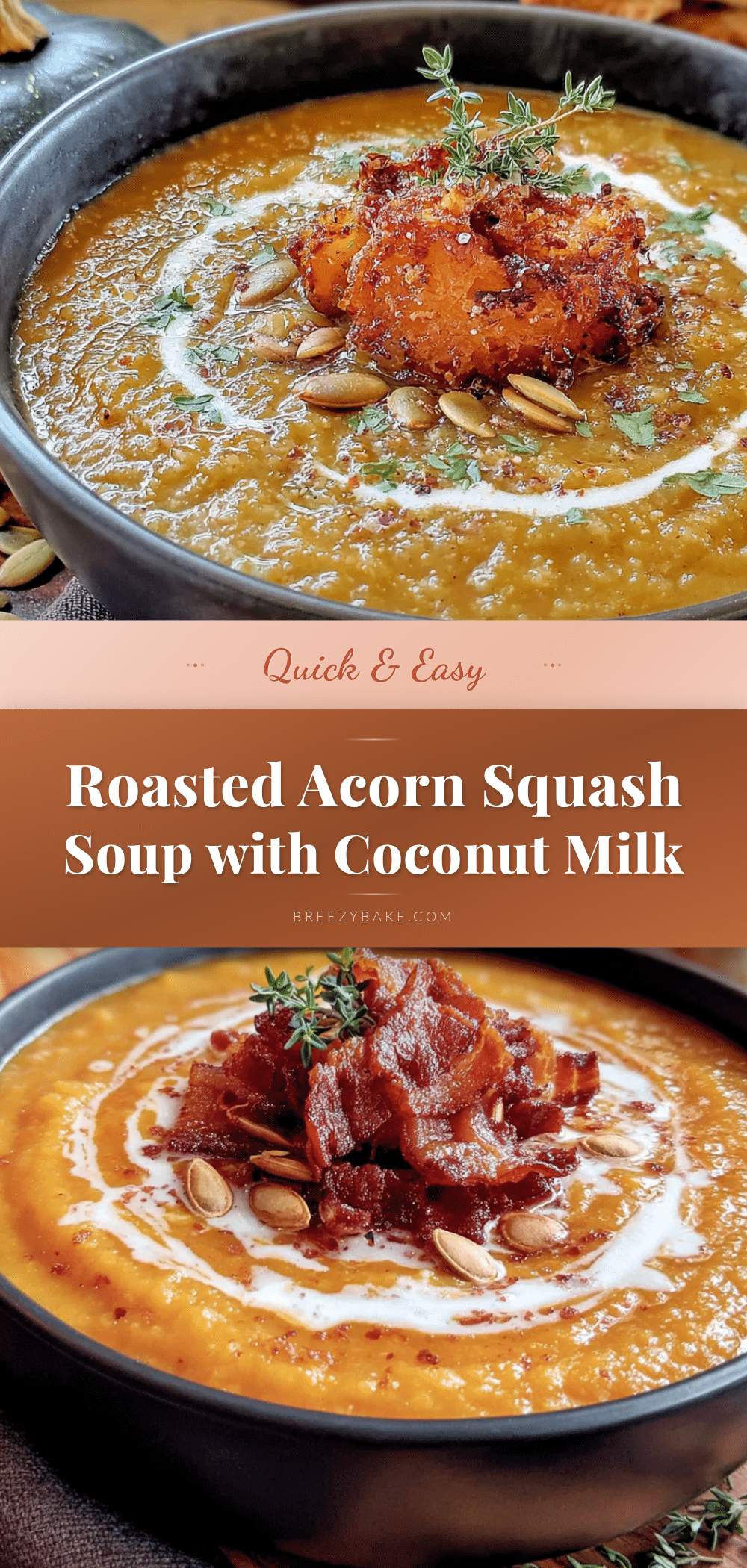
Quick Roasted Acorn Squash Soup with Coconut Milk

A quick and easy roasted acorn squash soup with coconut milk that’s creamy, comforting, and ready in under 45 minutes. Perfect for busy weeknights, this soup is naturally vegan, gluten-free, and packed with flavor.
- Prep Time: 10 minutes
- Cook Time: 30 minutes
- Total Time: 40 minutes
- Yield: 4 servings 1x
- Category: Soup
- Cuisine: American
Ingredients
- 1 medium acorn squash (about 2 pounds)
- 2 tablespoons olive oil, divided
- 1/2 teaspoon salt
- 1/4 teaspoon black pepper
- 1 medium yellow onion, diced
- 3 cloves garlic, minced
- 1 teaspoon ground cumin
- 1/2 teaspoon ground cinnamon
- 1/4 teaspoon cayenne pepper (optional)
- 3 cups vegetable broth
- 1 can (13.5 oz) full-fat coconut milk
- 1 tablespoon maple syrup or honey (optional)
- Salt and pepper to taste
- Toasted pumpkin seeds (for garnish, optional)
- Extra coconut milk or cream (for garnish, optional)
- Fresh thyme or parsley (for garnish, optional)
- Smoked paprika (for garnish, optional)
Instructions
- Preheat your oven to 400°F (200°C). Line a baking sheet with parchment paper or a silicone mat.
- Cut the acorn squash in half from stem to tip. Scoop out the seeds and stringy pulp. Cut each half into wedges about 1 to 1.5 inches thick.
- Place the wedges on the prepared baking sheet. Drizzle with 1 tablespoon olive oil and sprinkle with 1/2 teaspoon salt and 1/4 teaspoon pepper. Toss to coat evenly. Arrange in a single layer, skin-side down if possible. Roast for 25-30 minutes until tender and caramelized. Set aside to cool slightly.
- While the squash roasts, heat 1 tablespoon olive oil in a large pot or Dutch oven over medium heat. Add the diced onion and cook for about 5 minutes until softened. Add the minced garlic and cook for 1 minute until fragrant.
- Stir in the cumin, cinnamon, and cayenne (if using). Cook for about 30 seconds, stirring constantly, until fragrant.
- Pour in the vegetable broth and bring to a simmer. Once the squash is cool enough to handle, peel the skin off (or leave it on) and add the roasted squash to the pot.
- Let the mixture simmer for 5-10 minutes to meld flavors. Taste and adjust seasoning if needed.
- Remove the pot from heat. Use an immersion blender to puree the soup until smooth. If using a countertop blender, work in batches, filling no more than halfway. Hold the lid down with a towel and blend carefully. Return the pureed soup to the pot.
- Stir in the full can of coconut milk. Add maple syrup or honey if desired. Heat gently over low heat until warmed through. Do not let it boil.
- Ladle into bowls and garnish with toasted pumpkin seeds, a swirl of coconut milk, fresh herbs, or smoked paprika. Serve immediately.
Notes
Don’t skip roasting the squash—it brings out deep caramelized sweetness. Toast spices for only 30 seconds to avoid bitterness. Use full-fat coconut milk for the creamiest texture. Blend carefully to avoid splatters. Taste and adjust seasoning as squash sweetness varies. The soup can be made ahead and tastes even better the next day. Freezes well for up to 3 months.
Nutrition
- Serving Size: 1 serving (about 1.5
- Calories: 335
- Sugar: 10
- Sodium: 700
- Fat: 22
- Saturated Fat: 14
- Carbohydrates: 30
- Fiber: 6
- Protein: 5
Keywords: acorn squash soup, roasted squash soup, coconut milk soup, vegan soup, gluten-free soup, quick soup, weeknight dinner, fall soup, winter soup