My neighbor Rosa watched me wrestling with a massive pumpkin last October, trying to figure out how to get the thing carved without losing a finger. She didn’t say anything at first, just leaned against her fence with this knowing smile. Then she disappeared into her house and came back with a tray that looked like something out of a fairy tale — a perfect spider web made entirely of vegetables, sitting on a creamy white base. “For the party tonight,” she said, handing it over. “No carving required.” I laughed so hard I nearly dropped the pumpkin.
That moment changed how I think about Halloween food, honestly. I mean, we all love the candy and the creepy desserts, but there’s something about showing up to a party with a veggie tray that actually makes people stop and stare. Rosa’s original used a classic ranch dip, but I’ve tweaked it over the past year to make it lighter and brighter — perfect for those of us who want to enjoy the holiday without feeling like we’ve overdone it before the main event even starts.
This spider web veggie tray is my go-to for every fall gathering now. It’s the kind of thing that gets people talking, and I love watching guests figure out how to grab a veggie without disturbing the web pattern — maybe you’ve been there, trying to be polite while eyeing that perfect snap pea. It’s festive without being fussy, healthy without being boring, and honestly, it takes about fifteen minutes to throw together. Let me show you how it’s done.
Why You’ll Love This Recipe
Let’s be real for a second — most Halloween snacks are basically sugar bombs dressed up in orange and black. This spider web veggie tray is the breath of fresh air your party table needs. I’ve tested this at everything from casual family movie nights to full-blown costume parties, and it never fails to impress.
- Quick & Easy: You can put this together in under 20 minutes, no joke. It’s perfect for those last-minute Halloween gatherings where you forgot to sign up for the potluck until the morning of.
- Simple Ingredients: Everything here is stuff you can grab at any grocery store. No specialty items, no weird spices, no hunting down obscure ingredients online.
- Perfect for Halloween Parties: This tray fits right in with the spooky theme without adding more sugar to the mix. It’s great for school parties, office potlucks, or family dinners before trick-or-treating.
- Crowd-Pleaser: I’ve watched kids who swear they hate vegetables go back for seconds of these. Something about the web design makes it feel like a game, not a snack.
- Unbelievably Delicious: The combination of cool, creamy dip with crunchy fresh veggies is honestly addictive. It’s comfort food that happens to be good for you.
What makes this different from every other veggie tray out there is the presentation, sure, but also the dip. Instead of using heavy sour cream or store-bought ranch, I blend Greek yogurt with fresh herbs and a touch of garlic — you get all the creamy goodness with way more protein and way less guilt. It’s the kind of snack that makes you feel good about eating your vegetables, and isn’t that the whole point?
What Ingredients You Will Need
This recipe uses simple, fresh ingredients to create a show-stopping appetizer that’s as healthy as it is festive. Most of these are pantry staples or easy to find at any grocery store.
For the Creamy White Dip Base
- 2 cups plain Greek yogurt (I prefer full-fat for the creamiest texture, but 2% works great too)
- 2 tablespoons cream cheese, softened (adds richness and helps the dip hold its shape)
- 1 tablespoon fresh lemon juice (brightens everything up)
- 1 small garlic clove, minced (start with less — you can always add more)
- 1/2 teaspoon salt
- 1/4 teaspoon black pepper
- 2 tablespoons fresh chives or dill, finely chopped (optional but recommended)
For the Spider Web Design
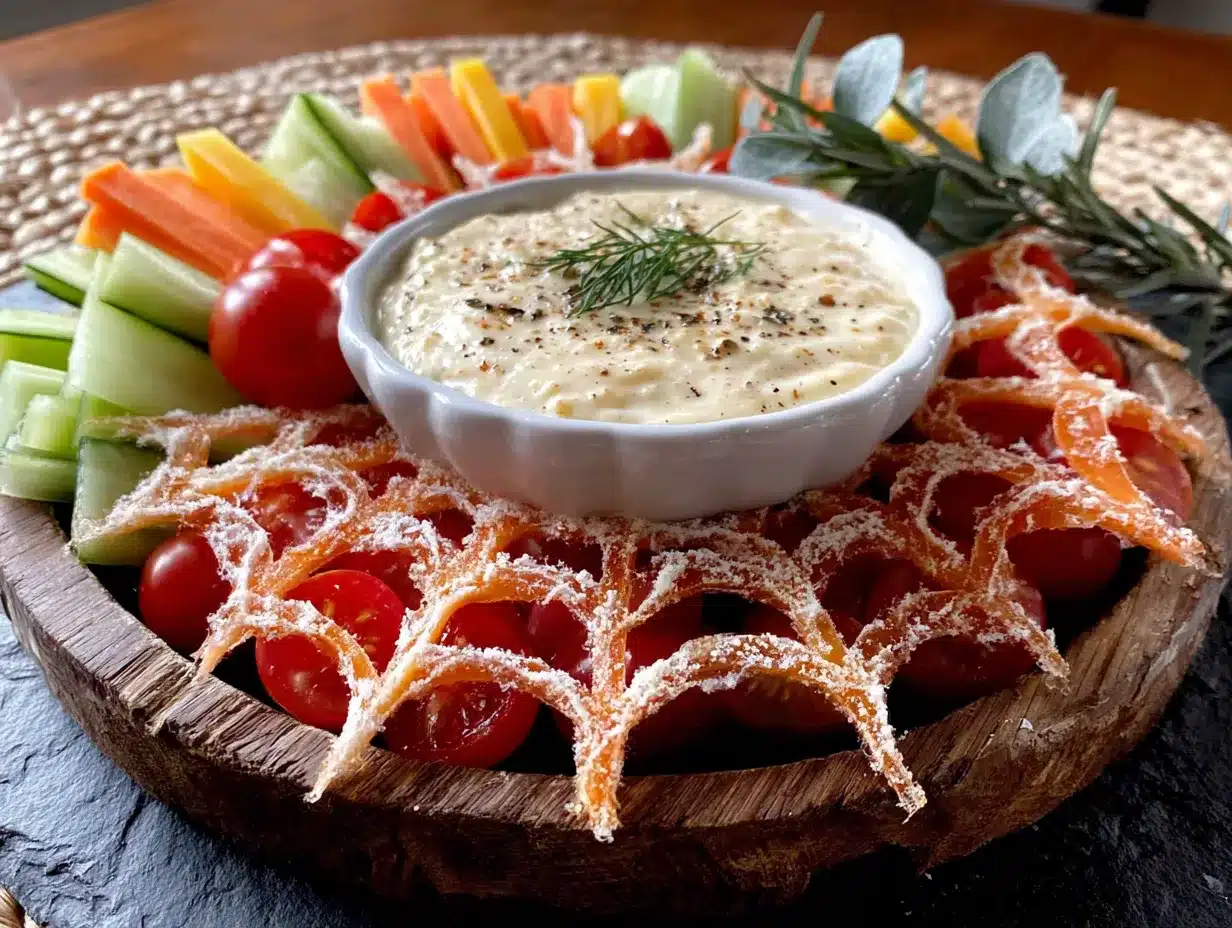
- 1 large round platter or serving board (white or light-colored works best for contrast)
- Black sesame seeds or poppy seeds (for drawing the web lines)
- 1 small black olive, sliced into thin strips (for the spider — trust me on this one)
For the Veggie Arrangement
- 1 large cucumber, sliced into thin rounds
- 1 cup snap peas or snow peas
- 1 cup cherry tomatoes (mix red and yellow for extra color)
- 1 cup broccoli florets, cut into small bite-sized pieces
- 1 cup cauliflower florets
- 1/2 cup baby carrots or carrot sticks
- 1/2 cup bell pepper strips (orange or yellow for contrast)
- Optional: 1/2 cup radish slices (adds a peppery kick and beautiful color)
I recommend using Fage or Chobani Greek yogurt for the dip — they’re thick enough to hold the web pattern without sliding around. For the veggies, try to pick ones that are firm and fresh. Limp vegetables won’t stand up nicely on the tray, and you want that crisp crunch.
If you’re dairy-free, swap the Greek yogurt for a thick coconut yogurt and use dairy-free cream cheese. The flavor will be slightly different, but the texture works just fine. For a nut-free version, obviously everything here is already nut-free, so you’re good to go!
Equipment Needed
You don’t need anything fancy for this recipe, which is part of the beauty. Here’s what you’ll want on hand:
- Large round platter or wooden board — at least 12 inches across. A white platter makes the web design pop, but I’ve used a dark slate board before and it looks surprisingly elegant.
- Small mixing bowl — for the dip base
- Spatula or butter knife — to spread the dip evenly
- Sharp knife and cutting board — for prepping veggies
- Small spoon or toothpick — for drawing the web pattern with seeds
- Piping bag or zip-top bag — optional, but makes drawing the web lines much easier
If you don’t have a piping bag, just snip the corner off a zip-top bag and use that. I’ve done it a dozen times and it works perfectly. For the platter, any large plate will do in a pinch — just make sure it’s round to get that web effect right.
Preparation Method
Let’s build this spider web veggie tray step by step. I promise it’s easier than it looks.
-
Make the dip base. In your small mixing bowl, combine the Greek yogurt, softened cream cheese, lemon juice, minced garlic, salt, and pepper. Stir until completely smooth and creamy. This should take about 2 minutes. Taste it and adjust the salt or garlic — I always end up adding just a pinch more salt. Fold in the fresh herbs if you’re using them. The dip should be thick enough to hold its shape when you spread it.
-
Spread the dip on the platter. Using your spatula, spread the yogurt mixture evenly across the center of your platter. Leave about 2 inches of bare platter around the edges — that’s where your veggies will go. Try to make the dip layer about 1/4 inch thick. Don’t worry about making it perfect; the web design will cover up any imperfections.
-
Create the web pattern. This is the fun part. Fill your piping bag or zip-top bag with the black sesame seeds. Starting from the center of the dip, pipe a small dot. Then pipe a line outward to the edge of the dip, like a spoke on a wheel. Repeat this 6 to 8 times around the circle, spacing them evenly. Now, pipe curved lines connecting the spokes, starting from the center and working your way out. You want about 4 or 5 concentric circles of seeds. The result should look like a spider web — it’s okay if it’s not perfect, that’s what gives it character!
-
Make the spider. Take your black olive slice and cut it into 8 thin strips — these will be the spider legs. Place the olive strips in the center of the web, arranging them like a spider. Use a tiny dot of dip to hold them in place if needed. You can also use a whole olive for the body and cut smaller pieces for the legs. I’ve done it both ways and they both look great.
-
Arrange the veggies. Now comes the veggie border. Start with the cucumber rounds — place them around the edge of the platter, overlapping slightly. This creates a nice green frame. Then fill in the rest of the space with your other veggies. I like to group similar colors together for visual appeal: tomatoes in one section, broccoli and cauliflower in another, snap peas and carrots together. Press the veggies gently into the edge of the dip so they stay put.
-
Final touches. Take a step back and look at your tray. Fill any bare spots with extra veggies. If the web looks a bit messy, you can use a toothpick to nudge the seeds back into place. Sprinkle a few extra black sesame seeds around the edges of the platter for a spooky, scattered effect.
And that’s it! The whole process takes about 15 to 20 minutes, depending on how detailed you get with the web. Your spider web veggie tray is ready to serve.
Cooking Tips & Techniques
I’ve made this tray about a dozen times now, and I’ve learned a few things the hard way. Let me save you some trouble.
Keep the dip thick. The first time I made this, I used a thinner yogurt and the web pattern basically melted into a white blob within ten minutes. Use full-fat Greek yogurt or strain regular yogurt overnight through a cheesecloth to get that thick, spreadable consistency. The dip needs to hold its shape for the web to look good.
Chill everything first. Cold veggies and cold dip hold up better on the tray. I prep all my vegetables and refrigerate them for at least 30 minutes before assembling. The dip also firms up nicely after a short chill. If you’re making this for a party, assemble it an hour ahead and keep it in the fridge until serving time.
Don’t overcomplicate the web. I once spent twenty minutes trying to make the web perfectly symmetrical with a ruler — it looked stiff and unnatural. Now I just freehand it, and it always looks better. The slight imperfections make it look handmade and charming, not like something from a factory. Trust the process.
Watch the moisture. Vegetables like cucumber and tomatoes release water over time, which can make the dip runny. Pat your veggies dry with a paper towel before arranging them on the tray. This is especially important if you’re making the tray ahead of time.
Use a piping bag for the seeds. I tried using a spoon to sprinkle the seeds once, and it was a disaster. The seeds went everywhere except where I wanted them. A piping bag gives you precise control, and you can even draw thin lines with it. A small squeeze bottle also works great if you have one.
Variations & Adaptations
One of the best things about this spider web veggie tray is how easy it is to customize. Here are some of my favorite variations:
Seasonal Swap: In the summer, I use zucchini rounds, yellow squash, and fresh basil leaves instead of the heartier fall vegetables. The lighter veggies give the tray a completely different feel — more garden party than Halloween spooky. In the winter, roasted root vegetables like parsnip sticks and beet slices add a cozy, earthy touch.
Dip Variations: Not in the mood for herb yogurt? Try a spicy black bean dip for the base — it gives the web a dark, dramatic look and adds a protein punch. Or use a beet hummus for a vibrant purple web that’s totally unexpected. I’ve also done a version with guacamole, though you have to serve it right away before the avocado browns.
Dietary Adaptations: For a vegan version, use cashew cream or coconut yogurt for the dip. Gluten-free is already covered since everything here is naturally gluten-free. If you’re watching your sodium, skip the salt in the dip and rely on the herbs and garlic for flavor.
Flavor Twists: Add a pinch of smoked paprika or cayenne to the dip for a subtle heat that catches people off guard. Or stir in some finely chopped sun-dried tomatoes for a tangy, umami kick. I once added a teaspoon of harissa paste to the dip and it was incredible — spicy, smoky, and completely addictive.
Mini Version: Make individual spider web veggie trays on small plates or in mason jar lids for a party. Each guest gets their own web, which is both adorable and hygienic. Perfect for school parties or buffets where you want to avoid cross-contamination.
Serving & Storage Suggestions
This spider web veggie tray is best served cold, straight from the fridge. The contrast between the cool, creamy dip and the crisp vegetables is what makes it so satisfying.
For presentation, I like to place the tray on a dark tablecloth or black serving board — the white dip and colorful veggies really pop against a dark background. Add some battery-operated tea lights around the tray for a spooky glow, or scatter a few fake spiders nearby for fun. It’s a great conversation starter at any Halloween gathering.
As for what to serve alongside it, this tray pairs beautifully with other light appetizers. I often put it next to a bowl of popcorn tossed with nutritional yeast (it looks like fallen leaves) or a platter of stuffed mushrooms. For drinks, a crisp white wine or sparkling water with lime cuts through the creamy dip nicely.
Storage: If you have leftovers (which honestly, rarely happens in my house), cover the tray tightly with plastic wrap and refrigerate. The dip will keep for up to 2 days, though the vegetables may start to wilt. For best results, store the dip and veggies separately and assemble fresh the next day.
Reheating: This is a cold dish, so no reheating needed! If the dip has been sitting out for more than 2 hours at room temperature, discard any leftovers for food safety reasons.
The flavors actually meld together beautifully after a few hours in the fridge. I’ve found that the herbs infuse the dip more deeply overnight, making it even tastier the next day — if you can resist eating it all at once.
Nutritional Information & Benefits
Let’s talk numbers, because I know you’re curious. This spider web veggie tray is surprisingly light compared to most Halloween snacks.
Per serving (about 1 cup of veggies with 2 tablespoons of dip):
- Calories: approximately 120-150
- Protein: 8-10 grams (thanks to the Greek yogurt)
- Carbohydrates: 12-15 grams
- Fiber: 3-4 grams
- Fat: 4-6 grams
- Sugar: 6-8 grams (mostly natural from vegetables)
The Greek yogurt base is packed with probiotics, which are great for gut health. The vegetables provide a wide range of vitamins — vitamin C from the bell peppers and broccoli, vitamin A from the carrots, and antioxidants from the tomatoes. The black sesame seeds add a small amount of calcium and iron, plus they look amazing.
This recipe is naturally gluten-free, nut-free, and can easily be made vegetarian or vegan. The only potential allergen is dairy from the yogurt and cream cheese, but as mentioned, you can substitute those easily. It’s also low in added sugar — there’s none at all, actually — which is rare for a holiday appetizer.
I love that I can serve this at a Halloween party and feel good about what I’m eating. It’s the kind of snack that keeps you energized for hours of trick-or-treating or dancing at a costume party, without the sugar crash that comes from candy and cupcakes.
Conclusion
This spider web veggie tray has become my signature Halloween dish, and I think it deserves a spot in your holiday rotation too. It’s quick, it’s healthy, and honestly, it’s just plain fun to make. Every time I bring it to a party, someone asks for the recipe — and I love watching their faces when I tell them how simple it is.
The best part is that you can make it your own. Swap in your favorite veggies, experiment with different dips, or go wild with the web design. There’s no wrong way to do this. Rosa would probably laugh at how much I’ve changed her original recipe, but I think she’d approve of the spirit behind it — sharing good food with people you care about, no stress required.
So go ahead, give it a try this Halloween. I’d love to hear how it turns out — drop a comment below and tell me about your version. Did you add something unexpected? Did your kids help design the web? Share your photos and tag me on social media, because honestly, I never get tired of seeing these trays come to life in different kitchens. Happy Halloween, and happy snacking!
Frequently Asked Questions
Can I make this spider web veggie tray the night before?
Absolutely! Assemble the tray up to 24 hours in advance, but wait to add the black sesame seed web until just before serving. The seeds can absorb moisture from the dip and lose their crisp definition overnight. Cover the tray tightly with plastic wrap and refrigerate.
What can I use instead of Greek yogurt for the dip?
You can use thick coconut yogurt for a dairy-free version, or try a thick cashew cream. For a completely different flavor, use hummus or a white bean dip as the base — just make sure it’s thick enough to hold the web pattern.
How do I keep the vegetables from sliding off the tray?
Press the veggies gently into the edge of the dip layer — the dip acts like glue. Also, make sure your vegetables are dry before placing them on the tray. Wet veggies slide around and make the dip runny.
Can I use other seeds for the web pattern?
Yes! Poppy seeds work beautifully and create a similar effect. You can also use chia seeds, though they’re smaller and harder to pipe. For a dramatic look, try using finely chopped black olives or even black bean paste in a piping bag.
Is this recipe suitable for kids to help with?
Definitely! Kids love arranging the vegetables and drawing the web pattern with the seeds. Just supervise the knife work for younger children. It’s a great way to get picky eaters excited about eating their vegetables — they’ll be proud of their creation and more willing to try it.
Pin This Recipe!
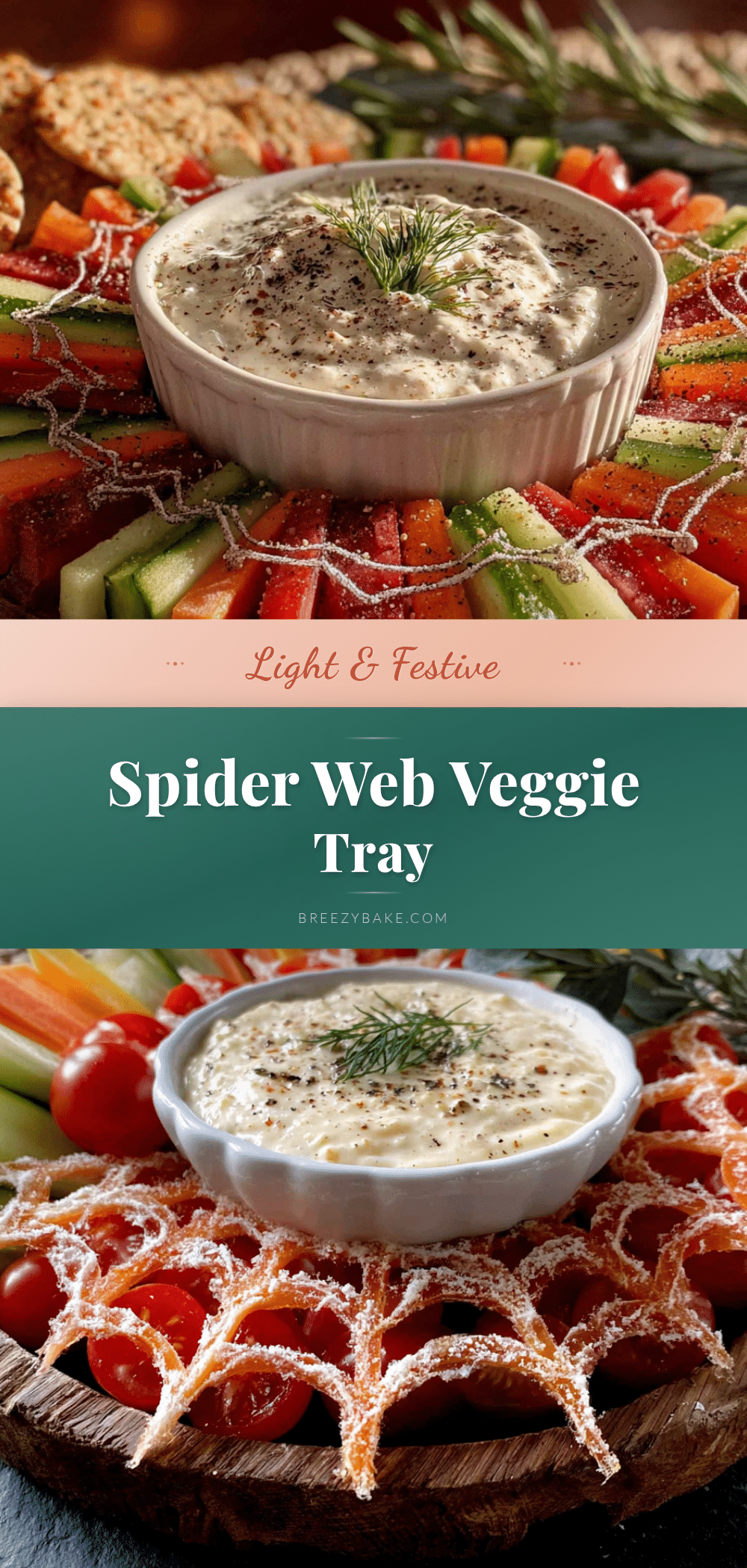
Spider Web Veggie Tray: Easy Healthy Halloween Appetizer

A festive and healthy Halloween appetizer featuring a creamy Greek yogurt dip spread in a spider web pattern on a platter, surrounded by fresh, crunchy vegetables. Quick to assemble and perfect for parties.
- Prep Time: 15 minutes
- Cook Time: 0 minutes
- Total Time: 15 minutes
- Yield: 8 servings 1x
- Category: Appetizer
- Cuisine: American
Ingredients
- 2 cups plain Greek yogurt (full-fat or 2%)
- 2 tablespoons cream cheese, softened
- 1 tablespoon fresh lemon juice
- 1 small garlic clove, minced
- 1/2 teaspoon salt
- 1/4 teaspoon black pepper
- 2 tablespoons fresh chives or dill, finely chopped (optional)
- Black sesame seeds or poppy seeds (for web lines)
- 1 small black olive, sliced into thin strips (for spider)
- 1 large cucumber, sliced into thin rounds
- 1 cup snap peas or snow peas
- 1 cup cherry tomatoes (mix red and yellow)
- 1 cup broccoli florets, cut into small bite-sized pieces
- 1 cup cauliflower florets
- 1/2 cup baby carrots or carrot sticks
- 1/2 cup bell pepper strips (orange or yellow)
- 1/2 cup radish slices (optional)
Instructions
- Make the dip base: In a small mixing bowl, combine Greek yogurt, softened cream cheese, lemon juice, minced garlic, salt, and pepper. Stir until smooth and creamy. Fold in fresh herbs if using.
- Spread the dip on the platter: Using a spatula, spread the yogurt mixture evenly across the center of a large round platter, leaving about 2 inches of bare platter around the edges. Aim for a 1/4-inch thick layer.
- Create the web pattern: Fill a piping bag or zip-top bag with black sesame seeds. Pipe a small dot in the center, then pipe lines outward to the edge of the dip like spokes on a wheel (6-8 spokes). Pipe curved lines connecting the spokes, starting from the center and working outward (4-5 concentric circles).
- Make the spider: Cut the black olive slice into 8 thin strips for legs. Place the strips in the center of the web, arranging them like a spider. Use a tiny dot of dip to hold them in place if needed.
- Arrange the veggies: Place cucumber rounds around the edge of the platter, overlapping slightly. Fill the remaining space with other veggies, grouping similar colors together. Press veggies gently into the edge of the dip.
- Final touches: Fill any bare spots with extra veggies. Use a toothpick to nudge seeds back into place if needed. Sprinkle a few extra black sesame seeds around the edges for a spooky effect.
Notes
Keep the dip thick by using full-fat Greek yogurt or straining regular yogurt. Chill veggies and dip before assembling for best results. Pat vegetables dry to prevent moisture from making the dip runny. Assemble up to 24 hours ahead but add the seed web just before serving. For a vegan version, use thick coconut yogurt and dairy-free cream cheese.
Nutrition
- Serving Size: 1 cup of veggies wit
- Calories: 135
- Sugar: 7
- Sodium: 250
- Fat: 5
- Saturated Fat: 2
- Carbohydrates: 13
- Fiber: 3
- Protein: 9
Keywords: Halloween appetizer, veggie tray, spider web, healthy snack, party platter, Greek yogurt dip, fall recipe