Maureen wasn’t trying to impress anyone. I’d stopped by to drop off a book I’d borrowed, and the smell hit me before I even got through the screen door. That warm, almost nutty scent of baking bread, mixed with something sweet and a little tangy. She was standing at the counter, flour dusted on her favorite old sweater, not even looking up. “Oh, that’s just soda bread,” she said when I asked. “It’s nothing fancy.” She was so casual about it, like she hadn’t just created something that smelled like a hug from the inside out. Honestly, I stood there for a minute, just breathing it in. It was a cold, drizzly Tuesday, and that kitchen felt like the only warm spot in the whole world.
She let it cool for maybe ten minutes before slicing into it. I remember watching the steam curl up, the crust cracking under the knife. She slathered a piece with butter, didn’t even offer me one at first, just took a bite and closed her eyes for a second. That’s when I knew. This wasn’t just bread. This was a feeling. I mean, I’ve made a lot of bread in my day, but there’s something about soda bread that feels different. It’s not about patience or proofing or any of that fuss. It’s about getting something deeply satisfying on the table with almost no drama. And that, my friends, is a kind of magic.
I practically begged for the recipe, and she scribbled it on a scrap of paper. It was stained with butter and barely legible. That’s how you know a recipe is good, you know? When the person who makes it doesn’t even need to look at it. This cozy Irish soda bread with currants has been in my rotation ever since that drizzly Tuesday. It’s the bread I make when I need a little comfort, when the house feels cold, or when I just want to remember that simple things can be the best things. Maybe you’ve been there, standing in a friend’s kitchen, watching them be completely nonchalant about something extraordinary. That’s this bread. It’s the ordinary that feels extraordinary, and I’m so glad I get to share it with you.
Why You’ll Love This Recipe
Let’s be real for a second. There are a million bread recipes out there, and a lot of them are high-maintenance. You need time, patience, a warm spot for the dough to rise, and sometimes a degree in chemistry just to get the yeast to cooperate. This cozy Irish soda bread with currants is the total opposite. It’s the friend who shows up with takeout and a bottle of wine when you’re having a rough day, not the one who expects you to host a five-course dinner. It’s reliable, it’s forgiving, and it delivers every single time.
- Quick & Easy: From start to finish, this bread is ready in about an hour. No kneading, no rising, no fuss. It’s perfect for a last-minute addition to dinner or a spontaneous breakfast treat.
- Simple Ingredients: You probably have everything you need in your pantry right now. Flour, buttermilk, baking soda, salt, a little sugar, and some dried currants. That’s it. No trips to a specialty store required.
- Perfect for Cozy Evenings: This is the bread you want when the weather turns cold. It’s dense, hearty, and just a little sweet from the currants. It pairs beautifully with a bowl of soup or a cup of tea.
- Crowd-Pleaser: I’ve brought this to potlucks and family dinners, and it always disappears. People love the rustic look and the tender crumb. It feels special without being complicated.
- Unbelievably Delicious: The texture is what gets me every time. The crust is crisp and golden, while the inside is soft and almost cake-like. The little bursts of sweetness from the currants are just perfect.
What makes this recipe different from all the others? It’s the balance. I’ve tested this dozens of times to get the ratio of flour to buttermilk just right. Too much buttermilk and the dough is a sticky mess; too little and the bread is dry. The trick is also in how you handle the dough. You don’t want to overwork it, or it gets tough. This version is the Goldilocks of soda breads—just right. Plus, I’ve swapped in a little whole wheat flour for a nuttier flavor and a touch more fiber, but it’s still as tender as can be.
Honestly, this isn’t just good bread. It’s the kind that makes you close your eyes after the first bite. It’s comfort food in its purest form—simple, soul-soothing, and made with love. It’s perfect for impressing guests without any stress, or for turning an ordinary Tuesday night into something a little more memorable.
Ingredients Needed
This recipe relies on a handful of humble ingredients that work together to create something truly special. The magic of Irish soda bread is in the chemical reaction between the acidic buttermilk and the baking soda, which creates a light, tender crumb without any yeast. Here’s what you’ll need and why each ingredient matters.
- All-Purpose Flour (3 cups / 375g): This is the backbone of the bread. I recommend using a good quality all-purpose flour like King Arthur or Gold Medal. It has the right amount of protein to give the bread structure without making it tough. For a slightly nuttier flavor, you can substitute 1 cup of the all-purpose flour with whole wheat flour, but keep the rest white for a lighter texture.
- Whole Wheat Flour (1 cup / 120g): This adds a lovely depth of flavor and a bit more fiber. It makes the bread feel heartier and more rustic. If you don’t have whole wheat on hand, you can use all all-purpose flour (4 cups total), but the texture will be a little less complex.
- Granulated Sugar (3 tablespoons / 36g): Just a touch of sweetness to balance the tangy buttermilk and complement the currants. Don’t skip it—it’s not enough to make the bread sweet, but it rounds out the flavors beautifully.
- Baking Soda (1 teaspoon): This is the leavening agent. It reacts with the acid in the buttermilk to create carbon dioxide bubbles, which make the bread rise. Make sure your baking soda is fresh, or your bread won’t rise properly. (I learned that the hard way once—flat soda bread is a sad thing.)
- Salt (1 teaspoon): Salt is crucial for flavor. It enhances everything and keeps the bread from tasting flat. I use fine sea salt for baking.
- Cold Unsalted Butter (4 tablespoons / 57g): The butter is cut into the flour to create little pockets of fat. As the bread bakes, these pockets melt and create steam, which helps make the crumb tender. Use cold butter and work quickly so it doesn’t soften too much. I prefer unsalted so I can control the salt level.
- Dried Currants (1 cup / 140g): These little gems are what make this bread special. They add little bursts of sweetness and a chewy texture. I love using currants because they’re smaller than raisins and distribute more evenly through the dough. You can substitute with raisins or dried cranberries if you prefer, but currants are the classic choice for a reason.
- Buttermilk (1 3/4 cups / 420ml): This is the heart of the recipe. The acid in the buttermilk reacts with the baking soda to make the bread rise. It also gives the bread its signature tangy flavor and tender crumb. If you don’t have buttermilk, you can make a quick substitute by adding 1 tablespoon of lemon juice or white vinegar to a measuring cup and then filling it with regular milk to the 1 3/4 cup line. Let it sit for 5 minutes before using.
- Optional: 1 large egg (for egg wash): Brushing the top of the loaf with a beaten egg before baking gives it a beautiful, glossy, golden-brown crust. It’s not strictly necessary, but it makes the bread look extra special.
Equipment Needed
You don’t need a fancy kitchen to make this bread. In fact, one of the reasons I love this recipe is how little equipment it requires. Here’s what you’ll need:
- Large Mixing Bowl: A good-sized bowl for combining your dry ingredients and cutting in the butter.
- Pastry Cutter or Two Forks: To cut the cold butter into the flour. You can also use your fingertips, but work quickly so the butter doesn’t warm up. I actually prefer a pastry cutter—it’s faster and keeps the butter in nice, small pieces.
- Wooden Spoon or Rubber Spatula: For mixing the wet and dry ingredients together.
- Baking Sheet: A standard half-sheet pan works perfectly. Line it with parchment paper for easy cleanup.
- Sharp Knife or Lame: To score a deep cross on top of the loaf before baking. This is a traditional step that helps the bread bake evenly and allows it to expand.
- Wire Rack: For cooling the bread. It’s important to let it cool on a rack so air can circulate and the bottom doesn’t get soggy.
- Measuring Cups and Spoons: For accurate measurements. If you have a kitchen scale, I highly recommend using it for the flour—it’s the most accurate way to measure and ensures consistent results.
If you don’t have a pastry cutter, don’t worry. Two forks work just fine, and I’ve even used my fingers in a pinch. The key is just to get the butter broken down into pea-sized pieces. That’s it!
Preparation Method
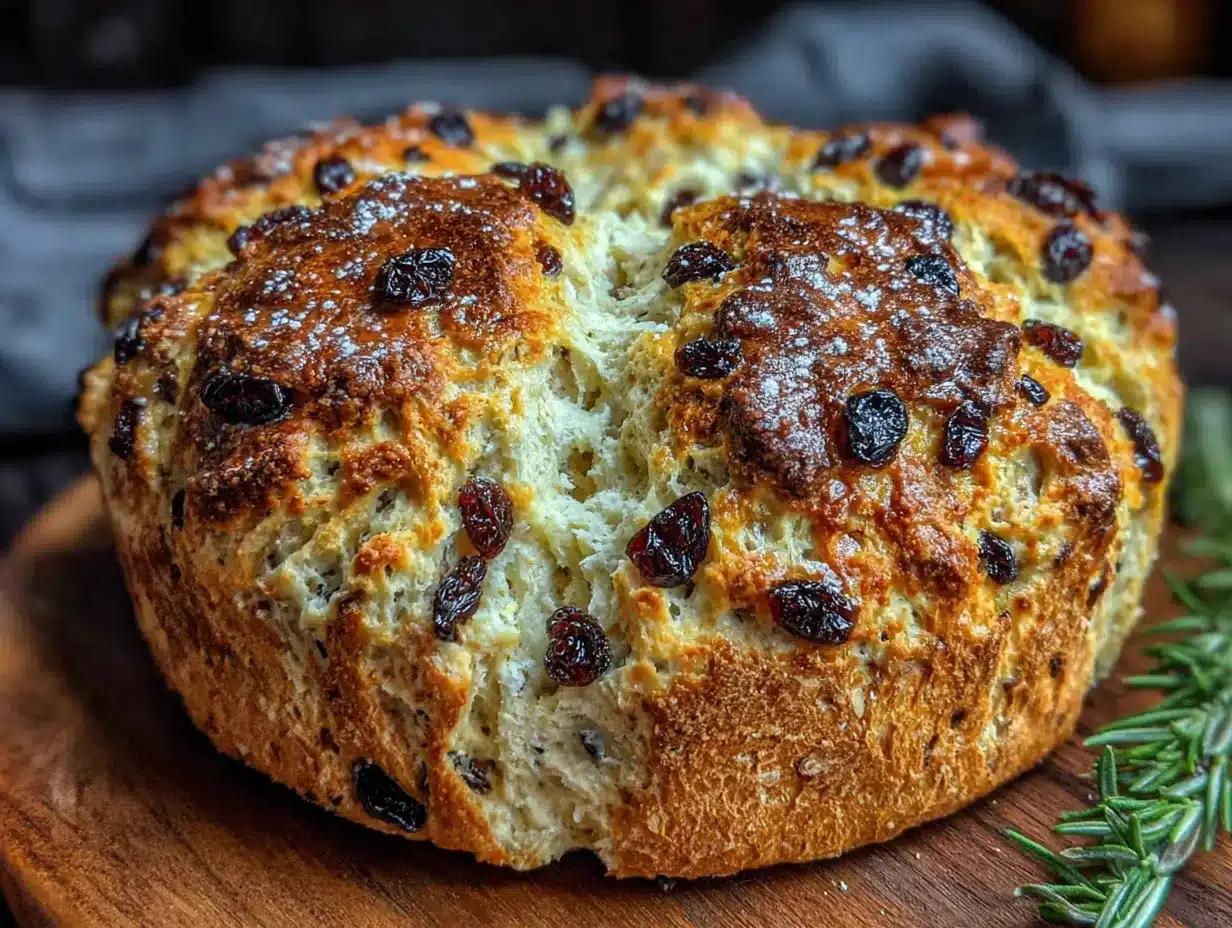
Alright, let’s get to the fun part. This cozy Irish soda bread with currants comes together in no time. Just follow these steps, and you’ll have a beautiful, fragrant loaf in about an hour.
- Preheat your oven to 400°F (200°C). Line a baking sheet with parchment paper. Getting the oven nice and hot is key to a good crust.
- Whisk the dry ingredients together. In your large mixing bowl, combine 3 cups all-purpose flour, 1 cup whole wheat flour, 3 tablespoons sugar, 1 teaspoon baking soda, and 1 teaspoon salt. Whisk them together until they’re well combined. This also helps aerate the flour.
- Cut in the cold butter. Take your 4 tablespoons of cold unsalted butter and cut it into small cubes. Add them to the flour mixture. Using a pastry cutter or two forks, cut the butter into the flour until the mixture looks like coarse crumbs with some pea-sized pieces of butter still visible. Don’t overdo it—you want those little butter pockets. I usually get mine done in about a minute.
- Stir in the currants. Add 1 cup of dried currants to the flour-butter mixture and stir to coat them. This helps prevent them from sinking to the bottom of the bread.
- Add the buttermilk. Make a well in the center of the flour mixture and pour in 1 3/4 cups of buttermilk. Using a wooden spoon or rubber spatula, stir until a shaggy, sticky dough forms. It will look messy and not at all like a smooth dough—that’s exactly what you want. Do not overmix. Overmixing develops the gluten and will make your bread tough. Just stir until it comes together.
- Turn the dough out onto a lightly floured surface. Sprinkle a little flour on your countertop. Turn the sticky dough out of the bowl. With floured hands, gently bring the dough together into a round loaf. Again, handle it as little as possible. A few gentle folds to shape it are all you need. It’s okay if it’s a little rough-looking.
- Transfer to the baking sheet. Place the shaped dough onto your parchment-lined baking sheet. Don’t worry if it’s not perfectly round—rustic is the goal here.
- Score the top. Using a sharp knife, cut a deep cross (an “X”) into the top of the loaf, about 1/2 inch deep. This is a traditional step that helps the bread bake evenly and allows it to expand. It’s also said to let the fairies out, but I think it’s more about the steam escaping!
- Optional egg wash. If you want a shiny, golden crust, beat one egg with a tablespoon of water and brush it over the top of the loaf. This step is totally optional, but it does make the bread look gorgeous.
- Bake for 40-45 minutes. Place the baking sheet in the preheated oven. Bake until the bread is deep golden brown and sounds hollow when you tap the bottom. The internal temperature should reach about 190°F (88°C) if you want to be precise. I usually start checking at the 40-minute mark.
- Cool on a wire rack. Transfer the baked bread to a wire rack to cool completely before slicing. I know it’s tempting to cut into it right away, but letting it cool allows the crumb to set. If you cut it too soon, it can be a little gummy inside. Patience, my friend!
Cooking Tips & Techniques
I’ve made this cozy Irish soda bread with currants more times than I can count, and I’ve learned a few things along the way. Here are my best tips to ensure success every time.
Don’t overwork the dough. This is the number one mistake people make with soda bread. The less you handle it, the more tender it will be. Mix just until the flour is moistened, and shape it with a gentle hand. If you knead it like a yeast bread, you’ll end up with a tough, dense brick. Trust me, I’ve been there.
Use cold ingredients. The butter should be straight from the fridge, and the buttermilk should be cold too. This helps create those steam pockets as the butter melts in the oven, resulting in a lighter crumb. If your kitchen is warm, you can even pop the flour mixture in the fridge for 10 minutes before adding the buttermilk.
Measure your flour correctly. If you’re not using a scale, spoon the flour into your measuring cup and level it off with a knife. Don’t scoop the cup directly into the flour bag—you’ll end up with compacted flour and too much of it, which leads to a dry bread. This is honestly the most common baking mistake I see.
Check your baking soda. Baking soda loses its potency over time. If your bread doesn’t rise well, it might be because your baking soda is old. To test it, drop a little bit into some vinegar—if it fizzes vigorously, it’s good. If it’s flat, get a new box.
Let it cool properly. I know the smell is intoxicating, but resist the urge to slice into the bread while it’s still hot. The interior needs time to finish setting. If you cut it too early, the crumb will be gummy and sticky. Let it cool for at least 30 minutes on a wire rack. I usually let it cool completely for the best texture.
Toast leftovers. This bread is absolutely amazing toasted. A slice of day-old soda bread, lightly toasted and slathered with butter, is a breakfast of champions. The toasting brings out the nutty flavor of the whole wheat and caramelizes the sugars a bit.
Variations & Adaptations
One of the best things about this recipe is how adaptable it is. You can easily tweak it to suit your taste or what you have on hand. Here are some of my favorite variations.
Gluten-Free Version: I’ve made this with a good quality gluten-free all-purpose flour blend (one that contains xanthan gum), and it works surprisingly well. The texture is a little more crumbly, but the flavor is still fantastic. Just be sure not to overmix the dough, as gluten-free batters can get gummy if overworked.
Vegan Option: To make this vegan, use a plant-based butter (like Miyoko’s or Earth Balance) and substitute the buttermilk with a mixture of plant-based milk (unsweetened almond or oat milk) and 1 tablespoon of lemon juice or apple cider vinegar. Let it sit for 5 minutes to curdle before using. The bread will be a little less rich, but still delicious.
Savory Irish Soda Bread: Skip the sugar and currants, and add 1 cup of shredded sharp cheddar cheese, 1/4 cup of chopped fresh chives or scallions, and a teaspoon of black pepper. This savory version is incredible with a bowl of soup or stew. I made this for St. Patrick’s Day one year, and it was gone in minutes.
Herb and Garlic Twist: Add 2 tablespoons of fresh rosemary or thyme (chopped) and 2 cloves of minced garlic to the dry ingredients. This gives the bread a wonderful aromatic quality that pairs beautifully with roasted meats or a hearty bean soup.
Spiced Apple Soda Bread: Swap the currants for 1 cup of finely chopped dried apples and add 1 teaspoon of cinnamon and 1/2 teaspoon of nutmeg to the flour mixture. This version tastes like autumn in a slice. It’s perfect with a cup of hot apple cider.
Honestly, I’ve tried most of these at one point or another, and they’re all winners. The basic formula is so forgiving that you can really make it your own. Don’t be afraid to experiment!
Serving & Storage Suggestions
This cozy Irish soda bread with currants is incredibly versatile when it comes to serving. It’s wonderful on its own, but it also pairs beautifully with a variety of accompaniments.
Serving Temperature: This bread is best served warm or at room temperature. If you’re serving it fresh from the oven, let it cool for at least 30 minutes first. A slice of warm soda bread with a generous pat of salted butter melting into it is, in my opinion, one of life’s simple greatest pleasures.
What to Serve With It: This bread is a natural companion to soups and stews. Try it alongside a bowl of creamy tomato soup, a hearty beef stew, or a classic potato leek soup. It’s also fantastic for breakfast or brunch, toasted and topped with jam, honey, or even a poached egg. For a simple afternoon snack, I love it with a spread of soft cheese and a cup of strong black tea.
Storage Instructions: Store leftover bread in an airtight container or wrapped tightly in plastic wrap at room temperature for up to 3 days. Do not refrigerate it, as the refrigerator will dry it out faster. The bread is best on the first day, but it’s still delicious for a couple of days after.
Freezing: This bread freezes beautifully. Wrap the completely cooled loaf tightly in plastic wrap, then in a layer of aluminum foil, and place it in a freezer bag. It will keep for up to 3 months. To thaw, simply leave it at room temperature for a few hours, or unwrap and pop slices directly into the toaster.
Reheating: To revive day-old bread, wrap it in foil and warm it in a 350°F (175°C) oven for about 10 minutes. This will bring back some of the crust’s crispness. For individual slices, toasting is the way to go.
How Flavors Develop: Interestingly, the flavor of this bread actually deepens a bit on the second day. The tanginess from the buttermilk becomes more pronounced, and the currants seem to plump up a little more. Some people actually prefer it the day after it’s baked!
Nutritional Information & Benefits
While this cozy Irish soda bread with currants is a treat, it does offer some nutritional benefits, especially compared to more processed breads. Here’s a general idea of what you’re getting per slice (based on 12 slices per loaf).
| Nutrient | Amount per Slice |
|---|---|
| Calories | 210 |
| Total Fat | 5g |
| Saturated Fat | 3g |
| Cholesterol | 15mg |
| Sodium | 320mg |
| Total Carbohydrates | 37g |
| Dietary Fiber | 3g |
| Sugars | 8g |
| Protein | 6g |
Key Health Benefits: The whole wheat flour provides a good source of dietary fiber, which is great for digestive health. Currants are packed with antioxidants and provide a natural source of energy. Buttermilk adds calcium and probiotics (if using cultured buttermilk), which are beneficial for bone and gut health. Compared to many store-bought breads, this one has no preservatives or artificial additives.
Dietary Considerations: This recipe is vegetarian-friendly. It can be made vegan with the substitutions mentioned earlier. It is not gluten-free in its standard form, but the gluten-free adaptation works well. The main allergens are wheat (gluten) and dairy (buttermilk, butter).
I believe in enjoying food in moderation. This bread is a wholesome, homemade treat that brings comfort and joy. It’s not an everyday health food, but it’s made with real ingredients and a lot of love, and that counts for something.
Conclusion
So there you have it—my go-to recipe for cozy Irish soda bread with currants. It’s the bread that reminds me of that drizzly Tuesday at Maureen’s house, the bread that fills my kitchen with warmth and my belly with happiness. It’s simple, it’s forgiving, and it’s absolutely delicious. I honestly think it’s one of those recipes that everyone should have in their back pocket.
I hope you give this a try. Don’t be afraid to make it your own—swap in different dried fruits, add some herbs, or go full-on savory with cheese and chives. The beauty of this bread is that it’s a blank canvas for whatever you’re craving. And the best part? Even if you mess up a little, it’s still going to taste amazing. That’s the kind of recipe I love.
Now I want to hear from you! Have you ever made Irish soda bread before? What’s your favorite way to enjoy it? Drop a comment below and let me know. And if you try this recipe, please share your photos and tag me—I love seeing your creations. Happy baking, friends! May your kitchen always be warm and your bread always be good.
Frequently Asked Questions
Why did my Irish soda bread turn out dry?
The most common reason for dry soda bread is overworking the dough or using too much flour. When you mix the dough, stop as soon as it comes together. Also, be sure to measure your flour correctly by spooning it into the cup and leveling it off. If the dough feels too dry when you’re mixing it, you can add an extra tablespoon or two of buttermilk.
Can I use raisins instead of currants?
Absolutely! Raisins are a great substitute. They are a bit larger than currants, so you might get a few bigger bursts of sweetness in each slice. You can also use dried cranberries, chopped dried apricots, or even chocolate chips for a different twist. Just keep the total amount at about 1 cup.
Do I have to use buttermilk? What can I substitute?
Buttermilk is key to the reaction with the baking soda, but you can make a quick substitute. Add 1 tablespoon of lemon juice or white vinegar to a measuring cup, then fill it with regular milk (dairy or plant-based) to the 1 3/4 cup line. Let it sit for 5 minutes. It will curdle slightly and mimic the acidity of buttermilk perfectly.
Why is there a cross cut on top of the bread?
The cross, or “X,” cut on top of Irish soda bread serves two purposes. First, it helps the bread bake evenly by allowing heat to penetrate the center. Second, it allows the bread to expand as it rises without cracking in weird places. Traditionally, it was also said to let the fairies out of the bread—a lovely bit of Irish folklore!
Can I make this bread ahead of time?
Yes! This bread is best on the day it’s baked, but it keeps well for a couple of days. You can also freeze the baked, cooled loaf for up to 3 months. For the freshest experience, I recommend baking it the day you plan to serve it, but it’s still wonderful toasted a day or two later.
Pin This Recipe!
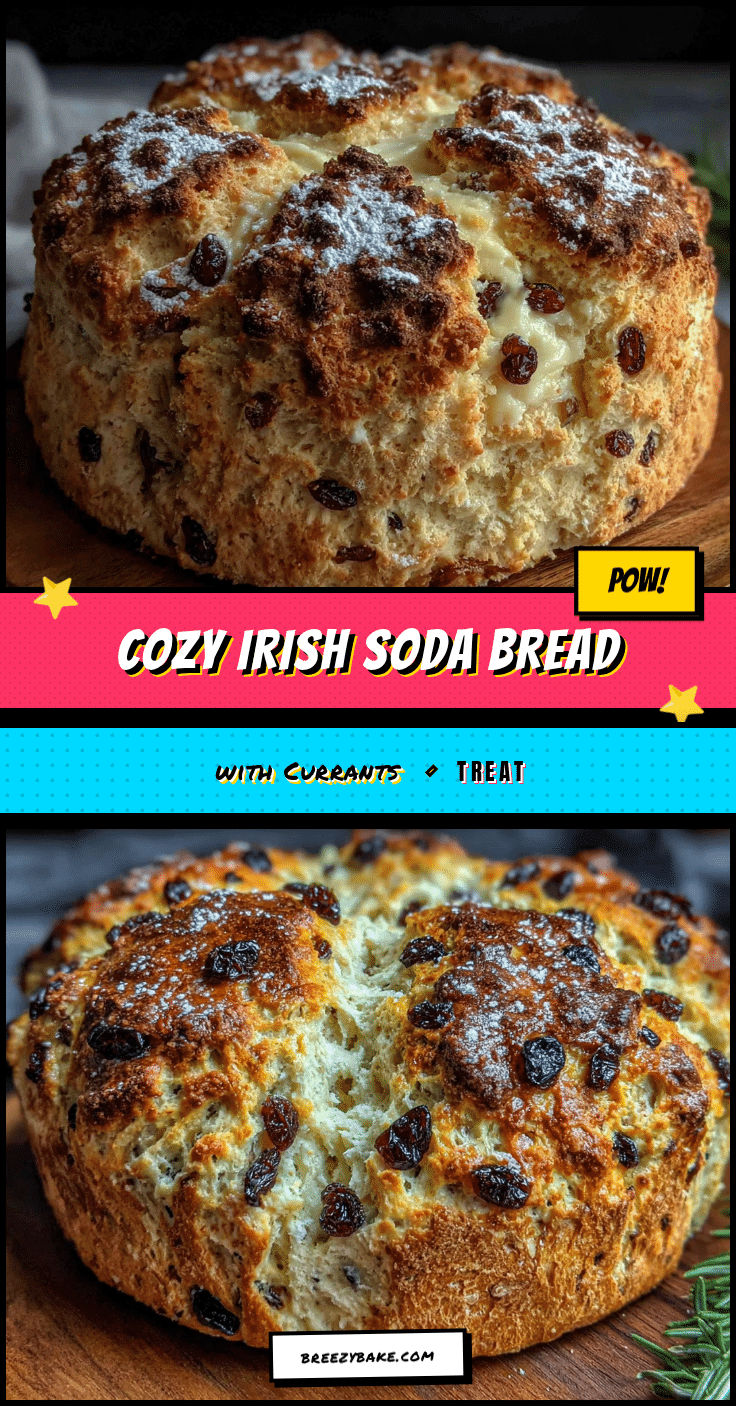
Cozy Irish Soda Bread with Currants: Best Easy Recipe
This cozy Irish soda bread with currants is the ultimate comfort food—simple, soul-soothing, and made with love. It’s a quick and easy bread that delivers a tender crumb with bursts of sweetness from currants, perfect for any occasion.
- Prep Time: 15 minutes
- Cook Time: 45 minutes
- Total Time: 1 hour
- Yield: 12 servings 1x
- Category: Bread
- Cuisine: Irish
Ingredients
- 3 cups (375g) all-purpose flour
- 1 cup (120g) whole wheat flour
- 3 tablespoons (36g) granulated sugar
- 1 teaspoon baking soda
- 1 teaspoon fine sea salt
- 4 tablespoons (57g) cold unsalted butter, cubed
- 1 cup (140g) dried currants
- 1 3/4 cups (420ml) buttermilk
- 1 large egg (for egg wash, optional)
Instructions
- Preheat your oven to 400°F (200°C). Line a baking sheet with parchment paper.
- In a large mixing bowl, whisk together 3 cups all-purpose flour, 1 cup whole wheat flour, 3 tablespoons sugar, 1 teaspoon baking soda, and 1 teaspoon salt.
- Cut the cold butter into the flour mixture using a pastry cutter or two forks until it resembles coarse crumbs with some pea-sized butter pieces.
- Stir in the dried currants until evenly coated.
- Make a well in the center and pour in the buttermilk. Stir with a wooden spoon or rubber spatula until a shaggy, sticky dough forms. Do not overmix.
- Turn the dough out onto a lightly floured surface. With floured hands, gently shape it into a round loaf, handling as little as possible.
- Transfer the dough to the prepared baking sheet. Using a sharp knife, cut a deep cross (X) about 1/2 inch deep into the top.
- If desired, beat the egg with 1 tablespoon of water and brush over the top for a glossy crust.
- Bake for 40-45 minutes, until deep golden brown and the loaf sounds hollow when tapped on the bottom. Internal temperature should reach about 190°F (88°C).
- Transfer to a wire rack and cool completely before slicing (at least 30 minutes).
Notes
Don’t overwork the dough—mix just until combined for a tender crumb. Use cold ingredients for best results. Measure flour correctly by spooning into the cup and leveling off. Check that your baking soda is fresh. Let the bread cool completely before slicing to avoid a gummy texture. Leftovers are excellent toasted.
Nutrition
- Serving Size: 1 slice
- Calories: 210
- Sugar: 8
- Sodium: 320
- Fat: 5
- Saturated Fat: 3
- Carbohydrates: 37
- Fiber: 3
- Protein: 6
Keywords: Irish soda bread, soda bread with currants, easy bread recipe, quick bread, comfort food, Irish recipe, homemade bread