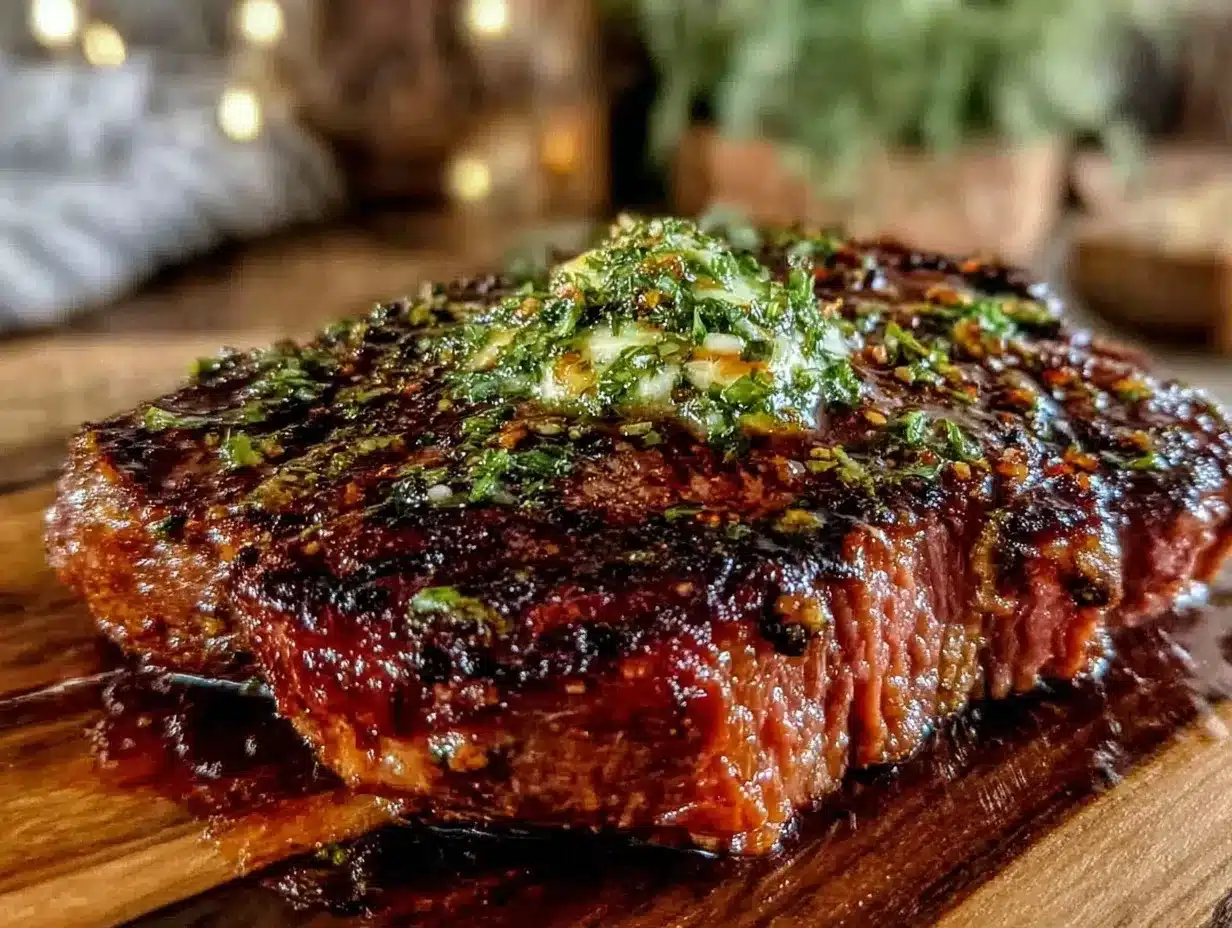
The first time I tried the perfect reverse sear ribeye steak with herb compound butter, I wasn’t exactly planning a steak night. Honestly, it started as a “let’s just see if this works” situation after a long day when I was too tired to wrestle with the grill. I had a thick ribeye staring back at me from the fridge, and instead of my usual pan-sear frenzy, I decided to try something a bit slower, a bit gentler. The oven did its quiet magic, and then came the quick sear that locked in everything. The aroma of sizzling steak mingled with fresh herbs melting into butter—it was like the kitchen suddenly felt alive again.
That herb compound butter, by the way, was a game changer. I whipped it up on a whim, using butter softened just right, mixed with garlic, thyme, rosemary, and a pinch of sea salt. Slathering that on the steak while it rested felt like a small indulgence, and honestly, it made me rethink how simple steak can be. There’s this satisfying contrast—the tender, evenly cooked meat with a crisp, caramelized crust and the creamy, fragrant butter melting over it. It’s not just dinner; it’s a moment of calm and satisfaction after a hectic day. That’s why this recipe stuck with me.
It’s one of those recipes that doesn’t demand you be a grill master or a chef; it just asks for patience and a little love. And if you’re anything like me, looking for that perfect steak that feels fancy but isn’t a production, this reverse sear ribeye with herb compound butter might just become your new go-to.
Why You’ll Love This Recipe
After testing this perfect reverse sear ribeye steak recipe more times than I can count, I can say it reliably delivers the kind of steak dinner that feels special without the stress. Here’s what really makes it stand out:
- Quick & Easy: You get beautifully cooked steak in under an hour, mostly hands-off in the oven, ideal for those busy evenings when you still want something impressive.
- Simple Ingredients: No exotic spices or hard-to-find elements—just a quality ribeye, fresh herbs, butter, and basic seasonings you probably already have on hand.
- Perfect for Any Occasion: Whether it’s a casual weekend meal or a special date night at home, this recipe brings that restaurant vibe to your own kitchen.
- Crowd-Pleaser: The rich, buttery herb topping combined with the tender steak always gets nods of approval from both steak lovers and skeptics alike.
- Unbelievably Delicious: The reverse sear technique ensures an even cook edge to edge, while the herb butter adds a luscious finish that’s anything but ordinary.
What really sets this recipe apart is the method itself—the slow oven step lets the steak cook gently, avoiding the dry edges that pan-searing alone sometimes causes. Then the sear creates that mouthwatering crust you crave. Plus, the herb compound butter isn’t just a garnish; it seeps into every bite, making the flavor deep and layered. It’s the kind of steak that makes you pause with your eyes closed, savoring the perfect balance of texture and taste.
If you’ve ever hesitated to cook ribeye at home because you’re unsure how to get it just right, this reverse sear method will change your mind. Plus, if you want to pair it with a fresh salad or a cozy side, you might find yourself looking back at healthy chicken veggie skillet wraps for something light and wholesome alongside this indulgent steak. It’s all about balance, right?
What Ingredients You Will Need
This perfect reverse sear ribeye steak recipe uses straightforward ingredients that work together to bring out bold, satisfying flavors. Nothing fancy, just honest components that let the steak shine and the herb butter sing.
- Ribeye Steak: 1 thick-cut ribeye (about 1.5 to 2 inches thick, roughly 16-20 oz / 450-570 g). Look for marbling—fat interlaced through the meat—for juiciness and flavor.
- Salt & Pepper: Kosher salt and freshly cracked black pepper. Season generously to enhance the beef’s natural flavor.
- Butter: 4 tablespoons (60 g) unsalted butter, softened. I like using Land O’Lakes for its creamy texture, but any good-quality butter will do.
- Garlic: 2 cloves, finely minced. Fresh garlic is key for that punch in the compound butter.
- Fresh Herbs: 1 teaspoon fresh thyme leaves and 1 teaspoon fresh rosemary, finely chopped. These herbs bring aromatic depth and pair perfectly with beef.
- Lemon Zest: A pinch, optional but adds a bright note that cuts through the richness.
- Olive Oil: 1 tablespoon (15 ml), for searing. Use extra virgin olive oil if possible for better flavor and a higher smoke point.
If you’re looking for substitutions, you can swap thyme and rosemary for a mix of parsley and oregano if that’s what you have. For a dairy-free option, try a plant-based butter alternative that handles heat well. And if ribeye isn’t your favorite cut, this method also works great for New York strip or even filet mignon, though cooking times may vary slightly.
Equipment Needed
- Oven-Safe Wire Rack and Baking Sheet: Vital for the slow, even cooking in the oven. The rack lets air circulate around the steak, preventing sogginess.
- Cast Iron or Heavy Skillet: For the final sear. Cast iron holds heat well and creates that perfect crust. If you don’t have one, a stainless steel pan will do.
- Instant-Read Meat Thermometer: A must-have to nail the perfect doneness without guessing. I rely on one for every steak night.
- Mixing Bowl and Spoon: To make the herb compound butter. Nothing fancy, just something to mix those flavors together smoothly.
- Knife and Cutting Board: For prepping herbs and garlic.
If you’re on a budget, a simple wire rack over a baking sheet can be found pretty affordably online or at kitchen stores. And if you don’t have a meat thermometer, you can check doneness by touch, but it’s a lot less stressful with one in hand. Keeping your cast iron skillet well-seasoned will help maintain that crust-forming magic; I clean mine with hot water only and dry immediately to prevent rust.
Preparation Method
- Preheat your oven: to 275°F (135°C). This gentle temperature lets the ribeye cook slowly and evenly.
- Season the steak: Pat the ribeye dry with paper towels (this is key for a good sear later). Generously season all sides with kosher salt and freshly cracked black pepper. Let it sit at room temperature while the oven heats up, about 20-30 minutes.
- Prepare your baking setup: Place a wire rack on a baking sheet. This allows air to circulate beneath the steak, promoting even cooking and preventing the bottom from steaming.
- Slow roast: Place the ribeye on the wire rack and insert an instant-read thermometer into the thickest part. Roast in the oven until the internal temperature reaches about 115°F (46°C) for medium-rare, usually about 30-40 minutes depending on thickness. Keep a close eye on the thermometer for best results.
- Make the herb compound butter: While the steak is roasting, mix the softened butter with minced garlic, chopped thyme, rosemary, lemon zest, and a pinch of salt in a small bowl. Taste and adjust seasoning if needed. Chill it briefly if it feels too soft.
- Preheat your skillet: Once the steak reaches target temperature, heat a cast iron skillet over high heat. Add olive oil and swirl to coat.
- Sear the steak: Place the ribeye in the hot skillet and sear for 1-2 minutes per side until you get a deep brown crust. Don’t forget to sear the edges for about 30 seconds each to render the fat.
- Rest and top: Transfer the steak to a cutting board, let it rest for 5-10 minutes. While resting, slather a generous dollop of the herb compound butter on top. The warmth will melt the butter into the steak.
- Slice and serve: Slice against the grain, plate, and enjoy immediately with your favorite sides.
Pro tip: If you notice the steak is cooking too fast in the oven, reduce the temperature slightly the next time. And when searing, keep your oil shimmering but not smoking to avoid bitterness.
Cooking Tips & Techniques
Getting that perfect reverse sear ribeye steak isn’t rocket science, but a few tricks make a big difference. First, patience is your best friend here. That slow oven step lets the steak cook evenly from edge to center, avoiding the dreaded gray band of overcooked meat you sometimes get with traditional pan-searing.
Don’t skip the drying step before seasoning; moisture on the surface interferes with browning. I learned this the hard way—once I rushed and ended up with a steak that looked steamed rather than seared.
Using a meat thermometer is a game changer. It takes all the guesswork out of doneness. For medium-rare, aim for 120-125°F (49-52°C) after searing, knowing the temperature rises a bit while resting.
When making the herb compound butter, don’t rush chopping the herbs. The finer, the better—they release more flavor and blend seamlessly into the butter. Also, letting the butter soften to just the right consistency before mixing helps everything combine better.
One last tip? Rest your steak. It’s tempting to dig in right away, but resting lets the juices redistribute, making every bite juicy and tender. You can even tent it loosely with foil to keep it warm.
Variations & Adaptations
If you want to switch things up, this reverse sear ribeye steak recipe is flexible:
- Spicy Herb Butter: Add a pinch of crushed red pepper flakes or smoked paprika to the compound butter for a little heat kick.
- Garlic & Blue Cheese Butter: Swap half the butter with softened cream cheese and fold in crumbled blue cheese and garlic for a rich, tangy topping.
- Low-Sodium Version: Use unsalted butter and reduce added salt, relying more on fresh herbs and a squeeze of lemon juice for flavor.
- Alternative Cooking Method: Try sous vide the ribeye first for precise temperature control, then finish with a quick sear in the skillet and herb butter topping.
- Herb Substitutions: If you don’t have thyme or rosemary, basil, oregano, or parsley can work well to keep it fresh and fragrant.
Personally, I once tried this with a rosemary-garlic butter blend inspired by my crispy loaded bacon mac and cheese casserole herbs, and it brought a comforting, homey vibe that was unforgettable.
Serving & Storage Suggestions
This ribeye steak shines best served hot, right after resting and buttering. I like to slice it thinly and fan it out on a warm plate for a little visual drama. It pairs beautifully with roasted vegetables, creamy mashed potatoes, or even a crisp green salad to balance the richness.
If you want to store leftovers, wrap the steak tightly in foil or plastic wrap and refrigerate for up to 3 days. To reheat, gently warm it in a low oven (around 250°F / 120°C) until just warmed through, then add a fresh pat of herb butter to bring back that melting magic.
Flavors actually deepen a bit after resting overnight, so some folks swear by enjoying cold slices in sandwiches the next day. For a side that keeps with the indulgence but adds freshness, the herb compound butter concept also works wonders melting over grilled asparagus or even a baked sweet potato.
Nutritional Information & Benefits
A 6-ounce (170 g) ribeye steak cooked this way typically contains around 430-480 calories, with 35-40 grams of protein and 35 grams of fat, depending on cut and trimming. The butter adds richness and calories, but also delivers fat-soluble vitamins like A, D, and E.
Ribeye’s marbling provides flavor and juiciness but also means it’s higher in saturated fats, so enjoying this steak as an occasional treat fits well into a balanced diet. The fresh herbs contribute antioxidants and a touch of vitamin C.
For those watching carbs, this recipe is naturally low-carb and gluten-free, making it friendly for keto and paleo approaches. Just watch your sides and toppings if you’re tracking macros closely.
Conclusion
Cooking the perfect reverse sear ribeye steak with herb compound butter is one of those kitchen wins that feels effortless but tastes like a feast. It’s a recipe that’s stayed in my rotation because it respects the steak’s natural beauty while adding just enough flair to make it exciting. Whether you’re impressing a guest or treating yourself after a long day, this method delivers reliably delicious results.
Feel free to tweak the herbs or butter mix to your liking—this recipe welcomes your personal touch. And if you love the idea of finishing dishes with a luscious butter blend, you might appreciate the balance of creamy textures in creamy strawberry cream puff bars for dessert after your steak dinner. It’s all about creating moments worth savoring.
Enjoy the process, savor the flavors, and don’t forget to tell me how your steak night went!
Frequently Asked Questions
What is the reverse sear method for steak?
The reverse sear involves cooking the steak slowly in a low oven first, then finishing with a high-heat sear to create a crust. This technique promotes even cooking and a juicy interior.
How thick should the ribeye be for reverse searing?
A thick cut, ideally 1.5 to 2 inches, works best. Thinner steaks cook too quickly and may not benefit as much from the slow oven step.
Can I use this recipe for other steak cuts?
Yes! New York strip, filet mignon, or even sirloin can be cooked this way. Adjust cooking times based on thickness and cut.
How do I know when the steak is done?
Using an instant-read thermometer is the safest bet. For medium-rare, aim for 120-125°F (49-52°C) after searing. The steak will continue to cook slightly while resting.
Can I make the herb compound butter ahead of time?
Absolutely. You can prepare the butter a day or two ahead and keep it refrigerated. Let it soften at room temperature before spreading on the steak.
Pin This Recipe!
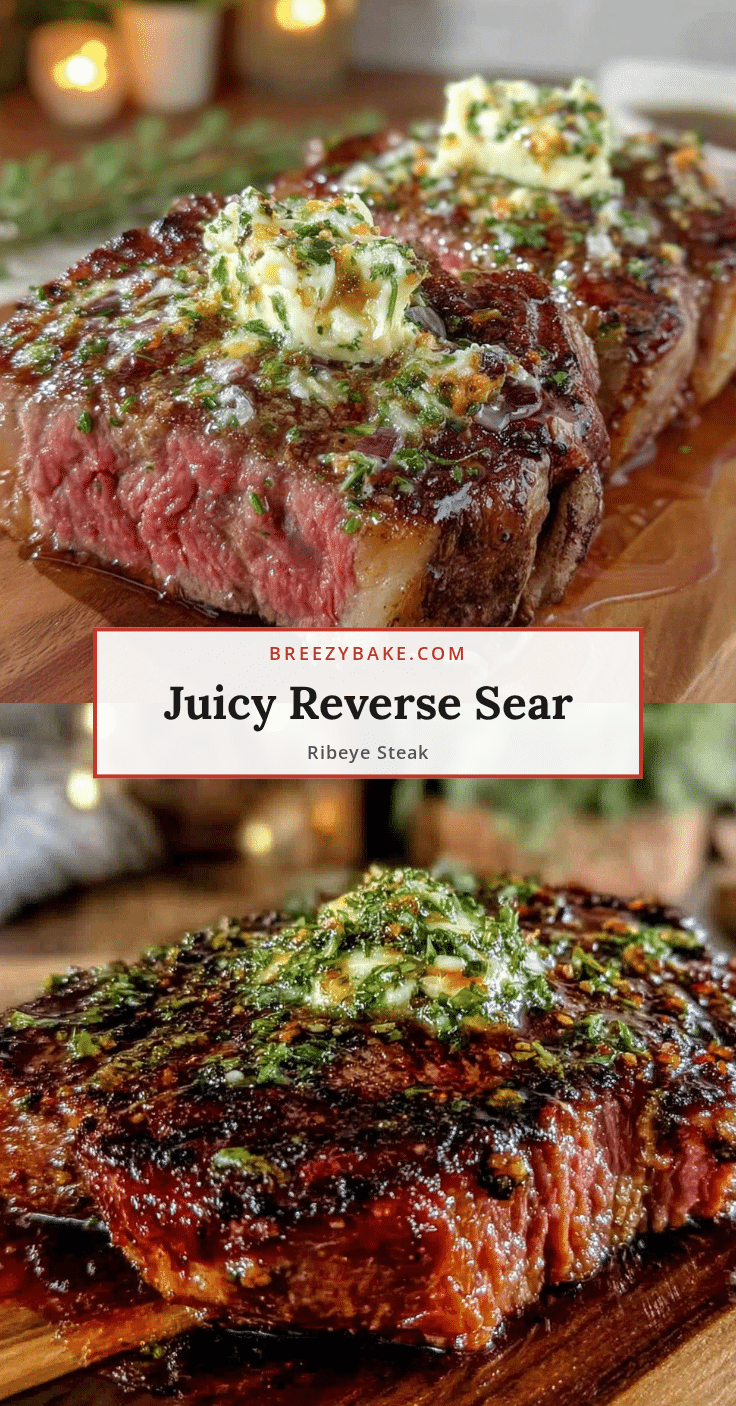
Perfect Reverse Sear Ribeye Steak Recipe with Easy Herb Butter
A simple and reliable reverse sear ribeye steak recipe that delivers a tender, evenly cooked steak with a crisp crust, topped with a flavorful herb compound butter.
- Prep Time: 10 minutes
- Cook Time: 40 minutes
- Total Time: 50 minutes
- Yield: 1 steak (serves 2) 1x
- Category: Main Course
- Cuisine: American
Ingredients
- 1 thick-cut ribeye steak (1.5 to 2 inches thick, 16–20 oz / 450–570 g)
- Kosher salt, to taste
- Freshly cracked black pepper, to taste
- 4 tablespoons (60 g) unsalted butter, softened
- 2 cloves garlic, finely minced
- 1 teaspoon fresh thyme leaves, finely chopped
- 1 teaspoon fresh rosemary, finely chopped
- Pinch of lemon zest (optional)
- 1 tablespoon (15 ml) olive oil (extra virgin preferred)
Instructions
- Preheat your oven to 275°F (135°C).
- Pat the ribeye dry with paper towels. Season generously on all sides with kosher salt and freshly cracked black pepper. Let it sit at room temperature for 20-30 minutes.
- Place a wire rack on a baking sheet to allow air circulation beneath the steak.
- Place the ribeye on the wire rack and insert an instant-read thermometer into the thickest part. Roast in the oven until the internal temperature reaches about 115°F (46°C) for medium-rare, about 30-40 minutes depending on thickness.
- While the steak roasts, mix the softened butter with minced garlic, chopped thyme, rosemary, lemon zest, and a pinch of salt in a small bowl. Adjust seasoning if needed and chill briefly if too soft.
- Heat a cast iron skillet over high heat and add olive oil, swirling to coat.
- Sear the ribeye in the hot skillet for 1-2 minutes per side until a deep brown crust forms. Sear the edges for about 30 seconds each to render the fat.
- Transfer the steak to a cutting board and let it rest for 5-10 minutes. While resting, slather a generous dollop of the herb compound butter on top to melt into the steak.
- Slice against the grain, plate, and serve immediately.
Notes
Patting the steak dry before seasoning is key for a good sear. Use a meat thermometer to ensure perfect doneness. Rest the steak after searing to redistribute juices. Keep oil shimmering but not smoking when searing to avoid bitterness. Herb compound butter can be made ahead and refrigerated.
Nutrition
- Serving Size: Approximately half t
- Calories: 455
- Sodium: 300
- Fat: 35
- Saturated Fat: 14
- Protein: 38
Keywords: reverse sear, ribeye steak, herb butter, steak recipe, easy steak, oven steak, cast iron skillet, compound butter